
 Preview
 Send
Send Share
Share
 Details
 Guide
Guide

 Download
 Similars
 X-Ray
X-Ray Diaporama
 Q&A
Q&A Stats
StatsFlowers (9)


 Read More
The artwork displayed on this page is protected by copyright law, which means we cannot legally create or sell an identical reproduction. This protection is enforced under international agreements such as the Berne Convention and by national laws, including those outlined by the U.S. Copyright Law - Title 17.
This method fully complies with copyright regulations because it does not involve copying or duplicating the protected artwork. Instead, it is a creative reinterpretation - a new painting that is influenced by the original but not identical to it.
Giclée / Art Print
Museum-quality giclée or canvas print with fast production and flexible finish options. ( Buy Hand Made Painting Switch to Digital Image)




P118B $10

P118H $10

P118W $10

P438Z $10

P508JH $12

P508YH $12

P805H $10

P805Z $10

P919BZ $10

P919G $10

P919XJ $10

P959ZH $10

P968JZ $12

W106C $8

W218G $10

W218JH $8

W218Y $10

W307PJ $10

W316G $10

W316PJ $8

W316Y $10

W398PJ $8

W4111J $10

W500HY $15

W500JH $15

W692G $12

W849H $8

W940BG $15

W953PJ $8




Pick from our preset sizes that match the artwork's original proportions.

Type the width and the height you need, to fit your frame or your wall. A print can only be cut, never made bigger than the picture, so a size with a different shape loses a part of the image. We send you a digital mockup to approve before we print anything. The picture shown on this page does not show the real cut — only the mockup does.
Worldwide Delivery () in 2 weeks instead of standard 4/5 weeks. (9 November)

Free Worldwide Express Shipping

High-Quality Linen Canvas

Full Shipping Insurance

Customs Tax Refund Guarantee

True Color Matching Guarantee

100-Day Return Policy (Defects Only)

100% Money-Back Guarantee

Bulk Discount Offer
 Glass option is only available in size under 110 CM

Flowers (9)
Giclée / Art Print
Reproduction Size
-


Total Price
$ 81
An Explosion of Color: Exploring Martiros Saryan's Floral Abundance
To stand before this vibrant depiction of flowers is to be enveloped in a sudden, joyous burst of life. It is not merely a still life; it is an exuberant celebration rendered with the passionate hand of Martiros Saryan. The composition overwhelms the viewer in the most delightful way possible—a dense tapestry woven from blossoms in fiery reds, sunlit yellows, deep purples, and warm oranges. One feels the very breath of the garden captured on canvas, a moment so rich it seems impossible to contain.
Technique and the Brushstroke's Song
Saryan’s mastery is evident in his handling of paint. The technique employed here speaks volumes about the artist's physical connection to his materials. Notice how the paint has been applied with a visible, almost urgent energy; these are not smooth, polished surfaces but thick, impastoed layers that give every petal and leaf a palpable texture. This approach moves beyond mere representation; it is an act of sensation. The brushstrokes themselves become part of the subject matter, guiding the eye through the riotous arrangement while simultaneously suggesting movement—as if the bouquet itself were swaying in a warm breeze.
The Spirit Behind the Bloom: Style and Context
While the subject matter anchors it firmly in the tradition of floral still life, the execution pulls it toward the expressive realms of Post-Impressionism. Saryan eschews rigid academic perspective for something far more immediate and emotional. The flowers seem to exist in a flattened, abundant space, emphasizing their sheer volume and chromatic power over any illusion of deep recession. This style choice allows the color—the pure, unadulterated joy of red meeting the brilliance of yellow—to take center stage, echoing the vibrant spirit that defined much of his work documenting Armenian life.
Symbolism of Life's Cycle
The sheer abundance captured here invites contemplation. Flowers, in art across cultures, are potent symbols. Here, their overflowing nature speaks powerfully of vitality and beauty at its zenith. Yet, within this glorious display lies the subtle acknowledgment of transience; every perfect bloom hints at the inevitable passing of time. It is a beautiful meditation on life itself—a moment of peak perfection captured forever by the artist’s unwavering gaze.
Bringing the Garden Home
For those who seek to infuse a space with artistic warmth and narrative depth, this piece offers unparalleled emotional resonance. Whether displayed in a grand hall or a sunlit drawing-room, its energy is undeniable. Owning a reproduction of this work means inviting not just a painting, but a feeling—a vibrant echo of Saryan’s deep connection to the earth and the enduring, passionate spirit of life itself.
Questions & Answers
How do the colors of "Flowers (9)" relate to each other?
The colors of "Flowers (9)" by Martiros Sarian show a softly mixed palette harmony. Harmony describes how the colors relate to each other.
Toward which tone does "Flowers (9)" lean?
A warm sunset tones hue runs through "Flowers (9)" by Martiros Sarian.
Who created "Flowers (9)" and in what year?
Martiros Sarian made "Flowers (9)" in 1960.
Artist Biography
Early Life, Family and Training
To understand the foundation of modern Armenian painting, one must look back to the specific circumstances of Martiros Sarian's birth. He was born on February 16 [February 28, New Style], 1880, in Nakhichevan-on-Don, Russia. As the seventh child of Sargis Saryan and Ustian Chiligaryan, his early environment was shaped by a large family structure. His initial education did not come from a formal institution but from his eldest brother, Hovhannes Saryan, who provided his primary instruction.
The technical rigor that defined his later output was forged during his years at the Moscow School of Painting, Sculpture, and Architecture. Between 1897 and 1903, Sarian moved beyond the domestic instruction of his brother into the professional sphere of the Russian art scene. This period was not merely about learning technique; it was about absorbing the specific methodologies of the era's most significant instructors. He worked within the studios of Konstantin Korovin and Valentin Serov, two figures who provided the technical grounding necessary for his subsequent stylistic developments.
This training provided more than just skill. It offered a direct connection to the evolving standards of the time. By studying under Korovin and Serov, Martiros Sarian acquired a professional discipline that allowed him to eventually move beyond simple representation. His transition from a student in Moscow to a central figure in Armenian art was predicated on this specific combination of familial guidance and rigorous academic study.
Travels and Artistic Inspiration
Saryan’s work finds its logic in a deliberate search for a specific visual language rooted in his homeland. His 1901 trip to Armenia was not a casual excursion but a focused artistic research project. By traversing regions like Lori, Shirak, Echmiadzin, Haghpat, Sanahin, Yerevan, and Sevan, he moved beyond mere observation to document the landscape through a personal lens. This period established the geographic and emotional foundation that would define his entire output.
His perspective expanded through strategic movement across the Middle East and North Africa. He was in Constantinople in 1910, Egypt in 1912, southwestern Armenia in 1913, and Persia in 1914. These travels allowed him to absorb the light and motifs of these diverse locations, integrating them into a cohesive style. Even his brief period in Paris between 1926 and 1928 functioned as a way to engage with international aesthetics before his permanent return to the Armenian landscape.
Technique and Artistic Style
Sarian’s visual language relies on a directness that avoids unnecessary complexity. His expressionist approach captures scenes in a simple, almost child-like form, stripped of academic clutter. This clarity is driven by an intense use of color. He did not merely observe light; he used it to define the weight and presence of his subjects. His palette reflects the heavy influence of Impressionism, yet he pushed beyond mere light effects to embrace the bold, saturated tones found in the works of Paul Gauguin and Henri Matisse.
The geography of his travels dictates the composition of his canvases. His time spent in Armenia and the Middle East provided the essential visual data for his career. He did not just paint landscapes; he synthesized the specific light and atmosphere of these regions into a distinct national style. This synthesis included the integration of Persian motifs, which he wove into his compositions to ground his modernism in regional reality. The result is a style that feels both modern and deeply rooted in the specificities of the East.
Key Works and Notable Paintings
Saryan’s output reflects a persistent obsession with the specificities of the Armenian landscape and the seasonal shifts of the Middle East. His 1909 work, Steppe flowers, demonstrates an early command of color that moved away from the muted tones of his predecessors. By 1916, his focus shifted toward the immediate reality of his homeland with Flowers of Armenia. This period of his career shows a transition from mere observation to a more structured, almost graphic interpretation of nature. His 1924 piece, Mottled landscape, further proves his ability to manipulate light and texture to define space without relying on traditional perspective.
The artist’s later years saw a continued preoccupation with botanical subjects and the atmospheric qualities of the Armenian terrain. He returned to the motif of seasonal renewal in Apricot trees in blossom (1929) and again in Apricot tree in blossom (1942). These works are not mere studies; they are assertive declarations of a specific regional identity. His 1933 painting, Mountainous march of Armenian units, provides a stark contrast to his floral studies, grounding his aesthetic in the social and political realities of the era. Even in 1944, with April landscape, his commitment to capturing the specific light of the Armenian spring remained a central pillar of his practice.
- Steppe flowers (1909)
- Flowers of Armenia (1916)
- Mottled landscape (1924)
- Apricot trees in blossom (1929)
- Mountainous march of Armenian units (1933)
- Apricot tree in blossom (1942)
Later Years and Death
Saryan’s presence in Armenia became permanent following his move to Yerevan in 1921. While his earlier years involved navigating the shifting borders of the Russian Empire and brief excursions to Paris, his later life was defined by his residence in Soviet Armenia. From 1928 until his death, he remained a constant figure in the region, producing a vast body of work that documented the landscape and life of his adopted home. His output during these decades was prolific, maintaining a high level of productivity even as the political landscape around him shifted.
He remained active in the Armenian art scene for decades, eventually passing away in Yerevan, Armenian S.S.R., U.S.S.R. He died on May 5, 1972, at the age of 92. His long life spanned the transition from the late imperial era through the complexities of the Soviet period, leaving behind a massive archive of work that remains central to the history of Armenian painting.
Legacy and Influence
Martiros Sarian's impact is measured by his status as the founder of a modern Armenian national school of painting. He did not merely paint landscapes; he established a visual language for a nation. His institutional influence was significant during the Soviet era. He served as the president of the Artists' Union of Soviet Armenia from 1945 to 1951. This position allowed him to shape the professional landscape for his contemporaries. His standing was further solidified by his election as a member of the USSR Academy of Fine Arts in 1947. By 1960, he had achieved the title of People's Artist of the USSR.
His work remains a primary reference for Armenian identity in art. He moved away from purely academic traditions to create something specific to his homeland. This shift helped define the direction of Armenian modernism. His ability to synthesize international influences with local subject matter ensured his relevance long after his death in 1972. He remains a central figure in the history of Armenian visual culture.
Where to See the Works Today
To encounter the physical reality of Saryan’s output, one must travel to Yerevan, Armenia. The city serves as the primary repository for his visual legacy. The National Gallery of Armenia maintains a significant collection of his paintings, providing a centralized look at his development within the Armenian landscape. This institution holds the weight of his formal contributions to the national school of painting.
For a more intimate connection to the man behind the brush, the Martiros Saryan House-Museum offers a direct link to his private life. This museum is housed within his former three-story residence. Walking through this specific space allows for a confrontation with his personal environment, situated just a short distance from Freedom Square. It remains a vital site for understanding the scale and domestic context of his creative existence.
The Saryan Museum in Yerevan also functions as a key site for his work. Together, these locations ensure that his influence remains anchored in the geography he spent his life documenting. Visitors seeking his specific depictions of Armenian life or his Middle Eastern studies will find the necessary concentration of his work within these Yerevan institutions.
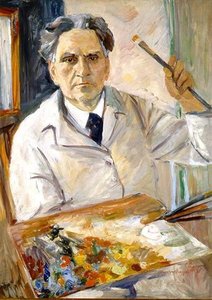
Martiros Sarian
1880 - 1972 , Russia
Quick Facts
- Artistic Movement Or Style: Post-Impressionism, Fauvism
- Artists Or Movements Influenced By This Artist: ['Modern Armenian national school']
- Artists Who Influenced This Artist:
- Paul Gauguin
- Henri Matisse
- Full Name: Martiros Saryan
- Nationality: Armenian
- Notable Artworks:
- Makravank
- Aragats
- Buffalo at Sevan
- Evening in the Garden
- Place Of Birth: Novaya Nakhichevan, Russia
- Date Of Birth: 1880
- Date Of Death: 1972
Related Articles
Beyond Impressionism: Exploring the Emotional Depth of Post-Impressionist Painting
Explore the profound emotional depth & innovative techniques of Post-Impressionism with OriginalUniqueArt. Discover Cézanne, Van Gogh, Gauguin & more – and their lasting impact on modern art.

Mastering Form: The 25 Greatest Paintings by Paul Cézanne
Explore 25 iconic Paul Cézanne masterpieces and his Post-Impressionist legacy. Discover the full collection online at OriginalUniqueArt.com.

Blossoms of Time: A Historical & Aesthetic Exploration of Floral Painting Across Cultures
Explore the rich history of floral painting! Discover symbolism, techniques & masterpieces from Van Huysum to O'Keeffe. Expert insights for art lovers & collectors at OriginalUniqueArt.
Blossoming Symbolism: A Historical Journey Through Flowers in Western Painting
Explore the rich history of flower symbolism in Western painting! Discover how artists from the Renaissance to Modernism used blossoms to convey meaning, emotion & beauty. Learn about iconic artworks and movements.
Post-Impressionism's 10 Defining Masterpieces: Art for Your Home |
Journey through Post-Impressionism's 10 defining masterpieces – Van Gogh, Monet & more. Explore iconic paintings, art history & find museum-quality reproductions for your home at . Discover all masterpieces online!


