Color Field Painting · 1955
Untitled (Mark Rothko, 1955)
Mark Rothko (1903–1970) made Untitled. It dates from 1955. It belongs to the Color Field Painting movement. It is made in oil on canvas. It measures 268 × 236 cm.
- 1955
- Oil On Canvas
- 268 × 236 cm

 Preview

 Hand Made Oil Painting
 Send
 Share
 Guide


 Download
 Similars
 X-Ray
 Diaporama
 Q&A

 Stats
Untitled: the essentials
- Title
- Untitled
- Artist
- Mark Rothko (1903–1970)
- Artist born in
- Daugavpils, Latvia
- Date
- 1955
- Medium
- Oil On Canvas
- Dimensions
- 268 × 236 cm
- Movement
- Color Field Painting
- Period
- Modern
- Subject
- minimalism, color harmony, emotional depth, geometric form, existentialism, red square
What does Untitled depict?
A Study in Somber Hue: The Emotional Depth of Rothko’s Untitled
Mark Rothko's "Untitled," completed in 1955, stands as a cornerstone of Color Field painting and embodies the anxieties of its time—a testament to both personal trauma and the broader existential concerns that gripped mid-century artistic discourse. Measuring an impressive 268 x 236 cm, this canvas immediately commands attention with its deceptively simple composition: a bold red square bisected by black borders. Yet, within this apparent minimalism lies a depth of emotion and intellectual rigor that continues to fascinate scholars and collectors alike. The painting presents a powerful encounter where the viewer is met with a striking visual drama, as the stark, deep black borders act as an infinite void, pushing the luminous red form toward the foreground.
The genesis of this work is deeply rooted in Rothko’s own history, shaped by the turbulent backdrop of his early life in Latvia and the subsequent cultural shifts following his relocation to Portland, Oregon. Witnessing firsthand the horrors of pogroms instilled within him an unwavering empathy for human suffering—a sensibility that would permeate his entire oeuvre. These experiences fueled a lifelong preoccupation with themes of mortality, trauma, and the elusive quest for meaning, finding eloquent expression in this rejection of traditional representational conventions. Through this piece, Rothko moves away from the figurative to seek instead a way to express universal human emotions through the potent language of color.
Technique, Symbolism, and the Language of Color
Rothko’s method was deliberately reductive, prioritizing color over form to achieve his signature effect. He achieved this through layering thin washes of pigment onto linen canvases, building up translucent blocks of color to create luminous rectangles that appear to bleed into one another. This technique—described by Rothko himself as “painting with feeling”—was painstakingly executed, demanding immense patience and precision. The black borders serve not merely as framing elements but as crucial components of the visual experience, intensifying the colors and creating a sense of enclosure that contributes to the painting’s contemplative atmosphere.
The deliberate choice of red and black is laden with profound symbolic significance. Rothko consistently employed these hues to convey intense emotional states—passion, grief, and despair—without resorting to explicit imagery. Red, often associated with vitality and primal instinct, represents the vibrancy of life’s energy, while simultaneously hinting at its vulnerability and eventual demise. Conversely, black embodies darkness, silence, and the inevitability of death. The juxtaposition of these colors within the square creates a dynamic tension that mirrors the complexities of human existence. For the discerning collector or interior designer, this artwork offers a captivating focal point; its ability to command attention through monochromatic intensity while maintaining a soft, inviting atmosphere makes it an ideal centerpiece for spaces designed for reflection, luxury, or quiet sophistication.
Untitled in high resolution
Mark Rothko, Untitled (1955).
Questions about Untitled
How is "Untitled" by Mark Rothko proportioned, and how big is it?
The format of "Untitled" is portrait, and the original measures 268 x 236 cm. Both are useful when planning a reproduction.
How is the color composition of "Untitled" by Mark Rothko built?
The color analysis of "Untitled" by Mark Rothko records a gentle contrast and a strong color unity harmony.
How does the subject of "Untitled" relate to Mark Rothko's usual themes?
"Untitled" depicts minimalism, color harmony, emotional depth, geometric form, existentialism, red square, abstraction, while Mark Rothko's recorded themes are rothko’s color field vision, exploring grief & reflection, minimalist expressionism legacy, jewish identity symbolism, central to rothko's style. Comparing the two shows how the work relates to the artist's usual subjects.
Where can I find a guide to "Untitled"?
The Guide page of "Untitled" by Mark Rothko offers a printable two-sheet factsheet: the artwork with its identity table, a decade band placing it in the artist's lifetime, other works by the artist, the measured color palette, and ready-to-copy citations in four styles.
What mood does "Untitled" by Mark Rothko express within Color Field Painting?
Within the Color Field Painting movement, "Untitled" is recorded with a reflective tone.
What technique and size is the original "Untitled" by Mark Rothko?
"Untitled" was made in oil on canvas and measures 268 x 236 cm in its original form.
Can I see "Untitled" by Mark Rothko under different lights?
Where do the visitors of "Untitled" by Mark Rothko come from?
Statistics about "Untitled" by Mark Rothko are on the artwork's Stats page: monthly visits of the artwork, visits of the artist's works, and country and language breakdowns of recent visitors.
What type of artwork is "Untitled" by Mark Rothko?
In the catalog, "Untitled" by Mark Rothko is filed as wall art. The category helps find similar works.
About the artist, Mark Rothko

1903–1970, Latvia
Mark Rothko
The Early Life of Mark Rothko Mark Rothko was born Markus Yakovlevich Rothkowitz in 1903. He was born in Dvinsk, Russia, in a place now known as Daugavpils, Latvia. His family lived within the Pale of Settlement, a region marked by political unrest and the constant shadow of pogroms. This atmosphere of instability followed the family when they emigrated to the United States in 1913.
Also by Mark Rothko
 White Center1950
 No.1
 No.61 (Rust and Blue)1953
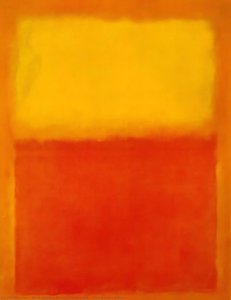 Orange and yellow1956
Essays around Untitled
 The Architecture of Emotion: A Connoisseur’s Guide to the Chromatic Sublimity of Mark RothkoExplore the profound emotional landscapes of Mark Rothko. An expert editorial on Color Field painting, decoding the spiritual depth, techni…
 Color Fields of Calm: Transform Luxury Interiors with Minimalist Masterpiece ReproductionsElevate your luxury interiors with museum-quality Mark Rothko reproductions. Discover how hand-painted Color Field masterpieces bring profo…
 Color & Emotion: The Top 25 Masterpieces by Mark RothkoExplore 25 iconic Mark Rothko masterpieces and the soul of Color Field art. Discover the full collection online at OriginalUniqueArt.com.