Abstract Expressionism · 1945
Untitled (Mark Rothko, 1945)
Mark Rothko (1903–1970) made Untitled. It dates from 1945. It belongs to the Abstract Expressionism movement. It is made in oil on canvas. It measures 74 × 60 cm.
- 1945
- Oil On Canvas
- 74 × 60 cm

 Preview

 Hand Made Oil Painting
 Send
 Share
 Fact sheet


 Download
 Similars
 X-Ray
 Diaporama
 Q&A

 Stats
Untitled, in brief
- Title
- Untitled
- Artist
- Mark Rothko (1903–1970)
- Artist born in
- Daugavpils, Latvia
- Date
- 1945
- Medium
- Oil On Canvas
- Dimensions
- 74 × 60 cm
- Movement
- Abstract Expressionism
- Period
- Modern
- Subject
- abstract, surrealism, figure, mystery, vulnerability, decay
What does Untitled depict?
A Meditation on Color and Form
Completed in 1945, this work belongs to the early period of American Abstract Expressionism. The composition relies on a subdued palette of earthy browns and ochres, interrupted by subtle washes of crimson and violet. Vertical rectangles are stacked horizontally across the canvas, creating a sense of stillness. There is no recognizable subject or narrative; instead, the arrangement of color fields directs attention to the interaction between light and shadow.
The technique utilizes alla prima, applying wet paint onto the canvas in thin layers to avoid visible brushstrokes. This method results in a rough surface where subtle variations in tone emerge through the texture of the pigment. The edges of the rectangular forms appear soft, contributing to an immersive, atmospheric effect that lacks a central focal point.
Historical and Emotional Resonance
The painting emerged in the immediate aftermath of World War II, a period marked by global uncertainty and existential anxiety. The somber tones reflect the heavy atmosphere of the era, mirroring personal and collective experiences of trauma and loss. The artist’s background, shaped by displacement from Latvia, informs this preoccupation with mortality and the search for meaning.
Symbolically, the layered rectangles may represent psychological states or spiritual realms. The tension between the dark masses and the lighter washes suggests the coexistence of opposing forces within the human psyche. By stripping away all representational detail, the work invites a personal, meditative response, prompting reflection on the nature of existence through pure color.
High-resolution images of Untitled
Protected by copyright: these files are for personal reference, not a licence to republish.
Mark Rothko, Untitled (1945).
Questions on Untitled, answered
What is the creation date of "Untitled" by Mark Rothko?
"Untitled" by Mark Rothko was created in 1945.
What technique was used for "Untitled" by Mark Rothko?
The medium of "Untitled" by Mark Rothko is oil on canvas. Reproductions aim to render the appearance of this technique.
What are the dimensions of the original "Untitled" by Mark Rothko?
"Untitled" measures 74 x 60 cm in its original form. Original dimensions are a useful reference when choosing a reproduction size.
What is "Untitled" about?
The themes present in "Untitled" by Mark Rothko include abstract, surrealism, figure, mystery, vulnerability, decay, organic forms, mood. Together they summarize the artwork's subject matter.
Is "Untitled" by Mark Rothko in the public domain?
"Untitled" by Mark Rothko is still protected by copyright. This status governs how the image of the work may be reproduced.
Who created "Untitled"?
"Untitled" is attributed to Mark Rothko.
Which artistic current is "Untitled" by Mark Rothko part of?
"Untitled" is a work of Abstract Expressionism. The movement indicates the artistic tradition the work is part of.
What stage of Mark Rothko's development does "Untitled" represent?
"Untitled" belongs to the Mature Period of Mark Rothko's career. This classification relates the work to the artist's development.
What was Mark Rothko's age when "Untitled" was created?
Mark Rothko made "Untitled" at the age of 42. The artist was born in 1903 and the work is dated 1945.
About the artist, Mark Rothko

1903–1970, Latvia
Mark Rothko
The Early Life of Mark Rothko Mark Rothko was born Markus Yakovlevich Rothkowitz in 1903. He was born in Dvinsk, Russia, in a place now known as Daugavpils, Latvia. His family lived within the Pale of Settlement, a region marked by political unrest and the constant shadow of pogroms. This atmosphere of instability followed the family when they emigrated to the United States in 1913.
Also by Mark Rothko
 White Center1950
 No.1
 No.61 (Rust and Blue)1953
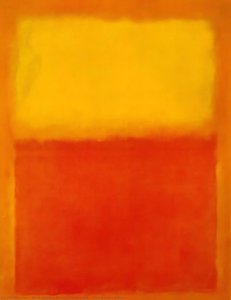 Orange and yellow1956
Essays around Untitled
 The Soul of Color: Exploring the Emotional Depth and Existential Resonance of Mark Rothko's MasterpiecesImmerse yourself in the profound emotional landscapes of Mark Rothko. Explore how his revolutionary Color Field paintings use pure pigment …
 Color Fields of Calm: Transform Luxury Interiors with Minimalist Masterpiece ReproductionsElevate your luxury interiors with museum-quality Mark Rothko reproductions. Discover how hand-painted Color Field masterpieces bring profo…
 Beyond Color: 25 Essential Mark Rothko Paintings That Define Abstract ExpressionismExplore 25 iconic Mark Rothko paintings and his color field legacy. Discover the full collection online at OriginalUniqueArt.com.