Color Field Expressionism
New Forms (Mark Rothko)
Mark Rothko (1903–1970) made New Forms. It belongs to the Color Field Expressionism movement. It is made in oil on canvas.
- Oil On Canvas

 Preview

 Hand Made Oil Painting
 Send
 Share
 Guide


 Download
 Similars
 X-Ray
 Diaporama
 Q&A

 Stats
New Forms: the essentials
- Title
- New Forms
- Artist
- Mark Rothko (1903–1970)
- Artist born in
- Daugavpils, Latvia
- Medium
- Oil On Canvas
- Movement
- Color Field Expressionism
- Period
- Modern
- Subject
- color field, abstraction, emotional depth, geometric form, desert landscape, minimalism
What does New Forms depict?
The Resonance of Color: Unveiling Rothko’s Vision
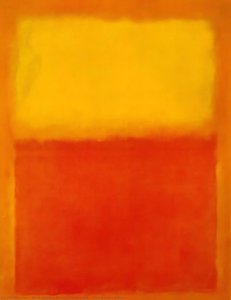
To stand before Mark Rothko’s “New Forms” is to enter a realm where the boundaries between the physical canvas and the human psyche begin to dissolve. As a cornerstone of the Abstract Expressionism movement, this work transcends mere pigment on fabric; it serves as a profound exploration of emotional depth through the revolutionary language of Color Field painting. Rothko, born in Latvia in 1903, carried a lifelong sensitivity to the complexities of human suffering and displacement—themes that found their most eloquent expression not in figures or landscapes, but in the weight and warmth of color itself. In this piece, we witness the artist’s mastery over the subconscious, inviting viewers to bypass visual perception and instead encounter a direct, visceral emotional resonance.
The composition is a masterclass in atmospheric depth and luminous intensity. Eschewing traditional representational subjects, Rothko utilizes expansive, rectangular blocks of color that appear to float within the frame. The palette—often characterized by rich crimsons, vibrant yellows, and glowing oranges—is applied through meticulous layers of thin, translucent washes. This glazing technique allows light to penetrate the surface, creating an internal glow that makes the forms seem to pulse with a life of their and breathe within the space. For the discerning collector or interior designer, this creates a sense of movement and "living" art; the colors do not simply sit upon the surface but seem to emerge from a deep, infinite void, providing a focal point that is both commanding and contemplative.
A Symphony of Emotion and Interior Harmony
Beyond its technical brilliance, “New Forms” functions as a portal to inner landscapes. The way the edges of the color blocks softly bleed into one another creates an illusionistic quality, suggesting a state of constant flux and transition. This lack of rigid borders mirrors the fluidity of human feeling—the way grief can merge with hope, or how tranquility can be interrupted by sudden intensity. The warmth of the yellowish tints against the dramatic red background evokes a sense of a desert-like heat or a sunset that lingers on the edge of memory, making the piece an evocative centerpiece for any sophisticated environment.
For those seeking to integrate fine art into a curated space, a high-quality reproduction of this masterpiece offers more than mere decoration; it offers an atmosphere. Whether placed in a quiet study to foster introspection or in a grand living area to provide a bold, emotive anchor, the painting’s ability to command attention through subtle nuance is unparalleled. It remains a testament to Rothko's enduring legacy—a work that does not just ask to be seen, but demands to be felt, transforming any room into a sanctuary of profound aesthetic and emotional significance.
New Forms in high resolution

Mark Rothko, New Forms.
Questions about New Forms
What does "New Forms" by Mark Rothko bring to an interior?
"New Forms" by Mark Rothko has a dramatic atmosphere and is recommended for a living room. The mood is what the work brings to the space around it.
Where in the home does a reproduction of "New Forms" fit well?
The recommended space for "New Forms" by Mark Rothko is a living room. The suggestion can of course be adapted to your interior.
What is the emotional tone of "New Forms" by Mark Rothko?
The emotional tone recorded for "New Forms" by Mark Rothko is reflective. It summarizes the feeling the work expresses.
How strong are the colors of "New Forms"?
"New Forms" by Mark Rothko is recorded with a vivid color saturation and a vivid intensity.
How is "New Forms" situated historically?
Historically, "New Forms" is a Color Field Expressionism work of the broader Modern era.
Where can I find artworks similar to "New Forms" by Mark Rothko?
Artworks similar to "New Forms" by Mark Rothko are gathered on the artwork's Similars page.
From which country does the Color Field Expressionism work "New Forms" come?
"New Forms" connects the Color Field Expressionism movement with Latvia through its creator's birthplace.
Is a download available for "New Forms"?
The image of "New Forms" by Mark Rothko can be downloaded from the artwork's Download page: a high-resolution digital image download.
What is the format of "New Forms"?
"New Forms" by Mark Rothko is a panoramic composition. The proportions are worth checking before choosing a print size.
About the artist, Mark Rothko

1903–1970, Latvia
Mark Rothko
The Early Life of Mark Rothko Mark Rothko was born Markus Yakovlevich Rothkowitz in 1903. He was born in Dvinsk, Russia, in a place now known as Daugavpils, Latvia. His family lived within the Pale of Settlement, a region marked by political unrest and the constant shadow of pogroms. This atmosphere of instability followed the family when they emigrated to the United States in 1913.
Also by Mark Rothko
 White Center1950
 No.1
 No.61 (Rust and Blue)1953
 Orange and yellow1956
Essays around New Forms
 The Architecture of Emotion: A Connoisseur’s Guide to the Chromatic Sublimity of Mark RothkoExplore the profound emotional landscapes of Mark Rothko. An expert editorial on Color Field painting, decoding the spiritual depth, techni…
 Color & Emotion: The Top 25 Masterpieces by Mark RothkoExplore 25 iconic Mark Rothko masterpieces and the soul of Color Field art. Discover the full collection online at OriginalUniqueArt.com.
 Chromatic Atmospheres: Exploring the Philosophical Foundations of Color Field PaintingExplore the philosophical and aesthetic foundations of Color Field painting with OriginalUniqueArt. Discover key artists like Rothko & Newm…