Preview
 Send
Send Share
Share
 Details

 Download
 Similars
 X-Ray
X-Ray Diaporama
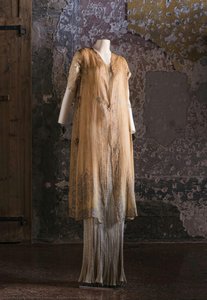
Matrix for printing textiles
 Acrylic On Canvas
- WallArt
- Modernism
 1910
1910 69.0 x 42.0 cm
 Palazzo Fortuny
 Read More
Hand Made Oil Reproduction
Hand-painted oil on canvas in your size and frame, made to order by our artists. ( Buy Print Buy Image)




P118B $10

P118H $10

P118W $10

P438Z $10

P508JH $12

P508YH $12

P805H $10

P805Z $10

P919BZ $10

P919G $10

P919XJ $10

P959ZH $10

P968JZ $12

W106C $8

W218G $10

W218JH $8

W218Y $10

W307PJ $10

W316G $10

W316PJ $8

W316Y $10

W398PJ $8

W4111J $10

W500HY $15

W500JH $15

W692G $12

W849H $8

W940BG $15

W953PJ $8




Pick from our preset sizes that match the artwork's original proportions.

You may enter your own dimensions to fit a specific frame or space. If your selected size does not match the original image's proportions, we will either crop the artwork or extend the painting with additional hand-painted elements. A digital mockup will be sent for your approval before production begins.
Please note that the on-screen preview does not reflect the actual cropping or extension. Only the mockup will accurately show the final composition.
While custom sizes are available, we recommend selecting a dimension from the predefined list to preserve the original proportions.
After order, OriginalUniqueArt.com team will email client for instructions and provide a mockup preview
Worldwide Delivery () in 3/4 weeks instead of standard 5 weeks. (21 August). No compromise on quality.

Free Worldwide Express Shipping

High-Quality Linen Canvas

Full Shipping Insurance

Customs Tax Refund Guarantee

True Color Matching Guarantee

60-Day Return Policy (Defects Only)

100% Money-Back Guarantee

Bulk Discount Offer
 Glass option is only available in size under 110 CM

Matrix for printing textiles
Reproduction Medium
Reproduction Size
-


Total Price
$ 300
Artwork Description
Mariano Fortuny’s Textile Vision: Decoding “Matrix for Printing Textiles”
Mariano Fortuny y Madrazo (1871-1949), a Spanish artist and designer whose influence extended far beyond the realm of fashion, remains an icon of Art Nouveau and early Modernism. His oeuvre is characterized by a masterful blend of artistic innovation and meticulous craftsmanship—a combination perfectly embodied in “Matrix for Printing Textiles,” created in 1910.
This striking monochrome pencil drawing delves into the decorative potential of geometric forms, specifically circles and undulating waves, reflecting Fortuny’s fascination with natural motifs filtered through an aesthetic sensibility rooted in scientific observation. The piece isn't merely a visual pattern; it represents a pivotal moment in textile design history—a testament to Fortuny’s pioneering approach to illumination and his dedication to elevating the craft of printing.
Composition & Technique: A Symphony of Line
- Vertically oriented, the composition prioritizes visual flow from top to bottom, emphasizing the rhythmic repetition of geometric shapes.
- Fortuny’s technique is defined by painstaking pencil drawing—a deliberate choice that allows for exceptional control over line weight and shading density. The extensive use of hatching and cross-hatching contributes significantly to creating tonal variations and simulating texture.
- Detailed observation informs every stroke, resulting in a surface imbued with palpable depth and form – an illusion achieved through layering patterns and manipulating light.
Historical Context & Artistic Influences: Embracing Art Nouveau’s Organic Spirit
“Matrix for Printing Textiles” firmly establishes Fortuny within the broader context of Art Nouveau, a movement that championed organic forms inspired by botanical studies and sought to fuse art and craftsmanship. His groundbreaking work on stage lighting—particularly his invention of the fortuny cyclorama dome—demonstrated an unwavering commitment to pushing artistic boundaries and redefining theatrical presentation.
Fortuny’s meticulous attention to detail reflects a broader intellectual curiosity, mirroring the scientific advancements of the era. He meticulously documented his experiments with reflected light, anticipating developments in illumination technology that would transform the visual experience of audiences worldwide.
Symbolism & Emotional Resonance: Order Amidst Complexity
Beyond its functional purpose as a textile design template, “Matrix for Printing Textiles” speaks to deeper themes of order and precision—values central to Fortuny’s artistic vision. The repetition of circular forms evokes notions of cyclical time and harmonious balance, while the undulating waves symbolize fluidity and dynamism.
Ultimately, this artwork transcends mere decoration; it embodies a celebration of craftsmanship and an aspiration for beauty rooted in scientific understanding. It serves as a poignant reminder of Fortuny’s enduring legacy—a testament to his ability to transform observation into artistic expression and elevate the art of printing to new heights.
Artist Biography
early life and inspiration
mariano fortuny, a spanish fashion designer, was born on may 11, 1871, in granada, spain. his father, mariano fortuny y marsal, was a genre painter who passed away when mariano was just three years old. this event led to the family's move to paris, france, where mariano's mother introduced him to various textiles and fabrics that would later influence his creativity.artistic talents and inventions
mariano fortuny showcased his artistic talents from a young age, demonstrating skills in painting, photography, sculpting, architecture, etching, and theatrical stage lighting. his inventions, including over twenty patented between 1901 and 1934, revolutionized the world of theater design.- he developed the fortuny cyclorama dome, a quarter dome-shaped structure of plaster or cloth, which used indirect lighting to create a seamless transition between scenes.
- his treatise "eclairage scenique" (1904) described his discovery of reflecting light off different surfaces, changing its color, intensity, and properties.
notable contributions and collaborations
mariano fortuny's work gained widespread recognition in the 1920s. he collaborated with notable figures, including:- richard wagner, a german composer, whose operas inspired mariano to paint scenes.
- the famous opera house, la scala of milan, where he installed his dome, adapting it for the larger theater and inventing a suction fan to maintain its taut structure.
legacy and later life
mariano fortuny passed away on may 3, 1949, in venice, italy. his work inspired french novelist marcel proust, and his life was depicted in pere gimferrer's novel "fortuny." mariano's legacy continues to influence the world of theatrical design.- explore more about mariano fortuny's inventions and designs at OriginalUniqueArt's collection.
- discover the impact of his work on theatrical lighting in the museum destroyed by fire (united states), a story of an unfortunate event that shaped american art history, available at OriginalUniqueArt's blog.
selected paintings by mariano fortuny and other artists
- mariano fortuny: teagown (museum of fine arts, boston, united states), available at OriginalUniqueArt's collection.
- marc chagall: study to 'song of songs iv' (naive art / primitivism), available at OriginalUniqueArt's collection.
- pablo picasso: clarinet (analytical cubism, oil on canvas), available at OriginalUniqueArt's collection.
- vincent van gogh: tree roots (50 x 100 cm, post-impressionism, oil on canvas), available at OriginalUniqueArt's collection.

Mariano Fortuny
1871 - 1949 , Spain
Quick Facts
- Artistic Movement Or Style: Orientalism art
- Artists Or Movements Influenced By This Artist: ['Marcel Proust']
- Artists Who Influenced This Artist: ['Richard Wagner']
- Date Of Birth: May 11, 1871
- Date Of Death: May 3, 1949
- Full Name: Mariano Fortuny y Marsal
- Nationality: Spanish
- Notable Artworks:
- Teagown
- Portrait of Henriette Fortuny
- Place Of Birth: Granada, Spain
Related Articles

Mariano Fortuny: A Fusion of Art, Fashion & Design – Exploring a Venetian Innovator's Legacy
Explore the captivating world of Mariano Fortuny – artist, designer & innovator. Discover his revolutionary textiles, iconic Delphos gown, and lasting influence on art, fashion & interiors. A collector's guide to a Venetian master.

Dark Masterpieces: 10 Iconic Paintings Dominated by Black Tones |
Explore 10 iconic paintings dominated by black tones, from Rembrandt’s chiaroscuro to Goya's dark expressions. Discover the stories behind these masterpieces & find museum-quality art reproductions for your home at .
Bold Threads: The Ultimate Trend Forecast for High-Impact Textile Art in Modern Interiors
Level up your space with the texture revolution. Explore our trend forecast on high-impact textile art—from bold geometric patterns to woven narratives. Discover how to move beyond flat canvas and create a high-energy, 3D aesthetic for modern, design-conscious interiors.

The Enduring Appeal of Geometric Patterns in Art: A Historical & Contemporary Exploration
Explore the captivating history of geometric abstraction in art, from ancient roots to contemporary masters. Expert insights for collectors & enthusiasts. Discover key artists, movements & investment potential.

Geometric Abstraction's 10 Defining Masterpieces | Art for Your Home - OriginalUniqueArt
Explore 10 defining masterpieces of Geometric Abstraction! Discover Kandinsky, Mondrian & Malevich’s iconic works. Find museum-quality art reproductions and curated decor ideas to elevate your home at OriginalUniqueArt.com.