Send
Send Share
Share
 Details
 Guide
Guide

 Download
 Similars
 Diaporama
 Q&A
Q&A Stats
StatsDress


 Read More
Giclée / Art Print
Museum-quality giclée or canvas print with fast production and flexible finish options. ( Buy Hand Made Painting Switch to Digital Image)




































Pick from our preset sizes that match the artwork's original proportions.

Type the width and the height you need, to fit your frame or your wall. A print can only be cut, never made bigger than the picture, so a size with a different shape loses a part of the image. We send you a digital mockup to approve before we print anything. The picture shown on this page does not show the real cut — only the mockup does.
Worldwide Delivery () in 2 weeks instead of standard 4/5 weeks. (8 November)

Free Worldwide Express Shipping

High-Quality Linen Canvas

Full Shipping Insurance

Customs Tax Refund Guarantee

True Color Matching Guarantee

100-Day Return Policy (Defects Only)

100% Money-Back Guarantee

Bulk Discount Offer
 Glass option is only available in size under 110 CM

Dress
Giclée / Art Print
Reproduction Size
-


Total Price
$ 81
A Symphony of Texture and Light
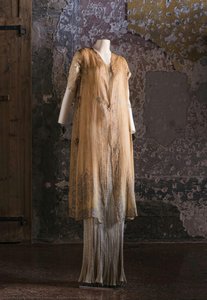
In the quiet, silvered depths of Mariano Fortuny’s 1925 photograph, titled Dress, we encounter a profound study in controlled elegance. This monochrome masterpiece transcends a mere photographic record of fashion; it serves as a portal into an era defined by meticulous craftsmanship and tactile luxury. The image focuses intently on the upper portion of a woman's gown, where the interplay of light and shadow breathes life into the heavy, plush velvet. Through a tight, intimate crop, the viewer is drawn into the very heart of the garment, feeling the weight of the fabric and the delicate precision of its ornamentation.
The composition relies on a sophisticated use of contrast to guide the eye. While the palette is strictly limited to the timeless shades of black, white, and gray, the visual richness is immense. The soft, diffused lighting minimizes harsh shadows, instead creating a gentle tonal range that highlights the raised texture of the intricate embroidery. These delicate stitches form organic, flowing floral patterns that dance across the chest and shoulders, providing a rhythmic counterpoint to the stronger, more defined lines of the draped coat. It is a visual dialogue between the smooth, light-absorbing velvet and the shimmering, structural detail of the threadwork.
The Artistry of an Era
Beyond its immediate aesthetic appeal, Dress captures the essence of 1925 fashion design, reflecting a period where textile artistry and sartorial innovation were inextricably linked. The work showcases Fortuny’s unique ability to manipulate texture and light, much like his revolutionary approach to theatrical lighting. The overlapping layers of the dress and coat create a subtle sense of depth within an otherwise flat perspective, inviting the observer to contemplate the physical construction of the piece. Every element, from the organic curves of the motifs to the verticality of the drapery, speaks to a mastery of form.
For the discerning collector or interior designer, this photograph offers more than just a beautiful image; it provides an atmosphere of timeless sophistication. The monochrome palette ensures that the work remains versatile, capable of anchoring a room with its sense of historical gravity and quiet luxury. To possess a reproduction of such a piece is to invite the spirit of the Jazz Age into a contemporary space—a celebration of craftsmanship, detail, and the enduring allure of fine textile art. It evokes an emotional response of reverence for the skill required to transform simple thread and fabric into a lasting emblem of elegance.
Questions & Answers
Where do the visitors of "Dress" by Mariano Fortuny come from?
The Stats page of "Dress" by Mariano Fortuny presents public visit statistics: monthly visits of this artwork, a comparison with the artist's most viewed works, and where its visitors come from.
From which country does the Orientalist Fashion Design work "Dress" come?
"Dress" connects the Orientalist Fashion Design movement with Spain through its creator's birthplace.
How strong are the colors of "Dress"?
"Dress" by Mariano Fortuny is recorded with a muted saturation and a monochromatic intensity.
Artist Biography
early life and inspiration
mariano fortuny, a spanish fashion designer, was born on may 11, 1871, in granada, spain. his father, mariano fortuny y marsal, was a genre painter who passed away when mariano was just three years old. this event led to the family's move to paris, france, where mariano's mother introduced him to various textiles and fabrics that would later influence his creativity.artistic talents and inventions
mariano fortuny showcased his artistic talents from a young age, demonstrating skills in painting, photography, sculpting, architecture, etching, and theatrical stage lighting. his inventions, including over twenty patented between 1901 and 1934, revolutionized the world of theater design.- he developed the fortuny cyclorama dome, a quarter dome-shaped structure of plaster or cloth, which used indirect lighting to create a seamless transition between scenes.
- his treatise "eclairage scenique" (1904) described his discovery of reflecting light off different surfaces, changing its color, intensity, and properties.
notable contributions and collaborations
mariano fortuny's work gained widespread recognition in the 1920s. he collaborated with notable figures, including:- richard wagner, a german composer, whose operas inspired mariano to paint scenes.
- the famous opera house, la scala of milan, where he installed his dome, adapting it for the larger theater and inventing a suction fan to maintain its taut structure.
legacy and later life
mariano fortuny passed away on may 3, 1949, in venice, italy. his work inspired french novelist marcel proust, and his life was depicted in pere gimferrer's novel "fortuny." mariano's legacy continues to influence the world of theatrical design.- explore more about mariano fortuny's inventions and designs at OriginalUniqueArt's collection.
- discover the impact of his work on theatrical lighting in the museum destroyed by fire (united states), a story of an unfortunate event that shaped american art history, available at OriginalUniqueArt's blog.
selected paintings by mariano fortuny and other artists
- mariano fortuny: teagown (museum of fine arts, boston, united states), available at OriginalUniqueArt's collection.
- marc chagall: study to 'song of songs iv' (naive art / primitivism), available at OriginalUniqueArt's collection.
- pablo picasso: clarinet (analytical cubism, oil on canvas), available at OriginalUniqueArt's collection.
- vincent van gogh: tree roots (50 x 100 cm, post-impressionism, oil on canvas), available at OriginalUniqueArt's collection.

Mariano Fortuny
1871 - 1949 , Spain
Quick Facts
- Full Name: Mariano Fortuny y Marsal
- Nationality: Spanish
- Date Of Birth: 1871
- Date Of Death: 1949
- Place Of Birth: Reus, Spain
- Notable Artworks:
- Teagown
- Portrait of Henriette Fortuny
- Artistic Movement Or Style: Orientalism art
- Artists Who Influenced This Artist: ['Richard Wagner']
- Artists Or Movements Influenced By This Artist: ['Marcel Proust']
Related Articles
Timeless Monochrome: Transform Your Personal Memories into Classic Black & White Fine Art Masterpieces
Elevate your cherished photos into timeless monochrome masterpieces. Our master artists hand-paint exquisite black & white oil reproductions on canvas, capturing the raw essence of light and shadow to create a sophisticated, lasting legacy for your home. Discover bespoke fine art today.
Draped Narratives: Fashion as Symbol & Subject in Historical Art
Explore the fascinating history of fashion as a symbol of power & status in art! Discover masterpieces from Gainsborough to Tissot and learn how clothing shaped societal narratives. Find museum-quality reproductions at OriginalUniqueArt.
Gianfranco Ferré: Deconstructing Haute Couture – A Legacy of Architectural Form
Explore the revolutionary world of Gianfranco Ferré, 'the architect of fashion.' Discover his architectural approach to haute couture, iconic Dior designs, and lasting influence on luxury style. A deep dive for collectors & enthusiasts.
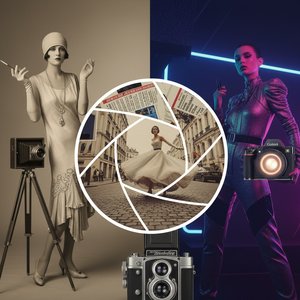
The Lens of Luxury: A Visual Journey Through the Evolution and Artistry of Fashion Photography
Embark on a visual journey through the evolution of fashion photography. Discover how masters like Gianfranco Ferré blended geometry, surrealism, and texture to redefine high-fashion art for collectors and connoisseurs of luxury imagery.

Capturing Elegance: The Timeless Art of Fashion Photography and the Evolution of Visual Narrative
Explore the exquisite evolution of fashion photography, from Pictorialism to cinematic mastery. Discover how light, texture, and narrative transform couture into timeless fine art for the discerning collector.