Menu
Text size

() ·

A painting made for you, by hand

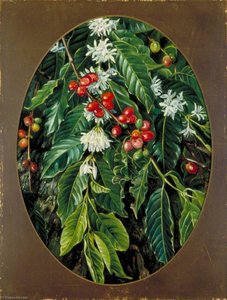
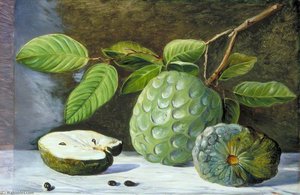
Two Flowering Shrubs of Java

Hand Made Oil Reproduction

Hand-painted oil on canvas in your size and frame, made to order by our artists. ( Switch to Print Switch to Digital Image)

Collectible Description

Victorian botanist Marianne North’s luminous ‘Two Swamp Plants of Java in Flower,’ painted in Naturalism style, captures the vibrant beauty of Indonesian flora with meticulous detail and a playful banana peel element—a captivating glimpse into her adventurous spirit.

Artist Biography

Discover Marianne North (1830-1890), a Victorian explorer & botanical artist who painted exotic flora worldwide. Her gallery at Kew Gardens showcases over 800 vibrant paintings – a testament to her adventurous spirit!

from ·

Chapter 1

How large should it be?

Slide to change the size; the picture on the left shows the frame at its real width. The proportions of the original are kept.

Standard
custom
CM
INCH

Pick from our preset sizes that match the artwork's original proportions.

width
height

Type the width and the height you need, to fit your frame or your wall. This is hand-painted, so for a size with a different shape the artist can paint a bit more around the picture, or cut a bit — you choose. We send you a digital mockup to approve before the painting starts. The picture shown on this page does not show the real result — only the mockup does.

Chapter 2

How should it arrive?

Choose the edges of the stretched canvas

Choose your frame

Corner sample of the WhiteWrap canvas edge finish, stretched on solid wood bars
White $1
Corner sample of the BlurSideWrap canvas edge finish, stretched on solid wood bars
Blurside $1
Corner sample of the ExtendedWrap canvas edge finish, stretched on solid wood bars
Extended $1
Corner sample of the P118B picture frame: moulded polystyrene, 5 cm wide and 3 cm thick
P118B $10
Corner sample of the P118H picture frame: moulded polystyrene, 5 cm wide and 3 cm thick
P118H $10
Corner sample of the P118W picture frame: moulded polystyrene, 5 cm wide and 3 cm thick
P118W $10
Corner sample of the P438Z picture frame: moulded polystyrene, 5.5 cm wide and 3.5 cm thick
P438Z $10
Corner sample of the P508JH picture frame: moulded polystyrene, 7 cm wide and 3.5 cm thick
P508JH $12
Corner sample of the P508YH picture frame: moulded polystyrene, 7 cm wide and 3.5 cm thick
P508YH $12
Corner sample of the P805H picture frame: moulded polystyrene, 5 cm wide and 3.5 cm thick
P805H $10
Corner sample of the P805Z picture frame: moulded polystyrene, 5 cm wide and 3.5 cm thick
P805Z $10
Corner sample of the P919BZ picture frame: moulded polystyrene, 7 cm wide and 3.5 cm thick
P919BZ $10
Corner sample of the P919G picture frame: moulded polystyrene, 7 cm wide and 3.5 cm thick
P919G $10
Corner sample of the P919XJ picture frame: moulded polystyrene, 7 cm wide and 3.5 cm thick
P919XJ $10
Corner sample of the P959ZH picture frame: moulded polystyrene, 5 cm wide and 3 cm thick
P959ZH $10
Corner sample of the P968JZ picture frame: moulded polystyrene, 6 cm wide and 4 cm thick
P968JZ $12
Corner sample of the W106C picture frame: solid wood, 5 cm wide and 3 cm thick
W106C $8
Corner sample of the W218G picture frame: solid wood, 5 cm wide and 3 cm thick
W218G $10
Corner sample of the W218JH picture frame: solid wood, 5 cm wide and 3 cm thick
W218JH $8
Corner sample of the W218Y picture frame: solid wood, 5 cm wide and 3 cm thick
W218Y $10
Corner sample of the W307PJ picture frame: solid wood, 6 cm wide and 3 cm thick
W307PJ $10
Corner sample of the W316G picture frame: solid wood, 6 cm wide and 3 cm thick
W316G $10
Corner sample of the W316PJ picture frame: solid wood, 6 cm wide and 3 cm thick
W316PJ $8
Corner sample of the W316Y picture frame: solid wood, 6 cm wide and 3 cm thick
W316Y $10
Corner sample of the W398PJ picture frame: solid wood, 5 cm wide and 3 cm thick
W398PJ $8
Corner sample of the W4111J picture frame: solid wood, 6.5 cm wide and 3.5 cm thick
W4111J $10
Corner sample of the W500HY picture frame: solid wood, 7 cm wide and 5 cm thick
W500HY $15
Corner sample of the W500JH picture frame: solid wood, 7 cm wide and 5 cm thick
W500JH $15
Corner sample of the W692G picture frame: solid wood, 8 cm wide and 4 cm thick
W692G $12
Corner sample of the W849H picture frame: solid wood, 5 cm wide and 3 cm thick
W849H $8
Corner sample of the W940BG picture frame: solid wood, 7.5 cm wide and 4.5 cm thick
W940BG $15
Corner sample of the W953PJ picture frame: solid wood, 6 cm wide and 3.5 cm thick
W953PJ $8
Corner sample of the H24-GOLD picture frame: carved wood with gesso, 10 cm wide and 6 cm thick
H24-GOLD $30
Corner sample of the H24-SILVER picture frame: carved wood with gesso, 10 cm wide and 6 cm thick
H24-SILVER $30
Corner sample of the H36-GOLD picture frame: carved wood with gesso, 15 cm wide and 6.5 cm thick
H36-GOLD $45
Corner sample of the H36-SILVER picture frame: carved wood with gesso, 15 cm wide and 6.5 cm thick
H36-SILVER $45
Frame preview
Framed

Moulding: . Overall size with the frame: .

Chapter 3

Who paints it, and should anything change?

Examples of what can be changed: Replace face with customer photo; Add pet (e.g., replace cat with dog); Include hidden message in background; Change background landscape or elements.
After order, OriginalUniqueArt.com team will email client for instructions and provide a mockup preview

Worldwide Delivery () in 3/4 weeks instead of standard 5 weeks. (30 October). No compromise on quality.

Chapter 4

The finishing touches

A nameplate, as in a museum?

Engraved Bronze Plaque Details

This elegant plaque features the artist's name and the title of the artwork, finely engraved for a timeless presentation.

It is made from bronze with a refined, elegant finish. The text is precisely laser-engraved for a sharp and permanent result. Measuring 9x2 cm, the plaque is compact yet easy to read. It's built to be durable and scratch-resistant, offering a professional, museum-quality look. Mounting is simple thanks to the included adhesive backing.

Transparent Acrylic Plaque Details

The plaque includes essential engraved details such as the artist's name, the title of the artwork, the date it was created, the type of media used-like oil on canvas or watercolor-a brief description of the piece, and a QR code that links to the complete artwork information.

It is crafted from clear acrylic, offering a sleek, modern appearance. The text is UV-engraved in black to ensure strong visual contrast. With a size of 10x15 cm, it ensures optimal readability. It comes equipped with two metal hooks for secure wall mounting. The plaque is designed to be weather-resistant, making it suitable for various environments, and it includes interactive features that work seamlessly with smartphone scanning.

Black Acrylic Plaque Details

This elegant plaque includes engraved information such as the artist's name, the title of the artwork, the date it was created, the type of media used (like oil on canvas or watercolor), a short description of the artwork, and a QR code for quick access to more information.

The plaque itself is made from refined black acrylic with a premium finish. The text is laser-engraved in white for high contrast and readability. Its size is 10x15 cm, designed to be easy to read. It comes with two metal hooks for professional mounting. The design is sleek and fits any interior style. It is also weather-resistant and durable, with built-in digital integration for mobile compatibility.

A protective varnish?

When do you need it?

Chapter 5

Your painting, as you ordered it

Two Flowering Shrubs of Java

Reproduction Medium

Reproduction Size

-

Elite Senior Artist

More detail, finesse, and extra production time

-

Reproduction Frame

-

-

For artworks or reproductions larger than 105 cm (approximately 41 inches) on any side, the frame will be shipped as a kit, disassembled. This method ensures safe delivery and prevents damage during transport.

Professional assembly required - this is not a DIY product.
The kit must be assembled and the canvas stretched by an experienced professional framer, using wood glue (not supplied), a canvas stretching plier and clamps to hold the bars square while the glue dries. Incorrect assembly or uneven canvas tension can permanently damage the artwork and is not covered by our warranty.

  • All solid wood bars are included, precisely cut to size.

  • Assembled with the screws provided, plus wood glue for the corner joints, which is not supplied and must be sourced by your framer.

  • Professional tools are required and not included: a canvas stretching plier (tensioner) and clamps to hold the bars square while the glue dries.

Important:
The corner joints require wood glue, the bars must be held with clamps until the glue is fully dry, and tightening the canvas on the assembled frame requires a canvas stretching plier. None of these are included in the kit. Please arrange an experienced professional framer before ordering this size.

Nameplate

-

-

Protective Varnish

Glossy Varnish (enhances colors, protects against light/moisture)

-

Customize My Artwork

Examples of what can be changed: Replace face with customer photo; Add pet (e.g., replace cat with dog); Include hidden message in background; Change background landscape or elements.

-

Urgent

Worldwide Delivery () in 3/4 weeks instead of standard 5 weeks. (30 October). No compromise on quality.

-

Express Shipping

Worldwide Delivery () in 5 weeks. (6 November).

Included

Total Price

$ 300

Total Price $ 300

Glass option is only available in size under 110 CM

Included with every order

  • Free Worldwide Express Shipping
  • High-Quality Linen Canvas
  • Full Shipping Insurance
  • Customs Tax Refund Guarantee
  • True Color Matching Guarantee
  • 100-Day Return Policy (Defects Only)
  • 100% Money-Back Guarantee
  • Bulk Discount Offer

Marianne North: A Victorian Pioneer of Botanical Art

Marianne North (1830-1890) wasn’t merely an artist; she was a fearless explorer, driven by an unwavering passion for documenting the natural world with breathtaking precision. Born into privilege in Hastings, England, her early life seemed destined for musical pursuits—a path gently redirected by illness towards the delicate art of flower painting—a transformative decision that cemented her legacy as one of Britain’s foremost botanical artists and propelled her onto a remarkable journey across continents. Her story resonates with resilience, independence, and an unparalleled connection to flora, representing a defiant rejection of societal constraints and embodying the spirit of scientific curiosity blended seamlessly with artistic vision.
  • Early Life & Education: Despite facing health challenges that curtailed musical aspirations, North’s innate fascination with botany blossomed under the influence of her father, Frederic North—a Liberal M.P. and Norfolk Deputy Lieutenant—who fostered her interest in scientific observation. This formative period instilled a deep appreciation for meticulous detail and fueled her lifelong dedication to capturing the beauty of plant life.
  • The Adventurous Spirit: Following her mother’s passing in 1855, North embarked on an extraordinary expedition alongside her father, traversing Europe and immersing herself in diverse landscapes. These formative travels honed her artistic skills and solidified her conviction that art could serve as a powerful tool for scientific understanding—a belief that would guide her subsequent explorations.
  • A Global Pursuit of Beauty: Driven by Frederic Edwin Church’s encouragement, North undertook expeditions to Australia and New Zealand in 1880, meticulously documenting the flora of these regions with unparalleled artistry. Her unwavering commitment to capturing the essence of nature extended beyond mere visual representation; it encompassed a profound desire to elevate scientific knowledge through evocative artistic expression.
  • The Kew Gallery: Recognizing the importance of preserving her extraordinary collection of paintings—over 800 oil on cardboard depictions of exotic plants—North generously offered them to the Royal Botanic Gardens, Kew, establishing a gallery that stands as a testament to her visionary philanthropy and enduring contribution to botanical art.
  • A Lasting Impression: Marianne North’s artistic output continues to inspire collectors and interior designers alike. Her paintings embody not only technical mastery but also an emotional resonance—a celebration of the sublime beauty of the natural world and a poignant reminder of Victorian scientific exploration at its finest.

Style & Technique: Naturalism Embodied

North’s artistic style – Naturalism – distinguishes her work from Impressionistic counterparts, prioritizing accuracy and detail over fleeting impressions of light and color. She meticulously studied plant specimens under magnification, painstakingly recreating their forms and textures with remarkable precision using oil paints on cardboard. This technique demanded patience, observation, and a profound understanding of botanical anatomy—qualities that underpinned North’s ability to produce images that transcend mere decoration, conveying the very essence of each plant she depicted. Her canvases glow with vibrant hues derived from pigments painstakingly extracted from natural sources, reflecting her unwavering commitment to scientific integrity alongside artistic excellence.

Symbolism & Emotional Impact: Capturing the Soul of Flora

Beyond technical prowess, North’s paintings resonate deeply with emotional significance. Each depiction serves as a conduit for conveying awe and wonder at the grandeur of botanical diversity—a celebration of life's intricate beauty and interconnectedness. Her canvases evoke feelings of tranquility, contemplation, and reverence for the natural world, mirroring her own profound connection to flora and reflecting the Victorian ethos of scientific inquiry tempered by spiritual appreciation. The resulting images are not simply representations of plants; they are embodiments of their spirit—a testament to North’s artistic vision and its enduring power to inspire viewers.

Historical Context: A Victorian Visionary

Marianne North's work emerged during the Victorian era, a period characterized by fervent scientific exploration and burgeoning interest in botany. Influenced by luminaries like Charles Darwin and Frederic Edwin Church, she embraced Naturalism as her artistic medium—a stylistic choice that aligned perfectly with the prevailing intellectual currents of the time. Her gallery at Kew Gardens stands as an enduring symbol of this era’s commitment to preserving botanical knowledge through artistic representation—a legacy that continues to captivate audiences worldwide.

Questions & Answers

What are the reproduction rights of "Two Flowering Shrubs of Java" at the Marianne North Gallery?

The copyright status of "Two Flowering Shrubs of Java" by Marianne North is clear: the work is in the public domain - its copyright has expired. Its presence at the Marianne North Gallery does not change that status.

How can "Two Flowering Shrubs of Java" by Marianne North be used in home decor?

Use (accent) and space (living room) are the two recommendations recorded for "Two Flowering Shrubs of Java" by Marianne North.

Who is the artist behind "Two Flowering Shrubs of Java"?

"Two Flowering Shrubs of Java" is attributed to Marianne North.

More about this painting

Preview AR preview Switch to Print Switch to Digital Image Send
Details Guide Add to favorites Download Similars X-Ray Diaporama Q&A Stats

In numbers

  • 1876the year it was painted
  • 29frames to choose from
  • standard sizes, in its own proportions
  • 5weeks to paint and deliver it
Marianne North

Marianne North

1830 - 1890, United Kingdom

Quick facts about Marianne North

  • Full Name: Marianne North
  • Nationality: British
  • Date Of Birth: 1830
  • Date Of Death: 1890
  • Place Of Birth: Hastings, United Kingdom
  • Notable Artworks:
    • Tegoro, Sarawak
    • On the Way from Tibet
    • Lake of Ajmere
    • Foliage, Flowers and Fruit
  • Artistic Movement Or Style: Victorian naturalism
  • Artists Who Influenced This Artist: ['Joseph Dalton Hooker']

Artist Biography

A Victorian Adventurer in Bloom

Marianne North was a spirit unbound, a woman who traded the expected comforts of Victorian domesticity for a life of intrepid exploration and artistic dedication. Born in 1830 into a privileged family in Hastings, England, her early path seemed destined for musical pursuits. However, failing health gently redirected her passions toward the delicate art of flower painting—a shift that proved not merely a consolation, but the genesis of an extraordinary existence lived entirely on her own terms. While many women of her era were confined to drawing rooms and societal expectations, North embarked upon a remarkable journey that would carry her across continents, transforming her into both a celebrated artist and a self-taught botanist. Her story is one of resilience, independence, and a profound connection with the natural world—a testament to a spirit unburdened by convention.

From Botanical Observation to Global Expedition

The years following her mother’s death in 1855 were formative ones, filled with extensive travel throughout Europe alongside her father. These journeys honed her observational skills and cultivated a keen eye for landscape, instilling within her a wanderlust that would soon blossom into something far more ambitious. After her father's passing in 1869, North resolved to dedicate herself fully to painting the flora of distant lands—a decision that marked a pivotal moment in her life. This wasn’t simply about capturing beauty; it was an act of scientific documentation, driven by a desire to record the botanical diversity of a world rapidly changing under the influence of colonialism and industrialization. Beginning in 1871, North embarked on a series of expeditions spanning nearly fifteen years, venturing into regions as diverse as Canada, Jamaica, Brazil, Japan, Borneo, India, Australia, and New Zealand. She traveled not with scientific teams or official patronage, but funded her adventures herself, relying on her family fortune and an unwavering determination to pursue her artistic vision. Her method was meticulous: she would immerse herself in each environment, carefully observing and sketching the plants before translating them onto canvas with remarkable accuracy and vibrant color. She wasn’t merely a visitor; she became a part of the landscapes she depicted, absorbing their essence and conveying it through her art. The sheer scale of her travels, undertaken independently by a woman during an era that severely restricted female autonomy, is itself a testament to North's exceptional character.

A Unique Artistic Style & Legacy at Kew

North’s artistic style is immediately recognizable for its detailed realism and luminous palette. Working primarily in oils—an unusual choice for botanical illustration at the time—she achieved a depth of color and texture that brought her subjects to life. Her paintings aren't sterile scientific renderings; they are imbued with a sense of atmosphere and place, capturing not just the form of the plants but also their environment and the feeling of being immersed within it. She wasn’t formally trained in any particular art movement, yet her work reflects elements of Victorian naturalism and a commitment to accurate representation. Perhaps her most enduring legacy is the gallery dedicated to her work at Kew Gardens in London. Recognizing the significance of her collection—over 800 paintings documenting plants from around the globe—North generously gifted them to the Royal Botanic Gardens in 1882, along with funds for a purpose-built exhibition space. The Marianne North Gallery, opened that same year, remains the only permanent solo exhibition by a female artist at Kew and continues to inspire visitors today. It stands as a powerful symbol of her artistic achievement and her commitment to sharing her discoveries with the world—a vibrant testament to a life lived in pursuit of beauty and knowledge. Paintings like ‘Tegoro, Sarawak’ exemplify this, transporting viewers to lush rainforests teeming with life, while works such as ‘On the Way from Tibet near Nagkunda, North India’ capture the dramatic grandeur of Himalayan landscapes.

Challenging Conventions & Enduring Influence

Marianne North was more than just an artist; she was a pioneer who challenged societal norms and expanded the boundaries of what was considered acceptable for women in Victorian society. Her independent travels, professional career, and dedication to scientific observation were all remarkable achievements for her time. She defied expectations by refusing marriage and choosing instead to forge her own path, driven by intellectual curiosity and artistic passion. Her paintings serve as invaluable historical records, documenting plant life at a crucial moment in history—a period of rapid environmental change and colonial expansion. They offer insights into the botanical landscapes of the 19th century and provide a visual record of species that may now be endangered or extinct. The restoration of the Marianne North Gallery in 2008 underscored her enduring legacy, reaffirming her place as a significant figure in both art history and botanical science. Her story continues to resonate today, inspiring artists, scientists, and adventurers alike to pursue their passions with courage and conviction—a true testament to the power of an independent spirit and a lifelong love of the natural world. She proved that a woman could be both a scholar and an explorer, a scientist and an artist, all while remaining fiercely independent. Her work continues to remind us of the importance of observation, documentation, and the preservation of our planet’s incredible biodiversity.

Notable Works

  • Foliage, Flowers and Fruit of the Cashew, Tanjore, India: A vibrant depiction showcasing the intricate details of this tropical plant.
  • Elephants, Exotic Fish, and Leaf Insect: Demonstrates North’s ability to capture not only flora but also fauna within their natural habitat.
  • Tegoro, Sarawak: A lush rainforest scene that exemplifies her detailed realism and atmospheric beauty.
  • On the Way from Tibet near Nagkunda, North India: Captures the dramatic Himalayan landscapes with romantic realism.
  • Lake of Ajmere, North West India: A watercolor landscape showcasing Indian mountains and a serene sunset.

These works, along with hundreds more, stand as enduring monuments to her artistic skill and unwavering dedication—a legacy that continues to bloom at Kew Gardens and inspire generations.

Quick Facts

  • Title: Two Flowering Shrubs of Java
  • Influences: Victorian Era
  • Location: Kew Gardens
  • Year: 1876
  • Artist: Marianne North
  • Subject or theme: Floral painting; Botanical study

Art Quiz

There is only one correct answer for each question.

Question 1:
What is the artist’s name?
Question 2:
In what year was this artwork created?
Question 3:
What artistic style is Marianne North’s painting characterized by?
Question 4:
Where was this artwork created?
Question 5:
What is a notable detail included in the painting’s foreground?