Preview
 Send
Send Share
Share
 Details
 Guide
Guide

 Download
 Similars
 X-Ray
X-Ray Diaporama
 Stats
StatsSt Stephen
 Acrylic On Canvas
- WallArt
- Renaissance/Baroque
 67.0 x 50.0 cm
 Museo del Prado
 Read More
Hand Made Oil Reproduction
Hand-painted oil on canvas in your size and frame, made to order by our artists. ( Switch to Print Switch to Digital Image)




P118B $10

P118H $10

P118W $10

P438Z $10

P508JH $12

P508YH $12

P805H $10

P805Z $10

P919BZ $10

P919G $10

P919XJ $10

P959ZH $10

P968JZ $12

W106C $8

W218G $10

W218JH $8

W218Y $10

W307PJ $10

W316G $10

W316PJ $8

W316Y $10

W398PJ $8

W4111J $10

W500HY $15

W500JH $15

W692G $12

W849H $8

W940BG $15

W953PJ $8




Pick from our preset sizes that match the artwork's original proportions.

Type the width and the height you need, to fit your frame or your wall. This is hand-painted, so for a size with a different shape the artist can paint a bit more around the picture, or cut a bit — you choose. We send you a digital mockup to approve before the painting starts. The picture shown on this page does not show the real result — only the mockup does.
After order, OriginalUniqueArt.com team will email client for instructions and provide a mockup preview
Worldwide Delivery () in 3/4 weeks instead of standard 5 weeks. (25 October). No compromise on quality.

Free Worldwide Express Shipping

High-Quality Linen Canvas

Full Shipping Insurance

Customs Tax Refund Guarantee

True Color Matching Guarantee

100-Day Return Policy (Defects Only)

100% Money-Back Guarantee

Bulk Discount Offer
 Glass option is only available in size under 110 CM

St Stephen
Reproduction Medium
Reproduction Size
-


Total Price
$ 300
The Silent Witness: Luis de Morales’s St Stephen
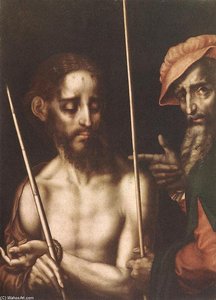
Luis de Morales's "St Stephen" isn’t merely a painting; it’s a profound distillation of faith, sorrow, and the quiet dignity of martyrdom. Executed in the late 16th century during a period of fervent religious fervor in Badajoz, Spain, this work stands as a testament to the artist’s extraordinary ability to imbue biblical scenes with palpable emotion and anatomical realism—a hallmark of his distinctive style. The painting depicts St Stephen, the first Christian martyr, not in grand, triumphant pose, but rather in a moment of contemplative stillness, a figure rendered with an almost unnerving intimacy that draws the viewer into his inner world.
Morales’s artistic lineage is deeply rooted in the traditions of Spanish religious art, yet he transcends mere imitation. He masterfully blends elements of the Renaissance and Baroque, employing a meticulous attention to detail reminiscent of Flemish painting—particularly evident in the rendering of St Stephen's skin, which exhibits a remarkable sensitivity to light and shadow – pores, wrinkles, and subtle variations in tone that suggest both age and suffering. The composition is deliberately restrained, focusing entirely on the figure of the saint, set against a subtly rendered landscape that hints at the desolate terrain where he met his tragic end.
A Study in Light and Shadow: Technique and Materials
The painting’s power resides significantly in Morales's masterful manipulation of light. He utilizes *chiaroscuro*—the dramatic contrast between light and dark—to sculpt St Stephen’s form, emphasizing his vulnerability and the weight of his impending fate. The muted palette – dominated by earthy browns, ochres, and subtle blues – contributes to a sense of solemnity and gravity. The artist employed oil on panel, a technique favored for its ability to achieve rich colors and nuanced textures. Close examination reveals an incredibly detailed surface, achieved through countless layers of thin glazes—a painstaking process that speaks volumes about Morales’s dedication to his craft.
Notably, the painting's execution suggests a deep understanding of human anatomy, a skill honed through years of observation and study. The pose is naturalistic, conveying a sense of quiet resignation rather than dramatic anguish. The artist doesn’t shy away from depicting the physical realities of martyrdom – the bald head, the weathered face, the simple garment—transforming a biblical narrative into a deeply human experience.
Symbolism and Spiritual Resonance
Beyond its technical brilliance, “St Stephen” is rich in symbolic meaning. The saint’s posture, with his hand resting gently on his chest, evokes the image of Christ's sacrifice. The presence of the three stones—a direct reference to his brutal execution—underscores the painting’s central theme: unwavering faith in the face of persecution. The rocky landscape, sparsely populated and bathed in a melancholic light, serves as a potent metaphor for the desolate spiritual journey undertaken by those who choose to follow Christ.
Furthermore, St Stephen's baldness is not merely a detail of representation; it’s a deliberate allusion to his role as a deacon, signifying his service and humility. The painting invites contemplation on themes of sacrifice, faith, and the enduring power of spiritual conviction—themes that resonated deeply with viewers during Morales’s time and continue to hold profound significance today.
A Legacy of Devotion: Reproduction and Artistic Value
Reproductions of “St Stephen” offer a remarkable opportunity to experience the depth and emotional resonance of this extraordinary work. The meticulous detail, combined with Morales's masterful use of light and shadow, ensures that these reproductions capture the essence of the original painting—a testament to the artist’s skill and vision. Whether displayed in a private residence or a public space, this image serves as a powerful reminder of the enduring legacy of Spanish religious art and the timeless themes it explores.
Consider commissioning a hand-painted reproduction from OriginalUniqueArt.com – an authentic recreation that honors Morales’s artistic legacy while bringing his profound vision into your home or studio. It's more than just a picture; it’s a window into the soul of a master artist and a celebration of faith, sacrifice, and the enduring power of human spirit.
Questions & Answers
How does "St Stephen" fit into Luis de Morales's themes and style?
Within Luis de Morales's output, "St Stephen" sits in the Renaissance/Baroque style, alongside the themes of religious devotion, renaissance realism, spanish piety, morales’ style, martyrdom, biblical narrative”, “devotional imagery, spiritual focus”.
Who is the author of "St Stephen", and in which movement?
Behind "St Stephen" stand Luis de Morales and the Renaissance/Baroque movement.
How is "St Stephen" by Luis de Morales proportioned, and how big is it?
The format of "St Stephen" is portrait, and the original measures 67 x 50 cm. Both are useful when planning a reproduction.
Artist Biography
Luis de Morales: The Divine Painter of Badajoz
Luis de Morales (c. 1509 – May 9, 1586), affectionately known as “El Divino,” stands as one of the most revered figures in Spanish Renaissance art—a painter whose profound spirituality and astonishing realism captivated audiences throughout his lifetime and continue to inspire admiration centuries later. Born in Badajoz, Extremadura, Morales’s artistic journey unfolded against a backdrop of burgeoning humanist ideals and religious fervor, shaping him into an unparalleled master of devotional imagery and cementing his legacy as the quintessential artist of his era.- Early Life & Influences: Little is known definitively about Morales's formative years beyond documented records indicating he was born in Badajoz around 1509. His artistic training likely commenced under the tutelage of Hernando Sturmio, a Flemish painter who had established himself in Badajoz, and possibly Pedro de Campaña, a prominent artist based in Seville—locations renowned for their vibrant artistic traditions during the Renaissance.
- The Lombard School & Florentine Echoes: Morales’s early works bear unmistakable marks of the Lombard school of Leonardo da Vinci – characterized by subtle sfumato (blurred outlines) and atmospheric perspective. Simultaneously, he absorbed influences from Michelangelo, whose monumental sculptures instilled in him a masterful understanding of anatomy and expressive gesture. These formative experiences profoundly impacted his artistic sensibilities.
A Period Defined by Anatomical Precision & Spiritual Depth
Morales’s artistic output can be broadly divided into two distinct periods, reflecting evolving stylistic trends and intellectual currents. The first phase, spanning roughly from 1539 to 1560, witnessed a continued engagement with Florentine aesthetics—particularly Michelangelo’s anatomical rigor—resulting in paintings imbued with palpable emotion and dramatic tension. Works such as *La Virgen del Pajarito* exemplify this early style, showcasing meticulous detail and conveying profound spiritual contemplation.- The Second Flowering: Following his marriage to Leonor de Chaves and subsequent relocation to Alcántara, Morales experienced a remarkable artistic renaissance. This period saw him produce masterpieces that pushed the boundaries of Renaissance technique—particularly in terms of anatomical accuracy—drawing inspiration from German and Flemish painters who championed chiaroscuro (contrast between light and dark) and meticulous observation of nature.
- Notable Achievements: Among his most celebrated paintings are *La Piedad* (1560), housed in Badajoz Cathedral, a breathtaking depiction of Mary mourning the death of Jesus—a testament to Morales’s unparalleled skill in conveying sorrowful emotion; *San Juan de Ribera* (1564), residing in Madrid's Prado Museum; and *Ecce Homo*, displayed at the Hispanic Society of America. These works stand as enduring symbols of Renaissance piety and artistic excellence.
Legacy & Recognition
Luis de Morales’s influence extended far beyond his own lifetime, establishing him as a cornerstone of Spanish Renaissance art and securing his place among the greatest painters of his generation. His unwavering devotion to religious themes—expressed with breathtaking realism and imbued with palpable emotion—resonated deeply with audiences across Europe. Today, his paintings are housed in prestigious institutions worldwide—including the Prado Museum in Madrid and Kingston Lacy House in Dorset—attesting to their enduring artistic merit and historical significance. Morales’s legacy continues to inspire artists and scholars alike, ensuring that “El Divino” remains a beacon of spiritual artistry for generations to come.Selected Works
- *La Virgen del Pajarito*(*Virgin of the Bird*) (1546), kept in the church of San Agustín, in Madrid.
- *La Piedad*() (1560), kept in Badajoz Cathedral.
- *San Juan de Ribera*(1564), in the Prado Museum, Madrid.
- *Ecce Homo*, at Kingston Lacy House (National Trust), Dorset U.K.
- *Virgen de la leche*(*Breastfeeding Virgin*), in the Prado Museum.
- *St. Jerome in the Wilderness*, in the National Gallery of Ireland, Dublin.

Luis de Morales
1509 - 1586 , Spain
Quick Facts
- Artistic Movement Or Style: Mannerism
- Artists Or Movements Influenced By This Artist: ['Michelangelo']
- Artists Who Influenced This Artist:
- Raphael Sanzio
- Leonardo da Vinci
- Date Of Birth: 1509
- Date Of Death: 1586
- Full Name: Luis de Morales
- Nationality: Spanish
- Notable Artworks:
- La Virgen del Pajarito
- La Piedad
- San Juan de Ribera
- Ecce Homo
- Place Of Birth: Badajoz, Spain
Related Articles
Hieronymus Bosch's Masterpieces: 25 Visions of Art & Morality | OriginalUniqueArt
Delve into the enigmatic world of Hieronymus Bosch! Explore 25 iconic paintings – from 'The Garden of Earthly Delusions' to his haunting triptychs. Discover the symbolism, history & artistry behind these Renaissance masterpieces. Find museum-quality art reproductions at OriginalUniqueArt.com.

Goya's Masterpieces: Explore 25 Iconic Paintings & Art Prints | OriginalUniqueArt
Delve into the world of Francisco Goya with OriginalUniqueArt. Explore 25 iconic paintings – from 'The Third of May' to his haunting Black Paintings. Discover the stories, techniques & emotions behind these Spanish masterpieces. Find museum-quality art reproductions for your home at OriginalUniqueArt.com!

About Us
Discover our story! We bring world-class art into your life through expert curation, personalized creations, and free previews. Trusted by individuals and businesses since 2000.

Oil on Canvas: A Historical & Technical Exploration of a Timeless Artistic Medium
Explore the rich history & enduring techniques of oil painting on canvas. Discover the science behind its longevity, conservation practices, and contemporary relevance. Expert insights for art enthusiasts.

El Greco's Masterpieces: Explore 25 Iconic Paintings & Spiritual Visions | OriginalUniqueArt
Journey through El Greco's 25 most iconic paintings! Explore the spiritual depth & dramatic beauty of this Spanish Renaissance master. Discover art history, techniques & find museum-quality reproductions for your home at OriginalUniqueArt.com.