- Home

- Print on canvas
- luigi prinotto
- Scrivania

 Preview
 Buy Painting
 Send
Send Share
Share
 Details

 Download
 Similars
 X-Ray
X-Ray Diaporama
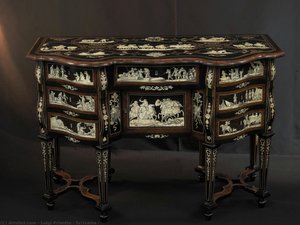
Scrivania
 Acrylic On Canvas
- WallArt
- Baroque Style
 1730
1730 131.0 x 83.0 cm
 Royal Palace of Venaria
 Read More
Giclée / Art Print
Museum-quality giclée or canvas print with fast production and flexible finish options.




P118B $10

P118H $10

P118W $10

P438Z $10

P508JH $12

P508YH $12

P805H $10

P805Z $10

P919BZ $10

P919G $10

P919XJ $10

P959ZH $10

P968JZ $12

W106C $8

W218G $10

W218JH $8

W218Y $10

W307PJ $10

W316G $10

W316PJ $8

W316Y $10

W398PJ $8

W4111J $10

W500HY $15

W500JH $15

W692G $12

W849H $8

W940BG $15

W953PJ $8




Pick from our preset sizes that match the artwork's original proportions.

You may enter your own dimensions to fit a specific frame or space. If your selected size does not match the original image's proportions, we will either crop the artwork or extend the image with a mirrored or solid-fill edge. A digital mockup will be sent for your approval before production begins.
Please note that the on-screen preview does not reflect the actual cropping or extension. Only the mockup will accurately show the final composition.
While custom sizes are available, we recommend selecting a dimension from the predefined list to preserve the original proportions.
Worldwide Delivery () in 2 weeks instead of standard 4/5 weeks. (26 July)

Free Worldwide Express Shipping

High-Quality Linen Canvas

Full Shipping Insurance

Customs Tax Refund Guarantee

True Color Matching Guarantee

60-Day Return Policy (Defects Only)

100% Money-Back Guarantee

Bulk Discount Offer
 Glass option is only available in size under 110 CM

Scrivania
Giclée / Art Print
Reproduction Size
-


Total Price
-
Collectible Description
A Window into Turin’s Baroque Soul: Luigi Prinotto's “Scrivania”
The painting "Scrivania" by Luigi Prinotto, completed in 1730, transcends mere depiction; it embodies the spirit of Turin during its golden age – a testament to artistic patronage and an exploration of humanist ideals intertwined with religious devotion. Measuring 131 x 83 cm, this artwork offers a glimpse into a domestic scene brimming with activity and intellectual curiosity, skillfully rendered in the luminous style characteristic of Baroque painting.The Painter’s Journey: From Mannerism to Roman Influence
Luigi Prinotto's artistic development began under the tutelage of Simon Vouet, mastering the techniques of Mannerist painters like Correggio and Parmigianino – artists who prioritized idealized beauty and dramatic illusion. However, it was his relocation to Rome that truly ignited his creative fervor. Amidst the grandeur of St. Peter’s Basilica and the studios of celebrated masters, Prinotto absorbed the revolutionary principles championed by Caravaggio and Bernini: a profound engagement with chiaroscuro—the masterful manipulation of light and shadow—became an indelible mark on his oeuvre. This influence is palpably present in “Scrivania,” where subtle gradations of illumination sculpt the forms of figures and furniture alike, creating an atmosphere of palpable depth and realism.A Composition Steeped in Symbolism
The scene depicted portrays a richly furnished desk, adorned with drawers and topped by a cabinet – symbols of erudition and administrative responsibility prevalent during the Baroque period. The inclusion of an elephant—a rare subject for Italian painting—adds an element of exoticism and grandeur to the composition. While its precise significance remains debated among scholars, it could represent wealth, power, or perhaps even a reference to biblical narratives concerning Solomon’s wisdom and dominion. The figures within the scene engage in conversation, suggesting intellectual discourse and social interaction – values highly esteemed by humanist thinkers of the time.Technique and Artistic Mastery
Prinotto's meticulous brushwork demonstrates an unwavering commitment to capturing texture and detail. He employed oil paints on canvas with remarkable precision, layering pigments to achieve a velvety surface finish that enhances the luminosity of the artwork. The artist’s careful observation of anatomy and drapery contributes to the overall sense of realism, grounding the fantastical element of the elephant within a believable domestic setting. This dedication to craft speaks volumes about Prinotto's artistic ambition and his desire to honor the legacy of the Old Masters.Emotional Resonance: Light and Reflection
Ultimately, “Scrivania” succeeds in conveying an emotional resonance that transcends its formal elements. The interplay of light and shadow evokes a feeling of warmth and intimacy, inviting viewers into the contemplative space of the depicted interior. It’s a painting that speaks to the human condition—to the pursuit of knowledge, the importance of social connection, and the enduring power of artistic beauty. A reproduction of this masterpiece would undoubtedly enrich any discerning collection and serve as a captivating centerpiece for an elegant home décor scheme.Artist Biography
Claude François (Frère Luc): A Life Painted in Faith and Light
Claude François, more intimately known as Frère Luc – a name bestowed upon him after his dedication to the Recollets order – stands as a compelling figure within 17th-century French art. Born in Amiens around 1614, his early life was marked by a fascination with drawing and an apprenticeship under Simon Vouet, a prominent Mannerist painter in Paris. This initial training provided him with a solid foundation, but it was his subsequent journey to Rome that truly shaped his artistic vision. There, amidst the echoes of the Old Masters, he honed his skills, meticulously copying works by giants like Jacopo Bassano and absorbing their techniques – particularly the masterful use of light and shadow. A pivotal moment in his life occurred during a youthful fall from a church tower; this event, recounted with dramatic detail, became intertwined with a promise to dedicate his life to religious service, solidifying his path towards monasticism.The Recollets and a Journey to New France
In 1670, Claude François embraced the Recoletos (Recollets) order in Châlons-en-Champagne, adopting the moniker Frère Luc. This transition marked a significant shift in his artistic focus, moving away from purely secular commissions and towards devotional works intended to inspire faith. His time within the monastery was not merely one of quiet contemplation; he actively contributed to the embellishment of sacred spaces, notably designing the reconstruction of Quebec’s monastery and seminary – a testament to his practical skills and dedication. However, his artistic spirit extended beyond France's borders, leading him to New France (Canada) in 1670. During his fifteen-month sojourn, Frère Luc produced a series of monumental religious paintings, most notably *La Sainte Famille à la Huronne* (The Holy Family with a Huron Woman), which remains a significant work reflecting the complexities and nuances of early colonial encounters. These canvases served as powerful visual narratives for the burgeoning Catholic community in Quebec City, bridging European artistic traditions with Indigenous perspectives.Style and Influences: A Harmonious Blend
Frère Luc’s artistic style is characterized by a remarkable synthesis of influences – a harmonious blend of Mannerism, Raphael's grace, and the dramatic lighting techniques of Italian masters. His early works, particularly those produced in Rome, demonstrate a clear admiration for Raphael, mirroring his compositional clarity, balanced forms, and refined elegance. However, he wasn’t merely a copyist; he infused these influences with a distinctly French sensibility, employing a softer palette and a more intimate portrayal of figures. The impact of Flemish genre painting, particularly the work of Adriaen Brouwer, is also evident in his depictions of peasant life – scenes rendered with a keen eye for detail, capturing both the humor and the hardship of everyday existence. Furthermore, elements of Caravaggio’s dramatic chiaroscuro are subtly integrated into his compositions, creating a sense of depth and emotional intensity.Notable Works and Legacy
Among Frère Luc's most celebrated works are *L'Assomption de la Vierge* (The Assumption of the Virgin), created at a remarkably young age in Amiens, and his series of paintings for the Jacobin church – including a copy of Bassano’s *Assumption*. His portrait of Saint Augustine presenting a dead child to the Madonna and Child, with a canvas showing his fall into the Somme behind the Virgin, is a poignant example of his ability to imbue religious subjects with personal narrative. His contributions to Quebec City's artistic landscape were particularly significant, establishing a precedent for large-scale devotional paintings that would shape the visual identity of the nascent colony. While often overshadowed by more prominent figures of the era, Claude François (Frère Luc) remains a vital figure in French art history – an artist who seamlessly combined religious devotion with technical mastery and a profound understanding of human experience.Connections to Other Artists
Frère Luc’s artistic journey reveals intriguing connections to other prominent figures of the 17th century. His early training under Simon Vouet, a key figure in the development of French portraiture, laid the groundwork for his subsequent career. The influence of Domenichino, Raphael's student, is also apparent in his meticulous attention to detail and compositional balance. Furthermore, his time in Rome exposed him to the works of Jacopo Bassano, whose dramatic use of light and color profoundly impacted his own style. The echoes of Adriaen Brouwer’s genre paintings are particularly noticeable in his depictions of peasant life, suggesting a shared interest in capturing the realities of everyday existence. Finally, his work with Jean-Marc Nattier during the later years of his career demonstrates a continued engagement with portraiture and a mastery of fashionable artistic trends.
luigi prinotto
1685 - 1780 , Italy
Quick Facts
- Artistic Movement Or Style: Baroque
- Artists Or Movements Influenced By This Artist:
- Jacopo Bassano
- Jean-Marc Nattier
- Artists Who Influenced This Artist:
- Simon Vouet
- Raphael
- Date Of Birth: 1614
- Date Of Death: 1685
- Full Name: Claude François (Frère Luc)
- Nationality: French
- Notable Artworks:
- Assumption of the Virgin
- Saint Augustine's Vision
- Place Of Birth: Amiens, France
Related Articles
Met Museum's 25 Masterpieces: Art History & Decor Inspiration | OriginalUniqueArt
Journey through 25 iconic artworks at the Metropolitan Museum of Art! Explore Van Gogh, Monet, Rembrandt & more. Discover art history, inspiring stories, and museum-quality reproductions to elevate your home decor. Explore the full collection on OriginalUniqueArt.com.
DIA's Masterpieces: Explore 25 Iconic Artworks & Bring Detroit's Spirit Home
Journey through 25 iconic artworks at the Detroit Institute of Arts! Explore Van Gogh, Monet, Rembrandt & more. Discover art history, stunning techniques & find museum-quality reproductions to elevate your home decor on OriginalUniqueArt.com.
MoMA's Masterpieces: Explore 25 Iconic Artworks & Decor Ideas | OriginalUniqueArt
Journey through MoMA's 25 most iconic artworks! Explore Van Gogh, Picasso, Warhol & more. Discover the stories behind masterpieces of modern art and find museum-quality reproductions for your home at OriginalUniqueArt.com.
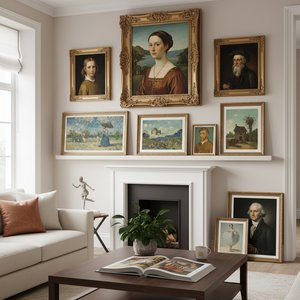
National Gallery of Art's Masterpieces: 25 Iconic Paintings for Your Home Decor
Explore 25 iconic artworks from Washington DC's National Gallery of Art! Discover masterpieces by Cézanne, Matisse & Picasso. Find museum-quality art reproductions and elevate your home decor with timeless paintings. Explore the full collection online at OriginalUniqueArt.com.

Whistler's Masterpieces: Explore 25 Iconic Paintings & Aesthetic Art for Your Home
Journey through 25 iconic James Abbott McNeill Whistler paintings! Explore his masterpieces of Aestheticism, from 'Nocturne in Black and Gold' to captivating portraits. Find museum-quality art reproductions & elevate your home decor with OriginalUniqueArt.com. Discover the full collection online.