
 Preview
 Send
Send Share
Share
 Details
 Guide
Guide

 Download
 Similars
 X-Ray
X-Ray Diaporama
 Q&A
Q&A Stats
StatsSketchbook

- 15.0 x 23.0 cm


 Read More
Giclée / Art Print
Museum-quality giclée or canvas print with fast production and flexible finish options. ( Buy Hand Made Painting Switch to Digital Image)




P118B $10

P118H $10

P118W $10

P438Z $10

P508JH $12

P508YH $12

P805H $10

P805Z $10

P919BZ $10

P919G $10

P919XJ $10

P959ZH $10

P968JZ $12

W106C $8

W218G $10

W218JH $8

W218Y $10

W307PJ $10

W316G $10

W316PJ $8

W316Y $10

W398PJ $8

W4111J $10

W500HY $15

W500JH $15

W692G $12

W849H $8

W940BG $15

W953PJ $8




Pick from our preset sizes that match the artwork's original proportions.

Type the width and the height you need, to fit your frame or your wall. A print can only be cut, never made bigger than the picture, so a size with a different shape loses a part of the image. We send you a digital mockup to approve before we print anything. The picture shown on this page does not show the real cut — only the mockup does.
Worldwide Delivery () in 2 weeks instead of standard 4/5 weeks. (11 November)

Free Worldwide Express Shipping

High-Quality Linen Canvas

Full Shipping Insurance

Customs Tax Refund Guarantee

True Color Matching Guarantee

100-Day Return Policy (Defects Only)

100% Money-Back Guarantee

Bulk Discount Offer
 Glass option is only available in size under 110 CM

Sketchbook
Giclée / Art Print
Reproduction Size
-


Total Price
$ 81
A Window Into the Composer's Soul
To gaze upon this 1823 sketchbook fragment is to step directly into the private sanctuary of a musical genius. This piece, a delicate relic from the twilight years of Ludwig van Beethoven, transcends mere notation; it is a tactile window into the creative struggle and the profound solitude of one of history's most transformative minds. The aged, worn paper, bearing the weight of nearly two centuries, serves as a silent witness to the moment an idea was first captured in pencil. There is an undeniable romance in its imperfection—the slight fraying of the edges and the delicate, handwritten annotations that suggest a mind constantly at work, translating the ephemeral beauty of sound into the permanence of ink.
The composition is characterized by a raw, unadorned aesthetic that captures the very essence of the Romantic era's fascination with the individual spirit. Unlike a finished, polished score intended for public performance, this sketch presents the skeletal structure of musical thought. The pencil strokes, varying in pressure and intent, reveal the rhythmic pulse of a composer navigating the complexities of melody and harmony. The presence of the name "Amy Fletcher Wade" alongside these notes adds a layer of historical mystery, inviting the viewer to contemplate the lineage of inspiration and the hands that have held this very parchment through the ages.
The Artistry of the Unfinished
In this intimate close-up, we observe the raw texture of history. The image reveals a piano score where the music appears as a series of rhythmic whispers across the page. These are not the grand, sweeping declarations found in his symphonies, but rather the tentative explorations of a master at work. The technique is one of pure spontaneity; the graphite marks capture the movement of the hand, reflecting a moment where thought and execution were inextricably linked. This piece functions as a visual diary, where every smudge and crease tells a story of intense concentration and the restless experimentation that fueled Beethoven's most enduring compositions.
The muted, sepia-toned palette of the aged paper and graphite lends itself beautifully to sophisticated, classical, or even minimalist environments. For the discerning collector or interior designer, this reproduction offers more than just a visual element; it provides an emotional anchor for a space. It functions as a conversation piece that evokes themes of legacy, intellectual depth, and the timelessness of art. When placed within a study, a library, or a curated gallery wall, this work brings a sense of quiet contemplation and historical grandeur to any room.
A Timeless Legacy for the Modern Collector
Owning a reproduction of such a significant fragment allows one to possess a piece of the very genesis of Western music. It is an invitation to reflect on the beauty found in the process rather than just the result. The emotional impact of this work lies in its vulnerability—it shows us the composer not as an untouchable icon, but as a human being grappling with the architecture of sound. For those seeking to infuse their interiors with a sense of profound history and intellectual weight, this sketchbook fragment serves as a perfect bridge between the monumental achievements of the past and the refined aesthetics of the present.
Questions & Answers
What are the medium and date of "Sketchbook" by Ludwig Van Beethoven?
"Sketchbook" was created in 1823 using the pencil technique. Material and date describe how and when the original was made.
In which movement and which era is "Sketchbook" by Ludwig Van Beethoven placed?
"Sketchbook" by Ludwig Van Beethoven is placed in the Romanticism movement, within the 19th-Century era of its creator.
How can I get a print of "Sketchbook" by Ludwig Van Beethoven?
To get a print of "Sketchbook" by Ludwig Van Beethoven, simply order it on its Fine Art Print page: a fine art print on cotton canvas or archival canvas paper.
Artist Biography
early life and musical beginnings
ludwig van beethoven, a renowned german composer and pianist, was born in bonn, germany, in 1770. displaying his musical talent at a young age, he began studying music under various teachers before moving to vienna, where he would spend most of his life.- sonata for piano and violoncello (a major) op. 69, 1st movement (available at OriginalUniqueArt.com)
- beethoven's manuscript of the missa solemnis (viewable at wikipedia)
- three opus 1 piano sonatas, patronized by karl alois, prince lichnowsky

Ludwig Van Beethoven
1770 - 1827 , Germany
Quick Facts
- Full Name: Ludwig van Beethoven
- Nationality: German
- Date Of Birth: 1770
- Date Of Death: 1827
- Place Of Birth: Bonn, Germany
- Notable Artworks:
- Moonlight Sonata
- Symphony No 9
- Artistic Movement Or Style: Classical Romantic
- Artists Who Influenced This Artist:
- Franz Joseph Haydn
- Christian Gottlob Schulze
- Artists Or Movements Influenced By This Artist:
- Johannes Brahms
- Robert Schumann
Related Articles

10 Iconic Pencil Masterpieces That Redefined the World of Art
Journey through history with 10 iconic pencil masterpieces that redefined art. Explore the profound techniques and stories behind these legendary graphite works. Find museum-quality reproductions and curated decor inspiration at OriginalUniqueArt.com. Discover all masterpieces on OriginalUniqueArt.com

10 Iconic Graphite Pencil Masterpieces That Redefined Art History
Journey through history with 10 iconic graphite pencil masterpieces. Explore the legendary techniques and stories behind these timeless monochrome works. Find museum-quality art reproductions and curated decor inspiration at OriginalUniqueArt.com. Discover all masterpieces on OriginalUniqueArt.com

10 Iconic Graphite Pencil Masterpieces That Redefined Art History
Journey through history with 10 legendary graphite pencil masterpieces. From hyperrealistic portraits to classical sketches, explore the techniques that redefined art. Find museum-quality reproductions and decor inspiration at OriginalUniqueArt.com. Discover all masterpieces on OriginalUniqueArt.com

10 Iconic Graphite Pencil Masterpieces That Redefined Art History
Journey through history with 10 legendary graphite pencil masterpieces. Explore the profound techniques and stories behind these iconic monochrome works. Find museum-quality art reproductions and curated decor inspiration at OriginalUniqueArt.com. Discover all masterpieces on OriginalUniqueArt.com.
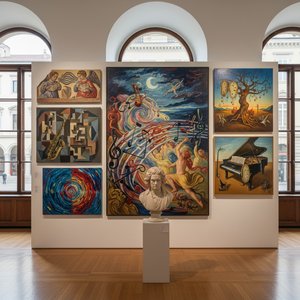
Harmonies on Canvas: Exploring the Visual Representation of Music in Art History
Explore the fascinating history of music's visual representation in art! From ancient symbolism to modern abstraction, discover how artists have captured sound and emotion on canvas. Expert insights & stunning examples.


