
 Preview
 Send
Send Share
Share
 Details

 Download
 Similars
 X-Ray
X-Ray Diaporama
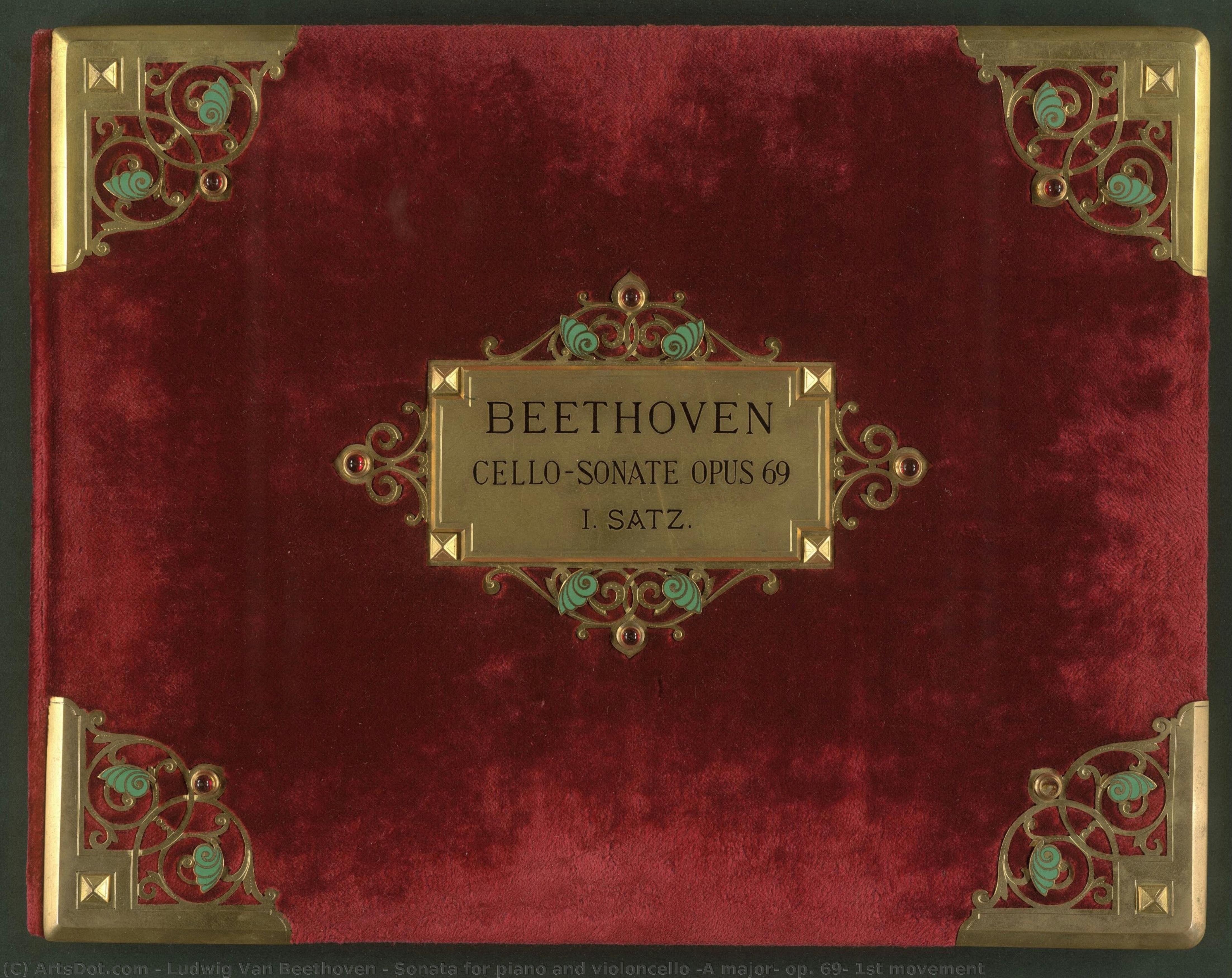
Sonata for piano and violoncello (A major) op. 69, 1st movement
 Acrylic On Canvas
- WallArt
- Romanticism
 1808
1808 23.0 x 31.0 cm
 Beethoven-Haus Bonn
 Read More
Hand Made Oil Reproduction
Hand-painted oil on canvas in your size and frame, made to order by our artists. ( Switch to Print Switch to Image)




P118B $10

P118H $10

P118W $10

P438Z $10

P508JH $12

P508YH $12

P805H $10

P805Z $10

P919BZ $10

P919G $10

P919XJ $10

P959ZH $10

P968JZ $12

W106C $8

W218G $10

W218JH $8

W218Y $10

W307PJ $10

W316G $10

W316PJ $8

W316Y $10

W398PJ $8

W4111J $10

W500HY $15

W500JH $15

W692G $12

W849H $8

W940BG $15

W953PJ $8




Pick from our preset sizes that match the artwork's original proportions.

You may enter your own dimensions to fit a specific frame or space. If your selected size does not match the original image's proportions, we will either crop the artwork or extend the painting with additional hand-painted elements. A digital mockup will be sent for your approval before production begins.
Please note that the on-screen preview does not reflect the actual cropping or extension. Only the mockup will accurately show the final composition.
While custom sizes are available, we recommend selecting a dimension from the predefined list to preserve the original proportions.
After order, OriginalUniqueArt.com team will email client for instructions and provide a mockup preview
Worldwide Delivery () in 3/4 weeks instead of standard 5 weeks. (11 August). No compromise on quality.

Free Worldwide Express Shipping

High-Quality Linen Canvas

Full Shipping Insurance

Customs Tax Refund Guarantee

True Color Matching Guarantee

60-Day Return Policy (Defects Only)

100% Money-Back Guarantee

Bulk Discount Offer
 Glass option is only available in size under 110 CM

Sonata for piano and violoncello (A major) op. 69, 1st movement
Reproduction Medium
Reproduction Size
-


Total Price
$ 300
Artwork Description
A Window Into Beethoven's Soul: Exploring Sonata No. 69
The year is 1808. Vienna pulsates with artistic fervor, and amidst the bustling salons and intellectual debates sits Ludwig van Beethoven – a composer grappling with deafness yet relentlessly pursuing musical brilliance. This portrait captures not merely his likeness but an essence of his spirit, immortalized in “Sonata for Piano and Violoncello No. 69,” specifically its first movement, a piece that continues to resonate with audiences today. More than just notes on parchment, this sonata embodies Beethoven’s profound connection to nature and contemplation—themes powerfully conveyed through the artist's masterful depiction.The Style of Romantic Reflection
Beethoven’s stylistic choices firmly establish this work within the Romantic movement. Rejecting the rigid formalism of earlier Classical composers like Mozart, Beethoven embraced expressive emotion and dramatic contrasts. The painting reflects this ethos with its muted palette—primarily browns and creams—creating an atmosphere of quiet introspection. Unlike grand orchestral canvases celebrating heroic narratives, this intimate scene prioritizes psychological depth over spectacle. It’s a deliberate decision to mirror the composer's inner world, where silence speaks louder than sound.Technique: Capturing Movement Within Stillness
The artist skillfully employs chiaroscuro—the dramatic interplay of light and shadow—to imbue the composition with dynamism. Beethoven himself was renowned for his innovative use of dynamics, shifting between thunderous outbursts and delicate whispers within a single piece. The painter meticulously renders the pianist’s hands poised over the keys, conveying the anticipation inherent in musical creation. Similarly, the violoncello's bowed instrument is depicted with flowing lines that suggest movement—a subtle echo of Beethoven’s musical gestures. Attention to detail extends beyond mere representation; it aims to evoke a feeling of palpable energy contained within a serene setting.Historical Context: Beethoven Amidst Enlightenment Ideals
The Sonata No. 69 emerged during a period marked by significant intellectual and artistic upheaval. The Enlightenment championed reason and observation, yet Beethoven’s music simultaneously challenged societal conventions with its emotional intensity. This painting subtly acknowledges this duality—the composer is positioned before a window, symbolizing both access to the outside world (representing ideas and influences) and retreat into inner contemplation. It speaks to the Romantic preoccupation with individualism and the sublime – experiences that transcend rational understanding.Symbolism: Light and Darkness as Emotional Resonance
The prominent window serves as more than just a visual element; it embodies Beethoven’s struggle against deafness. The light streaming through represents hope, inspiration, and the ability to perceive beauty despite physical limitations. Conversely, the darker tones surrounding the piano and violoncello symbolize the challenges faced in artistic endeavor—the difficulties of overcoming obstacles and expressing oneself authentically. Together, these elements underscore the sonata's core message: that true artistry flourishes even amidst darkness, fueled by unwavering passion and a profound appreciation for the natural world.Emotional Impact: A Portrait of Inner Harmony
Ultimately, this artwork seeks to capture the emotional essence of Beethoven’s music—a feeling of quiet contemplation mingled with fervent creativity. The artist's portrayal invites viewers to contemplate the composer’s inner life, prompting reflection on themes of resilience, beauty, and the transformative power of art. Like Beethoven himself, this sonata transcends mere musical notation; it offers a glimpse into the soul of a genius who dared to express his deepest emotions through sound—a legacy that continues to inspire generations of artists and listeners alike.Artist Biography
early life and musical beginnings
ludwig van beethoven, a renowned german composer and pianist, was born in bonn, germany, in 1770. displaying his musical talent at a young age, he began studying music under various teachers before moving to vienna, where he would spend most of his life.- sonata for piano and violoncello (a major) op. 69, 1st movement (available at OriginalUniqueArt.com)
- beethoven's manuscript of the missa solemnis (viewable at wikipedia)
- three opus 1 piano sonatas, patronized by karl alois, prince lichnowsky

ludwig van beethoven
1770 - 1827 , Germany
Quick Facts
- Artistic Movement Or Style: Classical Romantic
- Artists Or Movements Influenced By This Artist:
- Johannes Brahms
- Robert Schumann
- Artists Who Influenced This Artist:
- Franz Joseph Haydn
- Christian Gottlob Schulze
- Date Of Birth: 1770 Bonn Germany
- Date Of Death: 1827 Vienna Austria
- Full Name: Ludwig van Beethoven
- Nationality: German
- Notable Artworks:
- Moonlight Sonata
- Symphony No 9
- Place Of Birth: Bonn Germany
Related Articles
Harmonies on Canvas: Exploring the Visual Representation of Music in Art History
Explore the fascinating history of music's visual representation in art! From ancient symbolism to modern abstraction, discover how artists have captured sound and emotion on canvas. Expert insights & stunning examples.

Neo-Classicism's Greatest Hits: 10 Masterpieces for Your Home |
Journey through Neo-Classicism's finest! Explore 10 iconic masterpieces by David, Ingres & Canova. Discover art history, techniques & timeless beauty – perfect for inspiring your home decor. Find museum-quality reproductions at
The Enduring Legacy of Classicism: Principles, Evolution & Influence in Western Art
Explore the enduring legacy of Classicism in Western art! Discover its historical context, key principles, iconic masterpieces & lasting influence. Learn about Renaissance and Neoclassical movements with OriginalUniqueArt.
Timeless Resonance: Exploring Classic Vibe in Art – A Historical & Aesthetic Analysis
Explore the rich history & enduring aesthetic of Classicism art! Discover key movements, iconic artists like Raphael & David, and its lasting influence on Western art. Deepen your appreciation today.
The Enduring Legacy of Classical Style: Form, Narrative & Influence in Art
Explore the enduring legacy of classical art – from ancient Greece & Rome to Neoclassicism. Discover key artists, philosophical roots & build a timeless collection with OriginalUniqueArt's expert guidance.



