Buy Hand Made Painting
 Read More







































 For artworks or reproductions larger than 105 cm (approximately 41 inches) on any side, the frame will be shipped as a kit, disassembled. This method ensures safe delivery and prevents damage during transport.


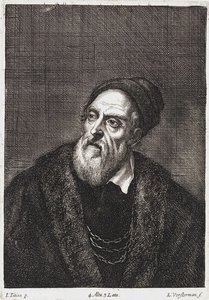
A Portrait of Stoicism: Examining Lucas Vorsterman’s Engraving of Marcus Junius Brutus
The artwork "Marcus Junius Brutus," executed by Lucas Vorsterman in 1638, stands as a testament to the Baroque artistic movement's fascination with dramatic realism and psychological depth. Produced during a period marked by political upheaval—the assassination of Julius Caesar—this engraving delves into the character of Marcus Brutus, one of Rome’s most revered figures, capturing not merely his physical appearance but also an aura of profound contemplation and moral fortitude. Vorsterman's masterful technique—characterized by meticulous etching—allows for astonishing detail, mirroring the precision demanded by portraiture during this era.- Subject Matter: The engraving depicts Brutus in a frontal pose, emphasizing his dignified countenance and conveying an impression of solemn seriousness. His gaze directs firmly toward the viewer, fostering a connection that transcends time, inviting contemplation on themes of duty, honor, and sacrifice.
- Style & Technique:
- Vorsterman’s approach aligns perfectly with Baroque aesthetics—a stylistic preference for grandeur, emotion, and theatrical presentation. The etching process itself contributes to the artwork's impact, utilizing tonal variations to sculpt light and shadow, creating a palpable sense of texture and depth. This technique was favored by artists like Rubens and Van Dyck, reflecting the artistic sensibilities of the time.
Historical Context: Caesar’s Assassination and Republican Ideals
Symbolism & Emotional Impact
Legacy & Artistic Influence
This engraving exemplifies Baroque artistry's commitment to conveying profound emotion alongside meticulous detail. Vorsterman’s skill ensured Brutus’s image would endure as a symbol of republican ideals and moral fortitude, cementing his place in art history.
Questions & Answers
What are the medium and dimensions of "Brutus" by Lucas Vorsterman?
The medium of "Brutus" by Lucas Vorsterman is engraving, and its recorded dimensions are 292 x 199 cm.
How much light do the colors of "Brutus" appear to reflect?
"Brutus" by Lucas Vorsterman has a bright balance luminance. Luminance describes how much light the colors appear to reflect.
How is "Brutus" situated historically?
"Brutus" by Lucas Vorsterman belongs to the Baroque Realism movement, within the Early-Modern period. Together they give the work its place in art history.
More about this painting
 Preview

 Send
 Share
 Details
 Guide


 Download
 Similars
 X-Ray
 Diaporama
 Q&A
 Stats