Menu
Text size

() ·

A painting made for you, by hand

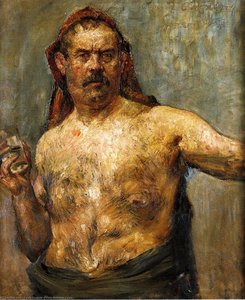
Self Portrait in a Tyrolean Hat

Hand Made Oil Reproduction

Hand-painted oil on canvas in your size and frame, made to order by our artists. ( Switch to Print Switch to Digital Image)

Collectible Description

Experience Lovis Corinth’s ‘Self-Portrait in a Tyrolean Hat’ (1913). A striking portrait blending Impressionism & Expressionism, showcasing his evolution after a stroke – explore the details!

Artist Biography

Explore the art of Lovis Corinth (1858-1925), a German painter bridging Impressionism & Expressionism. Known for portraits, landscapes, and raw depictions of life – including 'In the Slaughter House'. Discover his legacy as a Berlin Secession preside

from ·

Chapter 1

How large should it be?

Slide to change the size; the picture on the left shows the frame at its real width. The proportions of the original are kept.

Standard
custom
CM
INCH

Pick from our preset sizes that match the artwork's original proportions.

width
height

Type the width and the height you need, to fit your frame or your wall. This is hand-painted, so for a size with a different shape the artist can paint a bit more around the picture, or cut a bit — you choose. We send you a digital mockup to approve before the painting starts. The picture shown on this page does not show the real result — only the mockup does.

Chapter 2

How should it arrive?

Choose the edges of the stretched canvas

Choose your frame

Corner sample of the WhiteWrap canvas edge finish, stretched on solid wood bars
White $1
Corner sample of the BlurSideWrap canvas edge finish, stretched on solid wood bars
Blurside $1
Corner sample of the ExtendedWrap canvas edge finish, stretched on solid wood bars
Extended $1
Corner sample of the P118B picture frame: moulded polystyrene, 5 cm wide and 3 cm thick
P118B $10
Corner sample of the P118H picture frame: moulded polystyrene, 5 cm wide and 3 cm thick
P118H $10
Corner sample of the P118W picture frame: moulded polystyrene, 5 cm wide and 3 cm thick
P118W $10
Corner sample of the P438Z picture frame: moulded polystyrene, 5.5 cm wide and 3.5 cm thick
P438Z $10
Corner sample of the P508JH picture frame: moulded polystyrene, 7 cm wide and 3.5 cm thick
P508JH $12
Corner sample of the P508YH picture frame: moulded polystyrene, 7 cm wide and 3.5 cm thick
P508YH $12
Corner sample of the P805H picture frame: moulded polystyrene, 5 cm wide and 3.5 cm thick
P805H $10
Corner sample of the P805Z picture frame: moulded polystyrene, 5 cm wide and 3.5 cm thick
P805Z $10
Corner sample of the P919BZ picture frame: moulded polystyrene, 7 cm wide and 3.5 cm thick
P919BZ $10
Corner sample of the P919G picture frame: moulded polystyrene, 7 cm wide and 3.5 cm thick
P919G $10
Corner sample of the P919XJ picture frame: moulded polystyrene, 7 cm wide and 3.5 cm thick
P919XJ $10
Corner sample of the P959ZH picture frame: moulded polystyrene, 5 cm wide and 3 cm thick
P959ZH $10
Corner sample of the P968JZ picture frame: moulded polystyrene, 6 cm wide and 4 cm thick
P968JZ $12
Corner sample of the W106C picture frame: solid wood, 5 cm wide and 3 cm thick
W106C $8
Corner sample of the W218G picture frame: solid wood, 5 cm wide and 3 cm thick
W218G $10
Corner sample of the W218JH picture frame: solid wood, 5 cm wide and 3 cm thick
W218JH $8
Corner sample of the W218Y picture frame: solid wood, 5 cm wide and 3 cm thick
W218Y $10
Corner sample of the W307PJ picture frame: solid wood, 6 cm wide and 3 cm thick
W307PJ $10
Corner sample of the W316G picture frame: solid wood, 6 cm wide and 3 cm thick
W316G $10
Corner sample of the W316PJ picture frame: solid wood, 6 cm wide and 3 cm thick
W316PJ $8
Corner sample of the W316Y picture frame: solid wood, 6 cm wide and 3 cm thick
W316Y $10
Corner sample of the W398PJ picture frame: solid wood, 5 cm wide and 3 cm thick
W398PJ $8
Corner sample of the W4111J picture frame: solid wood, 6.5 cm wide and 3.5 cm thick
W4111J $10
Corner sample of the W500HY picture frame: solid wood, 7 cm wide and 5 cm thick
W500HY $15
Corner sample of the W500JH picture frame: solid wood, 7 cm wide and 5 cm thick
W500JH $15
Corner sample of the W692G picture frame: solid wood, 8 cm wide and 4 cm thick
W692G $12
Corner sample of the W849H picture frame: solid wood, 5 cm wide and 3 cm thick
W849H $8
Corner sample of the W940BG picture frame: solid wood, 7.5 cm wide and 4.5 cm thick
W940BG $15
Corner sample of the W953PJ picture frame: solid wood, 6 cm wide and 3.5 cm thick
W953PJ $8
Corner sample of the H24-GOLD picture frame: carved wood with gesso, 10 cm wide and 6 cm thick
H24-GOLD $30
Corner sample of the H24-SILVER picture frame: carved wood with gesso, 10 cm wide and 6 cm thick
H24-SILVER $30
Corner sample of the H36-GOLD picture frame: carved wood with gesso, 15 cm wide and 6.5 cm thick
H36-GOLD $45
Corner sample of the H36-SILVER picture frame: carved wood with gesso, 15 cm wide and 6.5 cm thick
H36-SILVER $45
Frame preview
Framed

Moulding: . Overall size with the frame: .

Chapter 3

Who paints it, and should anything change?

Examples of what can be changed: Replace face with customer photo; Add pet (e.g., replace cat with dog); Include hidden message in background; Change background landscape or elements.
After order, OriginalUniqueArt.com team will email client for instructions and provide a mockup preview

Worldwide Delivery () in 3/4 weeks instead of standard 5 weeks. (30 October). No compromise on quality.

Chapter 4

The finishing touches

A nameplate, as in a museum?

Engraved Bronze Plaque Details

This elegant plaque features the artist's name and the title of the artwork, finely engraved for a timeless presentation.

It is made from bronze with a refined, elegant finish. The text is precisely laser-engraved for a sharp and permanent result. Measuring 9x2 cm, the plaque is compact yet easy to read. It's built to be durable and scratch-resistant, offering a professional, museum-quality look. Mounting is simple thanks to the included adhesive backing.

Transparent Acrylic Plaque Details

The plaque includes essential engraved details such as the artist's name, the title of the artwork, the date it was created, the type of media used-like oil on canvas or watercolor-a brief description of the piece, and a QR code that links to the complete artwork information.

It is crafted from clear acrylic, offering a sleek, modern appearance. The text is UV-engraved in black to ensure strong visual contrast. With a size of 10x15 cm, it ensures optimal readability. It comes equipped with two metal hooks for secure wall mounting. The plaque is designed to be weather-resistant, making it suitable for various environments, and it includes interactive features that work seamlessly with smartphone scanning.

Black Acrylic Plaque Details

This elegant plaque includes engraved information such as the artist's name, the title of the artwork, the date it was created, the type of media used (like oil on canvas or watercolor), a short description of the artwork, and a QR code for quick access to more information.

The plaque itself is made from refined black acrylic with a premium finish. The text is laser-engraved in white for high contrast and readability. Its size is 10x15 cm, designed to be easy to read. It comes with two metal hooks for professional mounting. The design is sleek and fits any interior style. It is also weather-resistant and durable, with built-in digital integration for mobile compatibility.

A protective varnish?

When do you need it?

Chapter 5

Your painting, as you ordered it

Self Portrait in a Tyrolean Hat

Reproduction Medium

Reproduction Size

-

Elite Senior Artist

More detail, finesse, and extra production time

-

Reproduction Frame

-

-

For artworks or reproductions larger than 105 cm (approximately 41 inches) on any side, the frame will be shipped as a kit, disassembled. This method ensures safe delivery and prevents damage during transport.

Professional assembly required - this is not a DIY product.
The kit must be assembled and the canvas stretched by an experienced professional framer, using wood glue (not supplied), a canvas stretching plier and clamps to hold the bars square while the glue dries. Incorrect assembly or uneven canvas tension can permanently damage the artwork and is not covered by our warranty.

  • All solid wood bars are included, precisely cut to size.

  • Assembled with the screws provided, plus wood glue for the corner joints, which is not supplied and must be sourced by your framer.

  • Professional tools are required and not included: a canvas stretching plier (tensioner) and clamps to hold the bars square while the glue dries.

Important:
The corner joints require wood glue, the bars must be held with clamps until the glue is fully dry, and tightening the canvas on the assembled frame requires a canvas stretching plier. None of these are included in the kit. Please arrange an experienced professional framer before ordering this size.

Nameplate

-

-

Protective Varnish

Glossy Varnish (enhances colors, protects against light/moisture)

-

Customize My Artwork

Examples of what can be changed: Replace face with customer photo; Add pet (e.g., replace cat with dog); Include hidden message in background; Change background landscape or elements.

-

Urgent

Worldwide Delivery () in 3/4 weeks instead of standard 5 weeks. (30 October). No compromise on quality.

-

Express Shipping

Worldwide Delivery () in 5 weeks. (6 November).

Included

Total Price

$ 300

Total Price $ 300

Glass option is only available in size under 110 CM

Included with every order

  • Free Worldwide Express Shipping
  • High-Quality Linen Canvas
  • Full Shipping Insurance
  • Customs Tax Refund Guarantee
  • True Color Matching Guarantee
  • 100-Day Return Policy (Defects Only)
  • 100% Money-Back Guarantee
  • Bulk Discount Offer

A Portrait of Resilience: Lovis Corinth’s “Self-Portrait in a Tyrolean Hat” (1913)

Lovis Corinth's "Self-Portrait in a Tyrolean Hat," painted in 1913, is more than just a depiction of an artist; it’s a poignant study of identity, recovery, and the evolving spirit of a man grappling with both personal tragedy and artistic transformation. This remarkable work, currently housed within the Museum Folkwang in Essen, Germany, offers a rare glimpse into the inner world of a pivotal figure bridging the Impressionistic and Expressionist movements – a journey marked by physical hardship and an unwavering commitment to his craft.

The painting immediately draws the eye with its vibrant palette. Corinth employs bold strokes of ochre, crimson, and deep blues, creating a sense of immediacy and raw emotion. The Tyrolean hat itself—a symbol of rustic charm and regional identity—is rendered with meticulous detail, yet it feels slightly incongruous against the artist’s face, hinting at a deliberate juxtaposition. This isn't merely a casual addition; it speaks to Corinth’s conscious exploration of themes related to heritage, memory, and perhaps even a yearning for simpler times.

The Shadow of Recovery: Context and Technique

Painted just two years after a debilitating stroke severely impacted his left hand, “Self-Portrait in a Tyrolean Hat” is inextricably linked to Corinth’s arduous recovery. The physical limitations imposed by the stroke profoundly influenced his artistic approach. Notice how he subtly shifts his posture, adopting a more upright stance and holding his brush with his right hand – a deliberate act of reclaiming agency after a period of vulnerability. This isn't simply about overcoming disability; it’s about redefining his relationship with art itself.

Corinth’s technique during this period is particularly noteworthy. While retaining elements of Impressionism—evident in the loose brushwork and emphasis on capturing fleeting light—he increasingly incorporates expressive qualities reminiscent of Expressionism. The colors are intensified, the forms simplified, and a sense of urgency permeates the composition. The painting feels less like a carefully constructed portrait and more like an immediate emotional outpouring – a visual record of his internal struggle.

Symbolic Layers: Hat, Face, and the Unspoken

Beyond its technical merits, “Self-Portrait in a Tyrolean Hat” is rich with symbolic layers. The hat itself can be interpreted as a shield—a defense against the world and perhaps even his own self-doubt. Corinth’s face, etched with lines of worry and determination, reflects the weight of his experience. The direct gaze into the viewer creates an intimate connection, inviting us to share in his introspection.

Interestingly, Corinth's choice of a Tyrolean hat is not merely decorative. It connects him to the Alpine region, a place he would later find solace and inspiration during his recovery. This retreat to nature represents a crucial step in his healing process – a return to the physical world that had initially caused him so much pain.

A Legacy of Transformation

“Self-Portrait in a Tyrolean Hat” stands as a testament to Lovis Corinth’s resilience and artistic evolution. It's a powerful depiction of an artist confronting adversity, not with resignation, but with renewed determination and a willingness to embrace new forms of expression. This painting is more than just a portrait; it’s a visual diary of a man’s journey—a story of loss, recovery, and the enduring power of art to transform both the self and the world around us. Reproductions offer a remarkable opportunity to experience this deeply moving work firsthand.

Questions & Answers

What color palette is used in "Self Portrait in a Tyrolean Hat" by Lovis Corinth?

The palette of "Self Portrait in a Tyrolean Hat" by Lovis Corinth is described as earthy. It is a compact description of the work's colors.

How saturated is the palette of "Self Portrait in a Tyrolean Hat"?

"Self Portrait in a Tyrolean Hat" by Lovis Corinth is recorded with a muted saturation.

How light is "Self Portrait in a Tyrolean Hat" overall?

The perceived brightness of "Self Portrait in a Tyrolean Hat" by Lovis Corinth is balanced. It can be matched to the light of the intended space.

More about this painting

Preview AR preview Switch to Print Switch to Digital Image Send
Details Guide Add to favorites Download Similars X-Ray Diaporama Q&A Stats

In numbers

  • 1913the year it was painted
  • 29frames to choose from
  • standard sizes, in its own proportions
  • 5weeks to paint and deliver it
Lovis Corinth

Lovis Corinth

1858 - 1925, Netherlands

Quick facts about Lovis Corinth

  • Full Name: Franz Heinrich Louis Corinth
  • Nationality: German
  • Date Of Birth: 1858
  • Date Of Death: 1925
  • Place Of Birth: Tauwade, Netherlands
  • Notable Artworks:
    • In the Slaughter House
    • Self-Portrait
    • Female Semi-Nude
  • Artistic Movement Or Style: Impressionism & Expressionism
  • Artists Who Influenced This Artist:
    • Courbet
    • Rubens
  • Artists Or Movements Influenced By This Artist: ['Expressionism']

Artist Biography

A Life Forged in Paint: The World of Lovis Corinth

Lovis Corinth, born Franz Heinrich Louis on July 21, 1858, in the Prussian province of East Prussia, was a figure who embodied the tumultuous transition from the 19th to the early 20th-century art world. His journey wasn’t one of immediate acclaim but rather a gradual evolution fueled by relentless study, diverse influences, and ultimately, personal tragedy. Corinth's beginnings were rooted in the rural landscapes of his birthplace, Tapiau, where his father worked as a tanner. This early exposure to the physicality of labor and the raw beauty of nature would subtly permeate his later work, even amidst more sophisticated stylistic explorations. He initially pursued studies at the Academy of Königsberg in 1876, but quickly realized that academic tradition alone wouldn’t satisfy his artistic ambitions. A period of travel followed, taking him to Munich, Antwerp, and finally Paris – each city serving as a crucial stepping stone in his development. In Munich, he absorbed the meticulous realism championed by Ludwig von Löfftz, honing his observational skills and mastering technique. Antwerp introduced him to the dramatic Baroque intensity of Rubens, while Paris exposed him to the burgeoning Impressionist movement, though his initial response was one of cautious observation rather than immediate embrace.

From Naturalism to a Synthesis of Styles

Corinth’s artistic development wasn't marked by swift revolutions but by a gradual assimilation and synthesis of diverse influences. His early work leaned heavily towards naturalism, reflecting the prevailing academic standards of the time. Paintings like “In the Slaughterhouse” (1878), with its unflinching depiction of animal carcasses, demonstrate this commitment to realistic representation, yet even here, a nascent emotional intensity begins to surface. The subject matter itself—gruesome and visceral—hints at a willingness to confront uncomfortable truths, a characteristic that would become increasingly prominent in his later work. His time spent studying the Old Masters, particularly Rubens, instilled in him a love of dynamic composition and expressive brushwork. However, it was his exposure to Impressionism – initially viewed with skepticism – that ultimately proved transformative. He didn’t simply adopt the broken color and fleeting light effects of Monet or Renoir; instead, he integrated these elements into his own unique vision, creating a style that blended impressionistic vibrancy with a distinctly German sensibility. This synthesis would eventually position him as a bridge between Impressionism and Expressionism, two movements that defined the artistic landscape of the early 20th century.

A Master of Portraiture and Landscape

While Corinth explored various genres throughout his career – including biblical scenes and mythological subjects – he is perhaps best remembered for his portraits and landscapes. His portraiture wasn’t merely about capturing physical likeness; it was an attempt to penetrate the psychological depths of his sitters, revealing their inner lives through subtle gestures, expressive eyes, and carefully considered compositions. He possessed a remarkable ability to convey character and emotion with astonishing economy of means. Similarly, his landscapes weren't simply depictions of scenic views but rather emotional responses to nature. The Walchensee region in the Bavarian Alps became a particular source of inspiration, providing him with a wealth of motifs that he explored repeatedly throughout his later years. These paintings are characterized by their bold colors, dynamic brushwork, and a sense of raw energy that reflects Corinth’s own passionate engagement with the natural world. He wasn't interested in idyllic representations; instead, he sought to capture the untamed power and inherent drama of the landscape.

Tragedy, Resilience, and Lasting Legacy

A pivotal moment in Corinth’s life – and arguably in his artistic development – was a stroke he suffered in December 1911. The paralysis it caused on his left side threatened to end his career altogether. However, with unwavering determination and the support of his wife, Charlotte Berend-Corinth, he relearned to paint, adapting to his physical limitations and developing an even more expressive style. This period marked a turning point in his work, as his paintings became increasingly bold, gestural, and emotionally charged. The experience of confronting mortality and physical vulnerability infused his art with a new sense of urgency and authenticity. He embraced a looser brushstroke and intensified color palette, anticipating many of the stylistic innovations that would define Expressionism. Corinth’s influence extended beyond his own painting; he was also a respected teacher and writer on art, publishing essays such as “On Learning to Paint” in 1908, offering insights into his artistic philosophy and technical approach. He served as president of the Berlin Secession from 1915 until his death in 1925, championing progressive artistic ideas and fostering a vibrant creative community. Lovis Corinth’s legacy lies not only in his remarkable body of work but also in his unwavering commitment to artistic integrity and his ability to transform personal tragedy into profound artistic expression. He remains a pivotal figure in the history of German art, a master who bridged two eras and left an indelible mark on generations of artists to come.

Key Works & Their Significance

  • In the Slaughterhouse (1878): A starkly realistic depiction of animal carcasses, showcasing Corinth’s early mastery of technique and his willingness to confront unsettling subjects.
  • Self-Portrait (various years): A series of self-portraits created annually on his birthday, offering a fascinating chronicle of the artist's evolving self-perception and artistic style. These works reveal a profound introspection and a fearless exploration of identity.
  • Female Semi-Nude with Hat (1906): Demonstrates Corinth’s ability to blend classical motifs with impressionistic techniques, creating a sensuous and psychologically compelling portrait.
  • Walchensee Series (various years): A collection of landscapes depicting the Walchensee region in Bavaria, characterized by their vibrant colors, dynamic brushwork, and emotional intensity. These paintings represent Corinth’s mature style at its most powerful and expressive.
  • The Last Self-Portrait (1924): Painted shortly before his death, this work is a poignant testament to the artist's resilience and unwavering spirit in the face of physical adversity. It embodies the culmination of his artistic journey and serves as a powerful symbol of human endurance.

Quick Facts

  • Subject or theme: Self-representation
  • Dimensions: 80 x 60 cm
  • Artistic style: Portraiture, realistic
  • Title: Self-Portrait in a Tyrolean Hat
  • Notable elements or techniques: Tyrolean hat, self-portrait
  • Location: Museum Folkwang, Essen

Art Quiz

There is only one correct answer for each question.

Question 1:
What artistic movement is most closely associated with Lovis Corinth’s work, as evidenced by this self-portrait?
Question 2:
The Tyrolean hat depicted in the painting is a traditional headwear item from which region?
Question 3:
What year was this painting created, based on the provided information?
Question 4:
Considering Corinth’s biography, what significant event likely influenced the shift in his artistic style towards a more expressive approach?
Question 5:
The painting’s composition and subject matter suggest a possible commentary on which theme?