Preview
 Send
Send Share
Share
 Details
 Guide
Guide

 Download
 Similars
 X-Ray
X-Ray Diaporama
 Stats
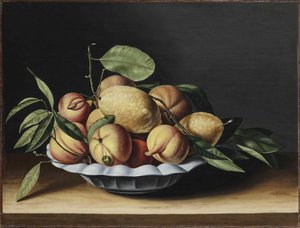
StatsNATURE MORTE PECHES ET PRUNES


 Read More
Giclée / Art Print
Museum-quality giclée or canvas print with fast production and flexible finish options. ( Buy Hand Made Painting Switch to Digital Image)




P118B $10

P118H $10

P118W $10

P438Z $10

P508JH $12

P508YH $12

P805H $10

P805Z $10

P919BZ $10

P919G $10

P919XJ $10

P959ZH $10

P968JZ $12

W106C $8

W218G $10

W218JH $8

W218Y $10

W307PJ $10

W316G $10

W316PJ $8

W316Y $10

W398PJ $8

W4111J $10

W500HY $15

W500JH $15

W692G $12

W849H $8

W940BG $15

W953PJ $8




Pick from our preset sizes that match the artwork's original proportions.

You may enter your own dimensions to fit a specific frame or space. If your selected size does not match the original image's proportions, we will either crop the artwork or extend the image with a mirrored or solid-fill edge. A digital mockup will be sent for your approval before production begins.
Please note that the on-screen preview does not reflect the actual cropping or extension. Only the mockup will accurately show the final composition.
While custom sizes are available, we recommend selecting a dimension from the predefined list to preserve the original proportions.
Worldwide Delivery () in 2 weeks instead of standard 4/5 weeks. (26 September)

Free Worldwide Express Shipping

High-Quality Linen Canvas

Full Shipping Insurance

Customs Tax Refund Guarantee

True Color Matching Guarantee

100-Day Return Policy (Defects Only)

100% Money-Back Guarantee

Bulk Discount Offer
 Glass option is only available in size under 110 CM

NATURE MORTE PECHES ET PRUNES
Giclée / Art Print
Reproduction Size
-


Total Price
$ 81
The Opulence of Harvest: A Baroque Still Life
To gaze upon this depiction of Nature Morte Peches et Prunes is to step directly into the richly colored, contemplative world of the Baroque era. The composition centers around a bountiful basket, overflowing with the luscious weight of peaches and plums. It is an immediate feast for the eyes, a testament to nature's generous bounty captured with masterful skill. The arrangement itself feels both spontaneous and meticulously orchestrated; the fruit spills forth as if gathered moments before by hand, nestled amongst verdant, supportive foliage that frames the entire scene like a velvet curtain.
Mastery in Light and Texture
Technically, the painting speaks volumes about the artist's command over oil paint on panel. The handling of light is nothing short of dramatic—a hallmark of Baroque sensibility. Notice how the illumination seems to originate from an unseen source, catching the waxy sheen of a peach skin and deepening the shadows pooling beneath the fruit clusters. This interplay between brilliant highlight and profound shadow gives the entire arrangement a palpable sense of volume and three-dimensionality. The brushwork, while expressive enough to convey movement and life, retains a careful attention to detail when rendering the individual contours of each piece of fruit, inviting the viewer to lean in and examine its perfect curve.
Echoes of Parisian Baroque Life
This work carries the unmistakable signature of an artist like Louise Moillon, whose career unfolded against the vibrant cultural currents of 17th-century Paris. During this time, still life painting evolved from mere documentation into a sophisticated genre capable of conveying deep meaning. The style reflects the period's love for opulence and sensory richness, often commissioned by patrons who desired art that spoke of worldly success and cultivated taste. It is an embodiment of aristocratic indulgence, transforming perishable goods into eternal artistic statements.
Symbolism of Abundance and Prosperity
Beyond its sheer beauty, the subject matter whispers tales of deeper meaning. In the language of still life painting, fruit has never been merely decorative. The overflowing basket serves as a potent symbol of abundance, often interpreted as prosperity, fertility, or the sweet rewards of a fruitful life. Each plum and peach carries with it this quiet promise of plenty. To own a reproduction of such a piece is not simply to decorate a wall; it is to invite a sense of enduring good fortune and natural harmony into your dwelling.
A Touch for the Modern Collector
For the contemporary collector or designer, this painting offers unparalleled depth. Whether placed in a formal drawing-room setting where its dramatic lighting can be appreciated under gallery spotlights, or used to anchor a console table with rich wood tones, its inherent drama elevates any space. It is an object that demands contemplation—a moment of pause amidst the rush of modern life, allowing one to appreciate the quiet, enduring beauty found in nature's most perfect offerings.
Artist Biography
The Quiet Brilliance of Louise Moillon
In the grand, sweeping narratives of the Baroque era, where drama and movement often dominate the canvas, the work of Louise Moillon offers a profound and meditative alternative. Born in Paris in 1610, Moillon emerged from a world shaped by the intense religious and cultural shifts of 17th-century France. Her very lineage tells a story of resilience and artistic heritage; as a descendant of Huguenot refugees from Holland, she was immersed in a tradition that valued the meticulous observation of the natural world. This background provided more than just a family history—it offered a stylistic vocabulary rooted in the Dutch mastery of light, texture, and symbolic realism.
Moillon’s early life was marked by both loss and profound artistic mentorship. The death of her father, the landscape painter and dealer Nicolas Moillon, when she was only ten, could have altered her path, yet her upbringing remained deeply embedded in the arts. Under the guidance of her stepfather, François Garnier, a skilled artist and dealer, she refined a technique that would become her hallmark. Her education was not merely about the application of pigment to canvas, but an immersion into the humanist values of her time, learning to see the divine within the minute details of a ripening fruit or the delicate curve of a petal.
A Mastery of Texture and Light
The true genius of Moillon lies in her ability to transform the mundane into the extraordinary. Her compositions are characterized by a serene stillness, a quietude that invites the viewer to linger and observe. She possessed an almost supernatural ability to capture the tactile qualities of her subjects—the waxy skin of a citron, the soft fuzz of a peach, or the translucent juice of a crushed berry. In works such as Still Life of Citrons and Curaçao Oranges in a White Polylobed Dish, one can sense the cool moisture of the fruit against the hard, glazed surface of the porcelain, creating a sensory experience that transcends the two-dimensional plane.
Her technique was deeply influenced by the naturalistic traditions of the Protestant circles in which she moved. This approach favored clarity and precision over the theatrical shadows of the more flamboyant Baroque masters. Instead, Moillon utilized light to sculpt her subjects, using subtle gradations of tone to create volume and depth. Her palette, while often focused on the vibrant hues of nature, was used with such restraint that each color felt luminous, as if lit from within. This mastery allowed her to bridge the gap between mere botanical illustration and high art, imbuing every piece with a sense of life and vitality.
Legacy and Historical Significance
Throughout her long life, which spanned nearly nine decades, Moillon achieved a level of renown that was rare for female artists of her era. Her ability to secure commissions from prestigious patrons, including members of the royal court, speaks to the undeniable quality and sophistication of her oeuvre. While her work often focused on the intimate scale of still life, its impact was expansive, contributing significantly to the development of the French still-life tradition.
The historical significance of Louise Moillon extends beyond her technical skill; she represents a vital link between the Dutch naturalistic tradition and the burgeoning French aesthetic of the 17th century. Her paintings serve as windows into a lost world of Parisian markets and private gardens, capturing a sense of abundance and ephemeral beauty. Today, her works remain cherished treasures in institutions such as the Louvre, standing as enduring testaments to a life dedicated to finding the extraordinary within the ordinary. Her legacy is found in every brushstroke that celebrates the quiet, breathtaking splendor of the natural world.

Louise Moillon
1610 - 1696 , France
Quick Facts
- Artistic Movement Or Style: Baroque Still Life
- Artists Or Movements Influenced By This Artist:
- Michelangelo
- Raphael
- Titian
- Artists Who Influenced This Artist:
- Isaac Moillon
- François Garnier
- Date Of Birth: Paris, France (1610)
- Date Of Death: 1696
- Full Name: Louise Moillon
- Nationality: French
- Notable Artworks:
- Basket of Apricots
- COUPE DE CERISES, PRUNES ET MELON
- Basket of Peaches, with Quinces, and Plums
- Place Of Birth: Paris
Related Articles

The Bountiful Still Life: Symbolism & Artistic Representation of Fruit Across Art History
Explore the rich history of still life painting & the symbolism of fruit across art movements. Discover masterpieces from Caravaggio to Cézanne with OriginalUniqueArt – expert guidance & museum-quality reproductions.
The Art of the Vine: Curating Exquisite Masterpieces Featuring Grapes for the Discerning Collector
Embark on a visual journey through the world's most exquisite grape-themed masterpieces. Discover the technical brilliance of Baroque masters and learn how to curate timeless, hand-painted oil reproductions for your luxury collection with OriginalUniqueArt.com.

Baroque Drama: Bringing Opulence & Emotion into Contemporary Interiors
Explore the opulent world of Baroque interior design! Discover key elements, modern applications & how to bring dramatic elegance into your home with OriginalUniqueArt.com's authentic reproductions.
Nature's Bounty: The Art History of Fruit Arrangement Masterpieces and the Baroque Still Life Tradition
Explore the profound beauty of fruit arrangement masterpieces. From Dutch Golden Age opulence to Baroque chiaroscuro, discover the art history, symbolism, and timeless elegance of classical still life paintings for the discerning collector.
Simon Vouet: A Baroque Master's Journey from Italian Influence to French Classicism
Explore the life & art of Simon Vouet, a pivotal French Baroque painter who introduced Italian styles to France. Discover his masterpieces and lasting influence on 17th-century art.