Preview
 Send
Send Share
Share
 Details
 Guide
Guide

 Download
 Similars
 X-Ray
X-Ray Diaporama
 Q&A
Q&A Stats
StatsLeda and the Swan

- 69.0 x 73.0 cm


 Read More
Giclée / Art Print
Museum-quality giclée or canvas print with fast production and flexible finish options. ( Buy Hand Made Painting Switch to Digital Image)




P118B $10

P118H $10

P118W $10

P438Z $10

P508JH $12

P508YH $12

P805H $10

P805Z $10

P919BZ $10

P919G $10

P919XJ $10

P959ZH $10

P968JZ $12

W106C $8

W218G $10

W218JH $8

W218Y $10

W307PJ $10

W316G $10

W316PJ $8

W316Y $10

W398PJ $8

W4111J $10

W500HY $15

W500JH $15

W692G $12

W849H $8

W940BG $15

W953PJ $8




Pick from our preset sizes that match the artwork's original proportions.

Type the width and the height you need, to fit your frame or your wall. A print can only be cut, never made bigger than the picture, so a size with a different shape loses a part of the image. We send you a digital mockup to approve before we print anything. The picture shown on this page does not show the real cut — only the mockup does.
Worldwide Delivery () in 2 weeks instead of standard 4/5 weeks. (1 November)

Free Worldwide Express Shipping

High-Quality Linen Canvas

Full Shipping Insurance

Customs Tax Refund Guarantee

True Color Matching Guarantee

100-Day Return Policy (Defects Only)

100% Money-Back Guarantee

Bulk Discount Offer
 Glass option is only available in size under 110 CM

Leda and the Swan
Giclée / Art Print
Reproduction Size
-


Total Price
$ 81
A Myth Made Visible: Exploring Leonardo da Vinci’s *Leda and the Swan*
Leonardo da Vinci's *Leda and the Swan*, created around 1510, remains one of the most captivating and elusive works attributed to the Renaissance master. Though the original painting is lost – tragically destroyed centuries ago – its legacy endures through numerous copies and preparatory drawings, allowing us to glimpse Da Vinci’s genius in depicting a pivotal moment from Greek mythology. This artwork embodies the High Renaissance ideals of beauty, harmony, and intellectual curiosity, inviting viewers into a world where myth and reality intertwine.The Story Unveiled: Mythological Context
The painting illustrates the tale of Leda, Queen of Sparta, seduced by Zeus who transformed himself into a magnificent swan to approach her. This union resulted in two sets of offspring: Helen and Polydeuces (Castor and Pollux) – children of Zeus – and Clytemnestra and Castor – children of her husband, Tyndareus. The myth is rich with symbolism relating to power, desire, fate, and the complexities of lineage. Da Vinci doesn’t merely illustrate a story; he delves into its psychological and emotional core.A Masterclass in Renaissance Technique
Da Vinci's approach to *Leda and the Swan* showcases his unparalleled technical skill. He employed sfumato, a technique characterized by subtle gradations of light and shadow, creating an ethereal softness that blurs lines and evokes a sense of mystery. The composition is meticulously balanced, with figures arranged in a harmonious pyramidal structure. His mastery of *chiaroscuro* – the dramatic contrast between light and dark – lends volume and realism to the forms, emphasizing the sensuality of Leda and the graceful power of the swan. Though only known through copies, these reveal Da Vinci’s layering technique, building depth and luminosity with thin glazes of oil paint.Symbolism & Interpretation
Beyond its narrative, *Leda and the Swan* is laden with symbolic meaning. The swan itself represents both beauty and aggression, embodying Zeus's dual nature as a god capable of both tenderness and force. Leda’s pose – often depicted as slightly yielding yet dignified – suggests a complex emotional response to the encounter. The presence of eggs, or newly hatched children, symbolizes fertility, renewal, and the unfolding of destiny. Some interpretations suggest the scene alludes to the inherent duality within human nature—the tension between reason and passion, control and surrender.Historical Significance & Artistic Legacy
*Leda and the Swan* exemplifies the Renaissance fascination with classical antiquity and its humanist themes. Da Vinci’s exploration of mythological subjects reflects a broader cultural shift towards celebrating human potential and intellectual inquiry. The work's influence can be seen in subsequent artistic depictions of the Leda myth, inspiring generations of artists to grapple with its complex themes. It stands as a testament to Da Vinci’s innovative spirit and his ability to elevate traditional narratives through masterful technique and profound psychological insight.Emotional Resonance & Contemporary Appeal
Even in reproduction, *Leda and the Swan* possesses a captivating emotional power. The painting evokes feelings of both awe and unease, beauty and vulnerability. It invites contemplation on themes of desire, fate, and the enduring power of myth. For collectors and interior designers, a high-quality reproduction offers an opportunity to bring a touch of Renaissance elegance and intellectual depth into any space. Its timeless appeal lies in its ability to spark conversation and inspire imagination.- Style: High Renaissance
- Medium: Oil on Panel (original), reproductions available on canvas or panel
- Dimensions: 69 x 73 cm (original)
- Current Location of Copies: Galleria Borghese (Rome), Wilton House (England), Uffizi Gallery (Florence) among others.
Questions & Answers
Is there a slideshow for "Leda and the Swan" by Leonardo da Vinci?
A slideshow is available: the Diaporama page of "Leda and the Swan" by Leonardo da Vinci.
Do the colors of "Leda and the Swan" appear strong or soft?
"Leda and the Swan" by Leonardo da Vinci shows a balanced color intensity.
What level of contrast does "Leda and the Swan" by Leonardo da Vinci show?
"Leda and the Swan" by Leonardo da Vinci shows a statement contrast between its light and dark areas.
Artist Biography
The Boy from Vinci
In the quiet hills near the village of Vinci, a child named Lionardo di ser Piero da Vinci entered a world that would never truly contain his restless mind. Born to a Florentine notary and a peasant woman, his very beginnings were marked by an unconventional path, as his illegitimacy meant he was not destined to follow in his father's legal footsteps. Instead, this freedom allowed him to wander into the workshop of Andrea del Verrocchio in Florence. It was here, amidst the scent of oils and the dust of marble, that a young apprentice learned that seeing was the highest form of understanding. He did not merely study the brush; he studied the way light clings to a curved surface and how shadow dissolves the edges of a limb.
His early years in Florence were defined by this intense observation. He absorbed the technical rigors of metalworking, carpentry, and drawing, building a foundation that merged the physical with the cerebral. While others sought only to replicate what they saw, he sought to understand the mechanics behind it. This period of growth was not marked by a sudden burst of fame, but by a slow, methodical accumulation of knowledge that would later allow him to bridge the gap between the artist's eye and the scientist's inquiry.
The Milanese Years and the Pursuit of Motion
When the winds of political change blew toward Milan, Leonardo followed the service of Ludovico Sforza. This move transformed him from a talented painter into a multifaceted presence within the ducal court. He arrived not merely as an artist, but as an engineer and designer, tasked with creating fortifications and even theatrical stage sets. It was during this long residency in Milan that he began to grapple with the profound drama of human interaction. In the refectory of Santa Maria delle Grazie, he applied his observations of psychology to a large-scale fresco, capturing the precise, heavy moment of betrayal within a group of apostles.
His mind during these years wandered far beyond the walls of the monastery. He filled notebooks with sketches of flying machines, advanced weaponry, and hydraulic systems, driven by a desire to map the hidden laws of nature. Yet, his ambitions often outpaced his ability to finish. A great equestrian statue, intended to honor the Sforza family, remained a dream of clay that was eventually shattered by invading French forces. This pattern of unfinished greatness followed him; he was a man who often found more satisfaction in the discovery of a principle than in the completion of a canvas.
The Final Light in France
A return to Florence brought with it a period of profound refinement. It was here that he worked on the portrait of a woman whose subtle, enigmatic expression would later haunt the halls of history. Through his use of sfumato, a technique where colors and tones blend so softly that they appear like smoke, he removed the harsh outlines of the world, creating an atmosphere that felt alive with breath and movement. His anatomical studies grew more precise during this time as well, fueled by his habit of dissecting cadavers to map the intricate architecture of bone and muscle.
In his final years, under the invitation of King Francis I, Leonardo moved to the Château du Clos Lucé in France. Even as age perhaps slowed his hand, his intellect remained sharp, focused on the study of optics, geology, and botany. He died in 1519, leaving behind a legacy that was never truly finished, much like his many drawings. His life remains a singular example of what can be achieved when the boundaries between art and science are erased, proving that to truly see the world, one must be willing to study every shadow and every muscle within it.
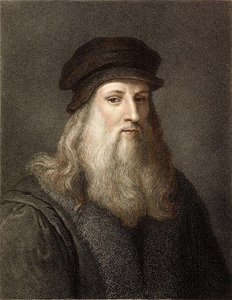
Leonardo da Vinci
1452 - 1519 , Italy
Quick Facts
- Artistic Movement Or Style: Renaissance
- Artists Or Movements Influenced By This Artist: ['Western art']
- Artists Who Influenced This Artist: ['Andrea del Verrocchio']
- Full Name: Lionardo di ser Piero da Vinci
- Nationality: Italian
- Notable Artworks:
- Mona Lisa
- The Last Supper
- Virgin of the Rocks
- Annunciation
- Place Of Birth: Vinci, Italy
- Date Of Birth: 1452
- Date Of Death: 1519
Related Articles

Masterpieces of Genius: The Top 25 Leonardo da Vinci Artworks
Explore 25 legendary Renaissance masterpieces by Leonardo da Vinci. Discover the stories behind each icon on OriginalUniqueArt.com.

25 Must-See Masterpieces at the Uffizi Gallery, Florence
Explore 25 iconic Renaissance masterpieces from the Uffizi Gallery. Discover timeless art legends on OriginalUniqueArt.com.
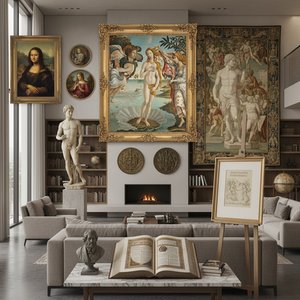
Renaissance Humanism's Greatest Art: 10 Masterpieces for Your Home
Explore 10 Renaissance Humanism masterpieces by Leonardo da Vinci, Michelangelo & Raphael. Discover the stories behind these iconic paintings & sculptures and bring timeless art into your home with museum-quality reproductions from OriginalUniqueArt.com. Explore the full collection online!

Unveiling Masterpieces: The Top 25 Must-See Artworks in The Louvre, Paris
Explore 25 iconic Louvre masterpieces, from Da Vinci to ancient relics. Discover museum-quality art on OriginalUniqueArt.com.
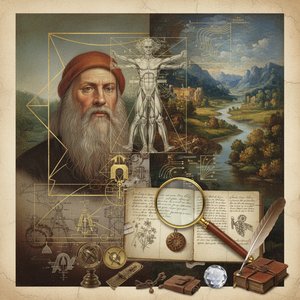
Leonardo da Vinci: A Renaissance Master’s Synthesis of Art, Science & Human Observation – Reinterpreted for the Collector
Explore Leonardo da Vinci’s timeless masterpieces with OriginalUniqueArt. Discover insights into his art, science, and legacy – trusted expertise for discerning collectors seeking authentic reproductions & investment opportunities.