

 Preview
 Send
Send Share
Share
 Details
 Guide
Guide

 Download
 Similars
 X-Ray
X-Ray Diaporama
 Stats
StatsQ 1 suprematistic


 Read More
Hand Made Oil Reproduction
Hand-painted oil on canvas in your size and frame, made to order by our artists. ( Switch to Print Switch to Digital Image)




































Pick from our preset sizes that match the artwork's original proportions.

Type the width and the height you need, to fit your frame or your wall. This is hand-painted, so for a size with a different shape the artist can paint a bit more around the picture, or cut a bit — you choose. We send you a digital mockup to approve before the painting starts. The picture shown on this page does not show the real result — only the mockup does.
After order, OriginalUniqueArt.com team will email client for instructions and provide a mockup preview
Worldwide Delivery () in 3/4 weeks instead of standard 5 weeks. (24 October). No compromise on quality.

Free Worldwide Express Shipping

High-Quality Linen Canvas

Full Shipping Insurance

Customs Tax Refund Guarantee

True Color Matching Guarantee

100-Day Return Policy (Defects Only)

100% Money-Back Guarantee

Bulk Discount Offer
 Glass option is only available in size under 110 CM

Q 1 suprematistic
Reproduction Medium
Reproduction Size
-


Total Price
$ 300
A Symphony of Geometry: The Visionary World of Q 1 Suprematistic
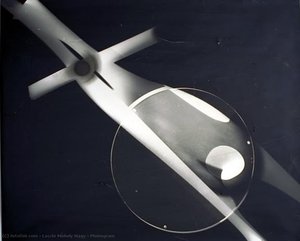
In the realm of modern abstraction, few works capture the rhythmic pulse of the machine age as vibrantly as Q 1 suprematistic. This striking composition serves as a profound testament to the power of geometric reductionism, where every line and shape is stripped of its representational burden to reveal a pure, elemental truth. At the heart of the piece lies a commanding red circle, pierced by a singular, decisive yellow line that cuts through the center like a beam of concentrated light. A solitary black dot anchors the core, providing a gravitational weight that stabilizes the surrounding movement. As the eye wanders from this central focal point, it encounters smaller, ethereal circles drifting in the periphery, creating a sense of cosmic depth and orbital motion that suggests a universe governed by mathematical elegance rather than organic chaos.
The technique employed in this work reflects the radical spirit of the Bauhaus era, where the boundaries between fine art, industrial design, and typography began to dissolve. The artist utilizes a bold, high-contrast palette to evoke an immediate emotional response, utilizing primary colors to stimulate the viewer's senses. There is a palpable tension between the heavy, saturated red and the sharp, kinetic energy of the yellow stroke. This interplay of weight and lightness, of stillness and motion, creates a visual rhythm that feels both ancient in its simplicity and futuristic in its execution. For the discerning collector or interior designer, this piece offers a sophisticated focal point that brings a sense of structured dynamism to any contemporary space.
To understand the soul of Q 1 suprematistic, one must look to the legacy of its creator, László Moholy-Nagy. As a pioneer of Constructivism and a central figure in the Bauhaus movement, Moholy-Nagy sought to integrate the precision of technology with the expressive potential of art. His work was never merely about decoration; it was an exploration of how light, space, and form could redefine human perception in a modern, industrial world. This painting embodies that very philosophy, acting as a window into a structured reality where geometry becomes a language of universal meaning. It is a piece that invites contemplation, urging the viewer to find beauty in the balance of opposing forces—the circle and the line, the dot and the void.
Integrating such a masterpiece into a curated collection or a high-end interior provides more than just aesthetic appeal; it introduces a dialogue between history and modernity. Whether placed in a minimalist gallery setting or as a bold statement piece in a luxury residence, this reproduction captures the enduring allure of the avant-garde. It serves as an inspiration for those who appreciate art that challenges the eye and enriches the spirit, offering a timeless elegance that transcends the fleeting trends of contemporary decor.
Questions & Answers
What is "Q 1 suprematistic" made with?
László Moholy-Nagy used the painting technique for "Q 1 suprematistic". The technique defines the material nature of the original work.
What mood would "Q 1 suprematistic" bring to a space?
The modern atmosphere of "Q 1 suprematistic" by László Moholy-Nagy matches its recommended space: a coworking.
How is the color composition of "Q 1 suprematistic" by László Moholy-Nagy built?
In "Q 1 suprematistic", a serene contrast is paired with a strong color unity harmony.
Artist Biography
László Moholy-Nagy: A Pioneer of Modern Art and the Bauhaus
- Born: Bacs-Kajala, Hungary (1895)
- Died: 1946
László Moholy-Nagy was a profoundly influential Hungarian painter, photographer, sculptor, and designer. He is best known for his significant contributions to the Bauhaus school and his pioneering work in Constructivism, typography, photography, and kinetic art. His artistic philosophy centered on integrating technology and industry into the arts, advocating for a new vision of creativity that embraced the modern world.
Early Life and Influences
- Early Years & Family: Born László Weisz to a Jewish family in Bacsborsód, Hungary, he later adopted the surname Moholy-Nagy. His cousin was the renowned conductor Sir Georg Solti.
- Education and War Service: He initially studied law in Budapest before serving in World War I, sustaining a serious injury. This period exposed him to avant-garde movements through journals like "Jelenkor" and the “activist” circle around Lajos Kassák’s journal "Ma."
- Early Artistic Training: Following his military service, he studied with Hungarian Fauvist artist Róbert Berény, demonstrating an early interest in modern artistic trends. He briefly supported the Hungarian Soviet Republic.
- Key Influences: Moholy-Nagy was heavily influenced by Constructivism and Suprematism, movements that emphasized geometric abstraction and industrial materials. These influences are evident in his later works.
The Bauhaus Years and "New Vision"
- Joining the Bauhaus: In 1923, Moholy-Nagy joined the Bauhaus school in Weimar, Germany, initially co-teaching the preliminary course with Josef Albers and eventually replacing Johannes Itten as head of the metal workshop.
- Shifting the Bauhaus Direction: His arrival marked a shift away from Expressionism towards a more Constructivist and design-oriented approach, aligning with the school’s original aims.
- "New Vision" (Neues Sehen): Moholy-Nagy is most famously known for coining the term "New Vision," which championed the camera's ability to reveal aspects of reality invisible to the human eye. This concept underpinned his photographic and artistic experimentation.
- Photograms: He pioneered the photogram technique – creating images by placing objects directly on light-sensitive paper, without a camera – demonstrating innovative approaches to photography.
- Experimentation with Materials & Technology: Moholy-Nagy embraced industrial materials like metal, plexiglass, and electric lighting in his sculptures and designs, reflecting his belief in the integration of art and technology.
Major Achievements and Innovations
- "Lichtrequisit einer elektrischen bühne" (Light-Space Modulator): Completed in 1930, this kinetic sculpture used moving parts and projected light to create dynamic patterns on surrounding surfaces, considered a precursor to both kinetic art and light art.
- Photography & Film: His photographic work explored abstraction, texture, and movement, often utilizing unconventional techniques like photomontage and experimental lighting. He also ventured into filmmaking.
- Teaching Legacy: As an educator at the Bauhaus and later at the New Bauhaus in Chicago (which he founded), Moholy-Nagy profoundly influenced generations of artists and designers.
- Stage Design & Advertising: Beyond his fine art practice, he designed sets for theatrical productions and created advertising campaigns, demonstrating a versatility that reflected his design philosophy.
Historical Significance
- Pioneer of Modern Art: László Moholy-Nagy stands as a pivotal figure in 20th-century modern art, bridging the gap between painting, sculpture, photography, and industrial design.
- Influence on Bauhaus Design: His contributions to the Bauhaus school were instrumental in shaping its curriculum and aesthetic, leaving a lasting impact on design education worldwide.
- Advocate for Technological Integration: Moholy-Nagy's emphasis on integrating technology into art anticipated many developments in contemporary art practices.
- Legacy of "New Vision": His concept of “New Vision” continues to inspire artists and photographers to explore the possibilities of perception and representation through innovative techniques.

László Moholy-Nagy
1895 - 1946 , Hungary
Quick Facts
- Artistic Movement Or Style: Constructivism, Bauhaus
- Artists Or Movements Influenced By This Artist:
- Marianne Brandt
- György Kepes
- Andor Weininger
- Artists Who Influenced This Artist: ['Robert Berény']
- Date Of Birth: 1895
- Date Of Death: 1946
- Full Name: László Moholy-Nagy
- Nationality: Hungarian
- Notable Artworks:
- Small Composition
- Flower
- Mass Psychosis
- Untitled
- The Storm
- Photogram
- Place Of Birth: Bacs-Kajala, Hungary
Related Articles

Crimson Threads of Narrative: Exploring Symbolism & Representation in Artworks Featuring the Red Dress
Explore the rich symbolism of the red dress in art history! From ancient power displays to iconic portraits like Cézanne’s 'Madame Cezanne', discover the cultural and artistic significance behind this captivating color. Expert analysis & insights.

Geometric Abstraction's 10 Defining Masterpieces | Art for Your Home - OriginalUniqueArt
Explore 10 defining masterpieces of Geometric Abstraction! Discover Kandinsky, Mondrian & Malevich’s iconic works. Find museum-quality art reproductions and curated decor ideas to elevate your home at OriginalUniqueArt.com.

Kandinsky's Masterpieces: 25 Paintings That Define Abstract Art | OriginalUniqueArt
Journey through Wassily Kandinsky's 25 most iconic abstract paintings. Explore his revolutionary use of color, form & spiritual expressionism. Find museum-quality Kandinsky reproductions and elevate your home decor with OriginalUniqueArt.com. Discover all masterpieces on OriginalUniqueArt.com!
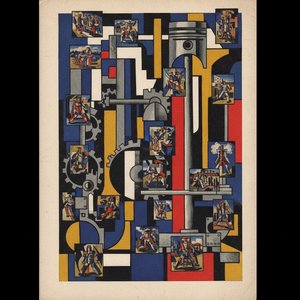
Fernand Léger's Masterpieces: 25 Iconic Paintings & The Machine Age Aesthetic | OriginalUniqueArt
Explore 25 iconic Fernand Léger paintings that defined the Machine Age & Cubism. Discover the stories behind his bold colors, geometric forms & avant-garde style. Find museum-quality art reproductions on OriginalUniqueArt.com.
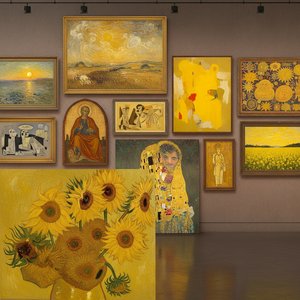
Golden Hues: 10 Masterpieces Dominated by Chrome Yellow | OriginalUniqueArt
Immerse yourself in golden light! Explore 10 famous paintings dominated by 'Chrome Yellow', from Van Gogh’s Sunflowers to Monet's Haystacks. Discover the stories behind these iconic Impressionist & Post-Impressionist masterpieces and find museum-quality art reproductions at OriginalUniqueArt.com.


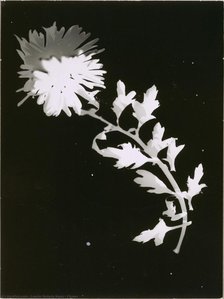




![Untitled [flower]](/media/artworks/images-thumb/eb/0d/eb0d8a64e9e5b1486ea88930be774245.jpg)


