Menu
Text size

() ·

A painting made for you, by hand

Composition (Cross and Circle)\n\nComposition (Cross and Circle)

Hand Made Oil Reproduction

Hand-painted oil on canvas in your size and frame, made to order by our artists. ( Switch to Print Switch to Digital Image)

Collectible Description

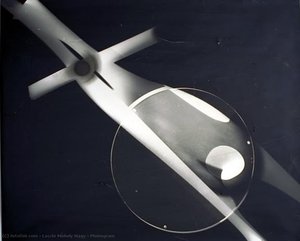
‘Composition (Cross and Circle)’ by László Moholy- Nagy is a 1923 Constructivist painting featuring intersecting cross and circle shapes alongside scattered dots. Displayed at the Museum of Fine Arts in Boston, it exemplifies Moholy-Nagy’s pioneering approach to art integrating technology and industry.

Artist Biography

László Moholy-Nagy (1895-1946) was a visionary Hungarian painter & Bauhaus master. Pioneer of Constructivism, photography & 'New Vision,' blending art with technology.

from ·

Chapter 1

How large should it be?

Slide to change the size; the picture on the left shows the frame at its real width. The proportions of the original are kept.

Standard
custom
CM
INCH

Pick from our preset sizes that match the artwork's original proportions.

width
height

Type the width and the height you need, to fit your frame or your wall. This is hand-painted, so for a size with a different shape the artist can paint a bit more around the picture, or cut a bit — you choose. We send you a digital mockup to approve before the painting starts. The picture shown on this page does not show the real result — only the mockup does.

Chapter 2

How should it arrive?

Choose the edges of the stretched canvas

Choose your frame

Corner sample of the WhiteWrap canvas edge finish, stretched on solid wood bars
White $1
Corner sample of the BlurSideWrap canvas edge finish, stretched on solid wood bars
Blurside $1
Corner sample of the ExtendedWrap canvas edge finish, stretched on solid wood bars
Extended $1
Corner sample of the P118B picture frame: moulded polystyrene, 5 cm wide and 3 cm thick
P118B $10
Corner sample of the P118H picture frame: moulded polystyrene, 5 cm wide and 3 cm thick
P118H $10
Corner sample of the P118W picture frame: moulded polystyrene, 5 cm wide and 3 cm thick
P118W $10
Corner sample of the P438Z picture frame: moulded polystyrene, 5.5 cm wide and 3.5 cm thick
P438Z $10
Corner sample of the P508JH picture frame: moulded polystyrene, 7 cm wide and 3.5 cm thick
P508JH $12
Corner sample of the P508YH picture frame: moulded polystyrene, 7 cm wide and 3.5 cm thick
P508YH $12
Corner sample of the P805H picture frame: moulded polystyrene, 5 cm wide and 3.5 cm thick
P805H $10
Corner sample of the P805Z picture frame: moulded polystyrene, 5 cm wide and 3.5 cm thick
P805Z $10
Corner sample of the P919BZ picture frame: moulded polystyrene, 7 cm wide and 3.5 cm thick
P919BZ $10
Corner sample of the P919G picture frame: moulded polystyrene, 7 cm wide and 3.5 cm thick
P919G $10
Corner sample of the P919XJ picture frame: moulded polystyrene, 7 cm wide and 3.5 cm thick
P919XJ $10
Corner sample of the P959ZH picture frame: moulded polystyrene, 5 cm wide and 3 cm thick
P959ZH $10
Corner sample of the P968JZ picture frame: moulded polystyrene, 6 cm wide and 4 cm thick
P968JZ $12
Corner sample of the W106C picture frame: solid wood, 5 cm wide and 3 cm thick
W106C $8
Corner sample of the W218G picture frame: solid wood, 5 cm wide and 3 cm thick
W218G $10
Corner sample of the W218JH picture frame: solid wood, 5 cm wide and 3 cm thick
W218JH $8
Corner sample of the W218Y picture frame: solid wood, 5 cm wide and 3 cm thick
W218Y $10
Corner sample of the W307PJ picture frame: solid wood, 6 cm wide and 3 cm thick
W307PJ $10
Corner sample of the W316G picture frame: solid wood, 6 cm wide and 3 cm thick
W316G $10
Corner sample of the W316PJ picture frame: solid wood, 6 cm wide and 3 cm thick
W316PJ $8
Corner sample of the W316Y picture frame: solid wood, 6 cm wide and 3 cm thick
W316Y $10
Corner sample of the W398PJ picture frame: solid wood, 5 cm wide and 3 cm thick
W398PJ $8
Corner sample of the W4111J picture frame: solid wood, 6.5 cm wide and 3.5 cm thick
W4111J $10
Corner sample of the W500HY picture frame: solid wood, 7 cm wide and 5 cm thick
W500HY $15
Corner sample of the W500JH picture frame: solid wood, 7 cm wide and 5 cm thick
W500JH $15
Corner sample of the W692G picture frame: solid wood, 8 cm wide and 4 cm thick
W692G $12
Corner sample of the W849H picture frame: solid wood, 5 cm wide and 3 cm thick
W849H $8
Corner sample of the W940BG picture frame: solid wood, 7.5 cm wide and 4.5 cm thick
W940BG $15
Corner sample of the W953PJ picture frame: solid wood, 6 cm wide and 3.5 cm thick
W953PJ $8
Corner sample of the H24-GOLD picture frame: carved wood with gesso, 10 cm wide and 6 cm thick
H24-GOLD $30
Corner sample of the H24-SILVER picture frame: carved wood with gesso, 10 cm wide and 6 cm thick
H24-SILVER $30
Corner sample of the H36-GOLD picture frame: carved wood with gesso, 15 cm wide and 6.5 cm thick
H36-GOLD $45
Corner sample of the H36-SILVER picture frame: carved wood with gesso, 15 cm wide and 6.5 cm thick
H36-SILVER $45
Frame preview
Framed

Moulding: . Overall size with the frame: .

Chapter 3

Who paints it, and should anything change?

Examples of what can be changed: Replace face with customer photo; Add pet (e.g., replace cat with dog); Include hidden message in background; Change background landscape or elements.
After order, OriginalUniqueArt.com team will email client for instructions and provide a mockup preview

Worldwide Delivery () in 3/4 weeks instead of standard 5 weeks. (30 October). No compromise on quality.

Chapter 4

The finishing touches

A nameplate, as in a museum?

Engraved Bronze Plaque Details

This elegant plaque features the artist's name and the title of the artwork, finely engraved for a timeless presentation.

It is made from bronze with a refined, elegant finish. The text is precisely laser-engraved for a sharp and permanent result. Measuring 9x2 cm, the plaque is compact yet easy to read. It's built to be durable and scratch-resistant, offering a professional, museum-quality look. Mounting is simple thanks to the included adhesive backing.

Transparent Acrylic Plaque Details

The plaque includes essential engraved details such as the artist's name, the title of the artwork, the date it was created, the type of media used-like oil on canvas or watercolor-a brief description of the piece, and a QR code that links to the complete artwork information.

It is crafted from clear acrylic, offering a sleek, modern appearance. The text is UV-engraved in black to ensure strong visual contrast. With a size of 10x15 cm, it ensures optimal readability. It comes equipped with two metal hooks for secure wall mounting. The plaque is designed to be weather-resistant, making it suitable for various environments, and it includes interactive features that work seamlessly with smartphone scanning.

Black Acrylic Plaque Details

This elegant plaque includes engraved information such as the artist's name, the title of the artwork, the date it was created, the type of media used (like oil on canvas or watercolor), a short description of the artwork, and a QR code for quick access to more information.

The plaque itself is made from refined black acrylic with a premium finish. The text is laser-engraved in white for high contrast and readability. Its size is 10x15 cm, designed to be easy to read. It comes with two metal hooks for professional mounting. The design is sleek and fits any interior style. It is also weather-resistant and durable, with built-in digital integration for mobile compatibility.

A protective varnish?

When do you need it?

Chapter 5

Your painting, as you ordered it

Composition (Cross and Circle)\n\nComposition (Cross and Circle)

Reproduction Medium

Reproduction Size

-

Elite Senior Artist

More detail, finesse, and extra production time

-

Reproduction Frame

-

-

For artworks or reproductions larger than 105 cm (approximately 41 inches) on any side, the frame will be shipped as a kit, disassembled. This method ensures safe delivery and prevents damage during transport.

Professional assembly required - this is not a DIY product.
The kit must be assembled and the canvas stretched by an experienced professional framer, using wood glue (not supplied), a canvas stretching plier and clamps to hold the bars square while the glue dries. Incorrect assembly or uneven canvas tension can permanently damage the artwork and is not covered by our warranty.

  • All solid wood bars are included, precisely cut to size.

  • Assembled with the screws provided, plus wood glue for the corner joints, which is not supplied and must be sourced by your framer.

  • Professional tools are required and not included: a canvas stretching plier (tensioner) and clamps to hold the bars square while the glue dries.

Important:
The corner joints require wood glue, the bars must be held with clamps until the glue is fully dry, and tightening the canvas on the assembled frame requires a canvas stretching plier. None of these are included in the kit. Please arrange an experienced professional framer before ordering this size.

Nameplate

-

-

Protective Varnish

Glossy Varnish (enhances colors, protects against light/moisture)

-

Customize My Artwork

Examples of what can be changed: Replace face with customer photo; Add pet (e.g., replace cat with dog); Include hidden message in background; Change background landscape or elements.

-

Urgent

Worldwide Delivery () in 3/4 weeks instead of standard 5 weeks. (30 October). No compromise on quality.

-

Express Shipping

Worldwide Delivery () in 5 weeks. (6 November).

Included

Total Price

$ 300

Total Price $ 300

Glass option is only available in size under 110 CM

Included with every order

  • Free Worldwide Express Shipping
  • High-Quality Linen Canvas
  • Full Shipping Insurance
  • Customs Tax Refund Guarantee
  • True Color Matching Guarantee
  • 100-Day Return Policy (Defects Only)
  • 100% Money-Back Guarantee
  • Bulk Discount Offer

Composition (Cross and Circle): A Pioneer’s Vision of Geometric Abstraction

László Moholy-Nagy's "Composition (Cross and Circle)" stands as a cornerstone of Constructivism, embodying the movement’s radical embrace of industrial materials and geometric abstraction. Created in 1923 during his pivotal time at the Bauhaus school in Weimar, Germany, this deceptively simple painting—measuring just 7 x 11 cm—commands considerable artistic significance despite its diminutive size. It resides within the Museum of Fine Arts in Boston, a testament to its enduring appeal and scholarly recognition.
  • Style: Constructivism – Rejecting Impressionism’s focus on subjective perception, Constructivism championed objectivity and rationality, prioritizing geometric forms—primarily intersecting lines and circles—to represent reality.
  • Technique: Executed in black ink on white paper, Moholy-Nagy utilized a precise linework technique to delineate the cross and circle shapes. The stark contrast between black and white amplifies the visual impact, emphasizing the purity of form and minimizing any illusionistic depth.
  • Historical Context: Bauhaus emerged as an avant-garde architectural school founded in 1919 with a mission to fuse art, craft, and technology. Moholy-Nagy’s involvement reflected this broader ambition—to reimagine the role of artists within society by exploring new mediums and methodologies.
Symbolism & Conceptual Depth: The intersecting cross and circle motif transcends mere visual representation; it speaks to fundamental concepts underpinning Constructivism. The cross symbolizes stability and hierarchy, while the circle embodies unity and infinite expansion—a deliberate juxtaposition designed to provoke contemplation about opposing forces shaping existence. Moholy-Nagy’s intention was not simply to depict a form but to convey an idea – a “New Vision” as he termed it – mirroring the Bauhaus ethos of experimentation and intellectual rigor.
  • Influence: Moholy-Nagy drew inspiration from Suprematism, pioneered by Kazimir Malevich, which similarly prioritized geometric abstraction as a pathway to spiritual enlightenment.
  • Beyond Aesthetics: The painting’s impact extends beyond its visual qualities. It represents a crucial step in the evolution of art toward embracing technological advancements and questioning traditional artistic conventions.
The artwork's emotional resonance lies in its understated elegance—a deliberate rejection of expressive gestures in favor of intellectual clarity. “Composition (Cross and Circle)” invites viewers to engage in a dialogue with form itself, prompting reflection on the relationship between order and chaos, certainty and ambiguity. It remains an exemplary illustration of Constructivism’s transformative vision for art and design, securing its place as a landmark achievement in 20th-century artistic history. Additional Resources: For further exploration, consider visiting WikiArt () and Yale University Art Gallery (); reproductions are available at OriginalUniqueArt.com () offering high-quality prints and digital mockups.

Questions & Answers

How does the style of "Composition (Cross and Circle)\n\nComposition (Cross and Circle)" relate to its creator's era?

"Composition (Cross and Circle)\n\nComposition (Cross and Circle)" by László Moholy-Nagy is placed in the Constructivism movement, within the Modern era of its creator.

Can I watch "Composition (Cross and Circle)\n\nComposition (Cross and Circle)" as a full-screen slideshow?

The diaporama of "Composition (Cross and Circle)\n\nComposition (Cross and Circle)" can be watched on the artwork's Diaporama page.

How big is the original "Composition (Cross and Circle)\n\nComposition (Cross and Circle)"?

"Composition (Cross and Circle)\n\nComposition (Cross and Circle)" measures 7 x 11 cm in its original form. Original dimensions are a useful reference when choosing a reproduction size.

More about this painting

Preview AR preview Switch to Print Switch to Digital Image Send
Details Guide Add to favorites Download Similars X-Ray Diaporama Q&A Stats

In numbers

  • 1923the year it was painted
  • 29frames to choose from
  • standard sizes, in its own proportions
  • 5weeks to paint and deliver it
László Moholy-Nagy

László Moholy-Nagy

1895 - 1946, Hungary

Quick facts about László Moholy-Nagy

  • Artistic Movement Or Style: Constructivism, Bauhaus
  • Artists Or Movements Influenced By This Artist:
    • Marianne Brandt
    • György Kepes
    • Andor Weininger
  • Artists Who Influenced This Artist: ['Robert Berény']
  • Date Of Birth: 1895
  • Date Of Death: 1946
  • Full Name: László Moholy-Nagy
  • Nationality: Hungarian
  • Notable Artworks:
    • Small Composition
    • Flower
    • Mass Psychosis
    • Untitled
    • The Storm
    • Photogram
  • Place Of Birth: Bacs-Kajala, Hungary

Artist Biography

László Moholy-Nagy: A Pioneer of Modern Art and the Bauhaus

  • Born: Bacs-Kajala, Hungary (1895)
  • Died: 1946

László Moholy-Nagy was a profoundly influential Hungarian painter, photographer, sculptor, and designer. He is best known for his significant contributions to the Bauhaus school and his pioneering work in Constructivism, typography, photography, and kinetic art. His artistic philosophy centered on integrating technology and industry into the arts, advocating for a new vision of creativity that embraced the modern world.

Early Life and Influences

  • Early Years & Family: Born László Weisz to a Jewish family in Bacsborsód, Hungary, he later adopted the surname Moholy-Nagy. His cousin was the renowned conductor Sir Georg Solti.
  • Education and War Service: He initially studied law in Budapest before serving in World War I, sustaining a serious injury. This period exposed him to avant-garde movements through journals like "Jelenkor" and the “activist” circle around Lajos Kassák’s journal "Ma."

  • Early Artistic Training: Following his military service, he studied with Hungarian Fauvist artist Róbert Berény, demonstrating an early interest in modern artistic trends. He briefly supported the Hungarian Soviet Republic.
  • Key Influences: Moholy-Nagy was heavily influenced by Constructivism and Suprematism, movements that emphasized geometric abstraction and industrial materials. These influences are evident in his later works.

The Bauhaus Years and "New Vision"

  • Joining the Bauhaus: In 1923, Moholy-Nagy joined the Bauhaus school in Weimar, Germany, initially co-teaching the preliminary course with Josef Albers and eventually replacing Johannes Itten as head of the metal workshop.
  • Shifting the Bauhaus Direction: His arrival marked a shift away from Expressionism towards a more Constructivist and design-oriented approach, aligning with the school’s original aims.
  • "New Vision" (Neues Sehen): Moholy-Nagy is most famously known for coining the term "New Vision," which championed the camera's ability to reveal aspects of reality invisible to the human eye. This concept underpinned his photographic and artistic experimentation.
  • Photograms: He pioneered the photogram technique – creating images by placing objects directly on light-sensitive paper, without a camera – demonstrating innovative approaches to photography.
  • Experimentation with Materials & Technology: Moholy-Nagy embraced industrial materials like metal, plexiglass, and electric lighting in his sculptures and designs, reflecting his belief in the integration of art and technology.

Major Achievements and Innovations

  • "Lichtrequisit einer elektrischen bühne" (Light-Space Modulator): Completed in 1930, this kinetic sculpture used moving parts and projected light to create dynamic patterns on surrounding surfaces, considered a precursor to both kinetic art and light art.
  • Photography & Film: His photographic work explored abstraction, texture, and movement, often utilizing unconventional techniques like photomontage and experimental lighting. He also ventured into filmmaking.
  • Teaching Legacy: As an educator at the Bauhaus and later at the New Bauhaus in Chicago (which he founded), Moholy-Nagy profoundly influenced generations of artists and designers.
  • Stage Design & Advertising: Beyond his fine art practice, he designed sets for theatrical productions and created advertising campaigns, demonstrating a versatility that reflected his design philosophy.

Historical Significance

  • Pioneer of Modern Art: László Moholy-Nagy stands as a pivotal figure in 20th-century modern art, bridging the gap between painting, sculpture, photography, and industrial design.
  • Influence on Bauhaus Design: His contributions to the Bauhaus school were instrumental in shaping its curriculum and aesthetic, leaving a lasting impact on design education worldwide.
  • Advocate for Technological Integration: Moholy-Nagy's emphasis on integrating technology into art anticipated many developments in contemporary art practices.
  • Legacy of "New Vision": His concept of “New Vision” continues to inspire artists and photographers to explore the possibilities of perception and representation through innovative techniques.

Quick Facts

  • Notable elements or techniques: Geometric abstraction; Cross and circle shapes.
  • Location: Museum of Fine Arts Boston
  • Influences: Bauhaus
  • Title: Composition (Cross and Circle)
  • Movement: Constructivism
  • Subject or theme: Composition

Art Quiz

There is only one correct answer for each question.

Question 1:
What artistic movement is László Moholy-Nagy’s ‘Composition (Cross and Circle)’ primarily associated with?
Question 2:
In what year was ‘Composition (Cross and Circle)’ created?
Question 3:
Where is ‘Composition (Cross and Circle)’ currently displayed?
Question 4:
What geometric shapes dominate the visual design of the painting?
Question 5:
‘Composition (Cross and Circle)’ exemplifies Moholy-Nagy’s belief in the importance of integrating what into artistic practice?