

 Preview
 Send
Send Share
Share
 Details
 Guide
Guide

 Download
 Similars
 X-Ray
X-Ray Diaporama
 Q&A
Q&A Stats
StatsPaul Hartland Carnival. Composition with two masks .


 Read More
Giclée / Art Print
Museum-quality giclée or canvas print with fast production and flexible finish options. ( Buy Hand Made Painting Switch to Digital Image)




P118B $10

P118H $10

P118W $10

P438Z $10

P508JH $12

P508YH $12

P805H $10

P805Z $10

P919BZ $10

P919G $10

P919XJ $10

P959ZH $10

P968JZ $12

W106C $8

W218G $10

W218JH $8

W218Y $10

W307PJ $10

W316G $10

W316PJ $8

W316Y $10

W398PJ $8

W4111J $10

W500HY $15

W500JH $15

W692G $12

W849H $8

W940BG $15

W953PJ $8




Pick from our preset sizes that match the artwork's original proportions.

Type the width and the height you need, to fit your frame or your wall. A print can only be cut, never made bigger than the picture, so a size with a different shape loses a part of the image. We send you a digital mockup to approve before we print anything. The picture shown on this page does not show the real cut — only the mockup does.
Worldwide Delivery () in 2 weeks instead of standard 4/5 weeks. (31 October)

Free Worldwide Express Shipping

High-Quality Linen Canvas

Full Shipping Insurance

Customs Tax Refund Guarantee

True Color Matching Guarantee

100-Day Return Policy (Defects Only)

100% Money-Back Guarantee

Bulk Discount Offer
 Glass option is only available in size under 110 CM

Paul Hartland Carnival. Composition with two masks .
Giclée / Art Print
Reproduction Size
-


Total Price
$ 81
The Dreamlike World of László Moholy-Nagy: Unveiling “Paul Hartland Carnival”
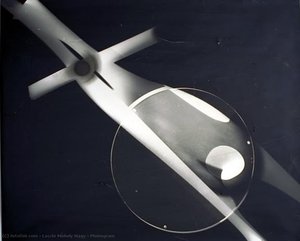
László Moholy-Nagy’s “Paul Hartland Carnival. Composition with two masks.”, created in 1934, isn't merely a painting; it’s an immersive journey into the subconscious, a vibrant collision of memory and illusion rendered in bold colors and fragmented forms. This artwork, now available as a high-quality reproduction through OriginalUniqueArt.com, stands as a testament to Moholy-Nagy’s pioneering spirit – his relentless experimentation with photography, collage, and the very nature of perception. It's a piece that immediately demands attention, pulling the viewer into its dreamlike atmosphere and prompting questions about identity, representation, and the power of visual language.
At first glance, the composition appears chaotic—two figures, their faces obscured by layers of textured material, dominate the central space. However, a closer look reveals a carefully orchestrated balance. Sharp angular lines intersect with softer curves, creating a dynamic tension that mirrors the complexities of human experience. The use of reflective surfaces – cellophane, perhaps, or other translucent materials – adds an ethereal quality, blurring the boundaries between reality and illusion. Fragments of what seem to be photographs, printed matter, and even architectural elements are interwoven, suggesting a world constructed from disparate memories and experiences.
A Pioneer of “New Vision”: Moholy-Nagy’s Artistic Philosophy
To fully appreciate “Paul Hartland Carnival,” it's crucial to understand the context of Moholy-Nagy’s artistic philosophy, which he termed "New Vision." Rejecting traditional notions of representation, he believed that photography could reveal hidden aspects of reality – a world beyond what the eye perceives. This concept profoundly influenced his work, leading him to experiment with photograms (images created by placing objects directly on light-sensitive paper) and other techniques designed to manipulate perception. He sought to capture not just appearances but also the *feeling* of a subject, translating it into visual form.
The artwork’s vibrant color palette – dominated by reds, yellows, and blues – further reinforces this sense of heightened emotion and subjective experience. These aren't naturalistic colors; they are deliberately chosen to evoke specific moods and sensations. The use of contrasting hues creates a dynamic visual rhythm, drawing the eye across the composition and adding to its overall intensity.
Historical Context: Dadaism, Constructivism, and the Dawn of Modernity
“Paul Hartland Carnival” was created during a period of profound social and artistic upheaval. The early 1930s witnessed the rise of Dadaism in Europe, a movement that challenged traditional notions of art and embraced absurdity and anti-establishment sentiment. Simultaneously, Constructivism – a Russian avant-garde movement focused on geometric abstraction and industrial materials – was gaining momentum. Moholy-Nagy’s work reflects these influences, blending elements of both styles while forging his own unique visual language.
His time at the Bauhaus school in Weimar further shaped his artistic approach, emphasizing design principles and exploring new technologies. The artwork's fragmented composition and use of unconventional materials can be seen as a direct response to the rapidly changing world around him – a world grappling with industrialization, urbanization, and the anxieties of modernity. It’s a visual echo of the era’s dynamism and uncertainty.
Symbolism and Emotional Resonance: A Portrait of the Psyche
While the specific meaning of “Paul Hartland Carnival” remains open to interpretation, it's clear that the two masked figures represent something deeper than mere portraits. They could symbolize duality, hidden identities, or perhaps the fragmented nature of selfhood. The masks themselves suggest a deliberate concealment, inviting us to question what lies beneath the surface.
Ultimately, this artwork is an invitation to engage with our own subconscious – to explore the layers of memory, emotion, and experience that shape our perceptions. It’s a powerful reminder of the transformative potential of art, capable of transporting us beyond the realm of the literal and into the depths of the human psyche. A reproduction of “Paul Hartland Carnival” offers a captivating glimpse into Moholy-Nagy's visionary world, bringing this extraordinary piece to your home or office.
Questions & Answers
What is the creation date of "Paul Hartland Carnival. Composition with two masks ." by László Moholy-Nagy?
"Paul Hartland Carnival. Composition with two masks ." dates from 1934. The date places the work within László Moholy-Nagy's career and its era.
What luminance does "Paul Hartland Carnival. Composition with two masks ." by László Moholy-Nagy have?
"Paul Hartland Carnival. Composition with two masks ." by László Moholy-Nagy has a bright balance luminance. Luminance describes how much light the colors appear to reflect.
At what size is "Paul Hartland Carnival. Composition with two masks ." suggested for a living room?
In a living room, "Paul Hartland Carnival. Composition with two masks ." is suggested at a large print size.
Artist Biography
László Moholy-Nagy: A Pioneer of Modern Art and the Bauhaus
- Born: Bacs-Kajala, Hungary (1895)
- Died: 1946
László Moholy-Nagy was a profoundly influential Hungarian painter, photographer, sculptor, and designer. He is best known for his significant contributions to the Bauhaus school and his pioneering work in Constructivism, typography, photography, and kinetic art. His artistic philosophy centered on integrating technology and industry into the arts, advocating for a new vision of creativity that embraced the modern world.
Early Life and Influences
- Early Years & Family: Born László Weisz to a Jewish family in Bacsborsód, Hungary, he later adopted the surname Moholy-Nagy. His cousin was the renowned conductor Sir Georg Solti.
- Education and War Service: He initially studied law in Budapest before serving in World War I, sustaining a serious injury. This period exposed him to avant-garde movements through journals like "Jelenkor" and the “activist” circle around Lajos Kassák’s journal "Ma."
- Early Artistic Training: Following his military service, he studied with Hungarian Fauvist artist Róbert Berény, demonstrating an early interest in modern artistic trends. He briefly supported the Hungarian Soviet Republic.
- Key Influences: Moholy-Nagy was heavily influenced by Constructivism and Suprematism, movements that emphasized geometric abstraction and industrial materials. These influences are evident in his later works.
The Bauhaus Years and "New Vision"
- Joining the Bauhaus: In 1923, Moholy-Nagy joined the Bauhaus school in Weimar, Germany, initially co-teaching the preliminary course with Josef Albers and eventually replacing Johannes Itten as head of the metal workshop.
- Shifting the Bauhaus Direction: His arrival marked a shift away from Expressionism towards a more Constructivist and design-oriented approach, aligning with the school’s original aims.
- "New Vision" (Neues Sehen): Moholy-Nagy is most famously known for coining the term "New Vision," which championed the camera's ability to reveal aspects of reality invisible to the human eye. This concept underpinned his photographic and artistic experimentation.
- Photograms: He pioneered the photogram technique – creating images by placing objects directly on light-sensitive paper, without a camera – demonstrating innovative approaches to photography.
- Experimentation with Materials & Technology: Moholy-Nagy embraced industrial materials like metal, plexiglass, and electric lighting in his sculptures and designs, reflecting his belief in the integration of art and technology.
Major Achievements and Innovations
- "Lichtrequisit einer elektrischen bühne" (Light-Space Modulator): Completed in 1930, this kinetic sculpture used moving parts and projected light to create dynamic patterns on surrounding surfaces, considered a precursor to both kinetic art and light art.
- Photography & Film: His photographic work explored abstraction, texture, and movement, often utilizing unconventional techniques like photomontage and experimental lighting. He also ventured into filmmaking.
- Teaching Legacy: As an educator at the Bauhaus and later at the New Bauhaus in Chicago (which he founded), Moholy-Nagy profoundly influenced generations of artists and designers.
- Stage Design & Advertising: Beyond his fine art practice, he designed sets for theatrical productions and created advertising campaigns, demonstrating a versatility that reflected his design philosophy.
Historical Significance
- Pioneer of Modern Art: László Moholy-Nagy stands as a pivotal figure in 20th-century modern art, bridging the gap between painting, sculpture, photography, and industrial design.
- Influence on Bauhaus Design: His contributions to the Bauhaus school were instrumental in shaping its curriculum and aesthetic, leaving a lasting impact on design education worldwide.
- Advocate for Technological Integration: Moholy-Nagy's emphasis on integrating technology into art anticipated many developments in contemporary art practices.
- Legacy of "New Vision": His concept of “New Vision” continues to inspire artists and photographers to explore the possibilities of perception and representation through innovative techniques.

László Moholy-Nagy
1895 - 1946 , Hungary
Quick Facts
- Artistic Movement Or Style: Constructivism, Bauhaus
- Artists Or Movements Influenced By This Artist:
- Marianne Brandt
- György Kepes
- Andor Weininger
- Artists Who Influenced This Artist: ['Robert Berény']
- Date Of Birth: 1895
- Date Of Death: 1946
- Full Name: László Moholy-Nagy
- Nationality: Hungarian
- Notable Artworks:
- Small Composition
- Flower
- Mass Psychosis
- Untitled
- The Storm
- Photogram
- Place Of Birth: Bacs-Kajala, Hungary
Related Articles
Pop Surrealism: A Collision of Culture, Dreams & the Subconscious in Post-War Art
Explore the captivating world of Pop Surrealism with OriginalUniqueArt. Discover key artists like George Condo & Robert Williams, investment potential, and the movement's cultural impact. Expert insights for collectors.
Unveiling the Mystery: A Journey Through the World's Most Iconic Mask Artworks
Embark on a profound journey through the world's most iconic mask artworks. Explore the spiritual depth, intricate craftsmanship, and rich cultural heritage of global traditions, from Chhau to Gomira, in this expert-led exploration of ancestral artistry and symbolic beauty.
Pop Surrealism Unveiled: The Sophisticated Intersection of Vibrant Pop Art and Dreamlike Subconscious Landscapes
Explore the captivating world of Pop Surrealism. Discover how vibrant Pop Art meets dreamlike subconscious imagery through the works of masters like Jeff Soto and Ryan Heshka. An expert guide for discerning collectors seeking to understand this profound contemporary art movement.
More Than Meets the Eye: Decoding the Hidden Symbols and Bold Layers of Allegorical Pop Art
Unlock the secrets of Pop Art. From Warhol's influence to aggressive modern aesthetics, we decode the bold layers and hidden symbols in contemporary icons. Elevate your urban space with high-impact, hand-painted reproductions and custom commissions designed for the bold.

Pop Surrealism: A Sophisticated Convergence of Cultural Icons and Dreamlike Landscapes
Embark on a curated journey through Pop Surrealism, where vibrant cultural icons collide with the profound depths of the subconscious. An authoritative exploration for discerning collectors seeking to masterfully integrate dreamlike landscapes and bold aesthetics into modern interiors.






![Untitled [flower]](/media/artworks/images-thumb/eb/0d/eb0d8a64e9e5b1486ea88930be774245.jpg)


