
 Preview
 Send
Send Share
Share
 Details
 Guide
Guide

 Download
 Similars
 X-Ray
X-Ray Diaporama
 Q&A
Q&A Stats
StatsLES LANDES


 Read More
Giclée / Art Print
Museum-quality giclée or canvas print with fast production and flexible finish options. ( Buy Hand Made Painting Switch to Digital Image)




P118B $10

P118H $10

P118W $10

P438Z $10

P508JH $12

P508YH $12

P805H $10

P805Z $10

P919BZ $10

P919G $10

P919XJ $10

P959ZH $10

P968JZ $12

W106C $8

W218G $10

W218JH $8

W218Y $10

W307PJ $10

W316G $10

W316PJ $8

W316Y $10

W398PJ $8

W4111J $10

W500HY $15

W500JH $15

W692G $12

W849H $8

W940BG $15

W953PJ $8




Pick from our preset sizes that match the artwork's original proportions.

Type the width and the height you need, to fit your frame or your wall. A print can only be cut, never made bigger than the picture, so a size with a different shape loses a part of the image. We send you a digital mockup to approve before we print anything. The picture shown on this page does not show the real cut — only the mockup does.
Worldwide Delivery () in 2 weeks instead of standard 4/5 weeks. (7 November)

Free Worldwide Express Shipping

High-Quality Linen Canvas

Full Shipping Insurance

Customs Tax Refund Guarantee

True Color Matching Guarantee

100-Day Return Policy (Defects Only)

100% Money-Back Guarantee

Bulk Discount Offer
 Glass option is only available in size under 110 CM

LES LANDES
Giclée / Art Print
Reproduction Size
-


Total Price
$ 81
A Symphony of Earth and Sky
In the quietude of Jules Dupré’s “Les Landes,” painted around 1841, we find ourselves transported to a realm where the boundary between the earth and the heavens feels beautifully blurred. This masterpiece serves as a quintessential window into the Barbizon School, a movement that sought to strip away the artifice of academic perfection in favor of a raw, honest dialogue with the natural world. The scene unfolds across a vast, undulating field, captured under the heavy, contemplative weight of an overcast sky. There is no dramatic storm here, nor a blinding sun; instead, Dupré presents us with the subtle, breathing reality of a landscape in repose. The composition is anchored by powerful horizontal lines—the distant horizon and the rhythmic swells of the meadow—which instill a profound sense of stability and immense spaciousness, inviting the viewer to step into the frame and wander through the tall grasses.
The technical mastery of Dupré lies in his ability to manipulate atmosphere through a sophisticated use of atmospheric perspective. Rather than relying on sharp, clinical outlines, he employs loose, expressive brushstrokes that allow colors to bleed and merge, mimicking the way mist and light soften the distant trees. The palette is a masterclass in restraint, dominated by earthy browns, muted group-greens, and somber grays that reflect the subdued lighting of a cloudy afternoon. Yet, just as the eye begins to settle into the melancholy, Dupré introduces a sudden, breathtaking moment of grace: small patches of warmth where sunlight pierces through the cloud cover, illuminating fragments of the field with a golden glow. This interplay of light and shadow creates a textured, impasto surface that gives the painting a physical presence, making the very materiality of the oil paint feel as organic as the landscape it depicts.
The Soul of the Barbizon Landscape
Beyond its visual splendor, “Les Landes” carries a deep emotional resonance that speaks to the human condition. As a cornerstone figure of the Barbizon movement, Dupré was known for his ability to capture the more tempestuous and melancholic aspects of nature, yet in this particular work, he achieves a rare state of tranquil introspection. The vastness of the landscape serves as a symbol of resilience and the enduring cycle of life, while the solitude of the scene evokes a sense of peaceful isolation. For the modern collector or interior designer, this piece offers more than mere decoration; it provides an emotional anchor. It is a work that commands attention through its quiet strength, making it an ideal centerpiece for a space dedicated to reflection, study, or sophisticated repose.
Integrating a high-quality reproduction of such a significant work into a curated interior can transform the atmosphere of a room, adding layers of historical depth and organic texture. Whether placed in a contemporary setting to provide a soft, natural contrast or within a more traditional gallery-style arrangement, “Les Landes” brings with it the spirit of 19th-century French Romanticism. It is an invitation to slow down, to observe the subtle gradations of light, and to reconnect with the profound, quiet beauty that exists in the untamed corners of our world.
Questions & Answers
What explains the copyright situation of "LES LANDES" by Jules Dupré?
"LES LANDES" by Jules Dupré is in the public domain - its copyright has expired. Copyright duration runs from the artist's death, which occurred in 1889.
What is a reproduction of "LES LANDES" by Jules Dupré recommended for?
The suggested use for "LES LANDES" by Jules Dupré is accent. It can serve other purposes as well.
What space matches the colors of "LES LANDES" by Jules Dupré?
Considering its earthy colors, "LES LANDES" is suggested for a living room.
Artist Biography
The Dramatic Soul of Barbizon
Jules Dupré (1811–1889) stands as a cornerstone figure within the Barbizon School, an artistic movement that championed raw observation and emotional resonance in landscape painting. Unlike his contemporaries like Corot who often sought lyrical beauty and tranquil stillness, Dupré wrestled with the darker, more tempestuous side of nature. He possessed a unique ability to capture the fury of storms, the melancholic grandeur of twilight, and the relentless energy of the elements, conveying these experiences with unparalleled intensity. Born in Nantes, France, Dupré’s artistic journey began amidst a burgeoning fascination for the natural world and its capacity to evoke profound, often turbulent, human feelings.
His early life provided a foundation of meticulous attention to detail and an appreciation for craftsmanship, qualities honed by his father’s porcelain manufacturing business. This formative experience would later translate into his own artistic endeavors, particularly evident in his early works exploring the intricacies of ceramic decoration. As an apprentice porcelain decorator, he learned the discipline of fine lines and textures, a skill set that would eventually evolve into his masterful handling of atmospheric depth and organic forms.
A Vision Shaped by Storm and Sky
The trajectory of Dupré’s career was irrevocably shaped by his encounter with the groundbreaking canvases of John Constable. This exposure to English landscape traditions ignited a desire to capture the essence of nature’s dynamism—the relentless push and pull of wind-driven foliage and the dramatic interplay of light and shadow during the most volatile hours of the day. Traveling to Great Britain in 1831, Dupré made profound studies of these English masters, returning to France with a portfolio of imagery that would redefine his approach to the landscape.
He found particular inspiration in the coastal districts around Southampton and Plymouth. These vast expanses of water, reflecting turbulent skies, provided him with the perfect laboratory to study the tempestuous motion of storm clouds and the movement of seas. His paintings from this period are not merely depictions of scenery; they are visceral expressions of mood and feeling, imbued with a palpable sense of drama and even sorrow. By embracing the Barbizon aesthetic, Dupré prioritized expressive color palettes and bold brushstrokes over idealized or polished representations, allowing the texture of the paint itself to mirror the ruggedness of the earth.
Legacy of the Barbizon Master
As a key figure in the Barbizon group, Dupré developed close ties with other legendary painters, including Théodore Rousseau. His rise within the French art establishment was marked by significant milestones, such as his acceptance into the Salon and receiving official recognition through medals for his landscapes. His work became synonymous with a certain sonorous and resonant color harmony, where the light of a setting sun or the gloom of an approaching gale could be felt by the viewer as much as seen.
Today, Jules Dupré is remembered as one of the most influential 19th-century French landscape artists. His contribution to art lies in his ability to bridge the gap between pure observation and romantic emotion. Through works such as La Petite Charrette, Cows Crossing a Ford, and his evocative depictions of river landscapes, he taught generations of artists that nature is not just a subject to be painted, but a powerful force to be experienced. His legacy remains etched in the heavy, atmospheric textures and the dramatic, breathing skies that continue to captivate the modern imagination.

Jules Dupré
1811 - 1889 , France
Quick Facts
- Full Name: Jules Dupré
- Nationality: French
- Date Of Birth: 1811
- Date Of Death: 1889
- Place Of Birth: Nantes, France
- Notable Artworks:
- Morning and Evening at the Louvre
- Crossing the Bridge in the Wallace Collection
- Artistic Movement Or Style: Barbizon School
- Artists Who Influenced This Artist: ['Constable']
- Artists Or Movements Influenced By This Artist: ['Romantic Painting']
Related Articles
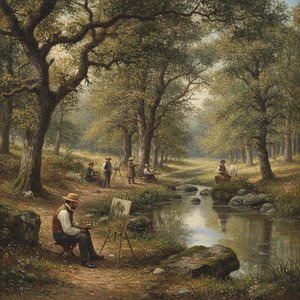
The Barbizon School: The Revolution of Naturalism and the Birth of Plein Air Landscape Painting
Explore the profound impact of the Barbizon School on landscape painting. Discover how masters like Rousseau and Corot revolutionized art through plein air naturalism, moving from academic idealism to the authentic beauty of the French countryside.

Evoking Nature's Sublime: A Comprehensive Exploration of 19th-Century Landscape Painting
Explore the captivating world of 19th-century landscape painting! Discover renowned artists like Friedrich & Monet, key movements, and find the perfect artwork to bring nature's serenity into your home. Expert insights at OriginalUniqueArt.

The Barbizon School: A Professional Guide to Naturalism and Landscape Mastery for Interior Designers
Explore the Barbizon School's mastery of naturalism. An expert guide for hotel designers and procurement managers on sourcing high-quality landscape reproductions to elevate hospitality and corporate interiors with authentic, large-scale fine art solutions.
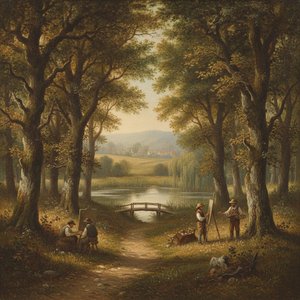
The Barbizon School: Discovering the Masters of Naturalistic Landscape Painting and the Birth of Realism
Explore the revolutionary Barbizon School and its masters, from Corot to Rousseau. Discover how these pioneers of plein air painting redefined landscape art through naturalism. Find museum-quality hand-painted reproductions and expert art insights at OriginalUniqueArt.com.

Romantic Landscapes: 10 Masterpieces for Your Home | OriginalUniqueArt
Journey through 10 Romantic landscape masterpieces by Friedrich, Turner & Cole. Explore emotional art, sublime nature scenes & iconic 19th-century paintings. Find museum-quality reproductions for your home at OriginalUniqueArt.com – discover the full collection online!


