Preview
 Send
Send Share
Share
 Details
 Guide
Guide

 Download
 Similars
 X-Ray
X-Ray Diaporama
 Q&A
Q&A Stats
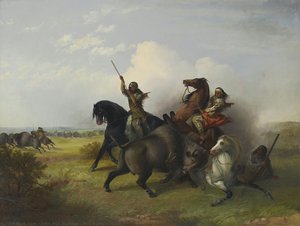
StatsMountain Landscape with Indians


 Read More
Giclée / Art Print
Museum-quality giclée or canvas print with fast production and flexible finish options. ( Buy Hand Made Painting Switch to Digital Image)




P118B $10

P118H $10

P118W $10

P438Z $10

P508JH $12

P508YH $12

P805H $10

P805Z $10

P919BZ $10

P919G $10

P919XJ $10

P959ZH $10

P968JZ $12

W106C $8

W218G $10

W218JH $8

W218Y $10

W307PJ $10

W316G $10

W316PJ $8

W316Y $10

W398PJ $8

W4111J $10

W500HY $15

W500JH $15

W692G $12

W849H $8

W940BG $15

W953PJ $8




Pick from our preset sizes that match the artwork's original proportions.

Type the width and the height you need, to fit your frame or your wall. A print can only be cut, never made bigger than the picture, so a size with a different shape loses a part of the image. We send you a digital mockup to approve before we print anything. The picture shown on this page does not show the real cut — only the mockup does.
Worldwide Delivery () in 2 weeks instead of standard 4/5 weeks. (2 November)

Free Worldwide Express Shipping

High-Quality Linen Canvas

Full Shipping Insurance

Customs Tax Refund Guarantee

True Color Matching Guarantee

100-Day Return Policy (Defects Only)

100% Money-Back Guarantee

Bulk Discount Offer
 Glass option is only available in size under 110 CM

Mountain Landscape with Indians
Giclée / Art Print
Reproduction Size
-


Total Price
$ 81
A Pioneer’s Vision: John Mix Stanley's “Mountain Landscape with Indians”
John Mix Stanley’s “Mountain Landscape with Indians,” painted circa 1870-75, isn’t merely a depiction of the American West; it’s a carefully constructed narrative of exploration, cultural encounter, and the burgeoning romanticism of the era. This oil on canvas, now housed within the Detroit Institute of Arts, offers a glimpse into a pivotal moment in American art history – a time when artists were actively seeking to document and interpret the vast, untamed territories of the nation. Stanley’s work stands as a testament to his dedication to capturing both the grandeur of the landscape and the dignity of its indigenous inhabitants, a perspective increasingly rare for the period.
The painting immediately draws the eye with its dramatic composition. A towering mountain range dominates the background, its snow-capped peaks piercing a hazy blue sky – a classic Romantic motif emphasizing the sublime power of nature. Below, a verdant valley unfolds, bisected by a winding river and dotted with small settlements nestled amongst the trees. Yet, it’s not just the landscape that commands attention; several canoes glide across the lake, carrying figures who suggest both peaceful coexistence and the subtle tension inherent in interactions between settlers and Native American tribes. The inclusion of these boats subtly hints at the burgeoning trade and interaction between cultures, a complex dynamic often overlooked in simpler portrayals of westward expansion.
The Artist’s Journey: Stanley's Western Odyssey
Understanding “Mountain Landscape with Indians” requires appreciating John Mix Stanley’s extraordinary life. Born in upstate New York, he was orphaned at twelve and apprenticed as a coach maker – experiences that instilled within him a remarkable self-reliance and an acute observational skill. Stanley’s artistic journey began humbly, painting signs and portraits to make ends meet before embarking on his ambitious project: to document the lives of Native Americans in the American West. This wasn't a casual undertaking; it was driven by a genuine desire to understand and represent these cultures with respect and accuracy – a radical stance for an artist of that time.
His travels took him across vast distances, from the Cherokee Council at Tahlequah to the plains inhabited by the Comanche. He meticulously observed tribal customs, documented their clothing, weaponry, and social structures, translating these observations onto canvas with remarkable detail. Stanley’s decision to accompany Colonel Stephen Watts Kearney's expedition further cemented his role as a chronicler of the West, capturing not only landscapes but also the realities of military campaigns and the challenges faced by both soldiers and indigenous peoples.
Symbolism and Romantic Ideals
The painting is deeply rooted in the tenets of Romanticism. The dramatic lighting, the emphasis on emotional response to nature’s grandeur, and the portrayal of Native Americans as noble figures embodying a connection to the land all align with this artistic movement. Stanley wasn't simply recording what he saw; he was imbuing his work with a sense of awe, wonder, and a romanticized vision of the West – a vision that often idealized both the wilderness and its inhabitants.
The presence of the canoes and the figures within them carries symbolic weight. They represent not just trade or interaction but also a potential for harmony between cultures, albeit one fraught with historical complexities. The mountains themselves can be interpreted as guardians of ancient wisdom, while the river symbolizes the flow of time and the interconnectedness of all things. Stanley’s deliberate use of color – the vibrant greens of the valley contrasting with the stark blues and whites of the mountains – further enhances this symbolic richness.
A Legacy in Reproduction: Bringing Stanley's Vision to Life
Today, “Mountain Landscape with Indians” stands as a significant work of American art, offering a valuable window into the 19th century. OriginalUniqueArt’s meticulously crafted reproductions aim to faithfully capture the essence of Stanley’s original vision, preserving the painting’s dramatic composition, evocative colors, and profound sense of place. By reproducing this iconic artwork with such care, we honor Stanley's legacy as a pioneering artist who sought to document and celebrate the beauty and complexity of the American West – a journey that continues to resonate with viewers today.
Questions & Answers
Is "Mountain Landscape with Indians" typical of what John Mix Stanley usually created?
John Mix Stanley's recurring themes include catlin’s native american portraits, westward exploration, settlement themes, cherokee, creek tribal depictions, stanley’s documented west journey, documenting frontier life, culture; "Mountain Landscape with Indians" focuses on landscape, indians, mountains, west, exploration, stanley, native americans, 1870.
What subject and atmosphere does "Mountain Landscape with Indians" by John Mix Stanley combine?
"Mountain Landscape with Indians" by John Mix Stanley depicts landscape, indians, mountains, west, exploration, stanley, native americans, 1870, in a calm mood. Subject and atmosphere together describe the work.
Can I preview "Mountain Landscape with Indians" by John Mix Stanley before ordering?
A preview of "Mountain Landscape with Indians" by John Mix Stanley is available on the artwork's Preview page.
Artist Biography
A Pioneer of the American West: The Life and Art of John Mix Stanley
John Mix Stanley, born in Canandaigua, New York, on January 17, 1814, emerged as a pivotal figure in documenting the landscapes and peoples of the 19th-century American West. His life story is one of remarkable self-reliance and artistic dedication, forged amidst personal hardship and relentless exploration. Orphaned at the tender age of twelve and apprenticed to a coach maker by fourteen, Stanley’s early years instilled within him a practical resourcefulness that would serve him well throughout his adventurous career. It was through diligent self-teaching that he cultivated his innate talent for painting, eventually leading him to Detroit in 1832 where he began his artistic journey as an itinerant sign and portrait painter. This period of apprenticeship wasn’t merely about honing technical skills; it was a crucial phase of observation, learning the nuances of light, form, and human expression that would later define his distinctive style.From Frontier Portraits to Panoramic Visions
Stanley's artistic trajectory took a decisive turn in 1842 when he embarked on an expedition to the American Southwest alongside Sumner Dickerman. This journey wasn’t simply about capturing scenic vistas; it was a deliberate quest to document Native American life, inspired perhaps by the earlier work of George Catlin. Establishing himself at Fort Gibson in Indian Territory (present-day Oklahoma), Stanley immersed himself in tribal cultures, attending significant councils like the one between Cherokee and Texas representatives at Tahlequah. He meticulously recorded these encounters through portraits and scenes of daily life, offering a valuable visual record of a rapidly changing world. His commitment to documentation continued during the Mexican-American War in 1846, where he served as a draftsman for Colonel Stephen Watts Kearney’s expedition to California and the Oregon Territory, producing sketches that captured the drama and scale of the military campaign. A subsequent sojourn to Hawaii from 1847 to 1848 saw him immortalizing King Kamehameha III and his family in striking portraits. Stanley wasn't content with static representation; he sought to capture the dynamism of a culture, the weight of history, and the individual character of his subjects. He organized large exhibitions of his work throughout the 1850s, culminating in a major display at the Smithsonian Institution in 1852 featuring nearly 200 works representing 43 tribes. Though met with critical acclaim, his attempts to secure government funding for his collection proved unsuccessful—a frustrating setback that foreshadowed later challenges. He even created a monumental 42-scene panorama of Western scenes exhibited across Washington D.C., Baltimore, New York and London, but sadly this ambitious work is now lost to time.Style, Influences, and Historical Significance
Stanley’s artistic style was rooted in academic principles, yet infused with the immediacy of on-site observation. While he utilized sketches and preliminary studies—a practice akin to early photographic documentation—his paintings were carefully composed and executed. He drew inspiration from George Catlin, a pioneer in depicting Native American life, but often lacked the same level of empathetic engagement with his subjects. Critics sometimes noted a certain detachment in Stanley’s portrayals, viewing them more as objective records than deeply felt interpretations. Nevertheless, his work remains invaluable as historical documentation, providing insights into 19th-century encounters between European Americans and Native American tribes. His paintings offer glimpses into the clothing, customs, and social structures of diverse cultures at a pivotal moment in history. The tragic loss of much of his artwork in the 1865 Smithsonian fire—along with subsequent losses in other fires—contributed to a period where Stanley’s contributions were somewhat overshadowed. However, recent decades have witnessed a renewed appreciation for his work, recognizing its significance as both art and historical record.A Legacy Rediscovered
Returning to Detroit in 1863, Stanley continued to paint until his death on April 10, 1872. Though he faced financial hardship and the devastating loss of much of his life’s work, his legacy endures through the surviving paintings held by museums across the nation. These works serve as a testament to his dedication, skill, and pioneering spirit. John Mix Stanley was more than just an artist; he was a chronicler of a vanishing world, a visual anthropologist who captured the essence of the American West during a period of profound transformation. His paintings are not merely beautiful objects; they are windows into the past, offering invaluable insights into the lives and cultures of those who inhabited this vast and dynamic landscape. His contribution to understanding 19th-century America is immeasurable.- Pioneering Documentation: Stanley was among the first artists to systematically document Native American cultures through painting.
- Extensive Travel: His travels across the American West and Hawaii resulted in a vast body of work depicting diverse landscapes and peoples.
- Historical Record: Surviving paintings provide valuable insights into 19th-century frontier life and Native American cultures.

John Mix Stanley
1814 - 1872 , United States of America
Quick Facts
- Full Name: John Mix Stanley
- Nationality: American
- Date Of Birth: 1814
- Date Of Death: 1872
- Place Of Birth: Canandaigua, United States of America
- Notable Artworks:
- Ko rak koo kiss
- Passing an Obstruction
- Interior of Wigwam
- Artistic Movement Or Style: Romantic realism
- Artists Who Influenced This Artist: ['George Catlin']
Related Articles

Grant Wood & American Regionalism: Identity, Myth & the Rural Landscape
Explore the world of Grant Wood & American Regionalism with OriginalUniqueArt. Discover the symbolism behind 'American Gothic', recurring themes, and the movement's lasting impact on art history. High-quality reproductions available.

Romantic Landscapes: 10 Masterpieces for Your Home | OriginalUniqueArt
Journey through 10 Romantic landscape masterpieces by Friedrich, Turner & Cole. Explore emotional art, sublime nature scenes & iconic 19th-century paintings. Find museum-quality reproductions for your home at OriginalUniqueArt.com – discover the full collection online!

John Singer Sargent's 25 Masterpieces: Portraits & Beyond | OriginalUniqueArt
Explore 25 iconic John Singer Sargent paintings – from dazzling portraits to Impressionist landscapes. Discover the stories behind Madame X, El Jaleo & more! Find museum-quality art reproductions and elevate your home decor with OriginalUniqueArt.com.

Mastering the English Landscape: The Top 25 John Constable Artworks
Experience the soul of English landscapes through John Constable's top 25 works. Explore the full collection online at OriginalUniqueArt.com.

John Frederick Kensett: Luminosity, Landscape & the American Identity
Explore the luminous landscapes of John Frederick Kensett, a master of Luminism and key figure in the Hudson River School. Discover his serene paintings & enduring legacy with OriginalUniqueArt.