
 Preview
 Send
Send Share
Share
 Details
 Guide
Guide

 Download
 Similars
 X-Ray
X-Ray Diaporama
 Q&A
Q&A Stats
StatsPalace Altarpiece

- 5.0 x 66.0 cm


 Read More
Giclée / Art Print
Museum-quality giclée or canvas print with fast production and flexible finish options. ( Buy Hand Made Painting Switch to Digital Image)




P118B $10

P118H $10

P118W $10

P438Z $10

P508JH $12

P508YH $12

P805H $10

P805Z $10

P919BZ $10

P919G $10

P919XJ $10

P959ZH $10

P968JZ $12

W106C $8

W218G $10

W218JH $8

W218Y $10

W307PJ $10

W316G $10

W316PJ $8

W316Y $10

W398PJ $8

W4111J $10

W500HY $15

W500JH $15

W692G $12

W849H $8

W940BG $15

W953PJ $8




Pick from our preset sizes that match the artwork's original proportions.

Type the width and the height you need, to fit your frame or your wall. A print can only be cut, never made bigger than the picture, so a size with a different shape loses a part of the image. We send you a digital mockup to approve before we print anything. The picture shown on this page does not show the real cut — only the mockup does.
Worldwide Delivery () in 2 weeks instead of standard 4/5 weeks. (9 November)

Free Worldwide Express Shipping

High-Quality Linen Canvas

Full Shipping Insurance

Customs Tax Refund Guarantee

True Color Matching Guarantee

100-Day Return Policy (Defects Only)

100% Money-Back Guarantee

Bulk Discount Offer
 Glass option is only available in size under 110 CM

Palace Altarpiece
Giclée / Art Print
Reproduction Size
-


Total Price
$ 81
A Quiet Masterpiece: Johann Andreas Thelott’s Palace Altarpiece
The image depicts an altar, a focal point of religious devotion and visual splendor. Painted in 1725 by Johann Andreas Thelott, this artwork embodies the meticulous craftsmanship characteristic of *fijnschilding*, a style championed by Carel de Moor—a Dutch Master known for his subtle detail and atmospheric realism—and reflects the artistic sensibilities of his time. It’s more than just decoration; it's an encapsulation of Baroque aesthetics aimed at conveying spiritual contemplation.Subject Matter and Composition
At its core, the painting portrays a church altar adorned with a statue positioned prominently atop. The altar itself is framed by gilded carvings—a deliberate choice to elevate its importance and imbue it with regal grandeur. Two statues flank the central figure, representing saints or biblical figures whose expressions convey solemn piety. Beyond these primary elements lie carefully arranged decorative items: three vases strategically placed around the altar contribute to a sense of balance and visual richness, while a clock on the left side serves as a reminder of time’s passage—a common motif in Baroque art symbolizing mortality and divine providence. Books positioned near the base offer an additional layer of symbolism, representing knowledge and faith.Style and Technique
Thelott's masterful technique exemplifies *fijnschilding*. He achieved remarkable luminosity through glazing – applying thin layers of translucent paint over opaque underlayers—creating a captivating interplay of light and shadow that enhances the sculptural quality of the statue and imbues the entire scene with an ethereal glow. The artist’s meticulous attention to detail is evident in every aspect of the composition, from the intricate carvings on the altar frame to the subtle textures of the vases and books. This painstaking approach underscores the Baroque ideal of conveying emotion through precise observation and skillful execution.Historical Context and Artistic Influences
Painted during the High Baroque period in Augsburg, Germany, this altarpiece reflects the artistic fervor of its era—a time marked by papal patronage and a fervent belief in religious iconography. Thelott’s work draws inspiration from artists like Gerrit Dou and Frans van Mieris, who similarly prioritized realism and psychological depth within their paintings. These influences contribute to the painting's understated elegance and its ability to evoke a profound sense of spiritual serenity—a testament to Thelott’s artistic legacy and his contribution to the enduring tradition of Baroque art.Emotional Impact and Decorative Potential
The Palace Altarpiece transcends mere visual representation; it aspires to inspire contemplation and convey a feeling of reverence. Its muted palette, combined with masterful lighting effects, creates an atmosphere conducive to prayer and reflection. For interior designers seeking to infuse their spaces with artistic sophistication, this reproduction offers a beautiful opportunity to introduce Baroque elegance—a timeless style that continues to captivate audiences worldwide.Questions & Answers
How is the palette of "Palace Altarpiece" by Johann Andreas Thelott described?
The colors of "Palace Altarpiece" form a neutrals palette. This classification describes the dominant color families.
What kind of piece is "Palace Altarpiece"?
"Palace Altarpiece" by Johann Andreas Thelott is classified as wall art. The category describes the kind of artwork the original is.
What color intensity does "Palace Altarpiece" by Johann Andreas Thelott have?
The color intensity of "Palace Altarpiece" is monochromatic. Intensity describes how strong the colors appear.
Artist Biography
Carel de Moor: A Dutch Master of Subtle Detail
Carel de Moor (the Younger), born on February 25, 1655, in Leiden, Netherlands, was a pivotal figure in the development of Dutch Golden Age painting. His life and career unfolded within a vibrant artistic landscape, shaped by the legacy of his father, Carel de Moor (the Elder), an ebony woodworker and art dealer, and influenced by masters like Gerrit Dou and Frans van Mieris. De Moor’s journey wasn't one of dramatic innovation but rather a meticulous refinement of existing techniques, earning him recognition as a master of *fijnschilding* – a style characterized by subtle details, atmospheric effects, and a quiet realism. He stands as a testament to the enduring power of observation and skillful execution within the Dutch artistic tradition.Early Training and Influences
De Moor’s early education was deeply rooted in his family's trade and artistic connections. His father, a skilled craftsman and art dealer, exposed him to the world of art from a young age. Recognizing his son’s innate talent for drawing, he sent Carel to Gerrit Dou (1613–75), a renowned Leiden master known for his atmospheric effects and meticulous rendering of textures. This early mentorship instilled in De Moor a deep appreciation for observation and a commitment to capturing the nuances of light and shadow. Later, seeking a bolder brush handling, he traveled to Amsterdam to study with Abraham van den Tempel (1622/23–72), another influential painter whose work emphasized realism and psychological insight. These formative experiences laid the foundation for De Moor’s distinctive style, blending the lessons of his teachers into a cohesive and personal artistic vision.Style and Technique
De Moor's paintings are distinguished by their remarkable subtlety and restraint. Unlike some of his contemporaries who favored dramatic compositions or bold colors, he cultivated a more understated approach, focusing on capturing fleeting moments and conveying psychological depth through carefully rendered details. His works often feature figures engaged in quiet activities – a woman listening to a scolding, a couple sharing a private moment, or a scholar absorbed in his studies. These scenes are presented with an almost photographic realism, achieved through meticulous attention to texture, light, and shadow. He employed a technique of *sfumato*, blurring outlines and softening edges to create a sense of atmosphere and ambiguity. This careful control of detail, combined with a masterful understanding of color and composition, is what sets De Moor’s work apart.Notable Works and Commissions
De Moor's career spanned several decades, during which he produced a substantial body of work encompassing history paintings, genre scenes, and portraits. He was a prolific member of the Leiden Guild of St. Luke, holding various leadership positions, including headman and dean, demonstrating his influence within the artistic community. Among his most celebrated works are *The Duet* (1674), a captivating depiction of two women engaged in conversation; and his series of paintings illustrating the life of Saint Bruno, commissioned for the Charterhouse Monastery in Paris. These later works showcase De Moor’s evolving style, incorporating elements of both realism and classical influence. His dedication to his craft is evident in the numerous drawings he created, many of which are now housed in museums worldwide.Legacy and Historical Significance
Carel de Moor (the Younger) remains a significant figure in Dutch Golden Age painting, representing a crucial link between the earlier masters and subsequent generations of artists. His commitment to subtlety, realism, and psychological insight established him as a leading exponent of *fijnschilding*. He wasn’t a revolutionary; rather, he perfected existing techniques, contributing significantly to the development of a refined and nuanced style that continues to be admired for its quiet beauty and profound observation of human nature. His influence can be seen in the work of later Dutch painters, solidifying his place as a master of detail and a testament to the enduring legacy of Leiden’s artistic tradition.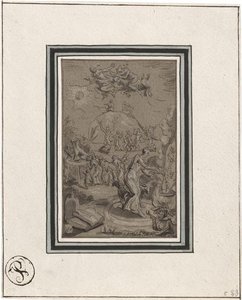
Johann Andreas Thelott
1655 - 1734 , Germany
Quick Facts
- Full Name: Eustache Le Sueur
- Nationality: French
- Date Of Birth: 1655
- Date Of Death: 1734
- Place Of Birth: Augsburg, Germany
- Notable Artworks:
- Angel and Hagar
- Tobias and Tobit
- Martyrdom St Lawrence
- Life of St Bruno
- Artistic Movement Or Style: Neoclassical
- Artists Who Influenced This Artist:
- Vouet
- Poussin
- Artists Or Movements Influenced By This Artist: ["Le Sueur's style influenced later artists."]
Related Articles

Baroque Masterpieces: 10 Paintings That Defined an Era |
Journey through the drama & grandeur of Baroque art! Explore 10 masterpieces by Caravaggio, Rembrandt, Rubens & more. Discover stunning oil paintings, rich colors & timeless stories. Find museum-quality reproductions at .

Baroque Drama: Bringing Opulence & Emotion into Contemporary Interiors
Explore the opulent world of Baroque interior design! Discover key elements, modern applications & how to bring dramatic elegance into your home with OriginalUniqueArt.com's authentic reproductions.

The Visceral Stage: Exploring Dramatic Narratives & Emotional Intensity in Baroque Art
Explore the dramatic world of Baroque art! Discover iconic masters like Caravaggio & Rembrandt, their techniques, and the movement's lasting impact. Expert insights for collectors & enthusiasts at OriginalUniqueArt.

The Dramatic Flourish: Exploring the Baroque Movement's Enduring Legacy in Art History
Explore the dramatic world of Baroque art! Discover iconic artists like Caravaggio & Rubens, defining techniques, and its lasting impact on art history. Expert insights for collectors & enthusiasts at OriginalUniqueArt.

Baroque Classicism: The Grandeur of Order and Drama in 17th-Century Art History
Explore the profound elegance of Baroque Classicism. Discover how 17th-century masters synthesized dramatic emotion with classical order through the lens of the Counter-Reformation and the works of legends like Carlo Maratta and Andrea Sacchi.
