Text size

() ·

A painting made for you, by hand

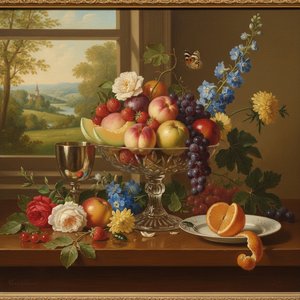
Still Life with Fruit

Hand Made Oil Reproduction

Hand-painted oil on canvas in your size and frame, made to order by our artists. ( Switch to Print Switch to Digital Image)

Collectible Description

James Peale's 'Still Life with Fruit' (1821) is a stunning example of American academic realism, showcasing opulent fruit & dramatic lighting. Explore this captivating miniature masterpiece!

Artist Biography

James Peale (1749-1831) was an American painter celebrated for his exquisite miniature portraits & vibrant still lifes. Brother of Charles Willson Peale, he captured colonial America with neoclassical grace.

from ·

Chapter 1

How large should it be?

Slide to change the size; the picture on the left shows the frame at its real width. The proportions of the original are kept.

Standard
custom
CM
INCH

Pick from our preset sizes that match the artwork's original proportions.

width
height

Type the width and the height you need, to fit your frame or your wall. This is hand-painted, so for a size with a different shape the artist can paint a bit more around the picture, or cut a bit — you choose. We send you a digital mockup to approve before the painting starts. The picture shown on this page does not show the real result — only the mockup does.

Chapter 2

How should it arrive?

Choose the edges of the stretched canvas

Choose your frame

Corner sample of the WhiteWrap canvas edge finish, stretched on solid wood bars
White $1
Corner sample of the BlurSideWrap canvas edge finish, stretched on solid wood bars
Blurside $1
Corner sample of the ExtendedWrap canvas edge finish, stretched on solid wood bars
Extended $1
Corner sample of the P118B picture frame: moulded polystyrene, 5 cm wide and 3 cm thick
P118B $10
Corner sample of the P118H picture frame: moulded polystyrene, 5 cm wide and 3 cm thick
P118H $10
Corner sample of the P118W picture frame: moulded polystyrene, 5 cm wide and 3 cm thick
P118W $10
Corner sample of the P438Z picture frame: moulded polystyrene, 5.5 cm wide and 3.5 cm thick
P438Z $10
Corner sample of the P508JH picture frame: moulded polystyrene, 7 cm wide and 3.5 cm thick
P508JH $12
Corner sample of the P508YH picture frame: moulded polystyrene, 7 cm wide and 3.5 cm thick
P508YH $12
Corner sample of the P805H picture frame: moulded polystyrene, 5 cm wide and 3.5 cm thick
P805H $10
Corner sample of the P805Z picture frame: moulded polystyrene, 5 cm wide and 3.5 cm thick
P805Z $10
Corner sample of the P919BZ picture frame: moulded polystyrene, 7 cm wide and 3.5 cm thick
P919BZ $10
Corner sample of the P919G picture frame: moulded polystyrene, 7 cm wide and 3.5 cm thick
P919G $10
Corner sample of the P919XJ picture frame: moulded polystyrene, 7 cm wide and 3.5 cm thick
P919XJ $10
Corner sample of the P959ZH picture frame: moulded polystyrene, 5 cm wide and 3 cm thick
P959ZH $10
Corner sample of the P968JZ picture frame: moulded polystyrene, 6 cm wide and 4 cm thick
P968JZ $12
Corner sample of the W106C picture frame: solid wood, 5 cm wide and 3 cm thick
W106C $8
Corner sample of the W218G picture frame: solid wood, 5 cm wide and 3 cm thick
W218G $10
Corner sample of the W218JH picture frame: solid wood, 5 cm wide and 3 cm thick
W218JH $8
Corner sample of the W218Y picture frame: solid wood, 5 cm wide and 3 cm thick
W218Y $10
Corner sample of the W307PJ picture frame: solid wood, 6 cm wide and 3 cm thick
W307PJ $10
Corner sample of the W316G picture frame: solid wood, 6 cm wide and 3 cm thick
W316G $10
Corner sample of the W316PJ picture frame: solid wood, 6 cm wide and 3 cm thick
W316PJ $8
Corner sample of the W316Y picture frame: solid wood, 6 cm wide and 3 cm thick
W316Y $10
Corner sample of the W398PJ picture frame: solid wood, 5 cm wide and 3 cm thick
W398PJ $8
Corner sample of the W4111J picture frame: solid wood, 6.5 cm wide and 3.5 cm thick
W4111J $10
Corner sample of the W500HY picture frame: solid wood, 7 cm wide and 5 cm thick
W500HY $15
Corner sample of the W500JH picture frame: solid wood, 7 cm wide and 5 cm thick
W500JH $15
Corner sample of the W692G picture frame: solid wood, 8 cm wide and 4 cm thick
W692G $12
Corner sample of the W849H picture frame: solid wood, 5 cm wide and 3 cm thick
W849H $8
Corner sample of the W940BG picture frame: solid wood, 7.5 cm wide and 4.5 cm thick
W940BG $15
Corner sample of the W953PJ picture frame: solid wood, 6 cm wide and 3.5 cm thick
W953PJ $8
Corner sample of the H24-GOLD picture frame: carved wood with gesso, 10 cm wide and 6 cm thick
H24-GOLD $30
Corner sample of the H24-SILVER picture frame: carved wood with gesso, 10 cm wide and 6 cm thick
H24-SILVER $30
Corner sample of the H36-GOLD picture frame: carved wood with gesso, 15 cm wide and 6.5 cm thick
H36-GOLD $45
Corner sample of the H36-SILVER picture frame: carved wood with gesso, 15 cm wide and 6.5 cm thick
H36-SILVER $45
Frame preview
Framed

Moulding: . Overall size with the frame: .

Chapter 3

Who paints it, and should anything change?

Examples of what can be changed: Replace face with customer photo; Add pet (e.g., replace cat with dog); Include hidden message in background; Change background landscape or elements.
After order, OriginalUniqueArt.com team will email client for instructions and provide a mockup preview

Worldwide Delivery () in 3/4 weeks instead of standard 5 weeks. (4 November). No compromise on quality.

Chapter 4

The finishing touches

A nameplate, as in a museum?

Engraved Bronze Plaque Details

This elegant plaque features the artist's name and the title of the artwork, finely engraved for a timeless presentation.

It is made from bronze with a refined, elegant finish. The text is precisely laser-engraved for a sharp and permanent result. Measuring 9x2 cm, the plaque is compact yet easy to read. It's built to be durable and scratch-resistant, offering a professional, museum-quality look. Mounting is simple thanks to the included adhesive backing.

Transparent Acrylic Plaque Details

The plaque includes essential engraved details such as the artist's name, the title of the artwork, the date it was created, the type of media used-like oil on canvas or watercolor-a brief description of the piece, and a QR code that links to the complete artwork information.

It is crafted from clear acrylic, offering a sleek, modern appearance. The text is UV-engraved in black to ensure strong visual contrast. With a size of 10x15 cm, it ensures optimal readability. It comes equipped with two metal hooks for secure wall mounting. The plaque is designed to be weather-resistant, making it suitable for various environments, and it includes interactive features that work seamlessly with smartphone scanning.

Black Acrylic Plaque Details

This elegant plaque includes engraved information such as the artist's name, the title of the artwork, the date it was created, the type of media used (like oil on canvas or watercolor), a short description of the artwork, and a QR code for quick access to more information.

The plaque itself is made from refined black acrylic with a premium finish. The text is laser-engraved in white for high contrast and readability. Its size is 10x15 cm, designed to be easy to read. It comes with two metal hooks for professional mounting. The design is sleek and fits any interior style. It is also weather-resistant and durable, with built-in digital integration for mobile compatibility.

A protective varnish?

When do you need it?

Chapter 5

Your painting, as you ordered it

Still Life with Fruit

Reproduction Medium

Reproduction Size

-

Elite Senior Artist

More detail, finesse, and extra production time

-

Reproduction Frame

-

-

For artworks or reproductions larger than 105 cm (approximately 41 inches) on any side, the frame will be shipped as a kit, disassembled. This method ensures safe delivery and prevents damage during transport.

Professional assembly required - this is not a DIY product.
The kit must be assembled and the canvas stretched by an experienced professional framer, using wood glue (not supplied), a canvas stretching plier and clamps to hold the bars square while the glue dries. Incorrect assembly or uneven canvas tension can permanently damage the artwork and is not covered by our warranty.

  • All solid wood bars are included, precisely cut to size.

  • Assembled with the screws provided, plus wood glue for the corner joints, which is not supplied and must be sourced by your framer.

  • Professional tools are required and not included: a canvas stretching plier (tensioner) and clamps to hold the bars square while the glue dries.

Important:
The corner joints require wood glue, the bars must be held with clamps until the glue is fully dry, and tightening the canvas on the assembled frame requires a canvas stretching plier. None of these are included in the kit. Please arrange an experienced professional framer before ordering this size.

Nameplate

-

-

Protective Varnish

Glossy Varnish (enhances colors, protects against light/moisture)

-

Customize My Artwork

Examples of what can be changed: Replace face with customer photo; Add pet (e.g., replace cat with dog); Include hidden message in background; Change background landscape or elements.

-

Urgent

Worldwide Delivery () in 3/4 weeks instead of standard 5 weeks. (4 November). No compromise on quality.

-

Express Shipping

Worldwide Delivery () in 5 weeks. (11 November).

Included

Total Price

$ 300

Total Price $ 300

Glass option is only available in size under 110 CM

Included with every order

  • Free Worldwide Express Shipping
  • High-Quality Linen Canvas
  • Full Shipping Insurance
  • Customs Tax Refund Guarantee
  • True Color Matching Guarantee
  • 100-Day Return Policy (Defects Only)
  • 100% Money-Back Guarantee
  • Bulk Discount Offer

A Symphony of Color and Form: James Peale’s Still Life with Fruit

James Peale's Still Life with Fruit, painted circa 1821, is more than just a depiction of perishable bounty; it’s a meticulously crafted window into the burgeoning aesthetic sensibilities of early America. This remarkable work, now housed within the collections of museums and art institutions worldwide, reveals a masterful blend of Neoclassical restraint and Baroque exuberance – a testament to Peale's artistic versatility and his deep understanding of both European traditions and the evolving American visual landscape.

The painting immediately captivates with its rich palette. Deep crimson peaches glow alongside the vibrant yellows of ripe pears, while the verdant greens of grapes and leafy foliage provide a grounding counterpoint. Peale’s technique is characterized by an almost obsessive attention to detail; each fruit is rendered with astonishing realism – the subtle variations in skin texture, the delicate veins tracing across leaves, even the slight imperfections that speak to their natural origins. This commitment to accuracy wasn't merely technical; it reflected a broader fascination with the natural world prevalent during this period, fueled by advancements in scientific observation and botanical illustration.

The Miniature Master’s Grand Vision

While often associated with his exquisite miniature portraits – a genre where Peale truly excelled – Still Life with Fruit demonstrates his ambition to tackle larger-scale works. This shift reflects a growing interest in still life painting within the American art world, influenced by European trends and a desire to elevate the status of decorative arts. Peale’s background as a cabinetmaker undoubtedly informed his approach; he clearly valued craftsmanship and sought to imbue his paintings with a sense of tactile richness. The arrangement of the fruit itself is carefully considered – a deliberate composition designed to draw the eye across the canvas, creating a dynamic visual rhythm.

Interestingly, Peale’s career was punctuated by military service during the American Revolution, an experience that instilled in him a disciplined approach to observation and execution. This dedication translates into the painting's remarkable clarity and precision. The lighting is particularly noteworthy – a dramatic chiaroscuro effect that casts deep shadows and highlights the luminous surfaces of the fruit, adding depth and drama to the scene.

Symbolism and the American Spirit

Beyond its technical merits, Still Life with Fruit carries symbolic weight. Fruit, in this context, represents abundance, prosperity, and the rewards of labor – themes deeply resonant within the developing American identity. The variety of fruits—peaches, pears, grapes—suggests a connection to the land and a celebration of its bounty. It’s a visual affirmation of the nation's potential for growth and success.

Furthermore, the painting can be viewed as an embodiment of Neoclassical ideals – order, balance, and harmony. The carefully arranged composition, the restrained color palette, and the meticulous rendering of detail all contribute to this sense of formal elegance. However, Peale subtly infuses this formality with a touch of Baroque exuberance—the dramatic lighting, the rich colors, and the sheer abundance of fruit create an atmosphere of opulent delight.

A Timeless Appeal

Still Life with Fruit remains a captivating work of art, offering a glimpse into the artistic and cultural landscape of early America. Its meticulous detail, evocative symbolism, and masterful technique continue to resonate with viewers today. Whether admired for its historical significance or simply appreciated for its aesthetic beauty, this painting stands as a testament to James Peale’s artistry and his enduring legacy.

Questions & Answers

How does the style of "Still Life with Fruit" relate to its creator's era?

In "Still Life with Fruit" by James Peale, the Academic Realism movement meets the Early-Modern era.

What other names is James Peale known by?

James Peale appears under the alternate names Charles Willson Peale, Raphaelle Peale, Rembrandt Peale.

What color harmony does "Still Life with Fruit" by James Peale display?

The color harmony of "Still Life with Fruit" is recorded as strong color unity.

More about this painting

Preview AR preview Switch to Print Switch to Digital Image Send
Details Guide Add to favorites Download Similars X-Ray Diaporama Q&A Stats

In numbers

  • 1821the year it was painted
  • 29frames to choose from
  • standard sizes, in its own proportions
  • 5weeks to paint and deliver it
James Peale

James Peale

1749 - 1831, United States of America

Quick facts about James Peale

  • Full Name: James Peale
  • Nationality: American
  • Date Of Birth: 1749
  • Date Of Death: 1831
  • Place Of Birth: Chestertown, United States of America
  • Notable Artworks:
    • Fruits of Autumn
    • The Artist & Family
    • Battle of Princeton
  • Artistic Movement Or Style: Neoclassical
  • Artists Who Influenced This Artist:
    • Charles Willson Peale
    • Benjamin West
  • Artists Or Movements Influenced By This Artist:
    • Anna Claypoole Peale
    • Margaretta Peale
    • Sarah Miriam Peale

Artist Biography

A Life Etched in Miniature and Stillness

James Peale, born in the burgeoning colonial landscape of Chestertown, Maryland, in 1749, occupies a fascinating, often understated position within the pantheon of early American art. Though overshadowed by the renown of his elder brother, Charles Willson Peale—a pivotal figure in establishing an authentically American artistic identity—James carved out a distinguished career marked by delicate miniatures, luminous still lifes, and a quiet dedication to capturing the essence of his era. His life story is one interwoven with familial legacy, military service, and a persistent pursuit of artistic refinement. The early loss of his father propelled the family to Annapolis, where young James initially apprenticed in practical trades—saddlery and cabinetmaking—experiences that perhaps instilled within him an appreciation for meticulous detail and craftsmanship, qualities that would later define his artistic approach. It was upon Charles’ return from London, having studied under Benjamin West, that James found his true calling, becoming his brother's assistant and embarking on a path of formal artistic training.

From Battlefield to Brushstroke

The burgeoning revolutionary fervor dramatically altered the course of Peale’s life. In 1776, he traded brush for musket, accepting a commission as an ensign in William Smallwood's regiment within the Continental Army. This wasn’t merely a patriotic gesture; it was a period of intense experience that would subtly inform his later work. He rose quickly through the ranks to captain, participating in pivotal battles—Long Island, White Plains, Trenton, Brandywine, Germantown, Princeton, and Monmouth—witnessing firsthand the hardships and heroism of the American Revolution. This military service instilled within him not only courage but also a keen observational skill, a capacity to register detail under pressure, qualities that would serve him well in portraiture and still life. Resigning his commission in 1779, he returned to Philadelphia, rejoining Charles’ studio, yet now possessing a broadened perspective shaped by the realities of war and nation-building. A notable collaboration with his brother followed in 1788, designing floats for a grand procession celebrating the newly ratified United States Constitution—a testament to their shared commitment to the ideals of the new republic.

A Legacy of Delicate Skill

Peale’s artistic development was significantly influenced by his brother's decision to relinquish his miniature portrait practice, allowing James to fully dedicate himself to this demanding art form. Throughout the 1790s and early 1800s, he became a master of watercolor on ivory, creating exquisitely detailed portraits that captured not just likeness but also a sense of personality and social standing. These miniatures were highly sought after, reflecting the growing demand for accessible and intimate representations of individuals within American society. However, Peale’s talents weren't confined to miniature painting. He excelled in still life compositions, particularly those featuring fruit, demonstrating an exceptional ability to render textures, light, and form with remarkable realism. As his eyesight began to decline around 1810, he transitioned towards larger-scale portraits and still lifes, allowing him to continue working despite the challenges of diminishing vision. His later works are characterized by a boldness of execution and a continued commitment to meticulous detail.

A Family of Artists and Enduring Influence

The Peale family’s artistic legacy extends far beyond James himself. He married Mary Claypoole in 1782, establishing his own household and fostering an environment that nurtured creativity. Remarkably, three of their six children—Anna Claypoole Peale, Margaretta Angelica Peale, and Sarah Miriam Peale—also became accomplished painters, each specializing in different genres but all inheriting their father’s dedication to artistic excellence. Maria Peale also pursued painting, though with less widespread recognition than her sisters. This familial constellation of artists underscores the importance of mentorship and the transmission of skills within early American art circles. James Peale's work, while often overshadowed by his brother Charles and his talented daughters, remains a significant contribution to the development of American artistic identity. He captured a pivotal moment in history—the birth of a nation—through portraits that documented its citizens and still lifes that celebrated the bounty of its land. His legacy lies not only in the beauty and technical skill of his paintings but also in the enduring influence he had on generations of artists within his family and beyond. He died in Philadelphia in 1831, leaving behind a body of work that continues to resonate with viewers today.

Quick Facts

  • Artistic style: Detailed, realistic
  • Movement: Academic Realism
  • Medium: Oil on wood panel
  • Dimensions: 18.4 x 25.4 in.
  • Year: 1821
  • Location: De Young Museum

Art Quiz

There is only one correct answer for each question.

Question 1:
What is the primary subject of James Peale’s ‘Still Life with Fruit’?
Question 2:
In what year was James Peale’s ‘Still Life with Fruit’ painted?
Question 3:
James Peale was known for his expertise in which artistic technique?
Question 4:
The painting reflects which artistic movement’s emphasis on realism and detail?
Question 5:
What does the inclusion of various fruits and vegetables in the painting likely symbolize?