

 Preview
 Send
Send Share
Share
 Details
 Guide
Guide

 Download
 Similars
 X-Ray
X-Ray Diaporama
 Stats
StatsGeorge Washington
 Oil On Canvas
- WallArt
- Romanticism
 1782
1782- Early Modern
 91.0 x 69.0 cm
 Metropolitan Museum of Art
 Read More
Hand Made Oil Reproduction
Hand-painted oil on canvas in your size and frame, made to order by our artists. ( Switch to Print Switch to Digital Image)




P118B $10

P118H $10

P118W $10

P438Z $10

P508JH $12

P508YH $12

P805H $10

P805Z $10

P919BZ $10

P919G $10

P919XJ $10

P959ZH $10

P968JZ $12

W106C $8

W218G $10

W218JH $8

W218Y $10

W307PJ $10

W316G $10

W316PJ $8

W316Y $10

W398PJ $8

W4111J $10

W500HY $15

W500JH $15

W692G $12

W849H $8

W940BG $15

W953PJ $8




Pick from our preset sizes that match the artwork's original proportions.

You may enter your own dimensions to fit a specific frame or space. If your selected size does not match the original image's proportions, we will either crop the artwork or extend the painting with additional hand-painted elements. A digital mockup will be sent for your approval before production begins.
Please note that the on-screen preview does not reflect the actual cropping or extension. Only the mockup will accurately show the final composition.
While custom sizes are available, we recommend selecting a dimension from the predefined list to preserve the original proportions.
After order, OriginalUniqueArt.com team will email client for instructions and provide a mockup preview
Worldwide Delivery () in 3/4 weeks instead of standard 5 weeks. (27 September). No compromise on quality.

Free Worldwide Express Shipping

High-Quality Linen Canvas

Full Shipping Insurance

Customs Tax Refund Guarantee

True Color Matching Guarantee

100-Day Return Policy (Defects Only)

100% Money-Back Guarantee

Bulk Discount Offer
 Glass option is only available in size under 110 CM

George Washington
Reproduction Medium
Reproduction Size
-


Total Price
$ 300
A Vision of Command: The Quiet Triumph of James Peale
In the annals of American art, few images capture the dawn of a nation with as much dignified poise as James Peale’s 1782 portrait of George Washington. This is not merely a likeness of a man; it is a window into a pivotal moment of historical transformation. Painted in the wake of the decisive victory at Yorktown, the work transcends the boundaries of traditional portraiture to embody the very spirit of a burgeoning republic. Peale, an artist celebrated for his meticulous eye and delicate touch, moves away from the flamboyant flourishes often seen in European Enlightenment portraiture, opting instead for a refined elegance that mirrors the stoic character of the man it depicts. The composition presents Washington in his military uniform, his hands resting upon his hips in a gesture of profound confidence, projecting an aura of authority that would soon define the presidency.
The technical mastery on display in this oil on canvas is nothing short of breathtaking, making it a centerpiece worthy of the most discerning collector. Peale utilizes a sophisticated application of chiaroscuro, employing dramatic contrasts between light and shadow to sculpt Washington’s figure, lending him a three-dimensional presence that commands the viewer's attention. Every detail has been rendered with an almost tactile precision—from the subtle sheen on the polished metal buttons of his uniform to the intricate textures of the fabric folds. This luminous effect is achieved through careful layering and blending, creating a sense of depth that draws the eye into the scene. For those seeking to adorn a space with art that possesses both substance and soul, the painting’s ability to capture light and texture offers an unparalleled aesthetic richness.
Symbolism and the Fabric of History
Beyond the immediate physical presence of the General, the painting is steeped in profound historical symbolism. The background serves as a silent narrator to the triumphs of the Revolutionary War; the presence of a ship and the suggestion of a harbor evoke the naval significance of the era's conflicts. Peale’s inclusion of these elements provides a vital context, grounding Washington’s individual leadership within the broader struggle for American independence. The composition is further enriched by the subtle presence of other figures and even a horse on the periphery, creating a sense of a living, breathing moment in time rather than a static icon. This layering of narrative elements ensures that the artwork remains intellectually stimulating long after the first glance.
For interior designers and art enthusiasts alike, this portrait offers more than just historical value; it provides an emotional anchor for any room. The painting radiates a sense of stability, order, and patriotic pride. Its Neoclassical influence—emphasizing clarity, balance, and restraint—makes it a versatile choice for sophisticated environments, whether they be traditional studies or modern galleries seeking a touch of classical gravitas. To possess a reproduction of this work is to invite a piece of the American foundation into one's home, celebrating a legacy of leadership and the enduring strength of a nation born from vision and valor.
Artist Biography
A Life Etched in Miniature and Stillness
James Peale, born in the burgeoning colonial landscape of Chestertown, Maryland, in 1749, occupies a fascinating, often understated position within the pantheon of early American art. Though overshadowed by the renown of his elder brother, Charles Willson Peale—a pivotal figure in establishing an authentically American artistic identity—James carved out a distinguished career marked by delicate miniatures, luminous still lifes, and a quiet dedication to capturing the essence of his era. His life story is one interwoven with familial legacy, military service, and a persistent pursuit of artistic refinement. The early loss of his father propelled the family to Annapolis, where young James initially apprenticed in practical trades—saddlery and cabinetmaking—experiences that perhaps instilled within him an appreciation for meticulous detail and craftsmanship, qualities that would later define his artistic approach. It was upon Charles’ return from London, having studied under Benjamin West, that James found his true calling, becoming his brother's assistant and embarking on a path of formal artistic training.From Battlefield to Brushstroke
The burgeoning revolutionary fervor dramatically altered the course of Peale’s life. In 1776, he traded brush for musket, accepting a commission as an ensign in William Smallwood's regiment within the Continental Army. This wasn’t merely a patriotic gesture; it was a period of intense experience that would subtly inform his later work. He rose quickly through the ranks to captain, participating in pivotal battles—Long Island, White Plains, Trenton, Brandywine, Germantown, Princeton, and Monmouth—witnessing firsthand the hardships and heroism of the American Revolution. This military service instilled within him not only courage but also a keen observational skill, a capacity to register detail under pressure, qualities that would serve him well in portraiture and still life. Resigning his commission in 1779, he returned to Philadelphia, rejoining Charles’ studio, yet now possessing a broadened perspective shaped by the realities of war and nation-building. A notable collaboration with his brother followed in 1788, designing floats for a grand procession celebrating the newly ratified United States Constitution—a testament to their shared commitment to the ideals of the new republic.A Legacy of Delicate Skill
Peale’s artistic development was significantly influenced by his brother's decision to relinquish his miniature portrait practice, allowing James to fully dedicate himself to this demanding art form. Throughout the 1790s and early 1800s, he became a master of watercolor on ivory, creating exquisitely detailed portraits that captured not just likeness but also a sense of personality and social standing. These miniatures were highly sought after, reflecting the growing demand for accessible and intimate representations of individuals within American society. However, Peale’s talents weren't confined to miniature painting. He excelled in still life compositions, particularly those featuring fruit, demonstrating an exceptional ability to render textures, light, and form with remarkable realism. As his eyesight began to decline around 1810, he transitioned towards larger-scale portraits and still lifes, allowing him to continue working despite the challenges of diminishing vision. His later works are characterized by a boldness of execution and a continued commitment to meticulous detail.A Family of Artists and Enduring Influence
The Peale family’s artistic legacy extends far beyond James himself. He married Mary Claypoole in 1782, establishing his own household and fostering an environment that nurtured creativity. Remarkably, three of their six children—Anna Claypoole Peale, Margaretta Angelica Peale, and Sarah Miriam Peale—also became accomplished painters, each specializing in different genres but all inheriting their father’s dedication to artistic excellence. Maria Peale also pursued painting, though with less widespread recognition than her sisters. This familial constellation of artists underscores the importance of mentorship and the transmission of skills within early American art circles. James Peale's work, while often overshadowed by his brother Charles and his talented daughters, remains a significant contribution to the development of American artistic identity. He captured a pivotal moment in history—the birth of a nation—through portraits that documented its citizens and still lifes that celebrated the bounty of its land. His legacy lies not only in the beauty and technical skill of his paintings but also in the enduring influence he had on generations of artists within his family and beyond. He died in Philadelphia in 1831, leaving behind a body of work that continues to resonate with viewers today.
James Peale
1749 - 1831 , United States of America
Quick Facts
- Artistic Movement Or Style: Neoclassical
- Artists Or Movements Influenced By This Artist:
- Anna Claypoole Peale
- Margaretta Peale
- Sarah Miriam Peale
- Artists Who Influenced This Artist:
- Charles Willson Peale
- Benjamin West
- Date Of Birth: 1749
- Date Of Death: 1831
- Full Name: James Peale
- Nationality: American
- Notable Artworks:
- Fruits of Autumn
- The Artist & Family
- Battle of Princeton
- Place Of Birth: Chestertown, USA
Related Articles

American Realism's Defining Works: 10 Masterpieces for Your Home
Explore 10 defining American Realism masterpieces – Hopper, Homer & more. Discover the stories behind these iconic paintings and bring timeless art to your home with OriginalUniqueArt's museum-quality reproductions. Explore the full collection online.

Titian Ramsay Peale II: A Legacy of Botanical Precision & Artistic Innovation
Explore the life & art of Titian Ramsay Peale II, a master of botanical precision and wildlife painting. Discover his legacy bridging art & natural history at OriginalUniqueArt.
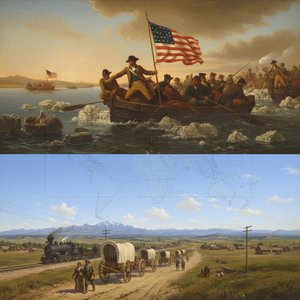
Emanuel Leutze: Transatlantic Identity & the Iconography of American Progress
Explore the life & art of Emanuel Leutze, famed for 'Washington Crossing the Delaware.' Discover his Romantic historical paintings, transatlantic influences, and powerful depictions of American identity & progress. Expert analysis at OriginalUniqueArt.

Grant Wood & American Regionalism: Identity, Myth & the Rural Landscape
Explore the world of Grant Wood & American Regionalism with OriginalUniqueArt. Discover the symbolism behind 'American Gothic', recurring themes, and the movement's lasting impact on art history. High-quality reproductions available.

Charles Willson Peale: Portraiture, Enlightenment Ideals & Shaping American Identity
Explore the life & art of Charles Willson Peale – Revolutionary portraitist, scientist, and founder of America’s first museum. Discover his iconic paintings of Washington & the Enlightenment ideals that shaped a nation.


