Preview
 Send
Send Share
Share
 Details
 Guide
Guide

 Download
 Similars
 X-Ray
X-Ray Diaporama
 Stats
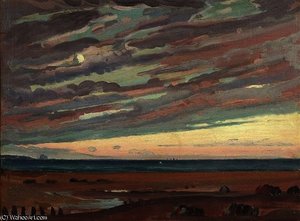
StatsA Performance Seen From A Box In Which Three Figures Are Standing

 Read More
Giclée / Art Print
Museum-quality giclée or canvas print with fast production and flexible finish options. ( Buy Hand Made Painting Switch to Digital Image)




P118B $10

P118H $10

P118W $10

P438Z $10

P508JH $12

P508YH $12

P805H $10

P805Z $10

P919BZ $10

P919G $10

P919XJ $10

P959ZH $10

P968JZ $12

W106C $8

W218G $10

W218JH $8

W218Y $10

W307PJ $10

W316G $10

W316PJ $8

W316Y $10

W398PJ $8

W4111J $10

W500HY $15

W500JH $15

W692G $12

W849H $8

W940BG $15

W953PJ $8




Pick from our preset sizes that match the artwork's original proportions.

Type the width and the height you need, to fit your frame or your wall. A print can only be cut, never made bigger than the picture, so a size with a different shape loses a part of the image. We send you a digital mockup to approve before we print anything. The picture shown on this page does not show the real cut — only the mockup does.
Worldwide Delivery () in 2 weeks instead of standard 4/5 weeks. (24 October)

Free Worldwide Express Shipping

High-Quality Linen Canvas

Full Shipping Insurance

Customs Tax Refund Guarantee

True Color Matching Guarantee

100-Day Return Policy (Defects Only)

100% Money-Back Guarantee

Bulk Discount Offer
 Glass option is only available in size under 110 CM

A Performance Seen From A Box In Which Three Figures Are Standing
Giclée / Art Print
Reproduction Size
-


Total Price
$ 81
Artist Biography
A Brief Blaze of Color: The Life and Art of James Dickson Innes
James Dickson Innes, a name that resonates with a poignant brevity in the annals of British modernism, occupies a unique space—a flash of vibrant color extinguished far too soon. Born in Llanelli, South Wales, on February 27th, 1887, his life was tragically cut short by tuberculosis at just twenty-seven years old. Yet within that limited span, he forged an artistic voice remarkably distinct and prescient, anticipating many of the developments that would define British painting for decades to come. His heritage was a compelling blend: a Scottish historian father with a fascination for industry, and a Catalan mother who instilled in him a sense of cultural richness. This duality, coupled with a naturally sensitive temperament, profoundly shaped both his life and artistic vision. Educated at Christ College, Brecon, young James quickly demonstrated an aptitude for art, leading him to the Carmarthen School of Art in 1904 before securing a coveted scholarship to the Slade School of Art in London just a year later. There, under the tutelage of figures like P. Wilson Steer, he began his formal training, absorbing the lessons of English Impressionism while simultaneously cultivating an independent spirit that would soon set him apart.From Impressionistic Roots to Fauvist Fire
Innes’s early work clearly reveals the influence of his Slade mentors and the broader currents of British painting at the turn of the century. He exhibited with the New English Art Club from 1907, showcasing landscapes that echoed the atmospheric effects favored by Steer and Sickert. However, a pivotal shift began around 1908, sparked by exposure to French Post-Impressionism during his travels. This wasn’t merely an adoption of technique; it was a fundamental reorientation of his aesthetic sensibilities. He moved away from the subtle tonal variations of Impressionism towards a more decorative treatment of landscape, embracing brilliant, often non-naturalistic colors and luminous atmospheres. The influence of masters like Turner, Constable, and John Sell Cotman remained present in his reverence for nature, but it was now filtered through the bold palettes and expressive brushwork of painters such as Matisse and Derain. This evolution culminated in a style that art historian David Fraser Jenkins aptly described as “primitive,” drawing parallels to the Fauves in France and the Expressionists in Germany—a childlike directness coupled with an intense connection to remote, often rugged landscapes. His association with the Camden Town Group in 1911 further solidified his position within the avant-garde, bringing him into contact with artists like Sickert and Augustus John who profoundly impacted his artistic direction. It was a period of experimentation and bold exploration, where Innes fearlessly pushed the boundaries of conventional representation.Welsh Landscapes and Continental Journeys
The Welsh countryside, particularly the dramatic peaks around Arenig Fawr in North Wales, became a central motif in Innes’s oeuvre. He frequently painted alongside Augustus John in this region during 1911 and 1912, their shared fascination with the landscape resulting in a series of powerful and evocative works. These weren't simply topographical depictions; they were emotional responses to the land, imbued with a sense of mystery and spiritual resonance. However, Innes’s artistic journey wasn’t confined to Wales. Diagnosed with tuberculosis, he embarked on several journeys across Europe—to France (Collioure), Spain, and Morocco between 1908 and 1913—seeking both respite and inspiration. These travels exposed him to new light, colors, and cultures, further enriching his artistic vocabulary. Collioure, in particular, with its vibrant Mediterranean palette and dramatic coastal scenery, proved to be a particularly fertile ground for experimentation. His paintings from this period demonstrate a remarkable ability to capture the essence of a place—not just its visual appearance, but also its atmosphere and emotional character. He sought not to replicate reality, but to convey his *experience* of it, imbuing each canvas with a palpable sense of feeling.Recognition and Lasting Legacy
Despite his relatively short career, Innes achieved significant recognition during his lifetime. A joint exhibition with sculptor Eric Gill at the Chenil Gallery in 1911 showcased his landscapes alongside Gill’s work, demonstrating his growing prominence within the London art scene. Perhaps most importantly, he was included in the groundbreaking Armory Show in New York City, Chicago, and Boston in 1913—a watershed moment that introduced modernist art to an American audience and brought international attention to Innes's unique vision. His patron, Winifred Coombe Tennant, a Welsh politician and philanthropist, played a crucial role in supporting his work and promoting his career. Tragically, his health continued to decline, and he succumbed to tuberculosis on August 22nd, 1914, at the young age of twenty-seven. Despite this premature death, Innes’s influence endured. His bold use of color and expressive brushwork challenged conventional artistic norms and paved the way for later generations of British artists, including David Hockney. A retrospective exhibition held at the National Museum of Wales in 2014, along with a BBC documentary exploring his relationship with Augustus John and their shared passion for Arenig Fawr, served as powerful reminders of his enduring legacy. James Dickson Innes remains a compelling figure—a painter who dared to break from tradition and forge his own path, leaving behind a body of work that continues to captivate and inspire.Key Characteristics of His Work
- Bold Color Palette: Innes was renowned for his use of vibrant, often non-naturalistic colors, influenced by Fauvism.
- Expressive Brushwork: His paintings are characterized by loose, energetic brushstrokes that convey a sense of movement and emotion.
- Landscape Focus: The Welsh countryside, particularly Arenig Fawr, was a recurring subject in his work, reflecting his deep connection to the land.
- Emotional Intensity: Innes sought to capture not just the visual appearance of a scene, but also its atmosphere and emotional impact.
- Influence of Post-Impressionism: He drew inspiration from artists like Matisse and Derain, incorporating their techniques into his own unique style.
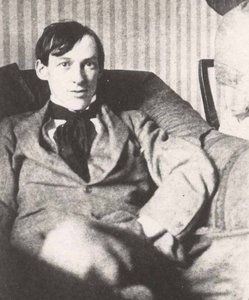
James Dickson Innes
1887 - 1914 , United Kingdom
Quick Facts
- Full Name: James Dickson Innes
- Nationality: British
- Date Of Birth: 1887
- Date Of Death: 1914
- Place Of Birth: Llanelly, United Kingdom
- Notable Artworks:
- Coastal Landscape
- Deep Twilight, Pyrenees
- View Of Llanelli
- The Waterfall
- Arenig, North Wales
- Artistic Movement Or Style: Post-Impressionism, Fauvism
- Artists Who Influenced This Artist:
- Turner
- Constable
- Cotman
- Matisse
- Derain
- Artists Or Movements Influenced By This Artist: ['David Hockney']
Related Articles
Beyond the Brush: How Post-Impressionism Recharged Modern Art with Bold Color and Raw Emotion
Dive into the high-energy revolution of Post-Impressionism. Discover how masters like Cézanne and Van Gogh traded fleeting light for bold colors and raw emotion, forever recharging modern art with the vibrant, structural intensity that defines today's most iconic visual aesthetics.

White on Canvas: 10 Masterpieces & Timeless Elegance for Your Home Decor
Explore 10 iconic white paintings by Monet, Whistler & Rothko! Discover the stories behind these serene masterpieces and their impact on art history. Find museum-quality reproductions for your home decor at .
The Revolution of Color and Emotion: A Definitive Exploration of Post-Impressionism
Explore the profound revolution of Post-Impressionism. Delve into the history, techniques, and emotional depth of masters like Van Gogh and Seurat. Discover how to transform your space with museum-quality, hand-painted oil reproductions of these iconic masterpieces.

Beyond Light & Color: Impressionism vs. Post-Impressionism for the Discerning Collector
Explore the nuances of Impressionism & Post-Impressionism with . Expert insights for collectors on style, investment, and acquiring museum-quality reproductions.

Dark Masterpieces: 10 Iconic Paintings Dominated by Black Tones |
Explore 10 iconic paintings dominated by black tones, from Rembrandt’s chiaroscuro to Goya's dark expressions. Discover the stories behind these masterpieces & find museum-quality art reproductions for your home at .