Preview
 Send
Send Share
Share
 Details
 Guide
Guide

 Download
 Similars
 X-Ray
X-Ray Diaporama
 Stats
StatsWalter Richard Sickert
 Oil On Canvas
- WallArt
- Realism
 1898
1898- 19th Century
 81.0 x 65.0 cm
 Read More
Hand Made Oil Reproduction
Hand-painted oil on canvas in your size and frame, made to order by our artists. ( Switch to Print Switch to Digital Image)




































Pick from our preset sizes that match the artwork's original proportions.

Type the width and the height you need, to fit your frame or your wall. This is hand-painted, so for a size with a different shape the artist can paint a bit more around the picture, or cut a bit — you choose. We send you a digital mockup to approve before the painting starts. The picture shown on this page does not show the real result — only the mockup does.
After order, OriginalUniqueArt.com team will email client for instructions and provide a mockup preview
Worldwide Delivery () in 3/4 weeks instead of standard 5 weeks. (23 October). No compromise on quality.

Free Worldwide Express Shipping

High-Quality Linen Canvas

Full Shipping Insurance

Customs Tax Refund Guarantee

True Color Matching Guarantee

100-Day Return Policy (Defects Only)

100% Money-Back Guarantee

Bulk Discount Offer
 Glass option is only available in size under 110 CM

Walter Richard Sickert
Reproduction Medium
Reproduction Size
-


Total Price
$ 300
A Gaze Through Time: The Introspective Soul of Jacques-Émile Blanche
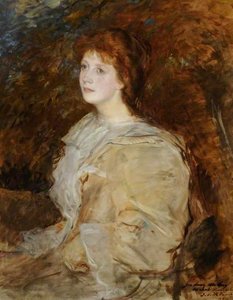
In the quiet, shadowed corners of late nineteenth-century Parisian art, few works capture the profound weight of identity as poignantly as this 1898 portrait. While the title suggests a connection to the gritty realism of Walter Richard Sickert, the hand behind this masterful oil on canvas is none other than Jacques-Élamile Blanche, a painter whose lineage and training placed him at the very heart of the French Belle Époque. This piece serves as more than just a depiction of a man; it is an invitation into a private moment of contemplation. The subject sits in a poised, seated pose, his presence commanding the space through a subtle, angled perspective that pulls the viewer directly into his steady, searching gaze. It is a composition that feels both intimate and monumental, perfect for a collector seeking a centerpiece that breathes life and history into a sophisticated interior.
The technique employed here is a masterclass in the use of light and texture, reminiscent of the great masters who preceded him. Blanche utilizes a directional light source originating from the upper left, a choice that does not merely illuminate but actively sculpts the subject's features. This chiaroscuro effect creates deep, dramatic shadows that define the contours of the face and the heavy folds of the clothing, lending the figure a three-dimensional vitality. The artist’s brushwork is remarkably tactile; through an impasto-like application of oil paint, he achieves a rich, layered texture that invites the eye to wander over the canvas. One can almost feel the weight of the fabric and the warmth of the skin, as the organic curves of the subject's hands and face are set against the more structured, geometric lines of his attire.
Beyond its technical brilliance, the painting resonates with a deep sense of psychological depth. The background is intentionally dark and indistinct, a void that strips away the distractions of the outside world to focus entirely on the subject's internal state. This stylistic choice fosters an atmosphere of introspection and perhaps a touch of artistic vanity, as if the sitter is acutely aware of his own legacy being captured for eternity. Subtle symbolic elements, such as the formal hat, hint at the social standing and professional dignity of the era, yet the overall mood remains grounded in a raw, human realism. For the interior designer or art enthusiast, this work offers a profound emotional impact—it is a piece that does not merely decorate a wall but anchors a room with its silent, powerful narrative of character and permanence.
Questions & Answers
In what year was "Walter Richard Sickert" by Jacques-Émile Blanche created?
"Walter Richard Sickert" dates from 1898. The date places the work within Jacques-Émile Blanche's career and its era.
Is "Walter Richard Sickert" by Jacques-Émile Blanche a bright or a dark artwork?
The perceived brightness of "Walter Richard Sickert" by Jacques-Émile Blanche is deep_shadow. It can be matched to the light of the intended space.
Who is the author of "Walter Richard Sickert", and in which movement?
Behind "Walter Richard Sickert" stand Jacques-Émile Blanche and the Realism movement.
Artist Biography
early life and training
jacques-émile blanche was born on january 1, 1861, in paris, france. he came from a family of successful physicians and grew up in the neighborhood of passy, where he was surrounded by affluent families and renowned artists. blanche's father, émile blanche, was a noted pathologist who encouraged his son's artistic interests. as a young boy, jacques-émile met many famous writers and painters, including edouard manet, who would later become a significant influence on his work.artistic career
blanche was largely self-taught, but he did receive some instruction from henri gervex and ferdinand humbert. in 1881, one of his paintings was accepted at the salon des artistes français, marking the beginning of his successful artistic career. throughout his life, blanche submitted many paintings to the salon and exhibited with various reputable societies. his work was characterized by loose brushwork and a restricted color scheme, which gave his portraits and landscapes a unique, impressionist feel.influences and style
blanche's style was influenced by edouard manet and james mcneill whistler, two artists he greatly admired. like them, blanche sought to capture the truth of his models, often using bold, expressive brushstrokes to convey their personalities. his portraits of elegant women and men, such as "portrait of marcel proust", are renowned for their sensitivity and insight. the musée des beaux-arts in rouen has an impressive collection of blanche's work, showcasing his ability to balance tradition and modernity.notable works and exhibitions
some of blanche's notable works include:- "the kreutzer sonata", a painting that showcases his ability to capture the essence of music and emotion.
- "portrait of henry james", a portrait that highlights blanche's skill in capturing the subtleties of human character.
- "london views", a series of paintings that demonstrate his love for the city and its people.
legacy
jacques-émile blanche died on september 30, 1942, leaving behind a legacy of elegant, impressionist paintings. his work continues to be celebrated for its sensitivity, expressiveness, and attention to detail. as a painter, writer, and critic, blanche made significant contributions to the art world, inspiring future generations with his unique style and approach. for more information on jacques-émile blanche, visit wikipedia or explore his artwork on OriginalUniqueArt.com.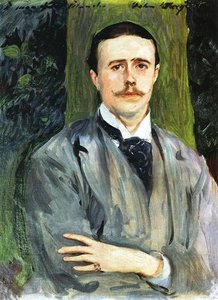
Jacques-Émile Blanche
1861 - 1942 , France
Quick Facts
- Artistic Movement Or Style: Impressionism
- Artists Who Influenced This Artist:
- Edouard Manet
- James McNeill Whistler
- Full Name: Jacques-Émile Blanche
- Nationality: French
- Notable Artworks:
- The Kreutzer Sonata
- Portrait of Henry James
- London Views
- Mrs. Sickert
- Mabel Beardsley
- Place Of Birth: Paris, France
- Date Of Birth: 1861
- Date Of Death: 1942
Related Articles

Impressionist Landscapes: 10 Masterpieces for Your Home | OriginalUniqueArt
Journey through 10 iconic Impressionist landscapes by Monet, Renoir & Degas. Explore the history, techniques & emotions behind these masterpieces. Find museum-quality reproductions for your home at OriginalUniqueArt.com – where art comes to life! Discover all masterpieces on OriginalUniqueArt.com
Renoir's Masterpieces: Explore 25 Iconic Paintings & Bring Art Home | OriginalUniqueArt
Explore 25 iconic Pierre-Auguste Renoir paintings! Discover the stories behind Impressionist masterpieces like 'Dance at Le Moulin de la Galette' & 'Luncheon of the Boating Party'. Find museum-quality art reproductions and elevate your home decor with OriginalUniqueArt.com.
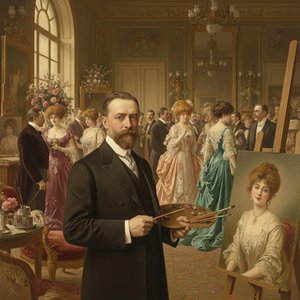
Jacques-Émile Blanche: Capturing Belle Époque Society & the Cult of Personality
Explore the captivating portraits of Jacques-Émile Blanche, a master Impressionist who captured the essence of Belle Époque society in Paris and London. Discover his unique style & lasting legacy.

Capturing Light: A Masterclass in the Ethereal Beauty of Impressionistic Landscapes
Explore the ethereal beauty of Impressionist landscapes. Discover how masters like Monet captured fleeting light through color and texture, and learn to curate these timeless, luminous masterpieces for your home collection.

Impressionistic Realism's Finest: 10 Masterpieces for Your Home | OriginalUniqueArt
Journey through Impressionistic Realism with 10 iconic masterpieces by Monet, Renoir & Van Gogh. Explore art history, techniques & find museum-quality reproductions for your home at OriginalUniqueArt.com. Discover all masterpieces online!