() ·

A painting made for you, by hand

Neptune

Hand Made Oil Reproduction

Hand-painted oil on canvas in your size and frame, made to order by our artists. ( Switch to Print Switch to Digital Image)

Collectible Description

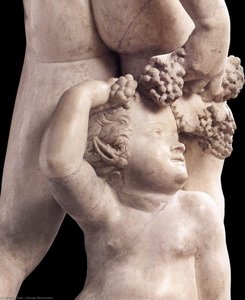
Jacopo Sansovino’s 1554 marble statue, 'Neptune,' exemplifies Neoclassical grandeur & meticulous detail. A monumental figure within an ornate facade, showcasing timeless power and classical beauty.

Artist Biography

Jacopo Sansovino (1486-1570): Florentine sculptor & architect of the Venetian Renaissance. Master of classicism, known for ornate detail in works like Biblioteca Marciana & Piazza San Marco designs.

from ·

Chapter 1

How large should it be?

Slide to change the size; the picture on the left shows the frame at its real width. The proportions of the original are kept.

Standard
custom
CM
INCH

Pick from our preset sizes that match the artwork's original proportions.

width
height

Type the width and the height you need, to fit your frame or your wall. This is hand-painted, so for a size with a different shape the artist can paint a bit more around the picture, or cut a bit — you choose. We send you a digital mockup to approve before the painting starts. The picture shown on this page does not show the real result — only the mockup does.

Chapter 2

How should it arrive?

Choose the edges of the stretched canvas

Choose your frame

Corner sample of the WhiteWrap canvas edge finish, stretched on solid wood bars
White $1
Corner sample of the BlurSideWrap canvas edge finish, stretched on solid wood bars
Blurside $1
Corner sample of the ExtendedWrap canvas edge finish, stretched on solid wood bars
Extended $1
Corner sample of the P118B picture frame: moulded polystyrene, 5 cm wide and 3 cm thick
P118B $10
Corner sample of the P118H picture frame: moulded polystyrene, 5 cm wide and 3 cm thick
P118H $10
Corner sample of the P118W picture frame: moulded polystyrene, 5 cm wide and 3 cm thick
P118W $10
Corner sample of the P438Z picture frame: moulded polystyrene, 5.5 cm wide and 3.5 cm thick
P438Z $10
Corner sample of the P508JH picture frame: moulded polystyrene, 7 cm wide and 3.5 cm thick
P508JH $12
Corner sample of the P508YH picture frame: moulded polystyrene, 7 cm wide and 3.5 cm thick
P508YH $12
Corner sample of the P805H picture frame: moulded polystyrene, 5 cm wide and 3.5 cm thick
P805H $10
Corner sample of the P805Z picture frame: moulded polystyrene, 5 cm wide and 3.5 cm thick
P805Z $10
Corner sample of the P919BZ picture frame: moulded polystyrene, 7 cm wide and 3.5 cm thick
P919BZ $10
Corner sample of the P919G picture frame: moulded polystyrene, 7 cm wide and 3.5 cm thick
P919G $10
Corner sample of the P919XJ picture frame: moulded polystyrene, 7 cm wide and 3.5 cm thick
P919XJ $10
Corner sample of the P959ZH picture frame: moulded polystyrene, 5 cm wide and 3 cm thick
P959ZH $10
Corner sample of the P968JZ picture frame: moulded polystyrene, 6 cm wide and 4 cm thick
P968JZ $12
Corner sample of the W106C picture frame: solid wood, 5 cm wide and 3 cm thick
W106C $8
Corner sample of the W218G picture frame: solid wood, 5 cm wide and 3 cm thick
W218G $10
Corner sample of the W218JH picture frame: solid wood, 5 cm wide and 3 cm thick
W218JH $8
Corner sample of the W218Y picture frame: solid wood, 5 cm wide and 3 cm thick
W218Y $10
Corner sample of the W307PJ picture frame: solid wood, 6 cm wide and 3 cm thick
W307PJ $10
Corner sample of the W316G picture frame: solid wood, 6 cm wide and 3 cm thick
W316G $10
Corner sample of the W316PJ picture frame: solid wood, 6 cm wide and 3 cm thick
W316PJ $8
Corner sample of the W316Y picture frame: solid wood, 6 cm wide and 3 cm thick
W316Y $10
Corner sample of the W398PJ picture frame: solid wood, 5 cm wide and 3 cm thick
W398PJ $8
Corner sample of the W4111J picture frame: solid wood, 6.5 cm wide and 3.5 cm thick
W4111J $10
Corner sample of the W500HY picture frame: solid wood, 7 cm wide and 5 cm thick
W500HY $15
Corner sample of the W500JH picture frame: solid wood, 7 cm wide and 5 cm thick
W500JH $15
Corner sample of the W692G picture frame: solid wood, 8 cm wide and 4 cm thick
W692G $12
Corner sample of the W849H picture frame: solid wood, 5 cm wide and 3 cm thick
W849H $8
Corner sample of the W940BG picture frame: solid wood, 7.5 cm wide and 4.5 cm thick
W940BG $15
Corner sample of the W953PJ picture frame: solid wood, 6 cm wide and 3.5 cm thick
W953PJ $8
Corner sample of the H24-GOLD picture frame: carved wood with gesso, 10 cm wide and 6 cm thick
H24-GOLD $30
Corner sample of the H24-SILVER picture frame: carved wood with gesso, 10 cm wide and 6 cm thick
H24-SILVER $30
Corner sample of the H36-GOLD picture frame: carved wood with gesso, 15 cm wide and 6.5 cm thick
H36-GOLD $45
Corner sample of the H36-SILVER picture frame: carved wood with gesso, 15 cm wide and 6.5 cm thick
H36-SILVER $45
Frame preview
Framed

Moulding: . Overall size with the frame: .

Chapter 3

Who paints it, and should anything change?

Examples of what can be changed: Replace face with customer photo; Add pet (e.g., replace cat with dog); Include hidden message in background; Change background landscape or elements.
After order, OriginalUniqueArt.com team will email client for instructions and provide a mockup preview

Worldwide Delivery () in 3/4 weeks instead of standard 5 weeks. (2 November). No compromise on quality.

Chapter 4

The finishing touches

A nameplate, as in a museum?

Engraved Bronze Plaque Details

This elegant plaque features the artist's name and the title of the artwork, finely engraved for a timeless presentation.

It is made from bronze with a refined, elegant finish. The text is precisely laser-engraved for a sharp and permanent result. Measuring 9x2 cm, the plaque is compact yet easy to read. It's built to be durable and scratch-resistant, offering a professional, museum-quality look. Mounting is simple thanks to the included adhesive backing.

Transparent Acrylic Plaque Details

The plaque includes essential engraved details such as the artist's name, the title of the artwork, the date it was created, the type of media used-like oil on canvas or watercolor-a brief description of the piece, and a QR code that links to the complete artwork information.

It is crafted from clear acrylic, offering a sleek, modern appearance. The text is UV-engraved in black to ensure strong visual contrast. With a size of 10x15 cm, it ensures optimal readability. It comes equipped with two metal hooks for secure wall mounting. The plaque is designed to be weather-resistant, making it suitable for various environments, and it includes interactive features that work seamlessly with smartphone scanning.

Black Acrylic Plaque Details

This elegant plaque includes engraved information such as the artist's name, the title of the artwork, the date it was created, the type of media used (like oil on canvas or watercolor), a short description of the artwork, and a QR code for quick access to more information.

The plaque itself is made from refined black acrylic with a premium finish. The text is laser-engraved in white for high contrast and readability. Its size is 10x15 cm, designed to be easy to read. It comes with two metal hooks for professional mounting. The design is sleek and fits any interior style. It is also weather-resistant and durable, with built-in digital integration for mobile compatibility.

A protective varnish?

When do you need it?

Chapter 5

Your painting, as you ordered it

Neptune

Reproduction Medium

Reproduction Size

-

Elite Senior Artist

More detail, finesse, and extra production time

-

Reproduction Frame

-

-

For artworks or reproductions larger than 105 cm (approximately 41 inches) on any side, the frame will be shipped as a kit, disassembled. This method ensures safe delivery and prevents damage during transport.

Professional assembly required - this is not a DIY product.
The kit must be assembled and the canvas stretched by an experienced professional framer, using wood glue (not supplied), a canvas stretching plier and clamps to hold the bars square while the glue dries. Incorrect assembly or uneven canvas tension can permanently damage the artwork and is not covered by our warranty.

  • All solid wood bars are included, precisely cut to size.

  • Assembled with the screws provided, plus wood glue for the corner joints, which is not supplied and must be sourced by your framer.

  • Professional tools are required and not included: a canvas stretching plier (tensioner) and clamps to hold the bars square while the glue dries.

Important:
The corner joints require wood glue, the bars must be held with clamps until the glue is fully dry, and tightening the canvas on the assembled frame requires a canvas stretching plier. None of these are included in the kit. Please arrange an experienced professional framer before ordering this size.

Nameplate

-

-

Protective Varnish

Glossy Varnish (enhances colors, protects against light/moisture)

-

Customize My Artwork

Examples of what can be changed: Replace face with customer photo; Add pet (e.g., replace cat with dog); Include hidden message in background; Change background landscape or elements.

-

Urgent

Worldwide Delivery () in 3/4 weeks instead of standard 5 weeks. (2 November). No compromise on quality.

-

Express Shipping

Worldwide Delivery () in 5 weeks. (9 November).

Included

Total Price

$ 300

Total Price $ 300

Glass option is only available in size under 110 CM

Included with every order

  • Free Worldwide Express Shipping
  • High-Quality Linen Canvas
  • Full Shipping Insurance
  • Customs Tax Refund Guarantee
  • True Color Matching Guarantee
  • 100-Day Return Policy (Defects Only)
  • 100% Money-Back Guarantee
  • Bulk Discount Offer

A Titan of Marble: Jacopo Sansovino’s Neptune

Within the grand halls of Venetian art resides a sculpture that commands attention not merely through its scale but through the profound sense of classical order and serene power it embodies – Jacopo Sansovino's 1554 depiction of Neptune. This monumental marble figure, recently brought to light through meticulous research, offers a captivating glimpse into the artistic sensibilities of the High Renaissance and the enduring legacy of Florentine mastery transported to the Adriatic. The statue’s presence is immediately striking; it’s not simply a representation of a god but an assertion of authority, a testament to the enduring strength and dominion associated with the sea itself.

Sansovino, born in Florence around 1486, was a sculptor deeply rooted in the traditions of antiquity. His early training, though somewhat shrouded in historical detail, undoubtedly instilled within him a reverence for classical forms – a desire to capture the idealized beauty and balanced proportions that defined the works of Greek and Roman sculptors. This influence is powerfully evident in Neptune’s posture: his stance is regal yet relaxed, conveying both strength and an inherent dignity. The musculature is carefully rendered, adhering to the anatomical principles championed by artists like Michelangelo, yet imbued with a subtle grace that avoids any hint of excessive realism.

A Symphony of Form and Texture

The technical execution of Neptune is nothing short of breathtaking. Crafted from pristine white marble, the statue’s surface possesses an almost luminous quality – polished to a mirror sheen that reflects light in captivating ways. Sansovino masterfully employed techniques of subtractive sculpture, meticulously carving away excess material to reveal the underlying form with astonishing precision. Note the intricate detailing of Neptune's flowing robes, the delicate folds and drapery suggesting movement even in stillness; the subtle variations in texture – from the smooth polish of the skin to the rougher surface of the marble folds – create a remarkable sense of depth and realism.

The architectural setting within which Neptune is placed further enhances the sculpture’s impact. The ornate facade, likely part of a larger commission, speaks to the lavish patronage that characterized Venetian art during this period. The use of classical motifs—arches, columns, and decorative friezes—reinforces the statue's connection to antiquity while simultaneously elevating it to a position of prominence within its surroundings. The lighting, diffused daylight as depicted in the photograph, contributes significantly to the overall effect, casting soft shadows that accentuate the form and texture of both the sculpture and the architecture.

Symbolism and the Sea God

Neptune, the Roman god of the sea, embodies a complex array of symbolic meanings. He represents not only the physical power of the ocean but also its unpredictable nature – its capacity for both creation and destruction. His trident, prominently displayed in his hand, is a potent symbol of control over the waves, while his flowing robes evoke the vastness and mystery of the sea itself. The statue’s placement within an architectural setting further amplifies these symbolic associations, suggesting that Neptune reigns supreme not just over the waters but also over the realm of human affairs.

Interestingly, the timing of this commission – 1554 – coincides with a period of significant artistic and political upheaval in Venice. The city was grappling with challenges from rival powers and navigating complex internal dynamics. Neptune’s image, therefore, can be interpreted as an assertion of Venetian power and resilience—a visual declaration of strength against adversity. The statue's enduring appeal lies not only in its technical brilliance but also in its ability to resonate with viewers across centuries, reminding us of the timeless themes of power, dominion, and the profound connection between humanity and the natural world.

A Legacy in Stone

Jacopo Sansovino’s Neptune stands as a testament to the enduring legacy of Florentine art within the Venetian Renaissance. Its meticulous craftsmanship, classical inspiration, and potent symbolism continue to captivate audiences today. Reproductions of this magnificent sculpture offer an exceptional opportunity to bring a touch of timeless grandeur into any setting – a reminder of the power of human artistry and the beauty that can be achieved through dedication, skill, and a profound understanding of form and proportion.

Questions & Answers

What color palette is used in "Neptune" by Jacopo Sansovino?

The colors of "Neptune" form an earthy palette. This classification describes the dominant color families.

Is "Neptune" by Jacopo Sansovino among the sought-after Neoclassicism artworks?

"Neptune" by Jacopo Sansovino is classified as recognized and belongs to the Neoclassicism movement.

What is the overall mood of "Neptune" by Jacopo Sansovino?

"Neptune" has a classic atmosphere.

More about this painting

Switch to Print Switch to Digital Image Send
Details Guide Add to favorites Download Similars Diaporama Q&A Stats

In numbers

  • 1554the year it was painted
  • 29frames to choose from
  • standard sizes, in its own proportions
  • 5weeks to paint and deliver it
Jacopo Sansovino

Jacopo Sansovino

1486 - 1570, Italy

Quick facts about Jacopo Sansovino

  • Artistic Movement Or Style: Renaissance, Mannerism
  • Artists Or Movements Influenced By This Artist:
    • Alessandro Vittoria
    • Danese Cataneo
    • Andrea Palladio
  • Artists Who Influenced This Artist:
    • Andrea Sansovino
    • Andrea del Sarto
  • Date Of Birth: 1486
  • Date Of Death: 1570
  • Full Name: Jacopo Sansovino
  • Nationality: Italian
  • Notable Artworks:
    • Biblioteca Marciana
    • St. Onofrio
    • Ca' de Dio hospital
    • Palazzo Corner
    • Madonna with the Child
  • Place Of Birth: Florence, Italy

Artist Biography

A Florentine Foundation and Early Promise

Jacopo Sansovino, born Jacopo Tatti in Florence around 1486, emerged into a world brimming with artistic ferment. His initial training remains somewhat shrouded in mystery—apprenticed to an unknown sculptor, he quickly demonstrated a talent that propelled him toward ambitious endeavors. The vibrant atmosphere of Renaissance Florence, already witnessing the towering achievements of masters like Michelangelo and Leonardo da Vinci, undoubtedly shaped his early aesthetic sensibilities. By 1511, commissions began to flow: marble sculptures for the Duomo, including a depiction of St. James, and a compelling *Bacchus* statue now residing in the Bargello museum—works that already hinted at the classical inclinations that would define his mature style. A revealing episode occurred in 1518 when designs he submitted for Santa Maria Gloriosa dei Frari were rejected by Michelangelo himself, a testament to the fiercely competitive artistic climate of Florence and a moment that likely spurred Sansovino to seek new horizons. His formative years also included a collaborative period with painter Andrea del Sarto from 1511-1515, an association that broadened his understanding of Renaissance art beyond the realm of sculpture. These early works reveal a fascinating blend—the High Renaissance ideals of balance and harmony interwoven with emerging Mannerist tendencies toward elegance and refined detail.

Rome, Rupture, and a Venetian Rebirth

The year 1519 marked a turning point as Sansovino journeyed to Rome. This period coincided with the tumultuous Sack of Rome in 1527, an event that irrevocably altered the course of Italian history and profoundly impacted the artist’s trajectory. While in Rome, he created works like St. Onofrio and Thomas Rangone, demonstrating a growing architectural awareness alongside his sculptural prowess. The upheaval caused by the sack prompted a decisive move—a relocation to Venice, a city poised to become the canvas for his most enduring legacy. This wasn't merely a change of location; it was an immersion into a distinctly different cultural milieu. Venice, with its unique blend of Byzantine heritage and maritime power, offered Sansovino both refuge and opportunity. Appointed architect to the Venetian Republic, he embarked on a series of ambitious projects that would fundamentally transform the city’s architectural landscape.

Shaping a City: The Venetian Masterpieces

Sansovino's arrival in Venice heralded his most prolific period. He wasn’t simply building structures; he was reimagining the very fabric of the city, infusing it with a new sense of classical grandeur and Venetian elegance. His masterpiece, undoubtedly, is the Biblioteca Marciana, begun around 1537 and painstakingly completed over half a century. This richly decorated Renaissance structure, strategically positioned across from the Doge’s Palace in the Piazzetta, stands as a testament to his ability to synthesize classical architectural principles with the unique decorative sensibilities of Venice. The library's façade, adorned with sculptures and intricate carvings, exemplifies this harmonious fusion. Beyond the Biblioteca Marciana, Sansovino left an indelible mark on Venice through numerous other significant works: the Ca’ de Dio hospital, a complex designed to provide shelter and care; the Palazzo Corner, showcasing his mastery of palatial architecture; the Palazzo Loredan, with its elegant proportions and refined details; and ambitious designs for the Piazza San Marco itself, aiming to create a grand civic space befitting Venice's status as a major European power. He successfully adapted classical architectural language to Venetian tastes, paving the way for the graceful architecture of Andrea Palladio who would follow in his footsteps.

Legacy and Historical Significance

Jacopo Sansovino’s historical significance lies not only in the beauty and innovation of his individual works but also in his pivotal role as a bridge between the High Renaissance and Mannerism. He possessed an exceptional ability to synthesize classical ideals—proportion, harmony, and order—with the decorative richness and unique spatial considerations of Venice. This synthesis created a distinctive architectural style that resonated throughout the city and influenced generations of artists and architects. He was more than just an architect or sculptor; he was a cultural translator, adapting ancient forms to a modern context while remaining deeply sensitive to local traditions. Sansovino also served as a mentor, nurturing the talents of sculptors like Alessandro Vittoria and Danese Cataneo, ensuring that his artistic vision would continue to flourish after his death in 1570. His work demonstrates a remarkable mastery of both sculpture and architecture—a rare combination that solidified his place as one of the most important Renaissance artists. His legacy continues to inspire appreciation for Venetian art and architecture, reminding us of the power of artistic vision to shape not just buildings, but entire cities and cultural identities.

Quick Facts

  • Movement: Neoclassical
  • Subject or theme: Sea god, power
  • Influences: Renaissance
  • Artistic style: Idealized forms
  • Title: Neptune

Art Quiz

There is only one correct answer for each question.

Question 1:
What artistic movement is most closely associated with Jacopo Sansovino’s ‘Neptune’?
Question 2:
The statue depicts which mythological figure?
Question 3:
In what year was ‘Neptune’ created?
Question 4:
What material is primarily used to construct the statue’s figure?
Question 5:
The image description highlights which aspect of the sculpture's presentation?