Switch to Print
 Read More







































 For artworks or reproductions larger than 105 cm (approximately 41 inches) on any side, the frame will be shipped as a kit, disassembled. This method ensures safe delivery and prevents damage during transport.


A Symphony of Flemish Abundance
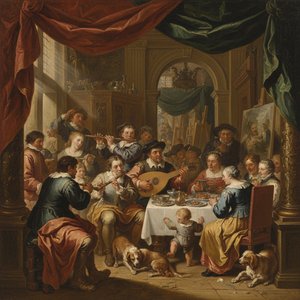
In the heart of the seventeenth century, amidst the bustling, prosperous streets of Antwerp, Jacob Jordaens captured a moment of pure, unadulterated joy that continues to resonate with viewers centuries later. The Bean King is not merely a painting; it is an immersive sensory experience, a window into a world where life is lived with profound intensity and communal warmth. The scene unfolds as a grand, boisterous banquet, a tableau brimming with figures caught in the throes of conviviality. As the eye wanders across the canvas, one encounters a landscape of human connection—faces illuminated by laughter, hands reaching for delicacies, and the palpable energy of a celebration in full swing. This is the essence of the Flemish Baroque: a celebration of earthly pleasures, where the textures of food, the sheen of glassware, and the very breath of the revelers seem to vibrate with life.
The composition is masterfully anchored by a central table laden with an opulent spread, reflecting the era's fascination with grandeur and plenty. Amidst the swirling movement of the crowd, subtle details invite deeper contemplation. Two dogs, symbols of domestic fidelity and grounded reality, wander through the scene—one tucked near the bottom corner and another providing a charming counterpoint on the far left. Even the passage of time is subtly acknowledged by a clock hanging above the festivities, serving as a poignant reminder that while these moments of merriment are fleeting, the spirit of togetherness is eternal. For the collector or designer, this piece offers more than just visual splendor; it provides a narrative of stability, warmth, and the enduring beauty of shared human experience.
Mastery of Light and Rubensian Spirit
To understand the technical brilliance of The Bean King, one must look to Jordaens’ profound connection to the Flemish tradition. While his contemporary and mentor, Peter Paul Rubens, was known for a more idealized and heroic grandeur, Jordaanness carved out a unique niche by tempering that Rubensian exuberance with a gritty, palpable realism. He possessed an extraordinary ability to render textures that feel almost tactile; one can almost sense the weight of the heavy linens, the cool smoothness of the pewter, and the succulent richness of the feast itself. His use of chiaroscuro—the dramatic interplay between light and shadow—is nothing short of masterful, sculpting the figures out of the darkness to create a sense of three-dimensional depth that pulls the viewer directly into the room.
This technique does more than showcase skill; it directs the emotional journey of the observer. The light falls strategically upon the most expressive faces, highlighting the wrinkles of laughter and the glint of excitement in the eyes, ensuring that the human element remains the soul of the work. For those seeking to adorn a space with art that commands attention, Jordaens’ ability to balance dramatic movement with grounded, earthy tones makes this piece an ideal centerpiece. It possesses a rare versatility, capable of anchoring a formal gallery setting or adding a layer of historical depth and soulful character to a sophisticated residential interior.
A Legacy of Joy for the Modern Collector
Beyond its technical merits, The Bean King serves as a powerful symbol of resilience and the celebration of life's simple bounties. In an age often characterized by fragmentation, Jordaens’ vision of a unified, celebrating community offers a profound sense of comfort and inspiration. The painting celebrates the "Bean Feast"—a tradition rooted in the festivities of the Twelfth Night—reminding us that even in the midst of life's complexities, there is always reason to gather, to feast, and to find joy in one another.
For the discerning art lover or interior designer, acquiring a high-quality reproduction of this masterpiece allows for the infusion of Baroque drama into contemporary environments. It is a piece that invites conversation, acting as a focal point that stimulates both the intellect and the emotions. Whether placed in a sunlit dining room to echo its themes of feasting or in a quiet study to provide a sense of historical gravity, The Bean King remains an eternal testament to the vibrant, flourishing spirit of Flanders.
Questions & Answers
Where is "The Bean King" by Jacob Jordaens on display today?
You can see the original "The Bean King" at the Hermitage Museum, Saint Petersburg, Russia.
What does "The Bean King" by Jacob Jordaens depict?
"The Bean King" by Jacob Jordaens depicts: celebration, family meal, dogs, table setting, portraiture, dutch masters, renaissance era, atmosphere.
What subject and atmosphere does "The Bean King" by Jacob Jordaens combine?
"The Bean King" shows celebration, family meal, dogs, table setting, portraiture, dutch masters, renaissance era, atmosphere, and its recorded mood is calm.
More about this painting
 Preview
 Send
Send Share
Share
 Details
 Guide
Guide

 Download
 Similars
 X-Ray
X-Ray Diaporama
 Q&A
Q&A Stats
Stats