Introduction: Jacob Jordaens – A Flemish Baroque Master
 Wikipedia: Jacob Jordaens
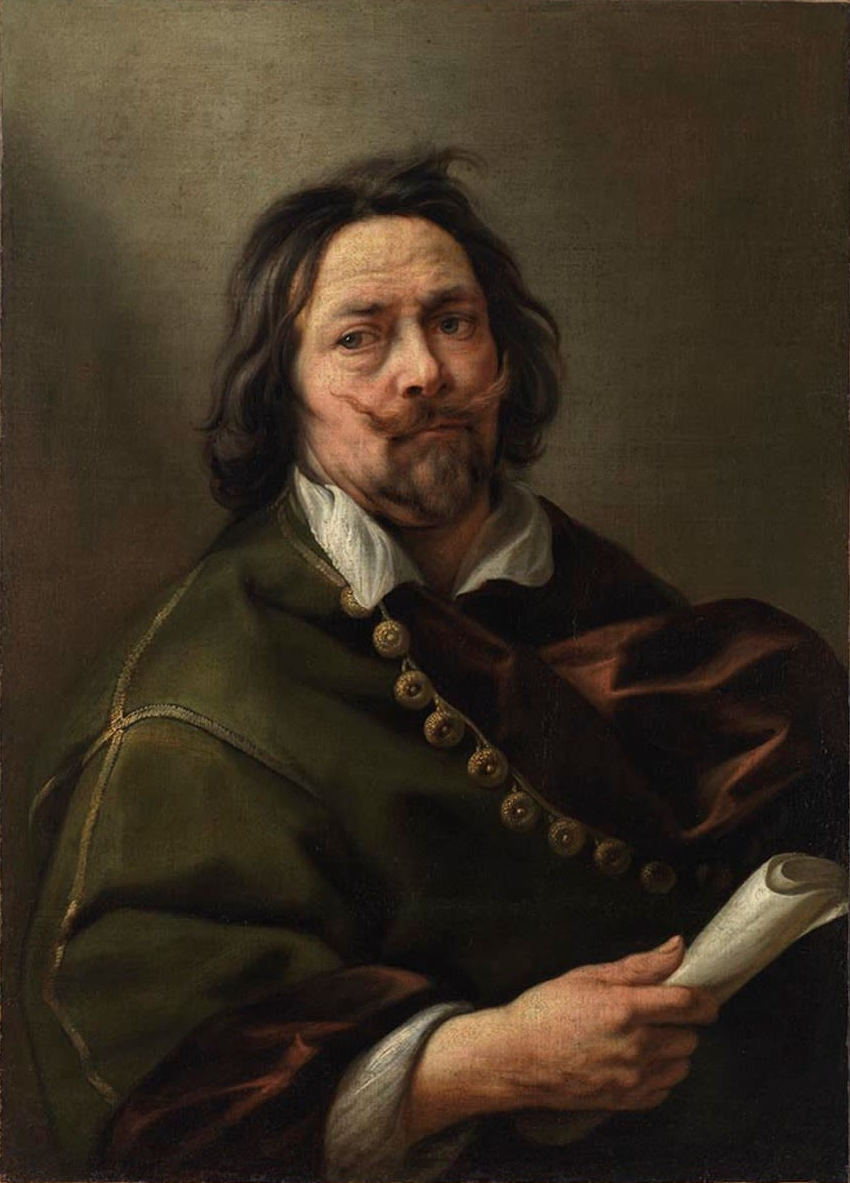
Jacques (Jacob) Jordaens (19 May 1593 – 18 October 1678) was a Flemish painter, draughtsman and a designer of tapestries and prints. He was a prolific artist who created biblical, mythological, and allegorical compositions, genre scenes, landscapes,...
Jacob Jordaens (1593-1678) stands as a towering figure within the vibrant landscape of 17th-century Flemish painting, often overshadowed by his more internationally celebrated contemporaries, Peter Paul Rubens and Anthony van Dyck. Yet, to dismiss Jordaens as merely another artist in their orbit is to profoundly underestimate his singular genius. While Rubens epitomized grand historical narratives and Van Dyck excelled in aristocratic portraiture, Jordaens carved a unique path, becoming the master of genre scenes – depictions of everyday life imbued with an unparalleled energy, realism, and often, a delightfully boisterous spirit. He wasn’t simply *recording* life; he was celebrating it, reveling in its textures, its appetites, and its unvarnished truths. His work offers a fascinating window into the social fabric of Antwerp during the Spanish Netherlands period, revealing a world brimming with both piety and pleasure.
Early Life & Training: The Foundations of a Distinct Style
Flemish Baroque painting was a style of painting in the Southern Netherlands during Spanish control in the 16th and 17th centuries. The period roughly begins when the Dutch Republic was split from the Habsburg Spain regions to the south with the Span...
Born into a prosperous linen merchant family in Antwerp, Jordaens’s artistic journey began at the age of fourteen as an apprentice to Adam van Noort. Van Noort, himself a student of Rubens, instilled in him a solid foundation in traditional techniques and compositional principles. However, unlike his illustrious peers who sought inspiration through extensive travel to Italy – the heart of Renaissance art – Jordaens remained largely rooted in Antwerp throughout his life. This geographical steadfastness proved crucial in shaping his artistic identity. He didn’t concern himself with emulating classical ideals; instead, he drew inspiration from the bustling streets and lively taverns of his hometown, as well as the works of northern Italian painters like Jacopo Bassano and Paolo Veronese, whose dynamic compositions and rich color palettes resonated deeply with his sensibilities. Registered in the Guild of Saint Luke in 1607, Jordaens quickly established himself as a skilled craftsman, but it was his willingness to deviate from prevailing artistic norms that truly set him apart.
Genre Scenes & Daily Life: Capturing the Vibrancy of Antwerp
Baroque painting is the painting associated with the Baroque cultural movement. The movement is often identified with Absolutism, the Counter Reformation and Catholic Revival, but the existence of important Baroque art and architecture in non-absolut...
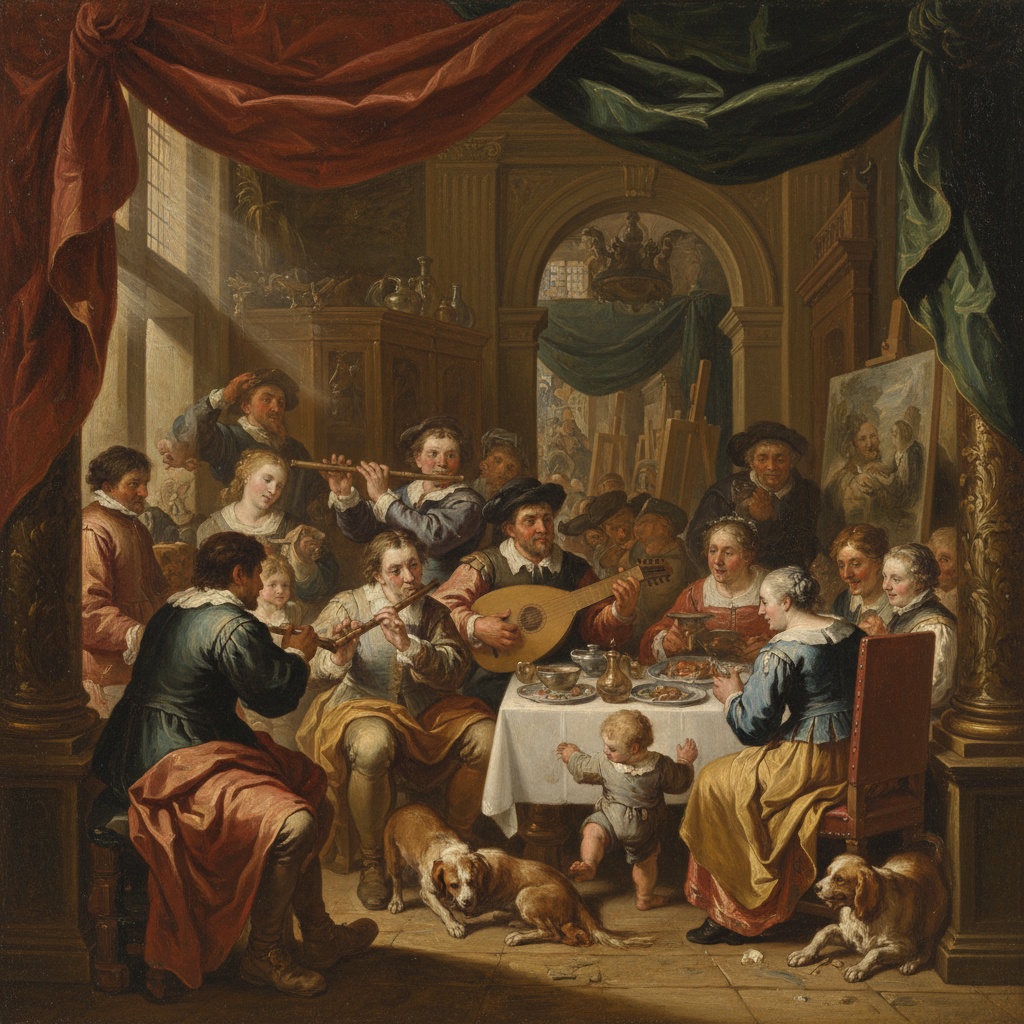
Jordaens’s most enduring legacy lies in his genre scenes. These weren't idealized portrayals of rustic life; they were often boisterous, even chaotic depictions of feasting, drinking, and merriment. Paintings like “The King Drinks” (1638) are prime examples – a whirlwind of activity centered around a jovial monarch indulging in earthly pleasures. The sheer abundance of detail is striking: overflowing tables laden with food and drink, richly dressed figures engaged in animated conversation, and an overall sense of uninhibited revelry. He possessed an extraordinary ability to capture the physicality of his subjects, rendering flesh tones with remarkable realism and conveying a palpable sense of movement and energy. But these scenes weren’t simply celebrations of hedonism; they often contained subtle moral undertones, serving as gentle reminders of the transience of life and the importance of moderation. His depictions of children – playful, mischievous, and utterly lifelike – are particularly captivating, offering a glimpse into the domestic lives of Antwerp families.
Mythological and Allegorical Works: Jordaens’s Unique Interpretations
While best known for his genre scenes, Jordaens also excelled in mythological and allegorical compositions. However, even these works bear the imprint of his distinctive style. Unlike Rubens's often dramatic and emotionally charged interpretations of classical themes, Jordaens approached mythology with a more grounded sensibility. His “Cleopatra’s Feast” is a testament to this – a lavish scene brimming with opulent detail and dramatic lighting, yet devoid of the high-flown idealism typically associated with such subjects. He infused these narratives with a distinctly Flemish character, populating them with robust figures who feel remarkably human and relatable. His allegorical paintings, often commissioned for more formal settings, similarly eschewed grandiosity in favor of a more intimate and accessible approach. They weren’t intended to intimidate or awe; they were meant to engage the viewer on a personal level.
Jordaens's Legacy & Influence on Subsequent Artists
Following Rubens’s death in 1640, Jordaens rose to become the leading Flemish Baroque painter of his time. His workshop was prolific, producing a vast number of paintings that catered to a diverse clientele. He exerted a significant influence on subsequent generations of artists, particularly those working in the genre scene tradition. Jan Steen, for example, clearly drew inspiration from Jordaens’s dynamic compositions and realistic depictions of everyday life. However, his impact extends beyond mere stylistic imitation. Jordaens’s willingness to embrace realism, his celebration of earthly pleasures, and his ability to capture the energy and vitality of Antwerp society left an indelible mark on Flemish art. He demonstrated that artistic merit wasn't solely dependent on adherence to classical ideals or courtly patronage; it could be found in the everyday moments of life, rendered with honesty, skill, and a touch of playful irreverence.
Exploring Key Masterpieces: A Closer Look at Notable Paintings
To truly appreciate Jordaens’s genius, one must delve into his individual masterpieces. “Adoration of the Shepherds” (1617) showcases his early mastery of chiaroscuro – the dramatic interplay of light and shadow – creating an intimate and emotionally resonant scene. The figures are rendered with remarkable realism, their expressions conveying a sense of awe and reverence. “As the Old Sing, So Pipe the Young” exemplifies his signature genre scenes, capturing a lively gathering filled with music, dancing, and merriment. The composition is dynamic and engaging, drawing the viewer into the heart of the festivities. And “The Satyr and the Peasant,” while seemingly lighthearted, offers a subtle commentary on social hierarchies and human folly. These paintings, along with countless others, demonstrate Jordaens’s extraordinary versatility, his technical skill, and his unwavering commitment to capturing the essence of Flemish life. Through works like these, Jacob Jordaens continues to captivate audiences centuries later, reminding us of the enduring power of art to reflect – and celebrate – the human experience.