Preview
 Send
Send Share
Share
 Details
 Guide
Guide

 Download
 Similars
 X-Ray
X-Ray Diaporama
 Q&A
Q&A Stats
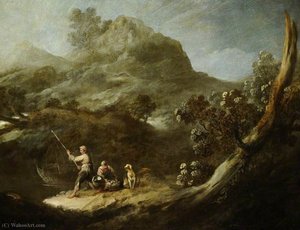
StatsRiver Crossing

- 63.0 x 84.0 cm


 Read More
Giclée / Art Print
Museum-quality giclée or canvas print with fast production and flexible finish options. ( Buy Hand Made Painting Switch to Digital Image)




P118B $10

P118H $10

P118W $10

P438Z $10

P508JH $12

P508YH $12

P805H $10

P805Z $10

P919BZ $10

P919G $10

P919XJ $10

P959ZH $10

P968JZ $12

W106C $8

W218G $10

W218JH $8

W218Y $10

W307PJ $10

W316G $10

W316PJ $8

W316Y $10

W398PJ $8

W4111J $10

W500HY $15

W500JH $15

W692G $12

W849H $8

W940BG $15

W953PJ $8




Pick from our preset sizes that match the artwork's original proportions.

Type the width and the height you need, to fit your frame or your wall. A print can only be cut, never made bigger than the picture, so a size with a different shape loses a part of the image. We send you a digital mockup to approve before we print anything. The picture shown on this page does not show the real cut — only the mockup does.
Worldwide Delivery () in 2 weeks instead of standard 4/5 weeks. (10 November)

Free Worldwide Express Shipping

High-Quality Linen Canvas

Full Shipping Insurance

Customs Tax Refund Guarantee

True Color Matching Guarantee

100-Day Return Policy (Defects Only)

100% Money-Back Guarantee

Bulk Discount Offer
 Glass option is only available in size under 110 CM

River Crossing
Giclée / Art Print
Reproduction Size
-


Total Price
$ 81
A Singular Vision: Ignacio de Iriarte and His Landscape Masterpieces
Ignacio de Iriarte (1620-1685), a name often overshadowed by the luminaries of his time – Murillo, Zurbarán – nonetheless occupies a crucial position in Spanish Baroque art. Unlike many artists preoccupied with religious commissions or portraiture, Iriarte dedicated himself almost entirely to capturing the untamed grandeur of the Iberian Peninsula’s rural vistas. This unwavering focus resulted in a distinctive artistic style that distinguishes him from his contemporaries and secures his place as “the Spanish Claude Lorraine,” a moniker reflecting his profound admiration for the French landscape painter whose work championed natural beauty and atmospheric perspective.
- Early Influences: Iriarte’s formative years were spent in Azcoitia, Gipuzcoa, where he received a grounding in humanist scholarship alongside artistic training. His apprenticeship with Francisco Herrera the Elder instilled him with foundational principles of disegno – Italian Renaissance drawing techniques – emphasizing careful observation and anatomical accuracy.
- Seville and Artistic Evolution: Moving to Seville in 1642 marked a pivotal moment, propelling Iriarte into the vibrant artistic milieu of the city. Here, he honed his skills further, experimenting with chiaroscuro—the dramatic interplay of light and shadow—a technique perfected by Caravaggio and embraced wholeheartedly by Iriarte.
The Style of Wildness: Defining Iriarte’s Artistic Language
What truly sets Iriarte apart is his stylistic approach. He eschewed the idealized landscapes favored by many artists, opting instead for depictions that convey a palpable sense of ruggedness and immediacy. His canvases pulsate with energy, capturing fleeting moments of weather – storms brewing over distant mountains, sunlit meadows dotted with wildflowers – with breathtaking realism. Unlike Caravaggio’s theatrical lighting, Iriarte employed softer illumination to sculpt the contours of his subjects, creating an atmosphere that is both dramatic and contemplative.
- Atmospheric Perspective: A hallmark of Iriarte's technique is masterful atmospheric perspective—the illusion of depth achieved through subtle gradations of color and tonal value. He skillfully renders distant landscapes with muted hues and hazy outlines, conveying the vastness and majesty of nature.
- Detailed Observation: Iriarte’s paintings are characterized by meticulous detail, reflecting his unwavering commitment to accurate representation. From the texture of bark on ancient trees to the ripples in a turbulent stream, every element is rendered with painstaking precision.
Historical Context and Symbolic Resonance
Iriarte's artistic endeavors unfolded against the backdrop of Spain’s Baroque era—a period marked by fervent religious fervor and opulent patronage. However, Iriarte transcended mere decorative splendor, imbuing his landscapes with profound symbolic significance. The depiction of solitary figures contemplating the sublime beauty of nature speaks to a humanist preoccupation with contemplation and moral reflection – values championed by thinkers like Descartes and Spinoza.
- The Sublime: Iriarte’s canvases embody the concept of “the sublime”—a feeling of awe and terror inspired by encountering overwhelming grandeur. He captures the majesty of mountains, the power of storms, and the immensity of the sky, prompting viewers to confront their own insignificance in the face of nature's forces.
- Religious Undertones: While primarily focused on landscape, Iriarte’s paintings often incorporate subtle religious iconography—references to biblical narratives or depictions of saints—suggesting a desire to elevate the viewer’s spirit and connect him with divine transcendence.
Legacy and Enduring Appeal
Despite his relative obscurity during his lifetime, Ignacio de Iriarte has experienced a resurgence of interest in recent decades. His landscapes continue to captivate audiences worldwide, admired for their breathtaking beauty, technical virtuosity, and profound emotional resonance. Reproductions of his masterpieces adorn homes and galleries across the globe, testament to the enduring power of his vision—a singular dedication to portraying the untamed splendor of Spain’s countryside that secures him a rightful place among the greatest artists of the Baroque.
Questions & Answers
What mood would "River Crossing" bring to a space?
With its calm mood, "River Crossing" is suggested for a living room.
When and with what materials was "River Crossing" made?
"River Crossing" was made in 1665, in oil on canvas.
What placement suits the format of "River Crossing" by Ignacio de Iriarte?
With its landscape shape, a reproduction of "River Crossing" is suggested for a living room.
Artist Biography
Ignacio de Iriarte: The Painter of Wild Landscapes
Ignacio de Iriarte, a name perhaps less familiar than those of his contemporaries Murillo or Zurbarán, stands as a pivotal figure in 17th-century Spanish art. Born in Azcoitia, Gipuzcoa, in 1620, he carved out a unique and remarkably successful career dedicated almost exclusively to landscape painting – a path rarely trodden by his peers at the time. His work, characterized by rugged, dramatic scenes often imbued with a sense of wildness and solitude, reveals an artist deeply attuned to the power and beauty of the Spanish countryside, earning him the somewhat evocative title of “the Spanish Claude Lorraine.” This article delves into the life, artistic development, and lasting legacy of this largely unsung master.
Iriarte’s early education was primarily at home, a common circumstance for artists of his era. However, in 1642, he moved to Seville and entered the studio of Francisco Herrera the Elder, where he initially focused on traditional portraiture and religious scenes. While he learned the fundamentals of color theory under Herrera, Iriarte quickly recognized that his true passion lay elsewhere. He found himself drawn to the untamed landscapes surrounding Seville, particularly the mountains near Aracena, a region that would become the enduring subject of much of his work. It was here, in 1646, that he married Doña Francisca de Chaves, though their marriage proved tragically short-lived.
His artistic trajectory shifted dramatically after this early period. Iriarte deliberately distanced himself from the prevailing trends of the time, rejecting the highly polished and often idealized depictions favored by many of his contemporaries. Instead, he embraced a more raw and expressive style, drawing inspiration from the works of Salvator Rosa, another master of dramatic landscapes. His paintings are not serene vistas; they are imbued with an atmosphere of drama, tension, and even melancholy. He captured the essence of the Spanish wilderness – its rugged peaks, dense forests, and turbulent rivers – with a remarkable sense of realism and emotional depth.
Iriarte’s association with Bartolomé Esteban Murillo proved to be one of the most significant collaborations in 17th-century Spanish art. The two artists shared a deep respect for each other's talents, and they frequently worked together on large-scale projects. Murillo typically focused on the human figures within his compositions, while Iriarte meticulously rendered the landscapes that framed them. A particularly poignant example of this collaboration is an unfinished landscape painting depicting a scene from the life of David, where Murillo sketched in the figures and Iriarte left the background incomplete – a testament to their falling out over the project. This episode highlights the differing approaches of the two artists: Murillo’s emphasis on narrative and human emotion versus Iriarte's dedication to capturing the sublime beauty of nature.
Iriarte’s career was further solidified by his membership in the Academia de Bellas Artes de Sevilla, where he served as its first secretary from 1660 to 1669 and again from 1667 to 1669. His work gained recognition throughout Spain and beyond, attracting the attention of collectors and patrons alike. He was celebrated for his ability to evoke a sense of atmosphere and emotion through his landscapes, earning him comparisons to the renowned Italian landscape painter Claude Lorrain. While the comparison isn’t entirely accurate – Iriarte's style possessed a uniquely Spanish character—it underscored the profound impact he had on the development of landscape painting in Spain.
The Style and Technique of a Lone Pioneer
Iriarte’s artistic style is immediately recognizable by its dramatic use of light, shadow, and color. He employed a technique known as *sfumato*, creating hazy, atmospheric effects that blurred the boundaries between foreground and background. His landscapes are often characterized by strong diagonals and dynamic compositions, conveying a sense of movement and energy. He favored earthy tones – browns, greens, and grays – to depict the rugged terrain, punctuated by flashes of vibrant color in the sky or foliage.
Unlike many of his contemporaries who relied on meticulous detail and precise rendering, Iriarte often employed looser brushstrokes and a more expressive approach. He prioritized capturing the *feeling* of a landscape over its literal representation, allowing for a degree of ambiguity and interpretation. This willingness to deviate from established conventions set him apart from other artists of his time and contributed to the distinctive character of his work.
His use of perspective was particularly noteworthy. Iriarte frequently employed aerial perspective – diminishing the clarity and intensity of colors as they receded into the distance – to create a sense of depth and scale. This technique, combined with his masterful handling of light and shadow, allowed him to transform ordinary landscapes into breathtaking vistas.
Major Works and Legacy
Several of Iriarte’s paintings have survived to this day, offering valuable insights into his artistic practice. “Landscape with Hunters” (circa 1640-1685), housed in Madrid, exemplifies his ability to capture the drama and grandeur of the Spanish wilderness. “Landscape with Figures,” also from Madrid, showcases his skill in integrating human figures into a carefully constructed landscape composition. “River Crossing,” currently located in Madrid, demonstrates his mastery of atmospheric perspective and dynamic composition.
Despite his considerable talent and influence, Iriarte’s work was not fully appreciated during his lifetime. He largely operated outside the established artistic circles of Seville, focusing on a niche market of patrons who valued his unique vision. However, in recent decades, Iriarte has experienced a resurgence of interest among art historians and collectors. His landscapes are now recognized as masterpieces of Spanish Baroque painting, offering a powerful testament to the beauty and resilience of the Spanish countryside.
Iriarte’s legacy extends beyond his individual paintings. He is considered a pioneer in the development of landscape painting in Spain, paving the way for future generations of artists who sought to capture the spirit of the Spanish wilderness. His work continues to inspire awe and admiration, reminding us of the enduring power of nature and the transformative potential of art.
Further Exploration
- Wikipedia Entry: https://en.wikipedia.org/wiki/Ignacio_de_Iriarte
- OriginalUniqueArt Artwork Page (Landscape with Hunters): https://www.wahoart.com/en/art/ignacio-de-iriarte-landscape-with-hunters-ignacio-de-iriarte-1640-D37TCM-en/
- OriginalUniqueArt Artist Page: https://www.wahoart.com/en/artists/ignacio-de-iriarte-en/
This information is provided by OriginalUniqueArt.com as of October 26, 2023.

Ignacio de Iriarte
1620 - 1685 , Spain
Quick Facts
- Artistic Movement Or Style: Landscape painting
- Artists Or Movements Influenced By This Artist:
- Salvator Rosa
- Claude Lorraine
- Artists Who Influenced This Artist: ['Francisco Herrera the Elder']
- Date Of Birth: 1620
- Date Of Death: 1685
- Full Name: Ignacio de Iriarte
- Nationality: Spanish
- Notable Artworks:
- Landscape with Hunters
- Landscape with Figures
- River Crossing
- Place Of Birth: Azcoitia, Spain
Related Articles

Cultivating Visions: A Historical Journey Through Rural Landscapes in Art
Explore the rich history of rural landscape painting with OriginalUniqueArt. Discover Impressionist masterpieces, key artists & movements. Find your perfect serene artwork and bring nature's beauty home.
The Golden Age Reforged: Dramatic Realism & Religious Zeal in Spanish Baroque Art
Explore the dramatic world of Spanish Baroque art! Discover masters like Zurbarán & the powerful influence of religious zeal on painting techniques – a guide for collectors and enthusiasts.

Mastering Shadows: The 25 Most Powerful Artworks by Francisco Goya
Explore Goya's haunting masterpieces from courtly portraits to Black Paintings. Discover the full collection on OriginalUniqueArt.com.

Masterpieces of Nature: The Top 25 John Constable Artworks
Explore John Constable's iconic landscapes and Romantic masterpieces. Discover the full collection online at OriginalUniqueArt.com.
Epic Drama & Dark Vibes: The Ultimate Collector's Guide to Baroque Landscapes
Master the art of drama with our ultimate guide to Baroque landscapes. Discover the power of chiaroscuro, explore legendary masters, and learn how to curate epic, dark-vibe masterpieces for your collection with expert insights from OriginalUniqueArt.