Text size

() ·

A painting made for you, by hand

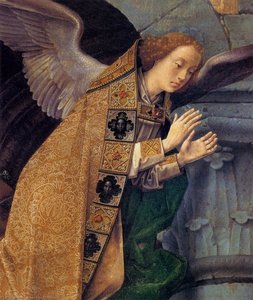
Portinari Triptych (11)

Hand Made Oil Reproduction

Hand-painted oil on canvas in your size and frame, made to order by our artists. ( Switch to Print Switch to Digital Image)

Collectible Description

Discover Hugo van der Goes's masterpiece, the Portinari Triptych! This iconic Flemish painting showcases stunning realism & emotional depth, influencing Renaissance art with its intricate details and profound symbolism.

Artist Biography

Explore the innovative Flemish Renaissance art of Hugo van der Goes (1440-1482). Known for dramatic realism, emotional portraits & the Portinari Altarpiece, he profoundly influenced Italian Renaissance painting.

from ·

Chapter 1

How large should it be?

Slide to change the size; the picture on the left shows the frame at its real width. The proportions of the original are kept.

Standard
custom
CM
INCH

Pick from our preset sizes that match the artwork's original proportions.

width
height

Type the width and the height you need, to fit your frame or your wall. This is hand-painted, so for a size with a different shape the artist can paint a bit more around the picture, or cut a bit — you choose. We send you a digital mockup to approve before the painting starts. The picture shown on this page does not show the real result — only the mockup does.

Chapter 2

How should it arrive?

Choose the edges of the stretched canvas

Choose your frame

Corner sample of the WhiteWrap canvas edge finish, stretched on solid wood bars
White $1
Corner sample of the BlurSideWrap canvas edge finish, stretched on solid wood bars
Blurside $1
Corner sample of the ExtendedWrap canvas edge finish, stretched on solid wood bars
Extended $1
Corner sample of the P118B picture frame: moulded polystyrene, 5 cm wide and 3 cm thick
P118B $10
Corner sample of the P118H picture frame: moulded polystyrene, 5 cm wide and 3 cm thick
P118H $10
Corner sample of the P118W picture frame: moulded polystyrene, 5 cm wide and 3 cm thick
P118W $10
Corner sample of the P438Z picture frame: moulded polystyrene, 5.5 cm wide and 3.5 cm thick
P438Z $10
Corner sample of the P508JH picture frame: moulded polystyrene, 7 cm wide and 3.5 cm thick
P508JH $12
Corner sample of the P508YH picture frame: moulded polystyrene, 7 cm wide and 3.5 cm thick
P508YH $12
Corner sample of the P805H picture frame: moulded polystyrene, 5 cm wide and 3.5 cm thick
P805H $10
Corner sample of the P805Z picture frame: moulded polystyrene, 5 cm wide and 3.5 cm thick
P805Z $10
Corner sample of the P919BZ picture frame: moulded polystyrene, 7 cm wide and 3.5 cm thick
P919BZ $10
Corner sample of the P919G picture frame: moulded polystyrene, 7 cm wide and 3.5 cm thick
P919G $10
Corner sample of the P919XJ picture frame: moulded polystyrene, 7 cm wide and 3.5 cm thick
P919XJ $10
Corner sample of the P959ZH picture frame: moulded polystyrene, 5 cm wide and 3 cm thick
P959ZH $10
Corner sample of the P968JZ picture frame: moulded polystyrene, 6 cm wide and 4 cm thick
P968JZ $12
Corner sample of the W106C picture frame: solid wood, 5 cm wide and 3 cm thick
W106C $8
Corner sample of the W218G picture frame: solid wood, 5 cm wide and 3 cm thick
W218G $10
Corner sample of the W218JH picture frame: solid wood, 5 cm wide and 3 cm thick
W218JH $8
Corner sample of the W218Y picture frame: solid wood, 5 cm wide and 3 cm thick
W218Y $10
Corner sample of the W307PJ picture frame: solid wood, 6 cm wide and 3 cm thick
W307PJ $10
Corner sample of the W316G picture frame: solid wood, 6 cm wide and 3 cm thick
W316G $10
Corner sample of the W316PJ picture frame: solid wood, 6 cm wide and 3 cm thick
W316PJ $8
Corner sample of the W316Y picture frame: solid wood, 6 cm wide and 3 cm thick
W316Y $10
Corner sample of the W398PJ picture frame: solid wood, 5 cm wide and 3 cm thick
W398PJ $8
Corner sample of the W4111J picture frame: solid wood, 6.5 cm wide and 3.5 cm thick
W4111J $10
Corner sample of the W500HY picture frame: solid wood, 7 cm wide and 5 cm thick
W500HY $15
Corner sample of the W500JH picture frame: solid wood, 7 cm wide and 5 cm thick
W500JH $15
Corner sample of the W692G picture frame: solid wood, 8 cm wide and 4 cm thick
W692G $12
Corner sample of the W849H picture frame: solid wood, 5 cm wide and 3 cm thick
W849H $8
Corner sample of the W940BG picture frame: solid wood, 7.5 cm wide and 4.5 cm thick
W940BG $15
Corner sample of the W953PJ picture frame: solid wood, 6 cm wide and 3.5 cm thick
W953PJ $8
Corner sample of the H24-GOLD picture frame: carved wood with gesso, 10 cm wide and 6 cm thick
H24-GOLD $30
Corner sample of the H24-SILVER picture frame: carved wood with gesso, 10 cm wide and 6 cm thick
H24-SILVER $30
Corner sample of the H36-GOLD picture frame: carved wood with gesso, 15 cm wide and 6.5 cm thick
H36-GOLD $45
Corner sample of the H36-SILVER picture frame: carved wood with gesso, 15 cm wide and 6.5 cm thick
H36-SILVER $45
Frame preview
Framed

Moulding: . Overall size with the frame: .

Chapter 3

Who paints it, and should anything change?

Examples of what can be changed: Replace face with customer photo; Add pet (e.g., replace cat with dog); Include hidden message in background; Change background landscape or elements.
After order, OriginalUniqueArt.com team will email client for instructions and provide a mockup preview

Worldwide Delivery () in 3/4 weeks instead of standard 5 weeks. (5 November). No compromise on quality.

Chapter 4

The finishing touches

A nameplate, as in a museum?

Engraved Bronze Plaque Details

This elegant plaque features the artist's name and the title of the artwork, finely engraved for a timeless presentation.

It is made from bronze with a refined, elegant finish. The text is precisely laser-engraved for a sharp and permanent result. Measuring 9x2 cm, the plaque is compact yet easy to read. It's built to be durable and scratch-resistant, offering a professional, museum-quality look. Mounting is simple thanks to the included adhesive backing.

Transparent Acrylic Plaque Details

The plaque includes essential engraved details such as the artist's name, the title of the artwork, the date it was created, the type of media used-like oil on canvas or watercolor-a brief description of the piece, and a QR code that links to the complete artwork information.

It is crafted from clear acrylic, offering a sleek, modern appearance. The text is UV-engraved in black to ensure strong visual contrast. With a size of 10x15 cm, it ensures optimal readability. It comes equipped with two metal hooks for secure wall mounting. The plaque is designed to be weather-resistant, making it suitable for various environments, and it includes interactive features that work seamlessly with smartphone scanning.

Black Acrylic Plaque Details

This elegant plaque includes engraved information such as the artist's name, the title of the artwork, the date it was created, the type of media used (like oil on canvas or watercolor), a short description of the artwork, and a QR code for quick access to more information.

The plaque itself is made from refined black acrylic with a premium finish. The text is laser-engraved in white for high contrast and readability. Its size is 10x15 cm, designed to be easy to read. It comes with two metal hooks for professional mounting. The design is sleek and fits any interior style. It is also weather-resistant and durable, with built-in digital integration for mobile compatibility.

A protective varnish?

When do you need it?

Chapter 5

Your painting, as you ordered it

Portinari Triptych (11)

Reproduction Medium

Reproduction Size

-

Elite Senior Artist

More detail, finesse, and extra production time

-

Reproduction Frame

-

-

For artworks or reproductions larger than 105 cm (approximately 41 inches) on any side, the frame will be shipped as a kit, disassembled. This method ensures safe delivery and prevents damage during transport.

Professional assembly required - this is not a DIY product.
The kit must be assembled and the canvas stretched by an experienced professional framer, using wood glue (not supplied), a canvas stretching plier and clamps to hold the bars square while the glue dries. Incorrect assembly or uneven canvas tension can permanently damage the artwork and is not covered by our warranty.

  • All solid wood bars are included, precisely cut to size.

  • Assembled with the screws provided, plus wood glue for the corner joints, which is not supplied and must be sourced by your framer.

  • Professional tools are required and not included: a canvas stretching plier (tensioner) and clamps to hold the bars square while the glue dries.

Important:
The corner joints require wood glue, the bars must be held with clamps until the glue is fully dry, and tightening the canvas on the assembled frame requires a canvas stretching plier. None of these are included in the kit. Please arrange an experienced professional framer before ordering this size.

Nameplate

-

-

Protective Varnish

Glossy Varnish (enhances colors, protects against light/moisture)

-

Customize My Artwork

Examples of what can be changed: Replace face with customer photo; Add pet (e.g., replace cat with dog); Include hidden message in background; Change background landscape or elements.

-

Urgent

Worldwide Delivery () in 3/4 weeks instead of standard 5 weeks. (5 November). No compromise on quality.

-

Express Shipping

Worldwide Delivery () in 5 weeks. (12 November).

Included

Total Price

$ 300

Total Price $ 300

Glass option is only available in size under 110 CM

Included with every order

  • Free Worldwide Express Shipping
  • High-Quality Linen Canvas
  • Full Shipping Insurance
  • Customs Tax Refund Guarantee
  • True Color Matching Guarantee
  • 100-Day Return Policy (Defects Only)
  • 100% Money-Back Guarantee
  • Bulk Discount Offer

A Masterpiece of Emotional Depth: The Portinari Triptych

Hugo van der Goes’s Portinari Triptych, completed around 1475, isn't merely a painting; it’s an immersive experience. This monumental work, now residing in the Uffizi Gallery in Florence, transcends its physical dimensions to offer a profound glimpse into the heart of late fifteenth-century Flanders and the burgeoning artistic currents flowing towards Italy. More than just portraits of a wealthy Florentine family – Tommaso and Maria Portinari – it’s a carefully constructed narrative brimming with symbolism, reflecting the couple's status, aspirations, and connection to the powerful Medici banking dynasty. The triptych format itself—a hinged panel revealing multiple scenes—was favored for its ability to create a sense of intimacy and devotion, transforming a private prayer space into a visual sanctuary.

Van der Goes’s genius lies in his masterful manipulation of light and shadow, creating an astonishingly realistic depiction of human emotion. The figures aren't idealized; they possess a palpable vulnerability and quiet dignity. Notice the subtle nuances of expression – Maria’s contemplative gaze, Tommaso’s slightly furrowed brow—that speak volumes about their inner lives. This wasn’t simply a commission for a wealthy merchant; it was an investment in legacy, a declaration of family pride, and a testament to the artist's unparalleled skill.

The Flemish Realism Revolution

Van der Goes stands as a pivotal figure in the transition from the stylized conventions of earlier Netherlandish painting to the groundbreaking realism that would define the era. Prior to his work, Flemish art often adhered to established formulas—precise detail, flattened perspective, and a focus on decorative elements. Van der Goes shattered these traditions by imbuing his paintings with an unprecedented psychological depth and dramatic intensity. He wasn’t interested in merely representing outward appearances; he sought to capture the very essence of human experience.

  • Attention to Detail: Observe the meticulous rendering of fabrics—the rich velvet, shimmering brocade, and delicate lace—that convey both luxury and texture.
  • Chiaroscuro: Van der Goes’s masterful use of light and shadow (chiaroscuro) creates a sense of volume and drama, drawing the viewer's eye to key elements within the composition.
  • Emotional Resonance: The figures are not static; they seem caught in moments of quiet contemplation, inviting viewers to share their inner thoughts and feelings.

The influence of Van der Goes extended far beyond Flanders. His innovations—particularly his emphasis on realism and psychological depth—resonated deeply with Italian Renaissance artists like Domenico Ghirlandaio, who famously adapted elements of the Portinari Triptych in his own masterpiece, *The Adoration of the Shepherds*. This exchange of artistic ideas exemplifies the dynamic interplay between Northern and Southern European art during this transformative period.

Symbolism and Context: A Florentine Tapestry

Beyond its immediate depiction of Tommaso and Maria Portinari, the triptych is rich in symbolic meaning. The setting—a richly decorated chamber—suggests their elevated social status and connection to the powerful Medici family. The inclusion of architectural elements, such as columns and arches, reinforces this sense of grandeur and authority. Furthermore, the painting’s commission by a Florentine banker highlights the growing economic and cultural ties between Flanders and Italy during the 15th century.

Interestingly, the triptych's arrival in Florence coincided with a period of significant social and political upheaval. The Medici family was consolidating its power, and the city was experiencing rapid growth and transformation. The *Portinari Triptych*, therefore, can be seen as a reflection of these broader historical forces—a testament to wealth, ambition, and the enduring allure of beauty.

A Legacy of Emotional Power

The Portinari Triptych remains one of the most captivating works in the Uffizi Gallery. Its profound emotional depth, masterful technique, and rich symbolism continue to resonate with viewers centuries after its creation. It’s a powerful reminder of the transformative potential of art—its ability to capture not only outward appearances but also the innermost thoughts and feelings of humanity. Reproductions offer a chance to experience this masterpiece's impact on a smaller scale, bringing a touch of Renaissance drama into any space.

Questions & Answers

For whom is "Portinari Triptych (11)" by Hugo van der Goes a good gift?

"Portinari Triptych (11)" by Hugo van der Goes is recommended as a gift for wedding, especially for reflective. A reproduction of the artwork can be given as a present.

Where should a reproduction of "Portinari Triptych (11)" by Hugo van der Goes be hung?

With its panoramic shape, a reproduction of "Portinari Triptych (11)" is suggested for a living room.

What use is suggested for "Portinari Triptych (11)" by Hugo van der Goes?

The suggested use for "Portinari Triptych (11)" by Hugo van der Goes is reflective. It can serve other purposes as well.

More about this painting

Preview AR preview Switch to Print Switch to Digital Image Send
Details Guide Add to favorites Download Similars X-Ray Diaporama Q&A Stats

In numbers

  • 1476the year it was painted
  • 29frames to choose from
  • standard sizes, in its own proportions
  • 5weeks to paint and deliver it
Hugo van der Goes

Hugo van der Goes

1440 - 1482, Belgium

Quick facts about Hugo van der Goes

  • Full Name: Hugo van der Goes
  • Nationality: Flemish
  • Date Of Birth: 1440
  • Date Of Death: 1482
  • Place Of Birth: Ghent, Belgium
  • Notable Artworks:
    • Portinari Altarpiece
    • Monforte Altarpiece
    • Adoration of the Magi
  • Artistic Movement Or Style: Early Netherlandish painting
  • Artists Who Influenced This Artist:
    • Jan van Eyck
    • Dirk Bouts
  • Artists Or Movements Influenced By This Artist:
    • Domenico Ghirlandaio
    • Italian Renaissance

Artist Biography

A Pioneer of Flemish Realism: The Life and Art of Hugo van der Goes

Born around 1440 in the vibrant artistic hub of Ghent, Belgium, Hugo van der Goes emerged as a pivotal figure in the Northern Renaissance. Though shrouded in some mystery—details of his early life remain scarce—his impact on the development of painting during the latter half of the 15th century is undeniable. Van der Goes wasn’t merely a painter; he was an innovator who profoundly altered the course of artistic expression, influencing masters both within Flanders and across the burgeoning Italian Renaissance. He entered the Ghent painters' guild in 1467, marking his formal establishment as a master craftsman, yet it was his unique vision—a blend of intense realism, psychological depth, and dramatic composition—that would set him apart. Before Van der Goes, Flemish painting, while technically brilliant, often adhered to established conventions; he dared to break from these traditions, imbuing his work with an unprecedented level of human emotion and tangible reality.

Innovation and Artistic Style

Van der Goes’s artistic signature lies in his ability to infuse religious scenes with a startling sense of immediacy and emotional weight. He moved beyond the stylized conventions of earlier Flemish painting, imbuing his figures with a weighty presence and individualized character. His use of color was deliberate and often somber, creating a sense of gravity and spiritual intensity. This wasn’t simply about replicating appearances; it was about conveying inner states—awe, sorrow, reverence—through subtle gestures, expressive faces, and the careful manipulation of light and shadow. His monumental style, characterized by large-scale compositions and imposing figures, further amplified this emotional impact. He didn't shy away from portraying imperfections; his figures often possess a raw, almost unsettling realism that distinguishes them from the more idealized representations common in earlier art. This commitment to depicting humanity in all its complexity was revolutionary for its time, influencing artists who sought to move beyond mere technical skill and explore the depths of human experience. The influence of Jan van Eyck’s meticulous detail is evident, but Van der Goes transcends imitation, forging a style uniquely his own.

Masterpieces and Lasting Influence

Perhaps Van der Goes’s most celebrated work is the Portinari Altarpiece, commissioned by Tommaso Portinari, an Italian banker residing in Bruges. Completed around 1475, this magnificent triptych—now housed in the Uffizi Gallery in Florence—is a testament to his mastery of composition, color, and psychological insight. The scene depicting the Adoration of the Shepherds is particularly striking, with its dramatic lighting, realistic portrayal of humble figures, and palpable sense of wonder. The altarpiece’s arrival in Italy had a profound effect on Florentine artists, including Domenico Ghirlandaio, who were captivated by its innovative realism and emotional power. Another significant work is The Adoration of the Magi (Monforte Altarpiece), currently residing in Berlin's Gemäldegalerie. This piece showcases his skill in creating dynamic scenes filled with intricate detail and symbolic meaning. Beyond these iconic works, Van der Goes contributed to numerous civic projects, including heraldic decorations for Charles the Bold’s ceremonial entries into Ghent, demonstrating his versatility as an artist. His influence extended beyond painting; he impacted the development of book illustration through his designs which were disseminated by artists like Alexander Bening.

A Life Transformed: From Workshop to Monastery

In a surprising turn of events, at the height of his artistic success in 1477, Van der Goes abruptly closed his bustling workshop and entered the Roode Klooster monastery near Auderghem. This decision remains something of an enigma, though it’s believed to have been driven by a deep spiritual yearning or perhaps a struggle with mental health. Despite taking religious vows as a lay brother, he continued to accept painting commissions, even undertaking the task of evaluating unfinished works by Dieric Bouts for the city of Leuven. However, his final years were marked by increasing bouts of depression and psychological distress. Accounts suggest that he suffered a severe breakdown in 1482, tragically taking his own life shortly thereafter. This poignant end to a brilliant career adds another layer of complexity to the legacy of Hugo van der Goes—a man whose art explored the depths of human emotion while grappling with inner turmoil. The circumstances surrounding his death have fueled speculation for centuries, adding to the mystique that surrounds this remarkable artist.

A Legacy Enduring Through Time

Hugo van der Goes’s influence extended far beyond his relatively short lifetime. His innovative techniques and profound psychological insights paved the way for future generations of artists, both in Flanders and Italy. His work can be found today in prestigious museums such as the Musées royaux des Beaux-Arts in Brussels, offering a glimpse into the genius of this pioneering Flemish master. He remains a compelling figure—a testament to the power of art to capture the complexities of the human condition and to transcend cultural boundaries. His legacy continues to inspire awe and admiration, solidifying his place as one of the most important artists of the Northern Renaissance.
  • His emphasis on realism influenced subsequent generations.
  • The Portinari Altarpiece remains a landmark achievement in art history.
  • His exploration of psychological depth set a new standard for portraiture and religious painting.

Quick Facts

  • Artist: Hugo van der Goes
  • Notable elements or techniques: Realism, detail
  • Title: Portinari Triptych (11)
  • Year: 1475-1482
  • Movement: Early Netherlandish
  • Location: Uffizi, Florence

Art Quiz

There is only one correct answer for each question.

Question 1:
What is the primary subject depicted in Hugo van der Goes’s ‘Portinari Triptych’?
Question 2:
The ‘Portinari Triptych’ is considered significant for its influence on which artistic movement?
Question 3:
Approximately when was the ‘Portinari Triptych’ painted?
Question 4:
What is a key characteristic of Hugo van der Goes’s style that contributed to the triptych's impact?
Question 5:
The ‘Portinari Triptych’ was originally commissioned by Tommaso Portinari, who was a prominent figure in which field?