Preview
 Send
Send Share
Share
 Details
 Guide
Guide

 Download
 Similars
 X-Ray
X-Ray Diaporama
 Q&A
Q&A Stats
StatsKing Solomon in the Prison

- 35.0 x 49.0 cm


 Read More
Giclée / Art Print
Museum-quality giclée or canvas print with fast production and flexible finish options. ( Buy Hand Made Painting Switch to Digital Image)




P118B $10

P118H $10

P118W $10

P438Z $10

P508JH $12

P508YH $12

P805H $10

P805Z $10

P919BZ $10

P919G $10

P919XJ $10

P959ZH $10

P968JZ $12

W106C $8

W218G $10

W218JH $8

W218Y $10

W307PJ $10

W316G $10

W316PJ $8

W316Y $10

W398PJ $8

W4111J $10

W500HY $15

W500JH $15

W692G $12

W849H $8

W940BG $15

W953PJ $8




Pick from our preset sizes that match the artwork's original proportions.

Type the width and the height you need, to fit your frame or your wall. A print can only be cut, never made bigger than the picture, so a size with a different shape loses a part of the image. We send you a digital mockup to approve before we print anything. The picture shown on this page does not show the real cut — only the mockup does.
Worldwide Delivery () in 2 weeks instead of standard 4/5 weeks. (5 November)

Free Worldwide Express Shipping

High-Quality Linen Canvas

Full Shipping Insurance

Customs Tax Refund Guarantee

True Color Matching Guarantee

100-Day Return Policy (Defects Only)

100% Money-Back Guarantee

Bulk Discount Offer
 Glass option is only available in size under 110 CM

King Solomon in the Prison
Giclée / Art Print
Reproduction Size
-


Total Price
$ 81
Composition and Symbolism
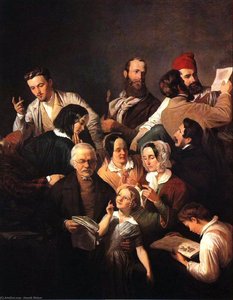
The composition of King Solomon in the Prison is characterized by its use of earth tones and subtle lighting, which creates a somber yet introspective atmosphere. The central figure, presumably King Solomon, is seated on a stone bench, engaged in what appears to be a moment of deep reflection. A book or manuscript lies before him, symbolizing his renowned wisdom. To his right, a vase or jar adds a touch of elegance to the otherwise austere setting. The artist's attention to detail and use of chiaroscuro enhance the emotional impact of the scene.Artistic Significance
Henrik Weber's work, including King Solomon in the Prison, demonstrates a strong affinity for historical and biblical themes. This painting, along with others like Composer Mihály Mosonyi and his Wife, showcases the artist's ability to capture the essence of his subjects. For those interested in exploring more of Henrik Weber's oeuvre or similar works, visiting the painting page on OriginalUniqueArt or learning about the Hungarian National Gallery can provide valuable insights.- The use of realistic techniques and muted colors contributes to the painting's somber mood.
- The inclusion of a book or manuscript highlights King Solomon's wisdom and intellectual pursuits.
- The setting, presumably a prison cell, contrasts with the figure's dignified demeanor, suggesting a narrative of resilience or contemplation.
The allure of King Solomon in the Prison lies not only in its historical significance but also in its capacity to evoke reflection and contemplation, making it a truly captivating piece of art.
Questions & Answers
Can I see "King Solomon in the Prison" by Henrik Weber on my own wall before buying?
"King Solomon in the Prison" has an augmented reality preview: the artwork's AR Preview page shows it in your own space on a compatible device.
Which artistic current is "King Solomon in the Prison" by Henrik Weber part of?
"King Solomon in the Prison" by Henrik Weber belongs to the Contemporary Realism movement. This movement provides the stylistic context of the work.
Is "King Solomon in the Prison" by Henrik Weber a painting, a drawing or a print?
"King Solomon in the Prison" is a wall art piece.
Artist Biography
A Hungarian Voice in the Currents of Realism
Henrik Weber, born in Pest on May 24th, 1818, emerged as a pivotal figure in 19th-century Hungarian art—a painter who skillfully bridged the delicate sensibilities of the Biedermeier period with the burgeoning force of Realism. His life story is one of artistic dedication, navigating shifting aesthetic tides and contributing significantly to the development of a distinctly Hungarian national identity through his work. Initially steered toward a scientific path by his merchant father, Mihaly Wéber, young Henrik’s innate passion for drawing proved irresistible. Sketchbooks filled with imaginative figures revealed a talent that could not be suppressed, leading his father to arrange lessons with János Tóbiás Kärgling, a local artist who recognized and nurtured the boy's potential.
Weber’s formal artistic education began in 1835 at the Academy of Fine Arts Vienna. There, he came under the influence of Johann Ender and Leopold Kupelwieser, instructors who subtly guided him away from rigid academic conventions toward a more truthful representation of the world—a nascent embrace of Realism. To support his studies, Weber supplemented his income through teaching art lessons and working as a lithographer, demonstrating an early entrepreneurial spirit alongside his artistic pursuits. His talent quickly gained recognition, establishing him as a sought-after portrait painter in Vienna during the late 1830s. However, this success was not to define his entire career.
From Portraits to Historical Narratives
As demand for portraits waned in Vienna around 1840, Weber made the strategic decision to relocate to Munich. This move marked a turning point in his artistic focus. Facing continued challenges in establishing himself, he began exploring historical themes, specifically scenes drawn from Hungarian history. The Death of John Hunyadi, one such work, proved remarkably successful and solidified Weber’s reputation as a prominent figure in Hungarian historical painting. This shift wasn't merely a change in subject matter; it was an assertion of national pride and artistic identity at a time when Hungary was experiencing growing nationalist sentiment.
From 1845 to 1847, Weber embarked on a journey through Italy, immersing himself in the landscapes and observing everyday life. This period yielded genre works depicting peasant life alongside evocative landscapes, revealing an artist keenly attuned to the beauty of the natural world and the dignity of ordinary people. Yet, despite the inspiration offered by Italian art and scenery, Weber found himself increasingly homesick. He returned to Pest in 1847, resuming portraiture while continuing to explore landscape and historical painting.
A Legacy Forged Through Perseverance
Life back in Hungary wasn’t without its struggles. Despite his undeniable talent, consistent commissions proved elusive. Weber supported himself through lithography for local magazines—a testament to his versatility—and continued offering art lessons. This period highlights the precarious existence of many artists during the 19th century, reliant on a fluctuating market and often forced to diversify their skills to survive. He continued working diligently in Pest until his death on May 14th, 1866.
Weber’s artistic style is characterized by its blend of Biedermeier precision with the emerging tenets of Realism. He prioritized accurate representation and a focus on everyday life, influenced significantly by Ender and Kupelwieser in Vienna, as well as Michelangelo Grigoletti during his Italian sojourn. His influence extended beyond his own creations; he mentored younger artists, most notably Károly Lotz, shaping the next generation of Hungarian painters.
Pioneering a National Artistic Voice
Henrik Weber’s historical significance lies in his pioneering role in establishing Realism as a major force within Hungarian art. His paintings weren't simply depictions of events; they were powerful statements contributing to the development of national artistic identity during a period of intense political and cultural change. The Hungarian National Gallery preserves numerous examples of his work, recognizing him as a master of Biedermeier painting and an essential figure in 19th-century Hungarian art. Furthermore, his lithographs documenting historical events for “Az Ország Tükre” (“The Mirror of the Country”) remain historically valuable, offering visual records of a pivotal era.
Weber’s legacy is one of artistic integrity and dedication to portraying the world as he saw it—a world imbued with both beauty and truth. He stands as a testament to the power of art to reflect and shape national identity, leaving an indelible mark on the cultural landscape of Hungary.

Henrik Weber
1818 - 1866 , Hungary
Quick Facts
- Full Name: Henrik Weber
- Nationality: Hungarian
- Date Of Birth: 1818
- Date Of Death: 1866
- Place Of Birth: Budapest, Hungary
- Notable Artworks:
- The Death of John Hunyadi
- King Solomon in Prison
- Tyroler Batthyany GOVERNMENT
- The Weber Family
- Artistic Movement Or Style: Realism, Biedermeier
- Artists Who Influenced This Artist:
- Johann Ender
- Leopold Kupelwieser
- Michelangelo Grigoletti
- Artists Or Movements Influenced By This Artist: ['Károly Lotz']
Related Articles
Realism in Art: A Professional Guide to Authentic Detail and Lifelike Masterpieces for Large-Scale Interior Projects
Master the use of Realism in professional interiors. This expert guide explores 19th-century masterpieces, offering procurement managers and designers technical insights into selecting authentic, hand-painted oil reproductions for high-end hotel and corporate projects.
The Poetic Truth of Observation: Exploring 19th-Century Realism in Painting
Explore the captivating world of 19th-century Realism! Discover key artists like Courbet & Millet, masterpieces, and the powerful social commentary behind this influential art movement. Expert insights at OriginalUniqueArt.
The Raw Truth: A Definitive Guide to the Power and Legacy of Social Realism Art
Explore the profound impact of Social Realism. Discover how masters like Courbet rejected idealism to capture the raw, socio-political truths of the working class through powerful, unvarnished art history and enduring visual critique.

Romantic Realism's Finest: 10 Masterpieces for Your Home | OriginalUniqueArt
Explore 10 defining masterpieces of Romantic Realism! Discover Courbet, Millet & Daumier's powerful paintings—capturing emotion and social realities. Find museum-quality reproductions for your home at OriginalUniqueArt.com.
Echoes of Society: Exploring Social Realism's Enduring Legacy in Art
Explore the powerful world of Social Realism art! Discover key artists, masterpieces & its profound social commentary. Expert insights into this influential movement's history and enduring legacy.