
 Preview
 Send
Send Share
Share
 Details
 Guide
Guide

 Download
 Similars
 X-Ray
X-Ray Diaporama
 Q&A
Q&A Stats
StatsThe Annunciation


 Read More
Giclée / Art Print
Museum-quality giclée or canvas print with fast production and flexible finish options. ( Buy Hand Made Painting Switch to Digital Image)




P118B $10

P118H $10

P118W $10

P438Z $10

P508JH $12

P508YH $12

P805H $10

P805Z $10

P919BZ $10

P919G $10

P919XJ $10

P959ZH $10

P968JZ $12

W106C $8

W218G $10

W218JH $8

W218Y $10

W307PJ $10

W316G $10

W316PJ $8

W316Y $10

W398PJ $8

W4111J $10

W500HY $15

W500JH $15

W692G $12

W849H $8

W940BG $15

W953PJ $8




Pick from our preset sizes that match the artwork's original proportions.

Type the width and the height you need, to fit your frame or your wall. A print can only be cut, never made bigger than the picture, so a size with a different shape loses a part of the image. We send you a digital mockup to approve before we print anything. The picture shown on this page does not show the real cut — only the mockup does.
Worldwide Delivery () in 2 weeks instead of standard 4/5 weeks. (3 November)

Free Worldwide Express Shipping

High-Quality Linen Canvas

Full Shipping Insurance

Customs Tax Refund Guarantee

True Color Matching Guarantee

100-Day Return Policy (Defects Only)

100% Money-Back Guarantee

Bulk Discount Offer
 Glass option is only available in size under 110 CM

The Annunciation
Giclée / Art Print
Reproduction Size
-


Total Price
$ 81
A Moment of Divine Revelation: The Annunciation by Hendrick Terbrugghen
Hendrick Terbrugghen’s “The Annunciation,” completed in 1629, is more than just a religious painting; it's a profound exploration of faith, humility, and the transformative power of divine communication. Painted during his tragically short life – he died at the age of forty-one – this work stands as a testament to Terbrugghen’s mastery of Baroque style and his ability to imbue biblical narratives with palpable emotion. The painting resides within the Stadsmuseum De Hofstadt in Diest, Belgium, offering visitors a rare opportunity to witness firsthand the dramatic intensity and exquisite detail that define this iconic piece.
The scene depicts the pivotal moment when the Archangel Gabriel appears to Mary, informing her of her impending role as the mother of Jesus. Gabriel, positioned slightly to the left, extends his hand towards Mary, presenting a delicate lily – a potent symbol of purity and grace. Mary, kneeling in reverence on the right, is rendered with an almost ethereal beauty, her expression a mixture of surprise, apprehension, and profound acceptance. The composition is carefully balanced, drawing the eye from Gabriel’s gesture to Mary's face and then back again, creating a dynamic visual flow that underscores the significance of this encounter.
Baroque Drama: Light, Shadow, and Composition
Terbrugghen was deeply influenced by Caravaggio, adopting his signature use of dramatic chiaroscuro – the stark contrast between light and shadow. This technique is brilliantly employed here to sculpt the figures, creating a sense of three-dimensionality and emphasizing their emotional states. The light source, unseen but powerfully felt, originates from above and slightly to the left, casting long shadows that define the folds of drapery, the contours of faces, and the architectural elements within the room. The painting’s composition adheres closely to classical principles, utilizing a pyramidal structure to create stability and harmony while simultaneously injecting dynamism through the figures' poses and gestures.
Notice the meticulous attention to detail in the rendering of textures – the velvet robes, the polished wood of the table, the delicate petals of the lily. Terbrugghen’s brushwork is remarkably refined, layering colors with a subtle glazing technique that produces a luminous quality. The use of muted earth tones—ochres, browns, and golds—is punctuated by highlights of white, creating a rich and visually arresting palette. The background, rendered in deep blues and purples, serves to heighten the drama of the foreground figures, drawing the viewer’s attention to the central event.
Symbolism and Spiritual Depth
Beyond its technical brilliance, “The Annunciation” is rich in symbolic meaning. The lily itself represents Mary's purity and virginity, a crucial element in understanding her acceptance of God’s will. Gabriel’s gesture – the offering of the lily – symbolizes divine grace and the promise of salvation. The setting—a modestly furnished room with a table laden with books—suggests a space of contemplation and spiritual significance. The inclusion of architectural details, such as the arched doorway and the window in the background, further reinforces the painting’s religious context.
Furthermore, the painting speaks to themes of humility, faith, and the acceptance of divine will. Mary's response – “Be it unto me according to thy word” – embodies a profound sense of trust and obedience. “The Annunciation” is not merely a depiction of a biblical event; it’s an invitation to contemplate the mysteries of faith and the transformative power of grace. It remains a powerful and moving work, resonating with viewers centuries after its creation.
A Legacy of Baroque Beauty
Hendrick Terbrugghen's “The Annunciation” is a cornerstone of Dutch Golden Age painting, showcasing his exceptional talent and his deep understanding of Caravaggio’s influence. Reproductions of this masterpiece capture the drama, emotion, and exquisite detail that define its enduring appeal. Whether displayed in a grand salon or a more intimate setting, "The Annunciation" continues to inspire awe and contemplation, reminding us of the profound beauty and spiritual depth found within religious art.
Questions & Answers
What emotion does "The Annunciation" by Hendrick Terbrugghen convey?
"The Annunciation" is associated with a spiritual feeling. The emotional tone describes the impression the work gives.
What is the overall mood of "The Annunciation" by Hendrick Terbrugghen?
"The Annunciation" by Hendrick Terbrugghen is described as romantic in mood. This classification can help match the work to a setting.
What does "The Annunciation" by Hendrick Terbrugghen bring to an interior?
"The Annunciation" by Hendrick Terbrugghen has a romantic atmosphere and is recommended for a living room. The mood is what the work brings to the space around it.
Artist Biography
**early life and influences**
hendrick jansz ter brugghen, a prominent figure in the dutch golden age painting, was born in 1588 in overijssel, netherlands. his father, jan egbertsz ter brugghen, served as secretary to the court of utrecht under prince william the silent. this exposure likely influenced hendrick's early interest in art.**artistic career and style**
ter brugghen's artistic journey began with his study under abraham bloemaert, a mannerist painter. he later became one of the leading members of the utrecht caravaggisti, a group of dutch painters inspired by caravaggio. his work is characterized by its dramatic use of light and shadow, as seen in his paintings like the annunciation (alte pinakothek, munich, germany) and the reveller (alte pinakothek, munich, germany).**notable works and legacy**
* the singing lute player (the kremer collection, amsterdam, netherlands), an autograph replica of a painting in the national gallery, london, showcasing his rich coloration. * the annunciation, a masterpiece reflecting his mastery of caravaggio's style. **influence on later artists:** ter brugghen's work had a profound impact on later artists, including rembrandt van rijn, whose famous painting the night watch (rijksmuseum, amsterdam, netherlands) is a testament to the enduring influence of the utrecht caravaggisti.**museums and collections featuring ter brugghen's work**
* mauritshuis (the hague, netherlands), featuring works like nymph and satyr by sir peter paul rubens. * the kremer collection (amsterdam, netherlands), housing ter brugghen's the singing lute player.- explore more of ter brugghen's works on OriginalUniqueArt.com
- discover the dutch golden age painting and its influences on OriginalUniqueArt.com's art history section
- learn about other artists like dirck van baburen, a fellow utrecht caravaggisti, on OriginalUniqueArt.com
**conclusion**
ter brugghen's enigmatic life and his significant contributions to the dutch golden age painting have left an indelible mark on art history. his dramatic use of light and shadow continues to inspire artists and art enthusiasts alike, making him a fascinating figure in the world of art.
Hendrick Terbrugghen
1627 - 1629 , Netherlands
Quick Facts
- Full Name: Hendrick Jansz Terbrugghen
- Nationality: Dutch
- Date Of Birth: 1627
- Date Of Death: 1629
- Place Of Birth: The Hague, Netherlands
- Notable Artworks:
- The Singing Lute Player
- Annunciation
- David Praised by the Israelite Women
- Artistic Movement Or Style: Caravaggisti Painting
- Artists Who Influenced This Artist: Abraham Bloemaert
- Artists Or Movements Influenced By This Artist: Rembrandt van Rijjn
Related Articles
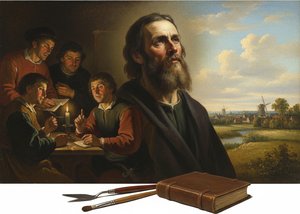
Hendrick Terbrugghen: Caravaggism, Spirituality & the Dutch Golden Age Painter's Evolving Style
Explore the captivating world of Hendrick Terbrugghen, a leading Dutch Golden Age painter influenced by Caravaggio. Discover his dramatic use of light, spiritual depth & lasting legacy. Learn more at OriginalUniqueArt.

Dutch Baroque Masters: 10 Paintings That Shaped an Era | OriginalUniqueArt
Journey through the Golden Age with our guide to the Top 10 Dutch Baroque masterpieces! Explore iconic paintings by Rembrandt, Vermeer & Frans Hals. Find museum-quality art reproductions and elevate your home decor at OriginalUniqueArt.com.

Dutch Masters: 10 Golden Age Paintings That Still Inspire |
Journey into the Dutch Golden Age! Explore 10 iconic paintings by Rembrandt, Vermeer & Hals. Discover the stories behind these Baroque masterpieces and find museum-quality art reproductions to elevate your home decor on .

Golden Age Reflections: Dutch Baroque Painting & Cultural Innovation
Explore the Dutch Golden Age of painting! Discover key artists like Vermeer & ter Borch, their innovative techniques, and the rich cultural context behind these Baroque masterpieces. Learn about collecting & appreciating this iconic art period.

Golden Light & Dutch Skies: The Timeless Magic of Dutch Golden Age Landscapes
Discover the breathtaking beauty of Dutch Golden Age landscapes. Explore the mastery of light, chiaroscuro, and 17th-century realism through an expert art history lens, celebrating the enduring legacy of the Dutch Masters for discerning collectors and art lovers.


