
 Preview
 Send
Send Share
Share
 Details
 Guide
Guide

 Download
 Similars
 X-Ray
X-Ray Diaporama
 Q&A
Q&A Stats
StatsDuet

- 101.0 x 81.0 cm


 Read More
Giclée / Art Print
Museum-quality giclée or canvas print with fast production and flexible finish options. ( Buy Hand Made Painting Switch to Digital Image)




P118B $10

P118H $10

P118W $10

P438Z $10

P508JH $12

P508YH $12

P805H $10

P805Z $10

P919BZ $10

P919G $10

P919XJ $10

P959ZH $10

P968JZ $12

W106C $8

W218G $10

W218JH $8

W218Y $10

W307PJ $10

W316G $10

W316PJ $8

W316Y $10

W398PJ $8

W4111J $10

W500HY $15

W500JH $15

W692G $12

W849H $8

W940BG $15

W953PJ $8




Pick from our preset sizes that match the artwork's original proportions.

Type the width and the height you need, to fit your frame or your wall. A print can only be cut, never made bigger than the picture, so a size with a different shape loses a part of the image. We send you a digital mockup to approve before we print anything. The picture shown on this page does not show the real cut — only the mockup does.
Worldwide Delivery () in 2 weeks instead of standard 4/5 weeks. (3 November)

Free Worldwide Express Shipping

High-Quality Linen Canvas

Full Shipping Insurance

Customs Tax Refund Guarantee

True Color Matching Guarantee

100-Day Return Policy (Defects Only)

100% Money-Back Guarantee

Bulk Discount Offer
 Glass option is only available in size under 110 CM

Duet
Giclée / Art Print
Reproduction Size
-


Total Price
$ 81
Hendrick Terbrugghen’s “Duet”: A Window into Dutch Baroque Sensuality
“Duet,” painted in 1628 by Hendrick Jansz ter Brugghen, is more than just a depiction of two young musicians; it's a vibrant snapshot of the burgeoning artistic and social landscape of the Dutch Golden Age. This captivating oil on canvas, now residing within the esteemed collection of the Louvre Museum in Paris, offers a glimpse into the world of Caravaggism – a movement that profoundly influenced Terbrugghen’s distinctive style and approach to portraying human emotion.
Ter Brugghen, born in 1588 in Overijssel, Netherlands, was deeply connected to the artistic currents of his time. His father, Jan Egbertsz ter Brugghen, served as secretary to Prince William the Silent, exposing young Hendrick to a world of courtly patronage and artistic refinement. This early exposure undoubtedly shaped his trajectory, leading him to study under Abraham Bloemaert, a prominent Mannerist painter, before embracing the dramatic intensity of Caravaggio’s style – characterized by intense contrasts of light and shadow, known as *chiaroscuro*. The Utrecht Caravaggisti group, of which Terbrugghen was a key member alongside Gerrit van Hondhorst and Dirck van Baburen, sought to capture the same emotional depth and dynamism found in Caravaggio's works, adapting them to the Dutch context.
A Symphony of Light and Color: Artistic Technique
The painting’s immediate impact lies in its masterful use of light. Terbrugghen expertly employs *chiaroscuro* to sculpt the figures, creating a dramatic interplay between illumination and shadow that draws the viewer's eye and imbues the scene with a palpable sense of drama. The strong directional lighting highlights the youthful faces of the musicians, emphasizing their expressions of joy and engagement. Notice how the light catches the feathered cap of the male figure, adding to his theatrical presence, while simultaneously casting subtle shadows across his face, hinting at an underlying intensity.
Terbrugghen’s brushwork is remarkably fluid and expressive. He utilizes loose, gestural strokes to convey movement and energy, particularly in the depiction of the lute and the flowing garments. The vibrant palette – dominated by rich reds, blues, and yellows – contributes significantly to the painting's overall dynamism. These colors aren’t merely decorative; they are carefully chosen to evoke a sense of warmth, sensuality, and youthful exuberance.
Symbolism and Social Context
Beyond its technical brilliance, “Duet” is rich in symbolic meaning. The lute itself, a prominent instrument in the Baroque era, was often associated with pleasure, music, and even eroticism. The young men’s attire – featuring flamboyant colors and feathered accessories – reflects the influence of theatrical traditions and suggests a world of entertainment and indulgence. The low-cut dress worn by the female musician is particularly noteworthy; it subtly challenges conventional notions of modesty, hinting at a playful disregard for social norms.
Furthermore, the scene can be interpreted as an allegory for harmony and balance – both musical and emotional. The two figures, engaged in a shared activity, represent a union of spirits, reflecting the broader humanist ideals prevalent during the Dutch Golden Age. The inclusion of the clock in the background subtly reminds us of the fleeting nature of time and the importance of savoring these moments of joy.
A Timeless Masterpiece: Emotional Resonance
“Duet” transcends its historical context to resonate with viewers today. The painting’s depiction of youthful exuberance, musical passion, and intimate connection evokes a powerful sense of nostalgia and delight. Terbrugghen's ability to capture the fleeting expressions of human emotion – the joy in the male musician’s gaze, the gentle affection in the female musician’s expression – is truly remarkable. It’s a painting that invites us to step into the scene, to feel the warmth of the music, and to share in the simple pleasures of companionship.
Reproductions of “Duet” offer an accessible way to experience this masterpiece firsthand, bringing its vibrant colors and captivating imagery into your home or office. Consider a high-quality reproduction to add a touch of Dutch Baroque elegance to any space – a reminder of the enduring power of art to inspire and uplift.
Questions & Answers
What shape and dimensions is "Duet" by Hendrick Terbrugghen?
"Duet" by Hendrick Terbrugghen is a portrait composition measuring 101 x 81 cm in the original.
Is "Duet" by Hendrick Terbrugghen a painting, a drawing or a print?
In the catalog, "Duet" by Hendrick Terbrugghen is filed as wall art. The category helps find similar works.
When was "Duet" made?
"Duet" dates from 1628. The date places the work within Hendrick Terbrugghen's career and its era.
Artist Biography
**early life and influences**
hendrick jansz ter brugghen, a prominent figure in the dutch golden age painting, was born in 1588 in overijssel, netherlands. his father, jan egbertsz ter brugghen, served as secretary to the court of utrecht under prince william the silent. this exposure likely influenced hendrick's early interest in art.**artistic career and style**
ter brugghen's artistic journey began with his study under abraham bloemaert, a mannerist painter. he later became one of the leading members of the utrecht caravaggisti, a group of dutch painters inspired by caravaggio. his work is characterized by its dramatic use of light and shadow, as seen in his paintings like the annunciation (alte pinakothek, munich, germany) and the reveller (alte pinakothek, munich, germany).**notable works and legacy**
* the singing lute player (the kremer collection, amsterdam, netherlands), an autograph replica of a painting in the national gallery, london, showcasing his rich coloration. * the annunciation, a masterpiece reflecting his mastery of caravaggio's style. **influence on later artists:** ter brugghen's work had a profound impact on later artists, including rembrandt van rijn, whose famous painting the night watch (rijksmuseum, amsterdam, netherlands) is a testament to the enduring influence of the utrecht caravaggisti.**museums and collections featuring ter brugghen's work**
* mauritshuis (the hague, netherlands), featuring works like nymph and satyr by sir peter paul rubens. * the kremer collection (amsterdam, netherlands), housing ter brugghen's the singing lute player.- explore more of ter brugghen's works on OriginalUniqueArt.com
- discover the dutch golden age painting and its influences on OriginalUniqueArt.com's art history section
- learn about other artists like dirck van baburen, a fellow utrecht caravaggisti, on OriginalUniqueArt.com
**conclusion**
ter brugghen's enigmatic life and his significant contributions to the dutch golden age painting have left an indelible mark on art history. his dramatic use of light and shadow continues to inspire artists and art enthusiasts alike, making him a fascinating figure in the world of art.
Hendrick Terbrugghen
1627 - 1629 , Netherlands
Quick Facts
- Full Name: Hendrick Jansz Terbrugghen
- Nationality: Dutch
- Date Of Birth: 1627
- Date Of Death: 1629
- Place Of Birth: The Hague, Netherlands
- Notable Artworks:
- The Singing Lute Player
- Annunciation
- David Praised by the Israelite Women
- Artistic Movement Or Style: Caravaggisti Painting
- Artists Who Influenced This Artist: Abraham Bloemaert
- Artists Or Movements Influenced By This Artist: Rembrandt van Rijjn
Related Articles

Dutch Masters: 10 Golden Age Paintings That Still Inspire |
Journey into the Dutch Golden Age! Explore 10 iconic paintings by Rembrandt, Vermeer & Hals. Discover the stories behind these Baroque masterpieces and find museum-quality art reproductions to elevate your home decor on .
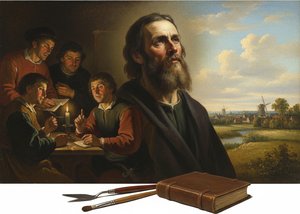
Hendrick Terbrugghen: Caravaggism, Spirituality & the Dutch Golden Age Painter's Evolving Style
Explore the captivating world of Hendrick Terbrugghen, a leading Dutch Golden Age painter influenced by Caravaggio. Discover his dramatic use of light, spiritual depth & lasting legacy. Learn more at OriginalUniqueArt.

Golden Age Reflections: Dutch Baroque Painting & Cultural Innovation
Explore the Dutch Golden Age of painting! Discover key artists like Vermeer & ter Borch, their innovative techniques, and the rich cultural context behind these Baroque masterpieces. Learn about collecting & appreciating this iconic art period.

Mastering Light & Shadow: A Journey Through the Dutch Golden Age's Luminous Legacy
Embark on a cultural journey through the Dutch Golden Age. Explore the masterful interplay of light and shadow in 17th-century masterpieces, from Rembrandt to Vermeer, and discover how this era of profound realism continues to inspire fine art collectors today.

Golden Light & Dutch Skies: The Timeless Magic of Dutch Golden Age Landscapes
Discover the breathtaking beauty of Dutch Golden Age landscapes. Explore the mastery of light, chiaroscuro, and 17th-century realism through an expert art history lens, celebrating the enduring legacy of the Dutch Masters for discerning collectors and art lovers.


