- Home

- Oil Painting Reproduction
- hendrick douverman
- St Ursula

 Buy print
 Send
Send Share
Share
 Details

 Download
 Similars
 X-Ray
X-Ray Diaporama
St Ursula


 Read More
Hand Made Oil Reproduction
Hand-painted oil on canvas in your size and frame, made to order by our artists.




































Pick from our preset sizes that match the artwork's original proportions.

You may enter your own dimensions to fit a specific frame or space. If your selected size does not match the original image's proportions, we will either crop the artwork or extend the painting with additional hand-painted elements. A digital mockup will be sent for your approval before production begins.
Please note that the on-screen preview does not reflect the actual cropping or extension. Only the mockup will accurately show the final composition.
While custom sizes are available, we recommend selecting a dimension from the predefined list to preserve the original proportions.
After order, OriginalUniqueArt.com team will email client for instructions and provide a mockup preview
Worldwide Delivery () in 3/4 weeks instead of standard 5 weeks. (23 July). No compromise on quality.

Free Worldwide Express Shipping

High-Quality Linen Canvas

Full Shipping Insurance

Customs Tax Refund Guarantee

True Color Matching Guarantee

60-Day Return Policy (Defects Only)

100% Money-Back Guarantee

Bulk Discount Offer
 Glass option is only available in size under 110 CM

St Ursula
Reproduction Medium
Reproduction Size
-


Total Price
-
Artwork Description
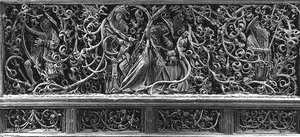
A Silent Witness to Renaissance Faith: Hendrick Douverman’s St Ursula
Hendrick Douverman (1490 – 1543), a figure largely absent from the annals of art history, nevertheless bequeathed upon us a remarkable testament to the spiritual fervor that gripped Northern Europe during the mid-16th century—the sculpture *St Ursula and her Virgins*. This masterpiece transcends mere representation; it embodies the profound theological concerns of its time and offers an unparalleled glimpse into the artistic sensibilities shaping the era’s devotional landscape. While overshadowed by giants like Grünewaldt, Douverman's contribution remains significant, particularly in his masterful depiction of biblical narrative and saintly devotion. ### Artistic Style and Technique: Echoes of Renaissance Idealism The sculpture exemplifies a distinctly Renaissance aesthetic—characterized by meticulous detail, balanced composition, and an aspiration towards idealized beauty. Douverman’s approach aligns closely with the prevailing stylistic trends of Kalkar and beyond, prioritizing clarity of form and conveying solemn piety through sculptural grace. The artist skillfully employs wood carving techniques to achieve remarkable textural richness, capturing the folds of Ursula's gown and the expressive faces of her companions with astonishing precision. Notice the subtle gradations of tone achieved through shading—a hallmark of Renaissance sculpture—that imbues the piece with a palpable sense of volume and depth. The sculptor’s meticulous attention to anatomical accuracy reflects the humanist influence permeating artistic thought during this period, grounding the spiritual narrative in observable reality. ### Historical Context: Patronage and Religious Symbolism Created around 1520, *St Ursula* emerged from a milieu deeply invested in religious iconography. Commissioned likely by a wealthy patron—perhaps Sir Adrian Conan Doyle—the sculpture served as a powerful visual affirmation of Christian faith during the Reformation’s turbulent formative years. The depiction itself is laden with symbolic significance: St Ursula, revered for her unwavering piety and martyrdom alongside 11,000 virgins, represents the pinnacle of female sanctity. Her posture—standing upright, holding a book symbolizing knowledge and scripture—communicates dignity and spiritual contemplation. Surrounding her are figures representing the virginal handmaidens, embodying purity and devotion—values central to Catholic theology at the time. The sculpture’s placement within the Doyle Collection underscores its enduring appeal as an emblem of artistic excellence and religious conviction. ### Emotional Impact: Reverence and Narrative Resonance Beyond its formal qualities, *St Ursula* possesses a profound emotional resonance. The sculptor's deliberate choice of materials—dark brown oak—enhances the solemn atmosphere of the piece, inviting contemplation and fostering a sense of reverence. The expressive faces of Ursula and her attendants convey sorrowful dignity, capturing the pathos inherent in tales of sacrifice and unwavering faith. Douverman’s work transcends mere visual representation; it transports viewers back to a time when art served as a conduit for spiritual experience—a reminder that beauty can inspire contemplation and illuminate the enduring power of religious narratives. The sculpture continues to captivate audiences today, prompting reflection on themes of virtue, devotion, and the sanctity of womanhood. ### Provenance and Legacy: A Journey Through Time The sculpture’s journey through history began in Kalkar, where Douverman honed his craft under Johann Grünewaldt—a formative influence evident in *St Ursula*'s stylistic sophistication. It subsequently resided within Sir Arthur Conan Doyle's esteemed collection before finding its permanent home at the Rijksmuseum, thanks to generous support from the Vereniging Rembrandt and the Commissie voor Fotoverkoop. This remarkable provenance testifies to the sculpture’s enduring value as an artistic treasure—a testament to Douverman’s skill and a poignant symbol of Northern Renaissance faith. Its presence in the Doyle Collection ensured its visibility to a discerning public, cementing its place within art history's canon.Artist Biography
A Silent Witness to Renaissance Faith
Hendrick Douverman, born in the German town of Kalkar around 1490, remains a figure shrouded in relative obscurity compared to the titans who dominated the artistic landscape of the German Renaissance. Yet, for those who look closely at the devotional art of the mid-16th century, his presence is felt through a profound and meticulous dedication to spiritual narrative. His life and work serve as a window into the intense religious fervor of the era, offering a glimpse into an aesthetic sensibility that sought to bridge the gap between the earthly and the divine through the precision of Northern European craftsmanship.
The formative years of Douverman are largely lost to the passage of time, known only through fragments of guild records in Kalkar. However, the lineage of his talent is clearly traced back to his apprenticeship under Johann Grünewaldt, a master whose name is synonymous with the raw, emotional power of the Isenheim Altarpiece. This connection was foundational; from Grünewaldt, Douverman inherited not only the technical rigor required for complex religious iconography but also a deep-seated commitment to expressive realism. This influence allowed him to move beyond mere decoration, infusing his subjects with a palpable sense of sanctity and human emotion that resonated with the faithful of his time.
Mastery of Form and Devotional Symbolism
Douverman’s artistic legacy is uniquely split between the tactile depth of sculpture and the narrative richness of painting. He possessed a rare ability to manipulate medium to serve theological ends, creating works that functioned as both art and objects of meditation. His sculptural achievements, most notably the breathtaking St Ursula, demonstrate a remarkable command over detail. In this piece, housed in the Kalkar Cathedral, he captures the saint and her companions with a lifelike quality that balances the weight of stone with the lightness of spiritual grace, embodying the very essence of Renaissance realism.
In his paintings, Douverman explored complex biblical genealogies and sacred figures with equal fervor. His interpretations of iconic themes include:
- The Tree of Jesse: A profound exploration of lineage and prophecy, where he utilized intricate detail to weave together the historical and the divine.
- Virgin and Child: Works that showcase his ability to capture tender, human intimacy within a highly stylized religious framework.
- Sacred Narratives: A collection of scenes that utilize light and shadow to guide the viewer through the complexities of Christian doctrine.
Through these works, Douverman achieved a level of historical significance that transcends his biographical anonymity. He was a master of the devotional gaze, an artist capable of translating the abstract mysteries of faith into tangible, breathtakingly beautiful forms. His contribution to the German Renaissance remains a vital chapter in the history of Northern European art, reminding us of the power of art to act as a silent, enduring witness to the human spirit's search for the eternal.

hendrick douverman
1490 - 1543 , Germany
Quick Facts
- Artistic Movement Or Style: Renaissance Art
- Artists Or Movements Influenced By This Artist: ['Dutch Renaissance Art']
- Date Of Birth: 1490
- Date Of Death: 1543
- Full Name: Hendrick Douverman
- Nationality: German
- Notable Artworks:
- St Ursula
- Virgin and Child
- Tree of Jesse
- Place Of Birth: Kalker, Germany
Related Articles
Illuminating Realism: Early Netherlandish Painting (15th-16th Centuries)
Explore the captivating world of Early Netherlandish painting! Discover Jan van Eyck, Hans Memling & more. Uncover symbolism, techniques & the legacy of these Flemish masters. A comprehensive guide for art enthusiasts.

The Renaissance Reimagined: Art, Humanism & Cultural Transformation (14th–16th Centuries)
Explore the Renaissance! Discover key artists like Leonardo & Michelangelo, the rise of Humanism, and groundbreaking techniques such as chiaroscuro. A comprehensive guide for art enthusiasts.

Illuminating Realism: Early Netherlandish Painting (15th-16th Centuries)
Explore the captivating world of Early Netherlandish painting (15th-16th centuries). Discover Jan van Eyck, Hans Memling & more. Uncover revolutionary techniques and hidden symbolism in this definitive guide.

Luca della Robbia: Renaissance Sculpture & the Innovation of Terracotta Glazing
Discover the innovative terracotta glazing techniques of Luca della Robbia, a Renaissance master sculptor. Explore his iconic works, legacy, and collecting tips with OriginalUniqueArt.
Renaissance Humanism's Greatest Art: 10 Masterpieces for Your Home
Explore 10 Renaissance Humanism masterpieces by Leonardo da Vinci, Michelangelo & Raphael. Discover the stories behind these iconic paintings & sculptures and bring timeless art into your home with museum-quality reproductions from OriginalUniqueArt.com. Explore the full collection online!