 Preview
 Send
Send Share
Share
 Details
 Guide
Guide

 Download
 Similars
 X-Ray
X-Ray Diaporama
 Stats
StatsBent-wing Swift Moth, Zelotypia stacyi


 Read More
Giclée / Art Print
Museum-quality giclée or canvas print with fast production and flexible finish options. ( Buy Hand Made Painting Switch to Digital Image)




P118B $10

P118H $10

P118W $10

P438Z $10

P508JH $12

P508YH $12

P805H $10

P805Z $10

P919BZ $10

P919G $10

P919XJ $10

P959ZH $10

P968JZ $12

W106C $8

W218G $10

W218JH $8

W218Y $10

W307PJ $10

W316G $10

W316PJ $8

W316Y $10

W398PJ $8

W4111J $10

W500HY $15

W500JH $15

W692G $12

W849H $8

W940BG $15

W953PJ $8




Pick from our preset sizes that match the artwork's original proportions.

You may enter your own dimensions to fit a specific frame or space. If your selected size does not match the original image's proportions, we will either crop the artwork or extend the image with a mirrored or solid-fill edge. A digital mockup will be sent for your approval before production begins.
Please note that the on-screen preview does not reflect the actual cropping or extension. Only the mockup will accurately show the final composition.
While custom sizes are available, we recommend selecting a dimension from the predefined list to preserve the original proportions.
Worldwide Delivery () in 2 weeks instead of standard 4/5 weeks. (25 September)

Free Worldwide Express Shipping

High-Quality Linen Canvas

Full Shipping Insurance

Customs Tax Refund Guarantee

True Color Matching Guarantee

100-Day Return Policy (Defects Only)

100% Money-Back Guarantee

Bulk Discount Offer
 Glass option is only available in size under 110 CM

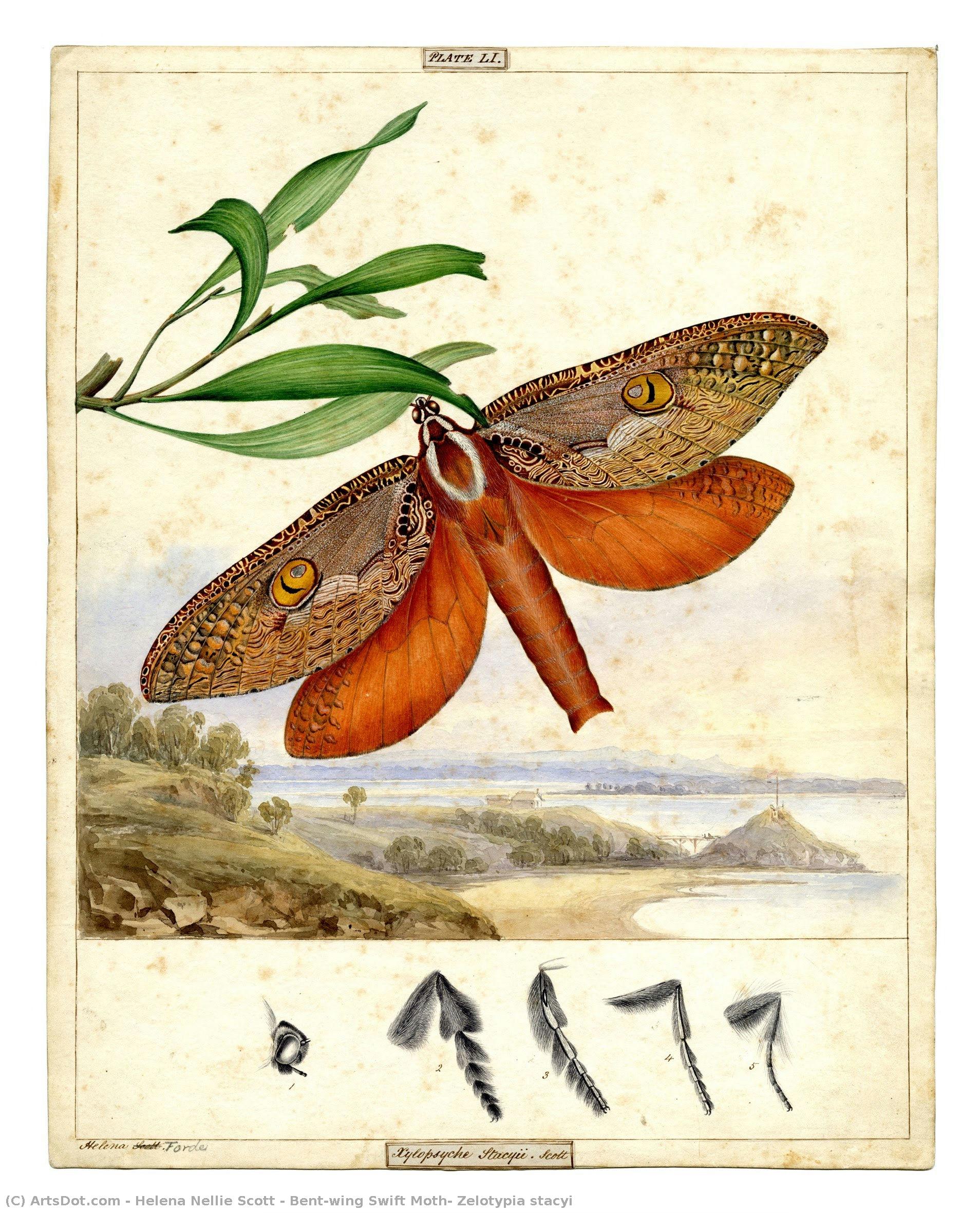
Bent-wing Swift Moth, Zelotypia stacyi
Giclée / Art Print
Reproduction Size
-


Total Price
$ 81
A Glimpse into Australian Entomology: Helena Scott’s Bent-Wing Swift Moth
Helena Nellie Scott's 1864 illustration of the Bent-wing Swift Moth, *Zeotypia stacyi*, is more than just a scientific depiction; it’s a window into a bygone era of meticulous observation and artistic dedication. This exquisite botanical artwork, rescued from an unpublished manuscript intended for Alexander Walker Scott’s “Australian Lepidoptera and Their Transformations,” captures the essence of a remarkable entomologist's daughter and her profound connection to the natural world. The image isn’t merely a rendering of an insect; it’s a testament to the Victorian fascination with classification, taxonomy, and the beauty hidden within the smallest details of Australian fauna.
The illustration immediately draws the eye with its remarkably detailed portrayal of the moth itself. Each scale is painstakingly rendered, suggesting a subtle shimmer and texture that belies the fragility of the creature. The intricate veins of the wings are not simply lines but carefully shaded to convey depth and form, while the delicate antennae and legs are depicted with an almost sculptural precision. Beneath the magnificent moth, a larval stage—a plump caterpillar clinging to a leaf—provides crucial context, illustrating the complete life cycle that Scott so diligently documented. The background landscape, a hazy coastal scene punctuated by a recognizable view of Port Macquarie Harbour (attributed to Captain Perry), subtly anchors the scientific study within its geographical and historical setting.
A Style Rooted in Scientific Precision
Scott’s artistic style is distinctly reminiscent of 18th and early 19th-century scientific illustrations—a period characterized by a commitment to accuracy and an avoidance of overt emotional expression. The composition is vertically oriented, prioritizing clarity and legibility. Lines are precise and carefully drawn, defining shapes with unwavering confidence. The use of hatching and cross-hatching creates subtle shading and depth, lending a sense of volume to the moth’s wings and body. This deliberate restraint in color—a muted palette dominated by browns, grays, and ochres—further emphasizes the illustration's scientific purpose, prioritizing observation over artistic embellishment.
The layering technique employed is particularly noteworthy. Scott doesn’t simply paint the moth; she builds it up through multiple washes of watercolor or ink, creating a sense of tactile richness. This meticulous approach mirrors the painstaking process of collecting and preserving specimens—a reflection of Scott's own dedication to her father’s research. The slightly aged appearance of the image – a subtle discoloration and softened edges – speaks volumes about its historical context, hinting at years spent tucked away in archives and collections.
The Legacy of a Pioneering Artist
Helena Nellie Scott’s story is one of quiet determination and remarkable achievement. Born in Sydney in 1832, she defied the limitations placed upon women artists during her time, carving out a niche for herself as a leading naturalist illustrator. Her upbringing within a family deeply immersed in entomology—her father was a renowned scientist—provided her with unparalleled access to knowledge and inspiration. The Scott sisters’ work, particularly their detailed depictions of Australian moths and butterflies, played a crucial role in advancing scientific understanding of the region's biodiversity.
Further research reveals that Scott’s illustrations were not merely decorative; they served as vital tools for identification and documentation. Her meticulous notes and annotations—often written in Latin—provide valuable insights into the species she depicted, while her correspondence with other naturalists highlights her commitment to sharing her knowledge. Today, her legacy endures through reproductions like this one, offering a glimpse into the world of early Australian scientific art and the remarkable dedication of a woman who dared to pursue her passion amidst societal constraints.
Symbolism and Interpretation
Beyond its technical merits, the Bent-wing Swift Moth itself carries symbolic weight. Moths have long been associated with transformation, mystery, and the hidden realms of the subconscious—qualities that resonate deeply within Scott’s artwork. The “bent wing” in the species' name suggests a deviation from the norm, perhaps representing an individual spirit or a unique perspective. The moth’s nocturnal habits further enhance its enigmatic aura, inviting viewers to contemplate the unseen wonders of the natural world.
The inclusion of the coastal landscape—a recognizable view of Port Macquarie Harbour—adds another layer of meaning. It anchors the scientific study within its geographical and historical context, reminding us that even the most minute details of nature are interconnected with broader ecological and cultural narratives. Scott’s illustration is therefore not simply a depiction of an insect; it's a celebration of Australian biodiversity, a testament to human curiosity, and a poignant reminder of the enduring power of observation.
Artist Biography
A Life Immersed in Nature’s Detail
Helena Nellie Scott, a name resonating with the quiet dedication of early Australian natural history illustration, was born in Sydney in 1832. Though often referenced alongside her sister Harriet Morgan, and sometimes under her married name Helena Forde, Scott carved a unique path as a pioneering artist and naturalist at a time when such pursuits were largely closed to women. Her upbringing was far from conventional, steeped in the scientific curiosity of her father, Alexander Walker Scott, a renowned entomologist whose passion permeated every aspect of their family life. This wasn’t merely an academic interest; it was a lived experience, particularly after the family relocated to Ash Island in the Hunter River estuary in 1846. There, amidst the untouched beauty of the Australian landscape, a home became a haven for observation and artistic documentation—a laboratory where nature's intricacies were meticulously recorded through both scientific study and delicate artistry. The integration of her father’s daughters from previous relationships into this family dynamic further fostered a collaborative spirit that would define much of Scott’s working life.Artistic Collaboration and Scientific Contribution
Scott’s artistic style wasn't born in isolation; it flourished through collaboration, most notably with her sister Harriet. Together, they weren’t simply illustrating scientific findings—they were actively contributing to the burgeoning field of entomology and natural history. Their joint projects became landmark achievements: The Snakes of Australia (1869), The Mammals of Australia (1871), and Catalogue of the Minerals and Rocks in the Australian Museum (1873) stand as testaments to their combined skill and dedication. Scott’s expertise lay in lithography and design, bringing a remarkable level of detail and accuracy to her depictions. These weren't merely pretty pictures; they were vital tools for scientific understanding, capturing nuances that words alone could not convey. Beyond the technical proficiency, however, was a genuine passion for the natural world—a reverence evident in every delicate line and carefully rendered color. Her work extended beyond mere representation; she possessed an early awareness of ecological concerns, notably becoming one of the first to warn about the devastating effects of invasive species on native Australian wildlife – a remarkably prescient observation for her time.Mastery in Miniature: Notable Works
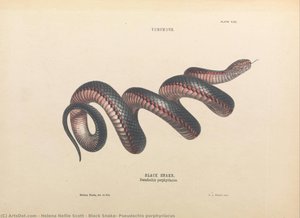
While Scott contributed to numerous publications, it is her individual illustrations that truly capture the essence of her artistic vision. Her depictions of moths and butterflies are particularly celebrated—exquisite studies in form, color, and texture. The lithograph Diamond Snake, Morelia spilotes, showcases her mastery of the medium, while Bent-wing Swift Moth, Zelotypia stacyi, exemplifies her ability to capture intricate details with breathtaking precision. The vibrant hues and delicate patterns of the Black Jezebel Butterfly, Delias nigrina, demonstrate not only technical skill but also a deep appreciation for the beauty inherent in nature. These works aren’t simply representations of insects; they are celebrations of life, rendered with an artist's eye and a scientist's understanding. The Museums Victoria in Melbourne houses several of her pieces, solidifying her place within Australia’s artistic heritage. The publication of Australian Lepidoptera and Their Transformations, undertaken with her father, remains a landmark achievement—a testament to the sisters’ collaborative spirit and their significant contribution to entomological knowledge.A Lasting Legacy: Pioneering Spirit and Enduring Influence
Helena Nellie Scott stands as a pivotal figure in Australian art and science. As one of the first professional female illustrators in Australia, she shattered barriers and paved the way for future generations of women to pursue careers in these fields. Her contributions weren’t limited to her artistic talent; her early warnings about invasive species highlight her foresight and commitment to environmental conservation—a concern that resonates powerfully today. She wasn't merely documenting nature; she was advocating for its preservation, recognizing the delicate balance of ecosystems long before it became a mainstream concern. Scott’s legacy extends beyond museums and publications; it lives on in the continued appreciation of her exquisite artwork and the inspiration she provides to artists and scientists alike. Her life serves as a reminder that art and science aren't mutually exclusive disciplines but rather complementary ways of understanding and celebrating the world around us, ensuring that her remarkable story as a naturalist and artist endures for generations to come.
Helena Nellie Scott
1832 - 1910 , Australia
Quick Facts
- Artistic Movement Or Style: Natural history art
- Artists Or Movements Influenced By This Artist:
- Australian naturalists
- Scientific illustrators
- Artists Who Influenced This Artist:
- Alexander Walker Scott
- Conrad Martens
- Samuel Thomas Gill
- Date Of Birth: 1832
- Date Of Death: 1910
- Full Name: Helena Nellie Scott
- Nationality: Australian
- Notable Artworks:
- Diamond Snake
- Bent-wing Swift Moth
- Black Jezebel Butterfly
- Place Of Birth: Sydney, Australia
Related Articles
The Art of Precision: Exploring the Beauty and Legacy of Scientific Illustration
Discover the exquisite intersection of science and fine art. Explore the history of scientific illustration, from botanical watercolor masters to nature's intricate geometry, through an expert lens of art history and technical precision.
The Refined Aesthetic of Victorian Illustration: A Study in Narrative & Technique
Explore the captivating world of Victorian illustration! Discover Pre-Raphaelite influences, key artists like Rossetti & Stephens, and the era's rich narrative detail. A deep dive for art enthusiasts.

The Evocative Detail of Nature: A History of Naturalistic Illustration
Explore the rich history of botanical illustration! Discover pioneering artists like Maria Sibylla Merian & Marianne North. Learn about scientific precision, artistic expression, and find museum-quality reproductions at OriginalUniqueArt.

The Precision of Perception: Scientific Illustration as Art & Epistemology
Explore the fascinating history of scientific illustration – where art meets accuracy. Discover key artists like Karl Blossfeldt & Maud H. Purdy, and delve into its profound epistemological roots. OriginalUniqueArt offers museum-quality reproductions.

The Art of Precision: A Definitive Guide to the History and Beauty of Scientific Illustration
Explore the profound history of scientific illustration. From ancient herbals to botanical masters like Robert Havell Jr., discover how precision meets beauty in this expert guide to natural history art and its enduring legacy in fine art collections.