The Rise of Victorian Illustration: Social Context & Artistic Demand
In the history of the United Kingdom and the British Empire, the Victorian era was the reign of Queen Victoria, from 20 June 1837 until her death on 22 January 1901. Slightly different definitions are sometimes used. The era followed the Georgian era...
The mid-19th century witnessed a burgeoning appetite for visual storytelling, inextricably linked to the societal shifts of the Victorian era. A rapidly expanding middle class, coupled with advancements in printing technology – particularly wood engraving – created an unprecedented demand for illustrated books and periodicals. This wasn’t merely about decoration; it was about accessibility. Art, previously confined to the galleries and homes of the wealthy, began to permeate everyday life, adorning parlors and informing public discourse. The Victorian novel flourished, and with it, a corresponding need for imagery that could capture the nuances of character and plot. However, this demand wasn’t simply for replication; readers craved illustrations imbued with moral weight, emotional depth, and meticulous detail – a reaction against what was perceived as the increasingly industrialized and impersonal nature of modern life.
The prevailing aesthetic sensibilities also played a crucial role. The Victorian public held complex views on beauty, often associating it with virtue and refinement. Illustrations became vehicles for reinforcing these ideals, portraying idealized figures and scenes that reflected societal norms. Yet, beneath this veneer of propriety lay a fascination with the dramatic, the gothic, and the psychologically complex – themes that would find particularly potent expression in the works of the Pre-Raphaelite Brotherhood.
Pre-Raphaelite Principles & Their Impact on Illustrative Style
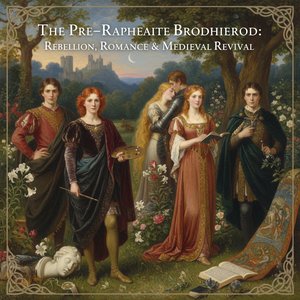
Founded in 1848 by a group of rebellious young artists including William Holman Hunt, Dante Gabriel Rossetti, and John Everett Millais, the Pre-Raphaelite Brotherhood (PRB) sought to revolutionize British art. Rejecting the academic conventions that dominated the Royal Academy – which they saw as derivative and artificial – they looked back to the Italian masters *before* Raphael for inspiration. This wasn’t simply a stylistic preference; it was a philosophical stance. The Pre-Raphaelites championed truth to nature, intense color, meticulous detail, and a renewed focus on narrative clarity. Their commitment extended beyond painting and profoundly influenced illustration.
Illustrators aligned with the PRB eschewed conventional shading techniques in favor of bright, clear colors applied directly onto the wood blocks. They prioritized accuracy in depicting flora, fauna, and costume, often working from direct observation rather than relying on established artistic tropes. This dedication to realism wasn’t merely about technical skill; it was intended to convey a sense of authenticity and emotional resonance. The PRB's emphasis on symbolism also found its way into illustration, with artists carefully embedding hidden meanings within their compositions.
Narrative Detail & Moral Commentary in Victorian Book Illustrations
Victorian illustrations weren’t simply decorative accompaniments to text; they were integral components of the storytelling process. Artists often took liberties with scenes and characters, adding layers of meaning that enhanced or even challenged the original narrative. The “fallen woman” motif – a recurring theme in Victorian literature – was particularly prevalent, offering opportunities for artists to explore complex moral issues surrounding female sexuality, social hypocrisy, and redemption. Illustrations depicting these narratives were often laden with symbolism, using objects, colors, and gestures to convey subtle messages about virtue, vice, and societal expectations.
The attention to detail in Victorian illustrations extended beyond the human figure. Artists meticulously rendered interiors, landscapes, and everyday objects, creating immersive worlds that transported readers into the heart of the story. This commitment to realism wasn’t simply aesthetic; it was intended to ground the narrative in a tangible reality, making its moral lessons more impactful. The use of light and shadow also played a crucial role, often employed to create dramatic effects and highlight key emotional moments.
Key Artists and Their Signature Approaches: Stephens, Scott, Holiday & Rossetti
 frederic george stephens
Explore Frederic George Stephens (1827-1907), a British art critic & Pre-Raphaelite Brotherhood member. Discover his artistic works, writings on art history, and influence on Victorian art patronage. #PreRaphaelites #ArtCritic #BritishArt
Frederic George Stephens, a founding member of the PRB, was not only an artist but also a prolific art critic. His illustrations often featured strong compositions and a keen eye for character detail, reflecting his analytical approach to art. William Bell Scott brought a distinctly Scottish sensibility to his work, depicting landscapes and scenes of industrial life with a rugged realism that contrasted sharply with the idealized imagery favored by some of his contemporaries. His focus on working-class subjects offered a unique perspective on Victorian society.
Henry Holiday is perhaps best known for his evocative illustrations for Lewis Carroll’s *The Hunting of the Snark*, which showcased his whimsical imagination and mastery of detail. His work often blended realism with fantasy, creating surreal and captivating images. Finally, Dante Gabriel Rossetti, a central figure in the Pre-Raphaelite movement, brought his poetic sensibility to illustration, imbuing his works with a sense of melancholy and romantic longing. His depictions of female beauty were particularly influential, often featuring languid poses and flowing draperies.
The Golden Age of Illustrated Books: Birmingham Museum Collections & Beyond
The period between the 1850s and 1890s represents a golden age for illustrated books. Publishers like Routledge and Macmillan commissioned artists to create lavish editions of classic novels, poetry collections, and historical narratives. The Birmingham Museum & Art Gallery boasts an exceptional collection of Victorian illustrations, offering a glimpse into the artistic diversity of this era. Works by Stephens, Scott, Holiday, and Rossetti are prominently featured, alongside examples from other notable illustrators.
Beyond Birmingham, collections at the Victoria and Albert Museum in London and the British Library provide further insight into the artistry and cultural significance of Victorian illustration. These institutions preserve not only finished illustrations but also preliminary sketches, wood blocks, and proofs, offering a fascinating glimpse into the creative process. Examining these materials reveals the meticulous planning and technical skill that went into creating these iconic images.
Beyond the Page: Illustration's Influence on Victorian Design & Culture
The impact of Victorian illustration extended far beyond the realm of books. The aesthetic principles championed by the Pre-Raphaelites – a focus on detail, symbolism, and narrative clarity – influenced a wide range of design disciplines, including wallpaper patterns, furniture decoration, and stained glass art. Artists like Henry Holiday, with his expertise in both painting and illustration, seamlessly transitioned between different mediums, blurring the boundaries between fine art and applied design.
The Victorian obsession with visual storytelling also shaped popular culture, influencing fashion, advertising, and even photography. Illustrations became a powerful tool for shaping public opinion and reinforcing societal norms. Today, Victorian illustrations continue to captivate audiences with their beauty, complexity, and emotional depth. At OriginalUniqueArt.com, we celebrate this rich artistic heritage by offering high-quality reproductions of iconic works, allowing you to bring the elegance and narrative power of Victorian illustration into your own home.