Preview
 Send
Send Share
Share
 Details
 Guide
Guide

 Download
 Similars
 X-Ray
X-Ray Diaporama
 Q&A
Q&A Stats
Statsuntitled (8641)

 Read More
The artwork displayed on this page is protected by copyright law, which means we cannot legally create or sell an identical reproduction. This protection is enforced under international agreements such as the Berne Convention and by national laws, including those outlined by the U.S. Copyright Law - Title 17.
This method fully complies with copyright regulations because it does not involve copying or duplicating the protected artwork. Instead, it is a creative reinterpretation - a new painting that is influenced by the original but not identical to it.
Giclée / Art Print
Museum-quality giclée or canvas print with fast production and flexible finish options. ( Buy Hand Made Painting Switch to Digital Image)




P118B $10

P118H $10

P118W $10

P438Z $10

P508JH $12

P508YH $12

P805H $10

P805Z $10

P919BZ $10

P919G $10

P919XJ $10

P959ZH $10

P968JZ $12

W106C $8

W218G $10

W218JH $8

W218Y $10

W307PJ $10

W316G $10

W316PJ $8

W316Y $10

W398PJ $8

W4111J $10

W500HY $15

W500JH $15

W692G $12

W849H $8

W940BG $15

W953PJ $8




Pick from our preset sizes that match the artwork's original proportions.

Type the width and the height you need, to fit your frame or your wall. A print can only be cut, never made bigger than the picture, so a size with a different shape loses a part of the image. We send you a digital mockup to approve before we print anything. The picture shown on this page does not show the real cut — only the mockup does.
Worldwide Delivery () in 2 weeks instead of standard 4/5 weeks. (4 November)

Free Worldwide Express Shipping

High-Quality Linen Canvas

Full Shipping Insurance

Customs Tax Refund Guarantee

True Color Matching Guarantee

100-Day Return Policy (Defects Only)

100% Money-Back Guarantee

Bulk Discount Offer
 Glass option is only available in size under 110 CM

untitled (8641)
Giclée / Art Print
Reproduction Size
-


Total Price
$ 81
A Haunting Embrace: Decoding Giorgio de Chirico’s Metaphysical Vision
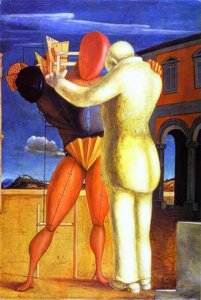
This captivating work by Giorgio de Chirico invites viewers into a realm of unsettling beauty and profound psychological resonance. Painted during his pivotal *Metaphysical* period, the artwork – titled “untitled (8641)” – exemplifies De Chirico's unique ability to evoke a sense of alienation and mystery through deceptively simple forms. The composition centers on two figures locked in an ambiguous embrace, their rigid postures and lack of discernible features lending them an almost mannequin-like quality.Style & Technique: A Fusion of Cubism and the Dreamscape
De Chirico masterfully blends elements of Cubism with his own burgeoning *Metaphysical* style. The figures are fragmented in their representation, echoing the analytical approach of Cubism, yet they aren’t broken down into purely geometric shapes. Instead, angularity defines them, emphasizing a sense of artificiality and emotional distance. The technique is characterized by smooth brushstrokes and precise outlines, creating a polished surface that paradoxically heightens the unsettling atmosphere. The cool color palette – dominated by whites, greys, muted blues, and greens – further contributes to this feeling of detachment and dreamlike stillness.Symbolism & Historical Context: Echoes of Modern Anxiety
Born in Greece but deeply connected to Italian artistic traditions, Giorgio de Chirico (1888-1978) developed *Metaphysical* art as a reaction against the prevailing trends of Futurism and Cubism. He sought not to depict the dynamism of modern life or analyze form, but rather to explore the hidden psychological realities beneath the surface of everyday existence. The figures in this painting are often interpreted as symbols of isolation and the dehumanizing aspects of modernity. The architectural backdrop – a possible building or archway receding into a distant mountain range – reinforces this sense of alienation, suggesting a vast, impersonal world. These elements combine to create a visual metaphor for the anxieties and uncertainties of the early 20th century.Composition & Emotional Impact: A Study in Unease
The composition is deliberately skewed, creating a subtle but pervasive sense of unease. The flattened space and stark contrast between foreground and background draw attention to the central interaction while simultaneously denying the viewer a comfortable perspective. This deliberate distortion contributes to the artwork’s dreamlike quality, inviting contemplation rather than offering easy answers. The emotional impact is one of quiet melancholy and profound mystery. It's a work that lingers in the mind long after viewing, prompting questions about identity, connection, and the nature of reality itself.For Collectors & Designers: A Timeless Statement
“untitled (8641)” represents a significant example of De Chirico’s *Metaphysical* period – a movement that profoundly influenced Surrealism and continues to resonate with contemporary audiences. Its cool palette, geometric forms, and evocative symbolism make it a versatile piece for both modern and traditional interiors. A high-quality reproduction would serve as a striking focal point in any space, adding an air of intellectual sophistication and artistic intrigue. It’s a work that speaks to the complexities of the human condition and invites ongoing interpretation – a truly timeless statement for discerning collectors and designers alike.Questions & Answers
What mood does "untitled (8641)" by Giorgio de Chirico express within Surrealism?
The melancholic emotion of "untitled (8641)" accompanies its Surrealism style.
What mood would "untitled (8641)" bring to a space?
"untitled (8641)" by Giorgio de Chirico has a mystical atmosphere and is recommended for a living room. The mood is what the work brings to the space around it.
How can "untitled (8641)" by Giorgio de Chirico be used in home decor?
Use (accent) and space (living room) are the two recommendations recorded for "untitled (8641)" by Giorgio de Chirico.
Artist Biography
A Dreamscape of the Mind: The Life and Art of Giorgio de Chirico
Born in 1888 in Volos, Greece, to Italian parents—a Genoese mother and a Sicilian father—Giorgio de Chirico’s artistic journey was one steeped in both classical heritage and a burgeoning sense of modern alienation. His early education at the Athens Polytechnic laid a foundation in traditional techniques, but it was his subsequent studies in Munich that truly ignited his creative spirit. There, amidst the intellectual ferment of pre-war Europe, he encountered the works of Arnold Böcklin and Max Klinger, artists whose symbolic landscapes and haunting imagery would deeply resonate with his own developing aesthetic. Equally influential were the philosophical currents of the time—the writings of Friedrich Nietzsche, Arthur Schopenhauer, and Otto Weininger—which explored themes of existentialism, the irrationality of human desire, and the subjective nature of reality. These ideas would become central to de Chirico’s groundbreaking artistic vision.The Birth of Metaphysical Painting
Around 1909, a unique style began to emerge from de Chirico's explorations—a style that he himself termed “Metaphysical” art. This wasn’t merely a stylistic innovation; it was a profound attempt to capture the hidden realities beneath the surface of everyday life, to reveal the unsettling poetry lurking within familiar spaces. A pivotal moment occurred during a visit to Florence and an experience in Piazza Santa Croce, which sparked his iconic ‘Metaphysical Town Square’ series. These paintings are characterized by their eerie stillness, long dramatic shadows, illogical perspectives, and the presence of classical architecture juxtaposed with unsettling elements like faceless mannequins and looming statues. The effect is deeply disquieting, evoking a sense of nostalgia, isolation, and an almost unbearable longing for something lost or unattainable. De Chirico founded the Scuola Metafisica, profoundly impacting Surrealism, though he would later distance himself from its interpretations of his work. His paintings weren’t intended as illustrations of dreams, but rather as attempts to depict a reality beyond the visible world—a realm where time and space are fluid, and the boundaries between consciousness and unconsciousness blur. Notable works like *The Vexations of the Thinker*, *The Enigma of an Autumn Afternoon*, and *The Song of Love* exemplify this haunting aesthetic, inviting viewers to contemplate the mysteries of existence and the fragility of human perception.A Shift in Style and a Lasting Legacy
Following World War I, around 1919, de Chirico’s artistic path took an unexpected turn. He rejected his earlier metaphysical approach, embracing instead a more traditional neoclassical or neo-baroque style. This shift was met with considerable controversy; many critics lamented the perceived decline in quality and accused him of abandoning the innovative spirit that had defined his early work. However, de Chirico remained steadfast in his artistic choices, revisiting themes from his past but rendering them with a different aesthetic sensibility. He continued to paint and exhibit prolifically throughout his life, exploring various styles and subjects while maintaining a consistent commitment to craftsmanship and technical skill. Despite the criticism, his influence on subsequent generations of artists cannot be overstated. His innovative use of space, perspective, and symbolism challenged conventional artistic norms and paved the way for new forms of expression.Influences and Enduring Impact
De Chirico’s work stands as a crucial bridge between the late 19th-century Symbolist movement and the rise of Surrealism in the early 20th century. He was directly influenced by artists like Arnold Böcklin and Max Klinger, whose evocative imagery resonated with his own fascination with mythology and the subconscious mind. Philosophers such as Nietzsche and Schopenhauer provided him with a framework for exploring themes of existential angst, alienation, and the search for meaning in a seemingly meaningless world. However, de Chirico’s influence extended far beyond Surrealism. Artists like René Magritte and Salvador Dalí were deeply inspired by his metaphysical paintings, adopting his techniques of juxtaposition, illogical perspective, and symbolic imagery to create their own dreamlike worlds. His work also impacted later movements such as Magic Realism, which sought to depict everyday reality with a heightened sense of mystery and psychological depth. Today, de Chirico’s paintings are exhibited in major museums worldwide, including the Museum dedicated to his work near the Spanish Steps in Rome, ensuring that his legacy as one of the most important figures in 20th-century art remains secure. He left behind not just a body of artwork but a new way of seeing—a way of perceiving the world as a place of hidden meanings, unsettling beauty, and enduring mystery.Key Influences & Artistic Lineage
- Influenced By: Arnold Böcklin, Max Klinger, Friedrich Nietzsche, Arthur Schopenhauer.
- Influenced: Surrealism, particularly artists like René Magritte and Salvador Dalí. His work also impacted later movements such as Magic Realism.

Giorgio de Chirico
1888 - 1978 , Greece
Quick Facts
- Full Name: Giorgio de Chirico
- Nationality: Italian
- Date Of Birth: 1888
- Date Of Death: 1978
- Place Of Birth: Volos, Greece
- Notable Artworks:
- The Vexations of the Thinker
- The Enigma of an Autumn Afternoon
- The Song of Love
- Artistic Movement Or Style: Metaphysical art
- Artists Who Influenced This Artist:
- Arnold Böcklin
- Max Klinger
- Friedrich Nietzsche
- Artists Or Movements Influenced By This Artist:
- Surrealism
- René Magritte
- Salvador Dalí
Related Articles
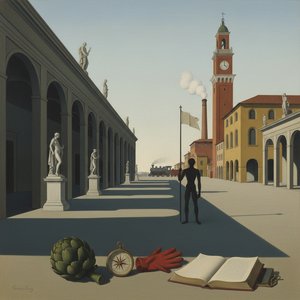
Giorgio de Chirico: Metaphysical Realities & the Poetics of Absence
Explore the captivating world of Giorgio de Chirico and his groundbreaking Metaphysical painting movement. Discover the philosophical depths & surreal imagery that influenced generations of artists. Learn more at OriginalUniqueArt.

Mastering Shadows: The 25 Most Powerful Artworks by Francisco Goya
Explore Goya's haunting masterpieces from courtly portraits to Black Paintings. Discover the full collection on OriginalUniqueArt.com.
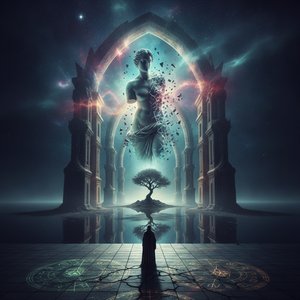
Beyond Reality: Discover the Haunting Beauty and Philosophical Depth of Metaphysical Art
Explore the haunting beauty of Metaphysical Art. Delve into Giorgio de Chirico’s dreamlike landscapes, the movement's profound connection to Surrealism, and the philosophical mysteries hidden within its eerie, silent piazzas.

Abstract Expressionism's 10 Defining Masterpieces |
Explore 10 defining Abstract Expressionism masterpieces by Pollock, Rothko & de Kooning. Discover the stories behind these iconic paintings and find museum-quality art reproductions to elevate your home decor on .

Beyond Reality's Veil: Exploring the Enigmatic World of Metaphysical Art
Explore the captivating world of Metaphysical art with OriginalUniqueArt. Discover Giorgio de Chirico's iconic paintings, philosophical influences & lasting impact on Surrealism. Expert insights for collectors.