Preview
 Send
Send Share
Share
 Details

 Download
 Similars
 X-Ray
X-Ray Diaporama
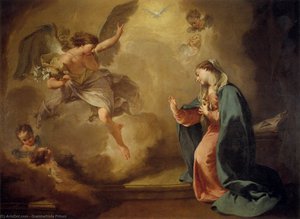
Annunciation
 Oil On Canvas
- WallArt
- Baroque
 1758
1758- Early Modern
 153.0 x 206.0 cm
 Gallerie dell'Accademia
 Read More
Giclée / Art Print
Museum-quality giclée or canvas print with fast production and flexible finish options. ( Buy Hand Made Painting Buy Image)




P118B $10

P118H $10

P118W $10

P438Z $10

P508JH $12

P508YH $12

P805H $10

P805Z $10

P919BZ $10

P919G $10

P919XJ $10

P959ZH $10

P968JZ $12

W106C $8

W218G $10

W218JH $8

W218Y $10

W307PJ $10

W316G $10

W316PJ $8

W316Y $10

W398PJ $8

W4111J $10

W500HY $15

W500JH $15

W692G $12

W849H $8

W940BG $15

W953PJ $8




Pick from our preset sizes that match the artwork's original proportions.

You may enter your own dimensions to fit a specific frame or space. If your selected size does not match the original image's proportions, we will either crop the artwork or extend the image with a mirrored or solid-fill edge. A digital mockup will be sent for your approval before production begins.
Please note that the on-screen preview does not reflect the actual cropping or extension. Only the mockup will accurately show the final composition.
While custom sizes are available, we recommend selecting a dimension from the predefined list to preserve the original proportions.
Worldwide Delivery () in 2 weeks instead of standard 4/5 weeks. (16 August)

Free Worldwide Express Shipping

High-Quality Linen Canvas

Full Shipping Insurance

Customs Tax Refund Guarantee

True Color Matching Guarantee

60-Day Return Policy (Defects Only)

100% Money-Back Guarantee

Bulk Discount Offer
 Glass option is only available in size under 110 CM

Annunciation
Giclée / Art Print
Reproduction Size
-


Total Price
$ 81
Collectible Description
The Divine Encounter: An Exploration of Pittoni's Annunciation
To stand before an image like this Annunciation by Giambattista Pittoni is to step directly into the heart of Baroque drama and spiritual ecstasy. This painting captures that singular, breathtaking moment when the divine intersects with the human—the announcement of Mary’s role in salvation history. The composition itself is a masterclass in controlled chaos; it is dynamic, almost vibrating with unseen energy. Notice how Pittoni employs strong diagonals, guiding the viewer's eye inexorably from the celestial messenger to the kneeling figure of Mary. It is not merely a depiction of an event, but a palpable experience of divine intervention, rendered with theatrical brilliance.
Baroque Drama and Theatrical Light
The style firmly roots itself in the grandeur of the Baroque period. Pittoni was adept at harnessing emotion for dramatic effect, and nowhere is this more evident than in his handling of light. The illumination is nothing short of theatrical; a brilliant, almost supernatural source bathes Mary and the angel in a luminous glow, causing them to emerge from the surrounding shadows. These deep, rich chiaroscuro effects lend an incredible sense of depth and weight to the scene. Furthermore, observe the textures: the flowing drapery seems caught mid-swirl, the clouds are not static backdrops but swirling entities themselves. This meticulous layering, characteristic of oil paint on canvas, gives the surface a palpable richness that even a reproduction can evoke.
Symbolism Woven into Form
Every element within this sacred narrative is imbued with profound meaning. The central focus remains Mary, portrayed in an attitude of humble reception, while the angel Gabriel delivers his message, often accompanied by the symbolic dove representing the Holy Spirit. These are not mere decorative touches; they are theological signposts. Pittoni masterfully balances the earthly intimacy suggested by the shallow perspective—drawing us close to these figures—with the overwhelming scale of the heavenly setting hinted at in the background. The inclusion of books speaks to prophecy and divine knowledge, grounding the miraculous event within a framework of sacred scripture.
A Timeless Resonance for Modern Spaces
For those seeking art that transcends mere decoration, this piece offers profound emotional resonance. Its warm color palette creates an immediate sense of reverence and spiritual calm, yet its dramatic energy keeps the eye engaged. Whether adorning a grand hall or serving as a focal point in a richly decorated interior, the Annunciation commands attention while simultaneously inviting contemplation. Owning a reproduction allows one to bring this confluence of Italian Baroque mastery—the drama, the light, the sublime narrative—into a contemporary setting, making it a breathtaking conversation piece for any discerning collector or designer.
Artist Biography
Willem Wissing: A Master of English Portraiture
Born in either Amsterdam or The Hague around 1656, Willem Wissing’s life and career unfolded dramatically across the North Sea, transforming him from a promising Dutch portraitist into one of England's most sought-after artists during the reign of Charles II. Initially trained by the esteemed Willem Doudijns and Arnoldus van Ravestyn in The Hague – masters known for their meticulous detail and classical influences – Wissing’s artistic trajectory shifted decisively when he arrived in London in 1676, a move that would cement his legacy as a pivotal figure in shaping English portraiture. His journey wasn't merely geographical; it represented a fusion of Dutch artistic traditions with the burgeoning tastes and demands of the English court.
Wissing’s early years in England were spent honing his skills under the tutelage of Peter Lely, a celebrated artist already renowned for his dynamic compositions and ability to capture character. Lely's workshop provided Wissing with invaluable experience, particularly in the realm of portraiture, exposing him to the latest techniques and stylistic trends. Following Lely’s untimely death in 1680, Wissing swiftly stepped into the role of his successor, inheriting a prestigious position and a considerable workload. This transition marked a crucial turning point, establishing Wissing as the principal portraitist at court – a status he would maintain for nearly a decade.
The royal sitters who graced Wissing’s studio during this period were among the most prominent figures of the era. He painted portraits of Charles II himself, capturing the king's charisma and regal bearing; Catherine of Braganza, showcasing her elegance and sophistication; George of Denmark, emphasizing his dignified presence; and James Scott, the Duke of Monmouth, reflecting the youthful energy of the heir apparent. These commissions weren’t merely exercises in likeness; Wissing skillfully imbued each portrait with a sense of personality and narrative, elevating them beyond simple representations to compelling works of art. His ability to convey both outward appearance and inner character was a hallmark of his style.
Wissing's influence extended far beyond the royal court. He established a workshop where he trained numerous assistants, most notably Jan van der Vaart, who specialized in adding drapery and landscape elements to Wissing’s compositions. This collaborative approach allowed him to maintain a prolific output while also developing a distinctive visual language characterized by rich colors, dramatic lighting, and an attention to detail that bordered on obsessive. The dissemination of his portraits through mezzotint prints further amplified his fame and ensured that his work reached a wider audience.
The Influence of Venetian Painting
Wissing’s artistic development reveals a fascinating interplay between Dutch and Italian influences. His early training in The Hague exposed him to the classical ideals championed by Doudijns and van Ravestyn, while his time with Lely introduced him to the dynamism and theatricality of English portraiture. However, it was his subsequent exposure to Venetian painting – particularly through the works of Carlo Marotti and Francesco Trevisani – that profoundly shaped his style. The rich colors, dramatic lighting, and emphasis on texture characteristic of Venetian art found their way into Wissing’s work, creating a distinctive visual vocabulary.
The influence of Venetian masters is most evident in his portraits of Charles II and Catherine of Braganza. These paintings are characterized by a sumptuous palette of reds, golds, and blues, as well as a masterful use of chiaroscuro – the dramatic contrast between light and shadow – to create a sense of depth and drama. The figures appear almost luminous against the dark backgrounds, conveying an aura of majesty and power.
A Tragic End
Wissing’s career reached its zenith in 1687, just months before his untimely death at Burghley House near Stamford, Lincolnshire. Circumstances surrounding his demise remain shrouded in mystery, with speculation ranging from natural causes to foul play. Some accounts suggest that he was poisoned out of jealousy by rivals who resented his success and popularity at court. Whatever the cause, Wissing’s death marked a significant loss for the English art world.
Despite his brief life, Wissing left an indelible mark on English portraiture. His portraits are admired today for their technical skill, expressive characterizations, and historical significance. They offer a valuable glimpse into the lives of England's most prominent figures during a pivotal period in the nation’s history. The enduring legacy of Willem Wissing lies not only in his artistic achievements but also in his role as a bridge between Dutch and English art traditions.
Notable Works
- Portrait of Charles II: A masterful depiction of the king's charisma and regal bearing, showcasing Wissing’s ability to capture personality.
- Portrait of Catherine of Braganza: An elegant portrayal of the queen, emphasizing her grace and sophistication.
- Portrait of George of Denmark: A dignified representation of the king's stately presence.
- Portrait of James Scott, 1st Duke of Monmouth: A dynamic depiction of the young heir apparent, conveying his youthful energy and ambition.
- Ariadne Asleep on Naxos: (Pennsylvania Academy of Fine Arts) – A prime example of Wissing’s ability to emulate the Venetian masters, particularly Giorgione and Titian.
Historical Significance
Willem Wissing's work is not merely aesthetically pleasing; it holds significant historical value. His portraits document the personalities and appearances of key figures during the Restoration period in England, providing invaluable insights into the courtly life and political landscape of the time. Furthermore, his influence on subsequent generations of English portraitists – particularly Godfrey Kneller – underscores his lasting impact on the development of the genre. Wissing’s legacy continues to be celebrated through exhibitions, scholarly research, and reproductions of his remarkable works.

giambattista pittoni
1687 - 1767 , Italy
Quick Facts
- Artistic Movement Or Style: Portraiture
- Artists Or Movements Influenced By This Artist: ['Peter Lely']
- Artists Who Influenced This Artist:
- Willem Doudijns
- Arnoldus van Ravestyn
- Date Of Birth: 1656
- Date Of Death: 1687
- Full Name: Willem Wissing
- Nationality: Dutch
- Notable Artworks:
- Portrait of Queen Anne
- Henrietta & Mary Hyde
- William III (Prince)
- Place Of Birth: Amsterdam/The Hague
Related Articles

The Dramatic Flourish: Exploring the Baroque Movement's Enduring Legacy in Art History
Explore the dramatic world of Baroque art! Discover iconic artists like Caravaggio & Rubens, defining techniques, and its lasting impact on art history. Expert insights for collectors & enthusiasts at OriginalUniqueArt.

The Visceral Stage: Exploring Dramatic Narratives & Emotional Intensity in Baroque Art
Explore the dramatic world of Baroque art! Discover iconic masters like Caravaggio & Rembrandt, their techniques, and the movement's lasting impact. Expert insights for collectors & enthusiasts at OriginalUniqueArt.

Baroque Drama: Bringing Opulence & Emotion into Contemporary Interiors
Explore the opulent world of Baroque interior design! Discover key elements, modern applications & how to bring dramatic elegance into your home with 's authentic reproductions.

Baroque Masterpieces: 10 Paintings That Defined an Era |
Journey through the drama & grandeur of Baroque art! Explore 10 masterpieces by Caravaggio, Rembrandt, Rubens & more. Discover stunning oil paintings, rich colors & timeless stories. Find museum-quality reproductions at .
Chiaroscuro and Soul: A Definitive Guide to the Drama and Emotion of Italian Baroque Masterpieces
Embark on a sophisticated journey through Italian Baroque art. Discover the dramatic interplay of light and emotion in Caravaggio’s masterpieces and explore how to bring this timeless grandeur into your collection with expert art insights.