Text size

() ·

A painting made for you, by hand

George Stubbs

Hand Made Oil Reproduction

Hand-painted oil on canvas in your size and frame, made to order by our artists. ( Switch to Print Switch to Digital Image)

Collectible Description

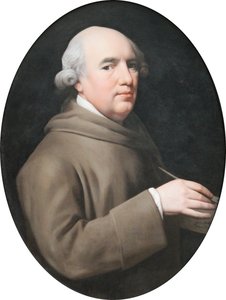
Admire George Stubbs’ ‘George Stubbs’ (1781) – a captivating portrait of a gentleman. Explore this 18th-century masterpiece, showcasing anatomical detail & historical significance. Hand-painted reproduction available.

Artist Biography

A pioneer of Romanticism famous for Whistlejacket. Explore his masterful equine art and anatomical studies today.

from ·

Chapter 1

How large should it be?

Slide to change the size; the picture on the left shows the frame at its real width. The proportions of the original are kept.

Standard
custom
CM
INCH

Pick from our preset sizes that match the artwork's original proportions.

width
height

Type the width and the height you need, to fit your frame or your wall. This is hand-painted, so for a size with a different shape the artist can paint a bit more around the picture, or cut a bit — you choose. We send you a digital mockup to approve before the painting starts. The picture shown on this page does not show the real result — only the mockup does.

Chapter 2

How should it arrive?

Choose the edges of the stretched canvas

Choose your frame

Corner sample of the WhiteWrap canvas edge finish, stretched on solid wood bars
White $1
Corner sample of the BlurSideWrap canvas edge finish, stretched on solid wood bars
Blurside $1
Corner sample of the ExtendedWrap canvas edge finish, stretched on solid wood bars
Extended $1
Corner sample of the P118B picture frame: moulded polystyrene, 5 cm wide and 3 cm thick
P118B $10
Corner sample of the P118H picture frame: moulded polystyrene, 5 cm wide and 3 cm thick
P118H $10
Corner sample of the P118W picture frame: moulded polystyrene, 5 cm wide and 3 cm thick
P118W $10
Corner sample of the P438Z picture frame: moulded polystyrene, 5.5 cm wide and 3.5 cm thick
P438Z $10
Corner sample of the P508JH picture frame: moulded polystyrene, 7 cm wide and 3.5 cm thick
P508JH $12
Corner sample of the P508YH picture frame: moulded polystyrene, 7 cm wide and 3.5 cm thick
P508YH $12
Corner sample of the P805H picture frame: moulded polystyrene, 5 cm wide and 3.5 cm thick
P805H $10
Corner sample of the P805Z picture frame: moulded polystyrene, 5 cm wide and 3.5 cm thick
P805Z $10
Corner sample of the P919BZ picture frame: moulded polystyrene, 7 cm wide and 3.5 cm thick
P919BZ $10
Corner sample of the P919G picture frame: moulded polystyrene, 7 cm wide and 3.5 cm thick
P919G $10
Corner sample of the P919XJ picture frame: moulded polystyrene, 7 cm wide and 3.5 cm thick
P919XJ $10
Corner sample of the P959ZH picture frame: moulded polystyrene, 5 cm wide and 3 cm thick
P959ZH $10
Corner sample of the P968JZ picture frame: moulded polystyrene, 6 cm wide and 4 cm thick
P968JZ $12
Corner sample of the W106C picture frame: solid wood, 5 cm wide and 3 cm thick
W106C $8
Corner sample of the W218G picture frame: solid wood, 5 cm wide and 3 cm thick
W218G $10
Corner sample of the W218JH picture frame: solid wood, 5 cm wide and 3 cm thick
W218JH $8
Corner sample of the W218Y picture frame: solid wood, 5 cm wide and 3 cm thick
W218Y $10
Corner sample of the W307PJ picture frame: solid wood, 6 cm wide and 3 cm thick
W307PJ $10
Corner sample of the W316G picture frame: solid wood, 6 cm wide and 3 cm thick
W316G $10
Corner sample of the W316PJ picture frame: solid wood, 6 cm wide and 3 cm thick
W316PJ $8
Corner sample of the W316Y picture frame: solid wood, 6 cm wide and 3 cm thick
W316Y $10
Corner sample of the W398PJ picture frame: solid wood, 5 cm wide and 3 cm thick
W398PJ $8
Corner sample of the W4111J picture frame: solid wood, 6.5 cm wide and 3.5 cm thick
W4111J $10
Corner sample of the W500HY picture frame: solid wood, 7 cm wide and 5 cm thick
W500HY $15
Corner sample of the W500JH picture frame: solid wood, 7 cm wide and 5 cm thick
W500JH $15
Corner sample of the W692G picture frame: solid wood, 8 cm wide and 4 cm thick
W692G $12
Corner sample of the W849H picture frame: solid wood, 5 cm wide and 3 cm thick
W849H $8
Corner sample of the W940BG picture frame: solid wood, 7.5 cm wide and 4.5 cm thick
W940BG $15
Corner sample of the W953PJ picture frame: solid wood, 6 cm wide and 3.5 cm thick
W953PJ $8
Corner sample of the H24-GOLD picture frame: carved wood with gesso, 10 cm wide and 6 cm thick
H24-GOLD $30
Corner sample of the H24-SILVER picture frame: carved wood with gesso, 10 cm wide and 6 cm thick
H24-SILVER $30
Corner sample of the H36-GOLD picture frame: carved wood with gesso, 15 cm wide and 6.5 cm thick
H36-GOLD $45
Corner sample of the H36-SILVER picture frame: carved wood with gesso, 15 cm wide and 6.5 cm thick
H36-SILVER $45
Frame preview
Framed

Moulding: . Overall size with the frame: .

Chapter 3

Who paints it, and should anything change?

Examples of what can be changed: Replace face with customer photo; Add pet (e.g., replace cat with dog); Include hidden message in background; Change background landscape or elements.
After order, OriginalUniqueArt.com team will email client for instructions and provide a mockup preview

Worldwide Delivery () in 3/4 weeks instead of standard 5 weeks. (10 November). No compromise on quality.

Chapter 4

The finishing touches

A nameplate, as in a museum?

Engraved Bronze Plaque Details

This elegant plaque features the artist's name and the title of the artwork, finely engraved for a timeless presentation.

It is made from bronze with a refined, elegant finish. The text is precisely laser-engraved for a sharp and permanent result. Measuring 9x2 cm, the plaque is compact yet easy to read. It's built to be durable and scratch-resistant, offering a professional, museum-quality look. Mounting is simple thanks to the included adhesive backing.

Transparent Acrylic Plaque Details

The plaque includes essential engraved details such as the artist's name, the title of the artwork, the date it was created, the type of media used-like oil on canvas or watercolor-a brief description of the piece, and a QR code that links to the complete artwork information.

It is crafted from clear acrylic, offering a sleek, modern appearance. The text is UV-engraved in black to ensure strong visual contrast. With a size of 10x15 cm, it ensures optimal readability. It comes equipped with two metal hooks for secure wall mounting. The plaque is designed to be weather-resistant, making it suitable for various environments, and it includes interactive features that work seamlessly with smartphone scanning.

Black Acrylic Plaque Details

This elegant plaque includes engraved information such as the artist's name, the title of the artwork, the date it was created, the type of media used (like oil on canvas or watercolor), a short description of the artwork, and a QR code for quick access to more information.

The plaque itself is made from refined black acrylic with a premium finish. The text is laser-engraved in white for high contrast and readability. Its size is 10x15 cm, designed to be easy to read. It comes with two metal hooks for professional mounting. The design is sleek and fits any interior style. It is also weather-resistant and durable, with built-in digital integration for mobile compatibility.

A protective varnish?

When do you need it?

Chapter 5

Your painting, as you ordered it

George Stubbs

Reproduction Medium

Reproduction Size

-

Elite Senior Artist

More detail, finesse, and extra production time

-

Reproduction Frame

-

-

For artworks or reproductions larger than 105 cm (approximately 41 inches) on any side, the frame will be shipped as a kit, disassembled. This method ensures safe delivery and prevents damage during transport.

Professional assembly required - this is not a DIY product.
The kit must be assembled and the canvas stretched by an experienced professional framer, using wood glue (not supplied), a canvas stretching plier and clamps to hold the bars square while the glue dries. Incorrect assembly or uneven canvas tension can permanently damage the artwork and is not covered by our warranty.

  • All solid wood bars are included, precisely cut to size.

  • Assembled with the screws provided, plus wood glue for the corner joints, which is not supplied and must be sourced by your framer.

  • Professional tools are required and not included: a canvas stretching plier (tensioner) and clamps to hold the bars square while the glue dries.

Important:
The corner joints require wood glue, the bars must be held with clamps until the glue is fully dry, and tightening the canvas on the assembled frame requires a canvas stretching plier. None of these are included in the kit. Please arrange an experienced professional framer before ordering this size.

Nameplate

-

-

Protective Varnish

Glossy Varnish (enhances colors, protects against light/moisture)

-

Customize My Artwork

Examples of what can be changed: Replace face with customer photo; Add pet (e.g., replace cat with dog); Include hidden message in background; Change background landscape or elements.

-

Urgent

Worldwide Delivery () in 3/4 weeks instead of standard 5 weeks. (10 November). No compromise on quality.

-

Express Shipping

Worldwide Delivery () in 5 weeks. (17 November).

Included

Total Price

$ 300

Total Price $ 300

Glass option is only available in size under 110 CM

Included with every order

  • Free Worldwide Express Shipping
  • High-Quality Linen Canvas
  • Full Shipping Insurance
  • Customs Tax Refund Guarantee
  • True Color Matching Guarantee
  • 100-Day Return Policy (Defects Only)
  • 100% Money-Back Guarantee
  • Bulk Discount Offer

An Encounter with an Eighteenth-Century Soul

In the quiet intimacy of this 1781 portrait, we are invited to step back into the refined atmosphere of the late Georgian era. The painting presents us with a gentleman of profound presence, his visage framed by the characteristic white wig and meticulously groomed beard that defined the dignity of his age. There is an immediate, palpable sense of intellectual weight in the way he holds a book or a sheaf of papers—a subtle yet powerful symbol of literacy, law, or perhaps scientific inquiry. The artist captures not just a likeness, but a moment of contemplative stillness, where the subject seems caught between the act of reading and a direct, piercing engagement with the viewer. This sense of connection is deepened by the dark, enveloping background, which pushes the figure forward, making his pale features and textured attire appear almost luminous against the shadows.

The technique employed in this work speaks to the mastery of George Stubbs, an artist whose name is synonymous with anatomical precision and a profound understanding of form. While many recognize him for his legendary equine studies, this portrait reveals his ability to translate human character through delicate brushwork and a sophisticated command of light. The play of light across the folds of his suit and the subtle textures of his wig demonstrate a painterly skill that prioritizes realism without sacrificing the soft, atmospheric quality essential to 18th-century portraiture. Every stroke serves to build volume, giving the man a three-dimensional vitality that makes him feel less like a historical relic and more like a living, breathing witness to his time.

A Legacy of Precision and Elegance

To possess or display a reproduction of this piece is to bring a fragment of Enlightenment history into a contemporary space. The painting serves as a bridge between the rigorous scientific curiosity of the 1780s—an era defined by anatomical study and the pursuit of knowledge—and the aesthetic elegance of classical portraiture. For the discerning collector or interior designer, this artwork offers more than mere decoration; it provides a focal point of intellectual gravity. Its muted palette and dramatic chiaroscuro allow it to integrate seamlessly into sophisticated, traditional interiors, yet its striking subject matter ensures it remains a conversation piece in modern, minimalist settings.

The emotional impact of the work lies in its quietude. In an age of digital noise, there is something deeply restorative about the steady, unwavering gaze of this gentleman. It evokes a sense of permanence and tradition, reminding us of a period when art was used to capture the very essence of human dignity and the pursuit of wisdom. Whether placed in a private library, a formal study, or an elegant living area, this hand-painted tribute to George Stubbs’s skill continues to resonate with anyone who finds beauty in the intersection of historical truth and artistic grace.

Questions & Answers

What subjects appear in "George Stubbs" by George Stubbs?

The subjects of "George Stubbs" are portrait of a man, 18th century attire, classical figure”, “book and paper”, “formal portrait”, “neoclassical style”, “historical subject”.

How is "George Stubbs" by George Stubbs proportioned, and how big is it?

"George Stubbs" by George Stubbs is proportioned as a portrait work of 70 x 53 cm.

What are the medium and date of "George Stubbs" by George Stubbs?

"George Stubbs" was made in 1781, in oil on panel.

More about this painting

Preview AR preview Switch to Print Switch to Digital Image Send
Details Guide Add to favorites Download Similars X-Ray Diaporama Q&A Stats

In numbers

  • 1781the year it was painted
  • 29frames to choose from
  • standard sizes, in its own proportions
  • 5weeks to paint and deliver it
George Stubbs

George Stubbs

1724 - 1806, United Kingdom

Quick facts about George Stubbs

  • Artistic Movement Or Style: Romantic movement
  • Artists Or Movements Influenced By This Artist: ['Romantic movement']
  • Artists Who Influenced This Artist:
    • Joshua Reynolds
    • Thomas Gainsborough
  • Full Name: George Stubbs
  • Nationality: English
  • Notable Artworks:
    • Whistlejacket
    • The Anatomy of the Horse
    • A Lion Attacking a Horse
  • Place Of Birth: Liverpool, United Kingdom
  • Date Of Birth: 1724
  • Date Of Death: 1806

Artist Biography

Early Life, Family and Training

Liverpool, United Kingdom, 1724. George Stubbs enters the world as the son of John Stubbs, a currier, or leather-dresser, and Mary. His childhood is spent within the confines of the family business, handling hides and tools. This early exposure to the physical properties of animal skins provides a tactile foundation for a developing curiosity. By the age of 15, the pull toward visual representation becomes impossible to ignore. He begins his artistic path not through formal academies, but through a relentless, self-directed drive to understand the mechanics of life.

The path is uneven. A brief apprenticeship under Hamlet Winstanley, a painter and engraver from Lancashire, offers a glimpse into the professional trade, but it remains a short chapter. Stubbs seeks something more rigorous than mere imitation. He moves toward York, where the focus shifts from surface appearance to internal structure. Under the guidance of surgeon Charles Atkinson at York County Hospital, he begins a deep study of anatomy. This period of dissection transforms his approach, turning the artist into a student of the skeletal and muscular systems.

He remains largely self-taught, building his technical proficiency by observing the work of 18th-century contemporaries. He absorbs the methods of great artists like Joshua Reynolds and Thomas Gainsborough, yet his focus remains anchored in the scientific. He does not merely want to paint a subject; he wants to understand the tension of the sinew and the placement of the bone beneath the skin. This intersection of the surgical and the aesthetic defines his early development.

Patrons, Workshop and Commissions

Success arrives through the doors of the English aristocracy. By 1759, the 3rd Duke of Richmond commissions three large pictures, a move that secures Stubbs's professional standing. His ability to render the physical reality of animals quickly attracts the attention of leading aristocratic patrons. He moves from the periphery of the art world into the inner circles of the elite, producing works for several dukes and lords. This steady stream of high-status commissions provides the financial stability required to establish a permanent presence in the capital. He eventually purchases a house in Marylebone, London, where he remains for the rest of his life.

The demand for his specific expertise extends to the highest levels of society, as he enjoys royal patronage. His reputation is built on the ability to satisfy the specific desires of owners who view their horses as symbols of status. These patrons seek more than mere likenesses; they require the anatomical precision that Stubbs provides. His workshop becomes a site of significant production, catering to the tastes of a class obsessed with equestrian excellence and the breeding of fine animals.

Technique and Style

Stubbs operates at the intersection of scientific inquiry and fine art. His approach relies on a pioneering realism rooted in the physical reality of the animal form. By combining anatomical exactitude with expressive details, he moves beyond mere likeness to capture the mechanics of life. He uses subtle gradations of shadow to breathe life into every sinew and tendon, rendering the underlying structure of his subjects with a clarity that reflects his deep study of anatomy.

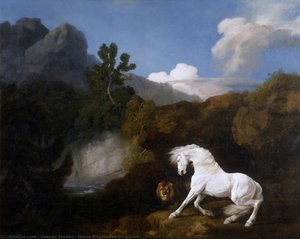
This obsession with the mechanics of movement often manifests in scenes of high tension. He becomes preoccupied with the theme of a wild horse threatened by a lion, a subject he explores through various iterations. These depictions of a lion attacking a horse represent early and significant examples of the Romantic movement. In these works, the focus shifts from the static portrait to the visceral energy of survival, utilizing the tension of musculature to drive the composition.

Key Works and Masterpieces

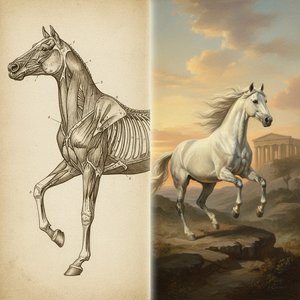
The year 1766 marks a definitive shift in the intersection of art and science. Stubbs publishes The Anatomy of the Horse, a groundbreaking treatise that moves beyond mere observation. The book contains 18 detailed illustrations, the result of years spent dissecting carcasses to understand the mechanics of life. This work establishes him as an authority on equine structure, providing a visual language for the musculature and tendons that define a living animal.

In the same year, the focus shifts from the internal to the visceral. A Lion Attacking a Stag captures a moment of raw, unscripted survival. The tension is palpable in the rendering of the predator and prey. This theme of conflict—the wild horse threatened by a lion—becomes a recurring obsession, appearing in various iterations throughout his career. It is a study of power and movement that bridges the gap between scientific documentation and the burgeoning Romantic movement.

The height of his equestrian portraiture arrives with Whistlejacket. Commissioned by the 2nd Marquess of Rockingham, the painting depicts a prancing horse against a plain background, breaking from the conventions of the time. The subject's presence is immediate. Around 1780, he produces The Marquess of Rockingham's Arabian Stallion, further cementing his status in the high-society circles of the era. His ability to capture the essence of a specific animal remains his most enduring contribution to the genre.

  • Whistlejacket
  • The Anatomy of the Horse (1766)
  • A Lion Attacking a Stag (1766)
  • The Marquess of Rockingham's Arabian Stallion (about 1780)

Where to See the Works Today

The legacy of Stubbs’s anatomical precision survives in the halls of major international institutions. In London, the National Gallery houses Whistlejacket, a large-scale portrait of a thoroughbred race horse. The Tate Gallery also maintains several of his paintings within its collection. These works offer a direct look at the precision that defined his career.

Across the Atlantic, the Yale Center for British Art in New Haven holds a significant number of his works. This collection provides a concentrated view of his output. In the United Kingdom, the Walker Art Gallery in Liverpool preserves his paintings, returning his imagery to the region of his birth. His influence extends beyond the canvas into the scientific realm; his book, The Anatomy of the Horse, remains a fundamental work of reference for the study of equine anatomy.

Quick Facts

  • Artist: George Stubbs
  • Title: George Stubbs
  • Notable elements or techniques: Anatomical detail
  • Medium: Wood