Read More


 For artworks or reproductions larger than 105 cm (approximately 41 inches) on any side, the frame will be shipped as a kit, disassembled. This method ensures safe delivery and prevents damage during transport.


More about this painting
Text size

() ·
A print made for you, with care
Giclée / Art Print
Museum-quality giclée or canvas print with fast production and flexible finish options. ( Buy Hand Made Painting Switch to Digital Image)
Artist Biography
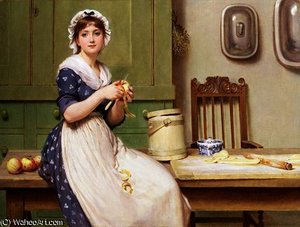
George Dunlop Leslie (1835-1921) was a British genre painter & Royal Academician celebrated for charming depictions of Victorian domestic life, particularly scenes featuring children. Explore his Pre-Raphaelite influenced works!
from ·
Chapter 1
On which medium should it be printed?
Canvas is printed with giclée inks and can be stretched or framed like a painting; paper comes flat, or framed behind glass.
Chapter 2
How large should it be?
Slide to change the size; the picture on the left shows the frame at its real width. The proportions of the original are kept.
Standard
custom
CM
INCH
Pick from our preset sizes that match the artwork's original proportions.
Loading sizes...

width
height
Type the width and the height you need, to fit your frame or your wall. A print can only be cut, never made bigger than the picture, so a size with a different shape loses a part of the image. We send you a digital mockup to approve before we print anything. The picture shown on this page does not show the real cut — only the mockup does.
Chapter 3
How should it arrive?
Choose the edges of the stretched canvas
Choose your frame

White $1

Blurside $1

Extended $1

P118B $10

P118H $10

P118W $10

P438Z $10

P508JH $12

P508YH $12

P805H $10

P805Z $10

P919BZ $10

P919G $10

P919XJ $10

P959ZH $10

P968JZ $12

W106C $8

W218G $10

W218JH $8

W218Y $10

W307PJ $10

W316G $10

W316PJ $8

W316Y $10

W398PJ $8

W4111J $10

W500HY $15

W500JH $15

W692G $12

W849H $8

W940BG $15

W953PJ $8

H24-GOLD $30

H24-SILVER $30

H36-GOLD $45

H36-SILVER $45
Framed
Moulding: . Overall size with the frame: .
Chapter 4
Worldwide Delivery () in 2 weeks instead of standard 4/5 weeks. (22 November)
The finishing touches
A nameplate, as in a museum?
Engraved Bronze Plaque Details
This elegant plaque features the artist's name and the title of the artwork, finely engraved for a timeless presentation.
It is made from bronze with a refined, elegant finish. The text is precisely laser-engraved for a sharp and permanent result. Measuring 9x2 cm, the plaque is compact yet easy to read. It's built to be durable and scratch-resistant, offering a professional, museum-quality look. Mounting is simple thanks to the included adhesive backing.
Transparent Acrylic Plaque Details
The plaque includes essential engraved details such as the artist's name, the title of the artwork, the date it was created, the type of media used-like oil on canvas or watercolor-a brief description of the piece, and a QR code that links to the complete artwork information.
It is crafted from clear acrylic, offering a sleek, modern appearance. The text is UV-engraved in black to ensure strong visual contrast. With a size of 10x15 cm, it ensures optimal readability. It comes equipped with two metal hooks for secure wall mounting. The plaque is designed to be weather-resistant, making it suitable for various environments, and it includes interactive features that work seamlessly with smartphone scanning.
Black Acrylic Plaque Details
This elegant plaque includes engraved information such as the artist's name, the title of the artwork, the date it was created, the type of media used (like oil on canvas or watercolor), a short description of the artwork, and a QR code for quick access to more information.
The plaque itself is made from refined black acrylic with a premium finish. The text is laser-engraved in white for high contrast and readability. Its size is 10x15 cm, designed to be easy to read. It comes with two metal hooks for professional mounting. The design is sleek and fits any interior style. It is also weather-resistant and durable, with built-in digital integration for mobile compatibility.
A protective varnish?
When do you need it?
Chapter 5
Your print, as you ordered it
Considering a Reply
Reproduction Medium
Reproduction Size
-
Reproduction Frame
-
-
For artworks or reproductions larger than 105 cm (approximately 41 inches) on any side, the frame will be shipped as a kit, disassembled. This method ensures safe delivery and prevents damage during transport.
Professional assembly required - this is not a DIY product.
The kit must be assembled and the canvas stretched by an experienced professional framer, using wood glue (not supplied), a canvas stretching plier and clamps to hold the bars square while the glue dries. Incorrect assembly or uneven canvas tension can permanently damage the artwork and is not covered by our warranty.
All solid wood bars are included, precisely cut to size.
Assembled with the screws provided, plus wood glue for the corner joints, which is not supplied and must be sourced by your framer.
Professional tools are required and not included: a canvas stretching plier (tensioner) and clamps to hold the bars square while the glue dries.
Important:
The corner joints require wood glue, the bars must be held with clamps until the glue is fully dry, and tightening the canvas on the assembled frame requires a canvas stretching plier. None of these are included in the kit. Please arrange an experienced professional framer before ordering this size.
Nameplate
-
-
Protective Varnish
Glossy Varnish (enhances colors, protects against light/moisture)
-
Urgent
Worldwide Delivery () in 2 weeks instead of standard 4/5 weeks. (22 November)
-
Express Shipping
Worldwide Delivery () in 4/5 weeks. (29 November).
Included
Total Price
$ 81
Glass option is only available in size under 110 CM
Included with every order
- Free Worldwide Express Shipping
- High-Quality Linen Canvas
- Full Shipping Insurance
- Customs Tax Refund Guarantee
- True Color Matching Guarantee
- 100-Day Return Policy (Defects Only)
- 100% Money-Back Guarantee
- Bulk Discount Offer
 Preview

 Send
 Share
 Details
 Guide


 Download
 Similars
 X-Ray
 Diaporama
 Q&A
 Stats
In numbers
- 29frames to choose from
- standard sizes, in its own proportions
- 5weeks to paint and deliver it
About the original

George Dunlop Leslie
1835 - 1921, United Kingdom
Quick facts about George Dunlop Leslie
- Full Name: George Dunlop Leslie
- Nationality: British
- Date Of Birth: 1835
- Date Of Death: 1921
- Place Of Birth: London, United Kingdom
- Notable Artworks:
- Alice in Wonderland
- Ten Minutes to Decide
- This is the Way...
- Matilda - Dante
- Artistic Movement Or Style: Genre painting, Pre-Raphaelite
- Artists Who Influenced This Artist:
- Charles Robert Leslie
- Robert Leslie
Artist Biography
A Life Immersed in Domestic Harmony: The World of George Dunlop Leslie
Born into a family steeped in artistic tradition in 1835, George Dunlop Leslie inherited a passion for painting that would define his life and career. His father, Charles Robert Leslie RA, was a celebrated genre painter, and his uncle, Robert Leslie, specialized in marine art—a lineage that provided young George with early exposure to the techniques, aesthetics, and professional world of art. He received initial instruction from his father before formally studying at Cary’s Art Academy and later, beginning in 1854, at the prestigious Royal Academy. This foundational training instilled in him a respect for classical principles while simultaneously exposing him to emerging artistic currents. Leslie's early life was thus one of privilege and encouragement, setting the stage for his own contributions to Victorian painting. He would eventually become a significant figure himself, achieving recognition as an Associate of the Royal Academy in 1868 and a full member in 1876—a testament to his skill and dedication.From Pre-Raphaelite Echoes to Pictures of Domestic Life
Leslie’s artistic journey began under the strong influence of the Pre-Raphaelites, evident in early works like “Matilda” (1860). These initial paintings showcased a meticulous attention to detail and a symbolic depth characteristic of the movement. However, Leslie didn't remain solely within this aesthetic realm. He gradually transitioned towards a more academic and aesthetically pleasing style, one that focused on portraying what he termed "pictures from the sunny side of English domestic life." This shift wasn’t merely stylistic; it reflected a deliberate artistic choice to capture the warmth, charm, and everyday beauty found in Victorian homes and families. He sought to depict scenes of quiet intimacy and gentle emotion, moving away from grand historical narratives or dramatic allegories. His paintings became windows into the lives of middle-class England, filled with carefully rendered interiors, elegant figures, and a sense of peaceful contentment.Children as Muse: A Celebration of Innocence
A defining characteristic of Leslie’s work is his frequent portrayal of children. He depicted them not as idealized cherubs but as lively, individual personalities engaged in simple activities—reading, playing, or simply lost in thought. His ability to capture the essence of childhood earned him particular praise, notably from John Ruskin, who lauded his paintings for their sensitive depiction of “the sweet quality of English girlhood.” Works like "Alice in Wonderland" (of which he created multiple versions) demonstrate this fascination with youthful innocence and imagination. He wasn’t simply painting portraits; he was crafting narratives that celebrated the joys and vulnerabilities of childhood, offering a glimpse into the Victorian understanding of family values and upbringing. This focus on domesticity and familial affection resonated deeply with audiences during his time, establishing him as a leading genre painter.Recognition and Legacy: Beyond the Canvas
George Dunlop Leslie was a consistent exhibitor at the Royal Academy from 1859 until his retirement, showcasing his work alongside other prominent artists of the era. He also displayed his paintings at prestigious venues like the British Institution, the Society of British Artists, the Dudley Gallery, and the Grosvenor Gallery, solidifying his reputation within the art world. Beyond painting, Leslie was a man of diverse talents. He authored several books, including "Our River" (1888), “Letters to Marco” (1893) and “Riverside Letters” (1896), all illustrated with his own black-and-white drawings—testament to his skill as an illustrator and keen observer of the natural world. He also penned a historical account, "The Inner Life of the Royal Academy," offering insights into the workings of this influential institution. Notably, his painting “This is the Way We Wash Our Clothes” gained unexpected recognition when it was adapted for use in a soap advertisement, demonstrating the growing intersection between art and commerce during the late 19th century. His murals at St Leonards Church in Wallingford, created in 1889, further showcase his versatility as an artist. George Dunlop Leslie’s legacy lies not only in his charming paintings but also in his ability to capture a specific moment in time—a glimpse into the heart of Victorian England and its enduring values.Related Articles

The Resonance of Modernity: Exploring Emotional Tones in Contemporary Artwork
Explore the emotional depth of modern art with expert insights on abstract expressionism, Color Field painting & key artists like Rothko & Pollock. Discover investment potential and curated selections for discerning collectors.

Ronald Ossory Dunlop: A Study in Early Canadian Modernism & Evocative Landscape Painting
Discover the captivating world of Ronald Ossory Dunlop, a pivotal Irish painter known for his 'alla prima' landscapes & emotive portraits. Explore his life, techniques, and key artworks with OriginalUniqueArt.

The Evocative Power of Art: Exploring Mood & Emotional Resonance in Visual Masterpieces
Explore the profound connection between art & emotion. Discover how master artists evoke feelings through color, composition, and symbolism. Uncover the psychology behind emotional resonance and the therapeutic power of visual masterpieces.

The Triadic Resonance of Artistic Choice: Exploring Emotional Response to Multiple Interpretations of a Singular Concept
Explore the emotional power of art & discover how skilled artists create lasting masterpieces. Custom paintings, expert consultations, & museum-quality reproductions at OriginalUniqueArt.com.
Explore artworks organized by themes, styles, and characteristics.