The Birth of Emotional Abstraction: Post-War Expressionism
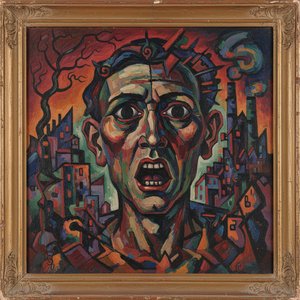 The Raw Emotion of Expressionism: A Revolution in 20th-Century Art
Explore the revolutionary world of Expressionism with . Discover key artists like Kirchner & Nolde, understand its emotional impact, and learn how to collect this influential art movement.
The aftermath of World War II irrevocably altered the artistic landscape, birthing a fervent need for expression that transcended representational form. A generation grappling with unprecedented trauma sought to convey not *what* they saw, but *how* they felt – a shift from depicting reality to embodying its emotional residue. This was the genesis of Abstract Expressionism in the United States, a movement characterized by spontaneous gesture, bold color palettes, and an intensely personal approach to painting. Artists like Jackson Pollock, with his revolutionary drip technique, and Mark Rothko, delving into the profound depths of color, rejected traditional composition in favor of raw, unfiltered emotion. The New York School, as it became known, wasn’t merely a stylistic departure; it was a philosophical one, prioritizing subjective experience over objective observation. The scale of these works often mirrored the vastness of human feeling – canvases becoming arenas for psychological exploration and existential questioning. It represented a break from social realism, influenced by earlier movements like Mexican muralism but ultimately forging its own path toward pure abstraction.
Color Field Painting: A Deep Dive into Rothko's Sublimity
 Untitled
Explore Mark Rothko's 1952 'Untitled' – a captivating Color Field painting featuring bold red & teal hues. Own a hand-painted reproduction of this emotionally resonant abstract masterpiece. #Rothko #AbstractArt #ColorFieldPainting
Within the broader context of Abstract Expressionism emerged Color Field painting, perhaps most powerfully exemplified by the work of Mark Rothko. Rothko’s canvases are not simply paintings; they are immersive environments designed to evoke contemplation and a sense of the sublime. He meticulously layered thin washes of color – often reds, oranges, and deep teals – creating luminous rectangles that seem to float on the canvas. The edges aren't sharply defined but rather bleed into one another, fostering an atmosphere of ambiguity and emotional resonance. “Orange and Red on Red”, for instance, is a masterclass in this technique, its vibrant hues pulsating with an inner light. Rothko believed that color possessed the power to communicate fundamental human emotions – joy, sorrow, tragedy – without resorting to narrative or symbolism. His intention wasn’t to paint *about* something but rather to create an experience, inviting viewers into a direct dialogue with their own emotional landscape. The impact of his work lies in its ability to bypass intellectual analysis and connect directly with the subconscious.
Beyond the Canvas: Exploring Geometric Abstraction and Irene Rice Pereira
 Irene Rice Pereira
Irene Rice Pereira (1902-1971): American modernist pioneer exploring geometric abstraction, abstract expressionism & Bauhaus principles. Her art blended technology, spirituality & social themes.
While Rothko explored emotion through expansive color fields, other artists sought similar depths through different means. Irene Rice Pereira stands as a pivotal figure bridging geometric abstraction, abstract expressionism, and the principles of the Bauhaus. Her work demonstrates a fascinating interplay between technology, spirituality, and social themes. Pereira’s early paintings often featured precise geometric forms, reflecting her interest in mathematical order and the underlying structure of reality. However, she gradually moved towards more organic shapes and vibrant color combinations, infusing her compositions with a sense of dynamism and emotional energy. Unlike some purely formalist approaches to abstraction, Pereira's work was deeply rooted in philosophical inquiry; she believed that art could serve as a vehicle for social change and spiritual awakening. Her exploration of non-representational forms wasn’t simply an aesthetic choice but a deliberate attempt to communicate complex ideas about the human condition.
Bauhaus Influence & Werner Drewes’s Expressive Non-Objectivity
 werner drewes
Werner Drewes: Pioneering American abstractionist & printmaker. Known for emotionally expressive non-objective & figurative work, he brought Bauhaus aesthetics to the US.
The influence of the Bauhaus school, with its emphasis on functionalism and geometric clarity, resonated deeply within American abstraction. Werner Drewes exemplifies this connection, pioneering a unique style that blended non-objective forms with emotionally expressive brushwork. Having emigrated from Germany, Drewes brought with him a strong understanding of Bauhaus principles but adapted them to the American context, infusing his work with a distinctly personal sensibility. His paintings often feature bold colors and dynamic compositions, characterized by a sense of movement and energy. Drewes wasn’t interested in replicating reality; instead, he sought to create purely abstract forms that could evoke emotional responses in viewers. He believed that art should be free from external references, allowing it to communicate directly with the subconscious mind. His work represents a powerful synthesis of European modernism and American expressionism.
The Neuroscience of Aesthetic Response: How Art Affects the Brain
Recent advancements in neuroscience have begun to shed light on *how* abstract art affects our brains, validating what artists and viewers have intuitively known for centuries. Studies utilizing electroencephalography (EEG) and functional magnetic resonance imaging (fMRI) reveal that viewing artwork activates a complex network of brain regions associated with reward representation, affective motor planning, attention-related sensory processing, and evaluative judgments. Interestingly, the emotional response to art is modulated by expertise; artists tend to exhibit heightened activity in areas related to visual processing and sustained attention when compared to non-artists. This suggests that prolonged engagement with art cultivates a deeper level of perceptual sensitivity and emotional understanding. Research indicates that abstract art, particularly works like Rothko’s Color Field paintings, can elicit strong arousal responses, prompting viewers to engage in introspection and self-reflection. The brain doesn't simply *see* the artwork; it actively interprets and responds to its colors, forms, and textures.
Curating Emotional Resonance: Integrating Abstract Art into Modern Interiors
Integrating abstract art into a modern interior is about more than just aesthetics—it’s about creating an atmosphere that reflects your personal values and emotional sensibilities. The dynamic dialogue between artwork and space can transform a room, adding depth, complexity, and visual interest. Consider the color palette of the artwork in relation to the existing décor; bold colors can energize a neutral space, while more subdued tones can create a sense of calm and tranquility. Scale is also crucial—a large-scale abstract painting can serve as a focal point, anchoring the room and drawing the eye. Abstract art’s inherent ambiguity allows for multiple interpretations, making it a versatile choice for various interior styles. Whether you prefer the vibrant energy of Pollock or the contemplative depth of Rothko, selecting pieces that resonate with your personal taste is paramount. OriginalUniqueArt.com offers a curated selection of handmade oil paintings and museum-quality prints, allowing you to bring the power of abstract art into your home and experience its transformative effects firsthand.