Read More


 For artworks or reproductions larger than 105 cm (approximately 41 inches) on any side, the frame will be shipped as a kit, disassembled. This method ensures safe delivery and prevents damage during transport.


More about this painting
Text size

() ·
A painting made for you, by hand
Hand Made Oil Reproduction
Hand-painted oil on canvas in your size and frame, made to order by our artists. ( Switch to Print Switch to Digital Image)
Artist Biography
George Clint (1770-1854) was an English portrait & theatrical painter known for capturing prominent figures of his time. Explore his dramatic scenes, historical portraits, and engravings – a key artist of the early 19th century.
from ·
Chapter 1
How large should it be?
Slide to change the size; the picture on the left shows the frame at its real width. The proportions of the original are kept.
Standard
custom
CM
INCH
Pick from our preset sizes that match the artwork's original proportions.
Loading sizes...

width
height
Type the width and the height you need, to fit your frame or your wall. This is hand-painted, so for a size with a different shape the artist can paint a bit more around the picture, or cut a bit — you choose. We send you a digital mockup to approve before the painting starts. The picture shown on this page does not show the real result — only the mockup does.
Chapter 2
How should it arrive?
Choose the edges of the stretched canvas
Choose your frame

White $1

Blurside $1

Extended $1

P118B $10

P118H $10

P118W $10

P438Z $10

P508JH $12

P508YH $12

P805H $10

P805Z $10

P919BZ $10

P919G $10

P919XJ $10

P959ZH $10

P968JZ $12

W106C $8

W218G $10

W218JH $8

W218Y $10

W307PJ $10

W316G $10

W316PJ $8

W316Y $10

W398PJ $8

W4111J $10

W500HY $15

W500JH $15

W692G $12

W849H $8

W940BG $15

W953PJ $8

H24-GOLD $30

H24-SILVER $30

H36-GOLD $45

H36-SILVER $45
Framed
Moulding: . Overall size with the frame: .
Chapter 3
Who paints it, and should anything change?
Examples of what can be changed: Replace face with customer photo; Add pet (e.g., replace cat with dog); Include hidden message in background; Change background landscape or elements.
After order, OriginalUniqueArt.com team will email client for instructions and provide a mockup preview
After order, OriginalUniqueArt.com team will email client for instructions and provide a mockup preview
Worldwide Delivery () in 3/4 weeks instead of standard 5 weeks. (16 November). No compromise on quality.
Chapter 4
The finishing touches
A nameplate, as in a museum?
Engraved Bronze Plaque Details
This elegant plaque features the artist's name and the title of the artwork, finely engraved for a timeless presentation.
It is made from bronze with a refined, elegant finish. The text is precisely laser-engraved for a sharp and permanent result. Measuring 9x2 cm, the plaque is compact yet easy to read. It's built to be durable and scratch-resistant, offering a professional, museum-quality look. Mounting is simple thanks to the included adhesive backing.
Transparent Acrylic Plaque Details
The plaque includes essential engraved details such as the artist's name, the title of the artwork, the date it was created, the type of media used-like oil on canvas or watercolor-a brief description of the piece, and a QR code that links to the complete artwork information.
It is crafted from clear acrylic, offering a sleek, modern appearance. The text is UV-engraved in black to ensure strong visual contrast. With a size of 10x15 cm, it ensures optimal readability. It comes equipped with two metal hooks for secure wall mounting. The plaque is designed to be weather-resistant, making it suitable for various environments, and it includes interactive features that work seamlessly with smartphone scanning.
Black Acrylic Plaque Details
This elegant plaque includes engraved information such as the artist's name, the title of the artwork, the date it was created, the type of media used (like oil on canvas or watercolor), a short description of the artwork, and a QR code for quick access to more information.
The plaque itself is made from refined black acrylic with a premium finish. The text is laser-engraved in white for high contrast and readability. Its size is 10x15 cm, designed to be easy to read. It comes with two metal hooks for professional mounting. The design is sleek and fits any interior style. It is also weather-resistant and durable, with built-in digital integration for mobile compatibility.
A protective varnish?
When do you need it?
Chapter 5
Your painting, as you ordered it
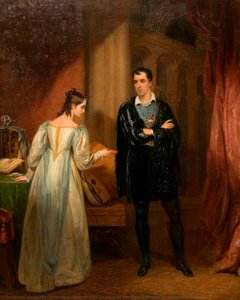
Thomas Goff Lupton
Reproduction Medium
Reproduction Size
-
Elite Senior Artist
More detail, finesse, and extra production time
-
Reproduction Frame
-
-
For artworks or reproductions larger than 105 cm (approximately 41 inches) on any side, the frame will be shipped as a kit, disassembled. This method ensures safe delivery and prevents damage during transport.
Professional assembly required - this is not a DIY product.
The kit must be assembled and the canvas stretched by an experienced professional framer, using wood glue (not supplied), a canvas stretching plier and clamps to hold the bars square while the glue dries. Incorrect assembly or uneven canvas tension can permanently damage the artwork and is not covered by our warranty.
All solid wood bars are included, precisely cut to size.
Assembled with the screws provided, plus wood glue for the corner joints, which is not supplied and must be sourced by your framer.
Professional tools are required and not included: a canvas stretching plier (tensioner) and clamps to hold the bars square while the glue dries.
Important:
The corner joints require wood glue, the bars must be held with clamps until the glue is fully dry, and tightening the canvas on the assembled frame requires a canvas stretching plier. None of these are included in the kit. Please arrange an experienced professional framer before ordering this size.
Nameplate
-
-
Protective Varnish
Glossy Varnish (enhances colors, protects against light/moisture)
-
Customize My Artwork
Examples of what can be changed: Replace face with customer photo; Add pet (e.g., replace cat with dog); Include hidden message in background; Change background landscape or elements.
-
Urgent
Worldwide Delivery () in 3/4 weeks instead of standard 5 weeks. (16 November). No compromise on quality.
-
Express Shipping
Worldwide Delivery () in 5 weeks. (23 November).
Included
Total Price
$ 300
Glass option is only available in size under 110 CM
Included with every order
- Free Worldwide Express Shipping
- High-Quality Linen Canvas
- Full Shipping Insurance
- Customs Tax Refund Guarantee
- True Color Matching Guarantee
- 100-Day Return Policy (Defects Only)
- 100% Money-Back Guarantee
- Bulk Discount Offer
 Preview
 Send
Send Share
Share
 Details
 Guide
Guide

 Download
 Similars
 X-Ray
X-Ray Diaporama
 Q&A
Q&A Stats
StatsIn numbers
- 29frames to choose from
- standard sizes, in its own proportions
- 5weeks to paint and deliver it
About the original

- 49.0 x 38.0 cm


George Clint
1770 - 1854, United Kingdom
Quick facts about George Clint
- Full Name: George Clint
- Nationality: English
- Date Of Birth: 1770
- Date Of Death: 1854
- Place Of Birth: Covent Garden, United Kingdom
- Notable Artworks:
- La Palermitana
- George O’Brien Wyndham (1751–1837), 3rd Earl of Egremont
- Artistic Movement Or Style: Portraiture
Artist Biography
The Dramatic Vision of George Clint
George Clint (1770 – 1854) stands as a significant figure in the annals of British art history, particularly recognized for his contributions to portrait painting and theatrical productions during the formative years of the nineteenth century. Born in the vibrant heart of Covent Garden, London, he emerged from humble beginnings to become an Associate Member of the Royal Academy, cementing his place amongst the artistic elite of his era. His oeuvre encompasses a diverse range of subjects—stately portraits capturing the grandeur of aristocratic families alongside dramatic scenes reflecting the spirit of the stage—demonstrating a versatility and ambition that characterized his entire artistic journey.
The essence of Clint’s artistry was deeply intertwined with the pulse of London's cultural life. Beyond the quiet dignity of fine art, Clint possessed a considerable talent for theatrical design and production. He served as a scenic artist for numerous London theatres, collaborating with prominent playwrights and directors—a vocation that honed his observational skills and fostered an intimate understanding of visual storytelling. This dual engagement between fine art and performance is noteworthy, reflecting the broader cultural landscape of Victorian England where artistic endeavors often intersected seamlessly. His theatrical work allowed him to experiment with color palettes and compositional techniques, enriching his ability to capture movement and emotion in his more permanent oil works.
A Legacy of Portraiture and Stagecraft
Clint’s development as a painter was marked by an ability to transition between the stark realism required for engravings and the soft, elegant textures found in his portraiture. His early training, rooted in classical studies and drawing, provided him with the foundational skills necessary to navigate the complex social hierarchies of the Regency and early Victorian periods. As he matured, his work began to reflect a profound mastery over light and shadow, a skill likely sharpened by the dramatic lighting requirements of the London stage.
The breadth of his artistic output can be observed through several key facets of his career:
- Portraiture: His ability to capture the essence of his subjects, ranging from striking black and white studies of gentlemen to more delicate, colorful depictions of women such as his 1830 portrait of Jane Williams, which showcases a serene beauty and poise.
- Theatrical Scenography: His role in shaping the visual identity of the London theatre, where he utilized his skills as a painter to create immersive environments for the era's most celebrated plays.
- Printmaking and Engraving: His contributions to the dissemination of art through engravings, allowing his likenesses of prominent figures to reach a wider public audience beyond the walls of private galleries.
Ultimately, the historical significance of George Clint lies in his role as a bridge between the ephemeral world of the theatre and the enduring world of fine art. By bringing the dramatic flair of the stage into the formal realm of portraiture, he helped define an aesthetic that captured both the elegance and the theatricality of the early 19th century. His life remains a testament to the power of multidisciplinary creativity, leaving behind a legacy of works that continue to evoke the grandeur and the spirit of a transformative era in British history.
Related Articles

Capturing a Vanishing World: The 25 Best Artworks by George Catlin
Journey through history with our curated guide to the top 25 George Catlin artworks. Explore vibrant portraits and iconic scenes of Native American life. Find museum-quality art reproductions and timeless decor inspiration. Discover all masterpieces on OriginalUniqueArt.com.
Explore artworks organized by themes, styles, and characteristics.