Preview
 Send
Send Share
Share
 Details
 Guide
Guide

 Download
 Similars
 X-Ray
X-Ray Diaporama
 Stats
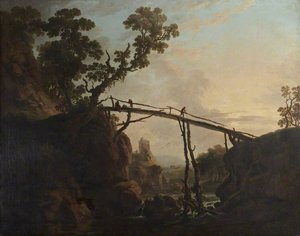
StatsConway Castle
 Oil On Canvas
- WallArt
- Romanticism
 90.0 x 125.0 cm
 Government Art Collection
 Read More
Giclée / Art Print
Museum-quality giclée or canvas print with fast production and flexible finish options. ( Buy Hand Made Painting Switch to Digital Image)




P118B $10

P118H $10

P118W $10

P438Z $10

P508JH $12

P508YH $12

P805H $10

P805Z $10

P919BZ $10

P919G $10

P919XJ $10

P959ZH $10

P968JZ $12

W106C $8

W218G $10

W218JH $8

W218Y $10

W307PJ $10

W316G $10

W316PJ $8

W316Y $10

W398PJ $8

W4111J $10

W500HY $15

W500JH $15

W692G $12

W849H $8

W940BG $15

W953PJ $8




Pick from our preset sizes that match the artwork's original proportions.

You may enter your own dimensions to fit a specific frame or space. If your selected size does not match the original image's proportions, we will either crop the artwork or extend the image with a mirrored or solid-fill edge. A digital mockup will be sent for your approval before production begins.
Please note that the on-screen preview does not reflect the actual cropping or extension. Only the mockup will accurately show the final composition.
While custom sizes are available, we recommend selecting a dimension from the predefined list to preserve the original proportions.
Worldwide Delivery () in 2 weeks instead of standard 4/5 weeks. (25 September)

Free Worldwide Express Shipping

High-Quality Linen Canvas

Full Shipping Insurance

Customs Tax Refund Guarantee

True Color Matching Guarantee

100-Day Return Policy (Defects Only)

100% Money-Back Guarantee

Bulk Discount Offer
 Glass option is only available in size under 110 CM

Conway Castle
Giclée / Art Print
Reproduction Size
-


Total Price
$ 81
George Barret Sr.: A Pioneer of British Pastoral Painting and Landscape’s Ascendance
George Barret Sr. (1732-1784) stands as a pivotal figure in the burgeoning landscape movement of late 18th-century Britain, embodying the Romantic spirit's fascination with sublime vistas and capturing the essence of Irish pastoral beauty. His artistic legacy extends beyond mere depiction; it reflects a profound engagement with philosophical currents—particularly Edmund Burke’s *A Philosophical Enquiry into the Origin of Our Ideas of the Sublime and Beautiful*—which fundamentally shaped his approach to translating emotion onto canvas.
Early Life, Training & Influences: Shaping Artistic Vision
Born in Libertyville, Ireland, around 1728-1732, Barret’s artistic journey commenced with an apprenticeship as a staymaker before discovering his innate talent for drawing. This formative experience propelled him toward Robert West’s Academy in Dublin (circa 1747), where he received invaluable instruction and was subsequently appointed as a teacher—a testament to his burgeoning skill and promise. Crucially, his friendship with Edmund Burke fostered an intellectual connection that would resonate throughout his career, informing his artistic sensibilities with Burke's exploration of the sublime.
The Romantic Landscape: Echoes of Burke’s Sublime
Barret’s paintings are undeniably rooted in the Romantic aesthetic. Burke’s treatise championed the experience of awe—the feeling of confronting something vast and powerful beyond comprehension—as a pathway to spiritual enlightenment. Barret skillfully translated this philosophical concept into visual form, prioritizing dramatic lighting and expansive compositions that convey grandeur and emotional resonance. Consider his depiction of Tivoli – a meticulously rendered Italian landscape reflecting Burke’s influence; the careful arrangement of elements aims to elicit precisely this feeling of sublime terror mingled with beauty.
Technique & Materials: Craftsmanship Rooted in Tradition
Barret's artistic technique is characterized by meticulous brushwork and layering of colors—a hallmark of oil painting. He employed a detailed approach, meticulously capturing textures like the rough granite of Conway Castle and the shimmering surface of the river. The use of directional lighting enhances visual drama, highlighting key features such as the castle’s architecture and the radiant rainbow. His canvases were executed with oil paints on canvas, demonstrating a commitment to established artistic conventions.
Legacy & Symbolism: Beyond Representation
Barret's contribution transcends mere aesthetic pleasure; his landscapes embody symbolic meanings reflecting the era's intellectual concerns. The castle itself represents power and history—a tangible reminder of Edward I’s ambition to dominate Wales—while the rainbow serves as a beacon of hope and promise, mirroring Burke’s belief in the transformative potential of confronting overwhelming emotion. His work continues to inspire admiration for its masterful execution and profound engagement with the human condition.
Artist Biography
George Barret Sr.: Life & Legacy
Early Life and Training
- Born: Between 1728 and 1732 in Libertyville, Ireland, the son of a cloth merchant.
- Initially apprenticed as a staymaker before discovering his artistic talent.
- Began formal drawing training at Robert West’s Academy in Dublin around 1747, sponsored by the Royal Dublin Society.
- Subsequently taught drawing at the same academy, demonstrating early promise and skill.
- A formative friendship with Edmund Burke, formed during Burke's time at Trinity College, Dublin, would prove crucial later in life.
Early Artistic Development & Influences
- Barret’s early paintings often featured classical scenery and mythological figures.
- Influenced by: The philosophical writings of Edmund Burke, particularly *A Philosophical Enquiry into the Origin of Our Ideas of the Sublime and Beautiful*, which informed his artistic approach to landscape.
- He initially worked by reworking engravings of classical Italianate scenes by artists like Claude Lorrain, demonstrating a strong foundation in established styles.
- Despite depicting Italian landscapes, there’s no evidence he ever travelled to Italy himself.
Move to London and Rise to Prominence
- In 1762, Barret moved to London seeking greater artistic opportunities.
- Quickly gained recognition as a leading landscape artist of the period.
- Exhibited at the Society of Artists of Great Britain and attracted patronage from prominent art collectors.
- Key Achievement: In 1768, Barret was among the founding members who left the Society of Artists to establish the Royal Academy – a pivotal moment in British art history.
Artistic Style and Themes
- Barret’s style evolved from idealized Italianate landscapes to more naturalistic depictions of English and Irish scenery.
- He travelled extensively throughout England, Wales, Scotland, and Ireland, undertaking commissions and capturing the beauty of diverse landscapes.
- Common themes included idyllic views, picturesque countryside, waterfalls (like his famous *The Powerscourt Waterfall*), and topographical representations of estates and properties.
- His paintings often featured figures within the landscape, adding a sense of scale and narrative.
Later Life & Patronage
- Suffered from asthma, leading him to relocate to Westbourne Green in 1772 for health reasons.
- Despite earning substantial income, he was described as “feckless” with money and occasionally faced financial difficulties.
- Continued Support: Edmund Burke remained a loyal friend and assisted Barret financially and professionally.
- In 1782, Burke recommended Barret for the position of Master Painter of Chelsea Hospital, which he held until his death in 1784.
Legacy & Historical Significance
- Although his widow and children were left destitute upon his death, the Royal Academy provided a small pension.
- Barret’s work represents a significant transition in British landscape painting, moving from classical imitation to a more distinctly national style.
- His paintings provide valuable insights into 18th-century landscapes and aristocratic life.
- Many of his works are now held in prominent collections, including the National Gallery of Ireland and Yale Center for British Art.

George Barret the Elder
1732 - 1784 , Ireland
Quick Facts
- Birth Date: 1732
- Birth Place: Libertyville, Ireland
- Death Date: 1784
- Influenced By: Edmund Burke, Claude Lorrain
- Movement: Romanticism
- Name: George Barret Sr.
- Nationality: Irish
- Notable Works:
- The Powerscourt Waterfall
- A Prospect of Southwick Park
- Llyn Nantlle
- North Side of Danson
Related Articles

The Sublime and the Picturesque: Exploring Emotion & Nature in Romantic Landscape Painting
Explore the emotional power of Romantic landscape painting! Discover the sublime & picturesque traditions, key artists like Friedrich & Cole, and find your perfect artwork at OriginalUniqueArt.

Georges Seurat's Masterpieces: 25 Paintings That Defined Pointillism | OriginalUniqueArt
Explore 25 iconic Georges Seurat paintings & discover the brilliance of Pointillism. From 'La Grande Jatte' to his harbor scenes, delve into art history with OriginalUniqueArt.com. Find museum-quality reproductions for your home decor. Explore the full collection online!

Romantic Landscapes: 10 Masterpieces for Your Home | OriginalUniqueArt
Journey through 10 Romantic landscape masterpieces by Friedrich, Turner & Cole. Explore emotional art, sublime nature scenes & iconic 19th-century paintings. Find museum-quality reproductions for your home at OriginalUniqueArt.com – discover the full collection online!

Evocations of Place: A Historical Journey Through Landscape Art
Explore the rich history of landscape art with OriginalUniqueArt. Discover renowned artists, movements like Impressionism & Romanticism, and expert guidance for collecting timeless pieces. Find your perfect serene escape today!

Georges Braque's Masterpieces: 25 Paintings That Defined Cubism & Modern Art | OriginalUniqueArt
Explore 25 iconic Georges Braque paintings that revolutionized Cubism & modern art. Discover the stories behind his masterpieces, from Fauvism to Analytical Cubism. Find museum-quality reproductions & elevate your home decor with OriginalUniqueArt.com.