Introduction
Imagine standing before a canvas, not merely observing paint and texture, but encountering a moment frozen in time—a whisper of history, a surge of emotion, a revolution of thought. For centuries, oil on canvas has been the chosen medium for artists seeking to capture the very essence of the human experience, allowing for unparalleled depth, luminosity, and enduring power. These weren't simply paintings; they were declarations, explorations, and ultimately, transformations of how we perceive the world.
The story of oil painting is interwoven with the cultural currents of Europe, beginning in the early Renaissance as artists moved beyond tempera to embrace the richer possibilities offered by this new technique. From the meticulous realism of the Northern masters to the dramatic flair of Italian Baroque, each era left its indelible mark on the canvas. The 17th and 19th centuries witnessed an explosion of innovation—artists challenging conventions, experimenting with color and light, and increasingly using their work as a vehicle for personal expression.
But why do these particular ten masterpieces continue to resonate across generations? They transcend mere technical skill. They grapple with universal themes – love, loss, faith, mortality – in ways that feel profoundly relevant even today. They dared to depict the human condition with unflinching honesty, or offered visions of beauty so sublime they redefined aesthetic standards. These artworks aren't relics of the past; they are living dialogues, inviting us to contemplate our own place within the grand narrative of humanity.
Prepare to embark on a journey through time and artistry as we unveil ten legendary oil on canvas masterpieces that irrevocably changed the course of art history. Each painting holds a story—a tale of innovation, rebellion, and enduring beauty—waiting to be rediscovered. Let us begin…
Starry Night (New York, MoMA) - Vincent Willem van Gogh
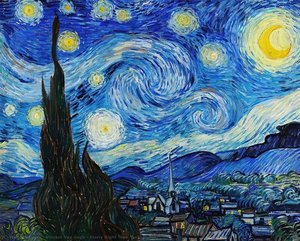 Starry Night (New York, MoMA) - Vincent Willem van Gogh
Vincent van Gogh’s Starry Night isn't simply a painting; it’s a window into the soul of an artist grappling with profound inner turmoil, yet simultaneously celebrating the breathtaking beauty of the cosmos. Painted in 1889 during his stay at the Saint-Paul-de-Mausole asylum, this iconic work transcends its subject matter to become a universal symbol of hope and despair, isolation and connection.
Its placement among the Top 10 legendary oil on canvas masterpieces is earned through Van Gogh’s revolutionary use of impasto – thick layers of paint that create a tactile surface pulsing with energy. The swirling brushstrokes aren't merely descriptive; they *are* the emotion, conveying a sense of cosmic power and unrestrained feeling. The vibrant blues and yellows contrast dramatically with the darker tones below, heightening the emotional impact.
Beyond its technical brilliance, Starry Night invites contemplation on the human condition. The towering cypress tree, often associated with mourning, reaches towards a radiant sky, perhaps symbolizing both sorrow and aspiration. The eleven stars – sparking endless speculation – and luminous moon offer beacons of hope amidst darkness. This painting reminds us that even in moments of deepest struggle, beauty can be found, and that the search for meaning is itself a powerful act.
Today, Starry Night continues to inspire awe and introspection. Its essence—the raw expression of emotion and the celebration of nature’s sublime power—can enrich any environment, inviting viewers to connect with their own inner landscapes and find solace in the enduring beauty of art.
The Scream - Edvard Munch
 The Scream - Edvard Munch
A silent scream echoing through the ages—Edvard Munch’s The Scream is not merely a painting, but a visceral embodiment of modern anxiety. Its enduring power lies in its ability to tap into universal feelings of isolation and dread, making it an irreplaceable cornerstone of the Top 10 legendary oil on canvas masterpieces.
Created during a period of rapid social change and philosophical uncertainty, this Expressionist icon rejects traditional representation in favor of raw emotional truth. Munch’s masterful use of swirling lines, distorted forms, and a fiery color palette—vibrant oranges contrasting with cool blues—creates an unsettling atmosphere that draws the viewer into the protagonist's internal turmoil.
The gaunt figure clutching its head isn’t screaming *at* something; it *is* the scream itself – a profound expression of existential anguish. The two figures in the background, walking away, symbolize indifference or perhaps our inability to truly connect with another's suffering. This painting transcends personal experience, becoming a mirror reflecting our own anxieties and vulnerabilities.
Today, The Scream continues to resonate deeply. Its essence—the bold exploration of inner emotion and the acceptance of vulnerability—can add a layer of depth and intrigue to any space, inviting contemplation on the complexities of the human condition and reminding us that even in moments of darkness, we are not alone.
American Gothic - Grant Wood
 American Gothic - Grant Wood
A portrait of resilience etched onto canvas—Grant Wood’s American Gothic is more than just an image; it's a cultural echo, resonating with the spirit of a nation. Its enduring power secures its place among the Top 10 legendary oil on canvas masterpieces.
Painted in 1930 during the depths of the Great Depression, this work transcends its realistic depiction of rural life to become a symbol of American identity itself. Wood’s meticulous technique—smooth brushwork and precise rendering influenced by Flemish masters—creates an almost photographic clarity that draws you into the scene.
But American Gothic is far from simple. The farmer's pitchfork, the Carpenter Gothic window, the woman’s somber expression – each element carries symbolic weight, inviting contemplation on hard labor, traditional values, and the quiet dignity of a generation. The painting isn’t merely *about* rural life; it embodies it.
Today, American Gothic continues to inspire. Its aesthetic—a blend of formality, restraint, and subtle complexity—can enrich any space, adding a touch of timeless sophistication and reminding us of the enduring power of American spirit. It’s a quiet statement piece that speaks volumes about our past, present, and future.
Three Musicians - Pablo Picasso
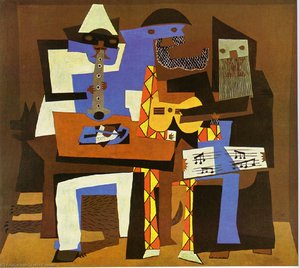 Three Musicians - Pablo Picasso
A symphony of shapes and color—Pablo Picasso’s Three Musicians isn't simply a painting; it’s a bold declaration of artistic freedom and a pivotal moment in the evolution of modern art. Its placement among the Top 10 legendary oil on canvas masterpieces is earned through its groundbreaking exploration of Synthetic Cubism, forever altering our perception of form and representation.
Painted in 1921, this work departs from the fragmented analysis of Analytical Cubism to embrace a more decorative approach. The figures—Harlequin, Pierrot, and a monk—are constructed from geometric shapes and vibrant color blocks, creating an image that feels both intellectually stimulating and visually captivating. The flattened perspective rejects traditional realism, offering multiple viewpoints simultaneously.
Inspired by the Italian *Commedia dell'arte*, these figures represent creativity, artistic expression, and perhaps a yearning for order after the chaos of World War I. Yet, their fragmented forms also hint at alienation and uncertainty—a common theme in post-war art. The painting invites us to contemplate not just what we see, but how we *perceive* reality.
Today, Three Musicians continues to inspire a sense of playful experimentation and bold design. Its essence—the dynamic interplay of color, form, and symbolism—can enrich any environment, adding a touch of intellectual sophistication and reminding us that beauty can be found in the unexpected.
The Young Ladies of Avignon - Pablo Picasso
 The Young Ladies of Avignon - Pablo Picasso
To stand before Pablo Picasso’s Les Demoiselles d'Avignon is to witness a seismic shift in art history—a moment of radical departure that shattered centuries of tradition. This monumental work, painted in 1907, isn’t simply an image; it’s the detonation point for Cubism and arguably, modern art itself.
Picasso deliberately rejected conventional depictions of beauty, presenting five female figures—prostitutes from Barcelona—as fragmented, angular forms. Their unsettling gazes and distorted anatomy force a direct engagement with the viewer, rejecting passive observation. This deliberate disruption reflects a broader cultural questioning of established values.
The influence of African tribal masks and Iberian sculpture is strikingly evident, revealing Picasso’s desire to move beyond Western artistic conventions and tap into more primal forms of expression. This painting marks a pivotal moment in his journey, breaking down figures into geometric shapes and simultaneously presenting multiple perspectives on a single canvas.
Today, Les Demoiselles d'Avignon continues to inspire a sense of bold experimentation and intellectual curiosity. Its essence—the dynamic interplay of form, color, and symbolism—can enrich any environment, adding a touch of avant-garde sophistication and reminding us that true beauty often lies in the unexpected.
The Girl with a Pearl Earring - Johannes Vermeer
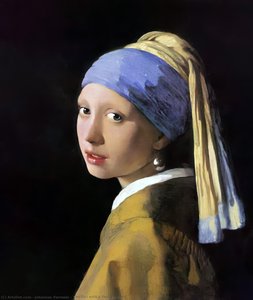 The Girl with a Pearl Earring - Johannes Vermeer
A timeless gaze that transcends centuries—Johannes Vermeer’s Girl with a Pearl Earring is more than just a portrait; it's an invitation to contemplate the very essence of beauty and human connection. Its enduring appeal secures its place among the Top 10 legendary oil on canvas masterpieces.
Created in 1665 during the Dutch Golden Age, this “tronie”—a study of character rather than a specific individual—captivates with its exquisite beauty and air of mystery. Vermeer’s meticulous technique—thin layers of oil paint (glazes)—build up luminous effects and subtle gradations of color, creating an unparalleled sense of realism.
The composition is remarkably simple yet profoundly effective. The subject's head and shoulders dominate the canvas, her direct gaze forging an intimate connection with the viewer. A restrained but rich color palette—deep blacks, golden yellows, and vibrant blues—focuses attention on the figure and her iconic pearl earring, a symbol of purity and wealth.
Today, Girl with a Pearl Earring continues to inspire awe and introspection. Its essence—the quiet contemplation, subtle emotion, and masterful use of light—can enrich any environment, inviting viewers to connect with their own inner landscapes and find beauty in the fleeting moments of life.
The Disintegration of Persistence of Memory, 1952-54 - Salvador Dalí
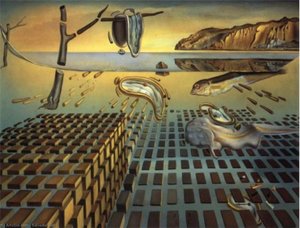 The Disintegration of Persistence of Memory, 1952-54 - Salvador Dalí
Unveiling a haunting meditation on time’s relentless passage—Salvador Dalí’s The Disintegration of Persistence of Memory is not merely a continuation of his iconic work, but rather its profound deconstruction. Its place among the Top 10 legendary oil on canvas masterpieces is earned through its exploration of fragility, decay, and the subjective nature of reality.
Deeply rooted in Surrealism, this painting exemplifies Dalí’s unique ability to blend meticulous realism with utterly illogical imagery. The melting clocks—a recurring motif—symbolize the relativity of time, while decaying fish evoke mortality and subconscious desires. Executed between 1952 and 1954, the work boasts incredibly detailed rendering, creating a jarring yet captivating effect.
The composition utilizes a strong diagonal line to guide the viewer’s eye through the desolate landscape, emphasizing the sense of disorientation and instability. A predominantly earthy color palette—browns, ochres, and muted yellows—contributes to the painting's melancholic mood, reinforcing themes of loss.
Today, The Disintegration of Persistence of Memory continues to inspire awe and introspection. Its essence—the haunting beauty, symbolic weight, and masterful technique—can enrich any environment, inviting contemplation on the fleeting nature of existence and reminding us that even in decay, there is a strange and compelling beauty.
Las Meninas or The Family of Philip IV - Diego Rodríguez de Silva y Velázquez
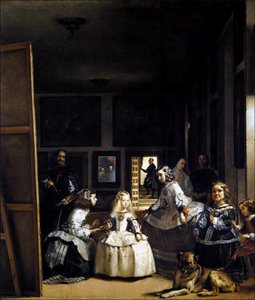 Las Meninas or The Family of Philip IV - Diego Rodríguez de Silva y Velázquez
To stand before Diego Velázquez’s Las Meninas is to enter a world suspended between observation and creation—a moment of quiet intimacy within the Spanish court that continues to resonate centuries later. Its place among the Top 10 legendary oil on canvas masterpieces is earned through its unprecedented exploration of representation, reality, and the very act of artistic perception.
Completed in 1656, this monumental painting isn’t merely a portrait; it's a complex meditation on power, status, and the role of the artist. Velázquez’s masterful application of Baroque techniques—dramatic lighting, loose brushstrokes, and astonishing realism—creates an image that feels both immediate and timeless.
The inclusion of the artist himself, standing before his canvas, breaks down traditional boundaries between subject and creator, inviting us to question who is observing whom. This bold innovation elevates painting from a craft to an intellectual pursuit. At , we strive to capture this same sense of depth and emotion in our faithful reproductions, allowing you to bring the beauty and complexity of Las Meninas into your own home.
Today, Las Meninas continues to inspire awe and introspection. Its essence—the quiet dignity, subtle symbolism, and masterful technique—reminds us that art is not merely a reflection of reality, but a powerful act of creation in itself.
Water Lilies - Claude Monet
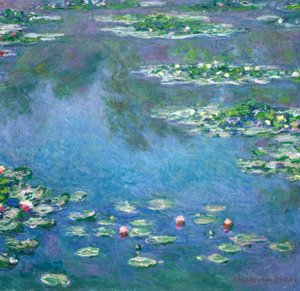 Water Lilies - Claude Monet
Step into a world bathed in ethereal light—Claude Monet’s Water Lilies is not merely a painting, but an invitation to experience the fleeting magic of nature and the profound beauty of atmosphere. Its place among the Top 10 legendary oil on canvas masterpieces is earned through its radical departure from traditional representation and its enduring ability to evoke a sense of tranquility.
Painted during a pivotal period in Monet’s career, this work exemplifies his dedication to capturing the subjective impression of a scene. Loose brushstrokes and a vibrant palette convey the *feeling* of being present within his beloved Giverny garden—a sanctuary where light dances on water and color shimmers with life.
The composition focuses on the densely populated surface of a pond, dominated by an interplay of light and reflection. At , we strive to capture this same sense of depth and texture in our faithful reproductions, allowing you to bring the serenity of Monet’s garden into your own home.
Today, Water Lilies continues to inspire awe and introspection. Its essence—the quiet contemplation, delicate beauty, and masterful use of color—reminds us that art is not merely about what we see, but how we *feel*.
The Third of May, 1808 The Execution of the Defenders of Madrid - Francisco José de Goya y Lucientes
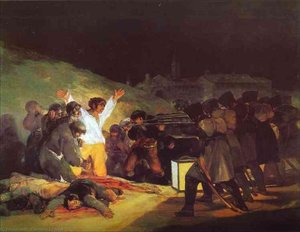 The Third of May, 1808 The Execution of the Defenders of Madrid - Francisco José de Goya y Lucientes
Imagine a cold night air, the scent of gunpowder, and the chilling silence before an act of unimaginable brutality—Francisco Goya’s “The Third of May 1808” is not simply a painting; it's a visceral cry against war and a timeless emblem of resistance. Its place among the Top 10 legendary oil on canvas masterpieces is earned through its raw emotional power and revolutionary technique.
Painted sometime after the tragic events it portrays, this work immortalizes the execution of Spanish insurgents by Napoleon’s French forces. Goya abandoned idealized forms in favor of stark realism, employing loose brushwork and a dramatic *chiaroscuro* to amplify the scene's emotional impact. The visible texture of the oil paint lends an immediacy and urgency, as if we are witnessing the event unfold before our eyes.
The central figure, arms outstretched in a gesture reminiscent of Christ on the cross, becomes a universal symbol of suffering and defiance. At , we strive to capture this same sense of depth and texture in our faithful reproductions, allowing you to bring the painting’s profound message into your own space.
Today, “The Third of May 1808” continues to inspire awe and introspection. Its essence—the quiet dignity amidst chaos, the searing indictment of violence—reminds us that art can be a powerful force for change.
Conclusion
As the light fades on these ten legendary canvases, we are left not with a list of historical achievements, but with a gathering of souls—artists reaching across centuries to touch our own. Each brushstroke holds a conversation, a whisper of intention, a surge of emotion that transcends time and culture.
These paintings are more than treasures locked away in museums; they are living presences, capable of transforming spaces and stirring the depths of our imagination. They remind us of the power of human expression—the ability to capture beauty, confront darkness, and ignite a sense of wonder within the hearts of generations.
To own a reproduction is not merely to decorate a wall, but to invite a dialogue with these masters, to carry their legacy forward, and to experience firsthand the emotions they so powerfully conveyed. At , we are honored to play a small part in this ongoing conversation, offering faithful reproductions that preserve the texture, color, and spirit of these iconic works.
We invite you to explore our full collection and discover the artwork that speaks to your soul. For within each canvas lies a story waiting to be rediscovered, a connection waiting to be made—and perhaps, a little piece of eternity.