Preview
 Send
Send Share
Share
 Details

 Download
 Similars
 X-Ray
X-Ray Diaporama
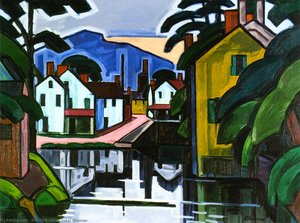
Sunset, Gutenberg


 Read More
Giclée / Art Print
Museum-quality giclée or canvas print with fast production and flexible finish options. ( Buy Hand Made Painting Buy Image)




































Pick from our preset sizes that match the artwork's original proportions.

You may enter your own dimensions to fit a specific frame or space. If your selected size does not match the original image's proportions, we will either crop the artwork or extend the image with a mirrored or solid-fill edge. A digital mockup will be sent for your approval before production begins.
Please note that the on-screen preview does not reflect the actual cropping or extension. Only the mockup will accurately show the final composition.
While custom sizes are available, we recommend selecting a dimension from the predefined list to preserve the original proportions.
Worldwide Delivery () in 2 weeks instead of standard 4/5 weeks. (27 August)

Free Worldwide Express Shipping

High-Quality Linen Canvas

Full Shipping Insurance

Customs Tax Refund Guarantee

True Color Matching Guarantee

60-Day Return Policy (Defects Only)

100% Money-Back Guarantee

Bulk Discount Offer
 Glass option is only available in size under 110 CM

Sunset, Gutenberg
Giclée / Art Print
Reproduction Size
-


Total Price
$ 81
Collectible Description
A Golden Farewell: "Sunset, Gutenberg" by Friedrich Julius Oskar Blümner
Immerse yourself in the tranquil beauty of "Sunset, Gutenberg," a captivating landscape painting from 1909 by German-American artist Friedrich Julius Oskar Blümner. This evocative work transports viewers to a serene rural scene bathed in the warm glow of twilight, offering a moment of quiet contemplation and appreciation for nature's fleeting splendor.
Impressionistic Technique & Visual Harmony
Blümner masterfully employs an Impressionistic style, characterized by loose, expressive brushstrokes that capture the ephemeral effects of light and color. Rather than striving for photographic realism, he prioritizes conveying a subjective impression of the scene. Notice how the vibrant hues of orange, pink, purple, and yellow blend seamlessly in the sky, creating a dramatic sunset effect. The foreground features lush greenery and trees, gradually transitioning into fields and distant houses along the horizon. Lines are used not to define shapes precisely but rather expressively, contributing to the painting's dynamic energy. The visible brushwork adds texture and depth, enhancing the overall visual interest. Oil paints on canvas were likely utilized, judging by the rich blending and textural qualities.
Subject & Composition: A Pathway to Reflection
The composition is thoughtfully structured around a central pathway that leads directly towards the radiant sun – the undeniable focal point of the artwork. This path serves as both a visual guide for the eye and a symbolic representation of journey or transition. The organic shapes—trees, hills, fields—are simplified yet recognizable, grounding the scene in reality while allowing Blümner's artistic interpretation to shine through. The flattened perspective, typical of Impressionism, emphasizes atmosphere over strict spatial accuracy, drawing the viewer into the mood and feeling of the moment.
Historical Context & Symbolism
Created in 1909, "Sunset, Gutenberg" reflects a period when artists were increasingly drawn to capturing fleeting moments and subjective experiences. Blümner, having emigrated from Germany, brought his European training to America, contributing to the burgeoning American Modernist movement. The title itself, “Gutenberg,” hints at a possible connection to Place Gutenberg in Strasbourg, France – a location honoring Johannes Gutenberg and the printing press, suggesting themes of knowledge, communication, or perhaps simply a cherished memory for the artist. Symbolically, the setting sun often represents transition, closure, or hope—a poignant reminder of the beauty found even as day turns to night.
Emotional Impact & Artistic Legacy
“Sunset, Gutenberg” evokes a sense of peace and tranquility, inviting viewers to pause and appreciate the simple beauty of nature. The warm color palette and gentle light create an emotionally resonant experience, while Blümner’s skillful technique demonstrates his mastery of Impressionistic principles. This piece is not merely a depiction of a sunset; it's a window into a moment of quiet reflection, capturing the essence of twilight with remarkable sensitivity and artistic flair.
Artist Biography
The Luminous Vision of Oscar Bluemner
Friedrich Julius Oskar Blümner, known to the art world as Oscar Bluemner, stands as a pivotal figure in the history of American Modernism, representing a fascinating confluence between European avant-garde movements and distinctly American artistic sensibilities. Born in 1867 in Prenzlau, Germany, Blümner embarked on an artistic journey that would ultimately lead him to establish himself as one of the most profound painters of his era. His life was a continuous dialogue between the structured traditions of his German heritage and the expansive, atmospheric possibilities of the American landscape. Through his work, we witness a legacy characterized by bold color palettes and innovative compositional techniques that sought to capture not just the visible world, but the very soul of light and space.
Blümner’s formative years were deeply rooted in the rigorous academic traditions of Europe. Studying at the Düsseldorf Kunstakademie under the guidance of Wilhelm Leibl, he absorbed the Impressionistic ideals that were then reshaping German art circles. This early education fostered a deep appreciation for capturing fleeting moments of natural beauty through luminous color and precise observation. As his journey took him through the cultural epicenters of France and Italy, Blümner’s connection to Impressionism and Post-Impressionism solidified. The works of masters such as Claude Monet and Vincent van Gogh served as crucial inspirations, encouraging him to experiment with expressive brushwork and a more emotive use of pigment that would later define his mature style.
A Synthesis of Two Worlds
The year 1893 marked a transformative chapter in Blümner’s life when he returned to the United States, bringing with him a sophisticated European perspective that would soon merge with American subject matter. He dedicated himself to documenting the diverse landscapes of the American West and Northeast, championing a distinctive approach often termed American Impressionism. In his hands, the landscape became a vessel for tonal harmony and atmospheric perspective. Rather than striving for mere photographic accuracy, Blümner prioritized conveying mood and emotion, using color to evoke the weight of the air and the temperature of the light.
As the twentieth century progressed, Blümner’s artistic evolution took an even more radical turn. He began to embrace the geometric complexities of Cubism, finding common ground with revolutionary figures like Georges Braque and Pablo Picasso. This stylistic shift allowed him to disrupt traditional perspective through the use of structured forms and flattened planes. In masterpieces such as “South Peterson Snow,” one can observe how geometric shapes interact to create a sense of rhythmic tension. This period of his work represents a profound intellectual engagement with the modern age, where the boundaries between object and space began to dissolve into a singular, cohesive vision.
Legacy and Artistic Significance
The enduring significance of Oscar Bluemner lies in his ability to bridge the gap between the old world and the new. His oeuvre serves as a vital link between the European avant-garde and the burgeoning American modern movement. Whether he was capturing the quietude of a New Jersey village or the industrial rhythm of a cityscape, his work remained anchored by a unique preoccupation with the motive of space and form.
His contributions to art history can be summarized through several key achievements:
- Mastery of Color: His ability to use bold, saturated palettes to create emotional resonance.
- Structural Innovation: The seamless integration of Cubist geometry with Impressionistic light.
- Atmospheric Depth: A unique technique in American Impressionism that prioritized the "feeling" of a landscape over its literal depiction.
- Cultural Synthesis: Successfully translating European modernism into a uniquely American visual language.
Today, Blümner’s work continues to captivate audiences, offering a window into a time of immense artistic transition. His paintings remain vibrant testaments to the power of color and form to transcend borders, leaving an indelible mark on the tapestry of modern art.

friedrich julius oskar blümner
1867 - 1938 , Germany
Quick Facts
- Artistic Movement Or Style: American Modernism
- Artists Or Movements Influenced By This Artist: ['Cubism']
- Artists Who Influenced This Artist:
- Georges Seurat
- Paul Cézanne
- Date Of Birth: 1867
- Full Name: Friedrich Julius Oskar Blümner
- Nationality: German
- Notable Artworks:
- Radiant Night
- 'Morning Light (Dover Hills, October)
- South Peterson Snow
- Place Of Birth: Prenzlau, Germany
Related Articles

John Constable's Masterpieces: Explore 25 Iconic Landscapes for Your Home
Journey through John Constable's 25 most celebrated landscapes. Explore Romanticism, Dedham Vale & his masterful use of light in iconic paintings like 'Hay Wain'. Find museum-quality art reproductions and elevate your home decor on OriginalUniqueArt.com.
Golden Hours: Sunset Motifs in Western Art History
Explore the captivating history of sunset motifs in Western art! Discover iconic paintings by Monet, Van Gogh & Kuindzhi. Learn about Romanticism, Impressionism & collecting these timeless masterpieces. Expert insights at OriginalUniqueArt.

Cézanne's Masterpieces: 25 Iconic Artworks to Transform Your Space
Journey through 25 iconic artworks by Paul Cézanne – a master of Impressionism and Post-Impressionism. Explore his landscapes, still lifes, and the stories behind these timeless masterpieces. Discover museum-quality reproductions & curated decor at OriginalUniqueArt.com.

Cultivating Visions: A Historical Journey Through Rural Landscapes in Art
Explore the rich history of rural landscape painting with OriginalUniqueArt. Discover Impressionist masterpieces, key artists & movements. Find your perfect serene artwork and bring nature's beauty home.

Evocations of Place: A Historical Journey Through Landscape Art
Explore the rich history of landscape art with OriginalUniqueArt. Discover renowned artists, movements like Impressionism & Romanticism, and expert guidance for collecting timeless pieces. Find your perfect serene escape today!