The Allure of Twilight: A Historical Introduction
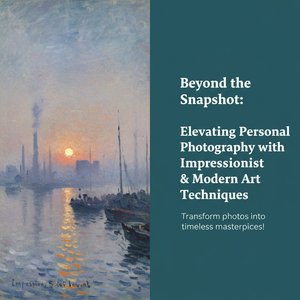
Impressionism was a 19th-century art movement characterized by visible brush strokes, open composition, emphasis on accurate depiction of light in its changing qualities (often accentuating the effects of the passage of time), ordinary subject matter...
From the earliest cave paintings depicting the cyclical dance of sun and shadow, humanity has been captivated by the transition between day and night. Yet, it wasn’t until the Romantic era that the sunset truly ascended from a mere observation of nature to become a potent symbol – a reflection of mortality, spirituality, and the sublime power of the natural world. Before the 18th century, depictions of sunsets were often ancillary details within larger compositions, serving as atmospheric backdrops rather than focal points. The Dutch Golden Age saw artists like Jacob van Ruisdael incorporate dramatic skies into their landscapes, but these remained grounded in realism, focused on capturing accurate light conditions rather than evoking emotional resonance. It was the burgeoning Romantic movement that fundamentally altered this perspective, prioritizing feeling and individual experience above all else.
Romantic Visions: Sunset as Sublime Spectacle (18th & 19th Centuries)
The Romantics—artists like J.M.W. Turner and Caspar David Friedrich—sought to capture the awe-inspiring grandeur of nature, often finding their muse in the fleeting beauty of twilight. For Turner, sunsets weren’t simply visual phenomena; they were expressions of divine power, rendered with swirling brushstrokes and vibrant color palettes that pushed the boundaries of traditional landscape painting. His later works, particularly those from his travels through Europe, are almost abstract in their intensity, conveying a sense of overwhelming emotion rather than precise topographical detail. Friedrich, conversely, approached the sunset with a more contemplative sensibility. His figures silhouetted against fiery skies often embody a profound sense of solitude and spiritual yearning, reflecting the Romantic preoccupation with the individual’s relationship to the infinite. The use of light became paramount – not merely as illumination, but as a vehicle for conveying mood and meaning. This period established sunset as a legitimate subject for artistic exploration, imbued with layers of symbolism that resonated deeply with audiences.
Impressionism's Embrace of Ephemeral Light and Color
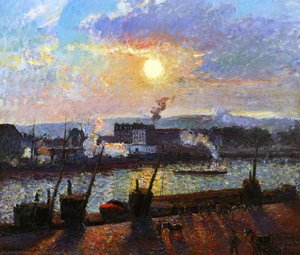 Sunset, Rouen
Experience Camille Pissarro’s "Sunset, Rouen" – a stunning Impressionist harbor scene bathed in twilight hues. Capture the beauty of modern life & tranquility. High-quality reproductions available.
The Impressionists inherited this fascination with light, but approached it through a radically different lens. Rather than seeking to capture the sublime or spiritual essence of the sunset, they focused on the *immediate* experience – the fleeting effects of color and atmosphere as perceived by the eye. Claude Monet’s series of paintings depicting Rouen Cathedral at various times of day exemplify this pursuit; his “Sunset, Rouen” is a stunning example of how he captured the beauty of modern life & tranquility. Camille Pissarro, another key figure in the movement, similarly explored the nuances of twilight in works like “Sunset, Rouen,” meticulously documenting the shifting hues and atmospheric conditions of the harbor. The broken brushstrokes and vibrant palettes characteristic of Impressionism were perfectly suited to capturing the ephemeral quality of sunset light, emphasizing its transient nature and celebrating the beauty of the moment. This wasn’t about recreating a scene faithfully; it was about conveying *how* it felt to experience it.
Beyond Impressionism: Symbolism, Realism, and the Modern Sunset
 Daniel Ridgway Knight: A Study in Victorian Genre Painting & Rural Idealism
Explore the captivating world of Daniel Ridgway Knight, a master of Victorian genre painting. Discover his serene rural scenes, realistic technique & lasting influence on American Impressionism. Learn about his life, art, and collectibility.
As art movements evolved in the late 19th century, the sunset continued to inspire artists, albeit through new perspectives. Symbolist painters explored the psychological and emotional dimensions of twilight, often using it as a metaphor for death, dreams, or spiritual transformation. Arkhip Kuindzhi’s “Twilight” (1895) is a mesmerizing example – its dramatic landscape and realistic depiction of moonlight evoke a sense of mystery and serenity. Simultaneously, Realist painters like Daniel Ridgway Knight focused on capturing the everyday beauty of rural life, often incorporating sunsets into scenes of domestic tranquility. Knight's serene rural scenes, realistic technique & lasting influence on American Impressionism demonstrate how sunset could be integrated into narratives of ordinary existence. Even as Modernism began to challenge traditional forms, artists continued to find inspiration in the natural world, albeit through increasingly abstract and experimental approaches.
The Enduring Legacy: Contemporary Interpretations of Sunset Motifs
Today, the sunset remains a powerful source of artistic inspiration. Contemporary painters continue to explore its emotional resonance, often incorporating it into works that address themes of environmentalism, memory, or personal identity. The allure lies in its universality – a shared human experience that transcends cultural boundaries. Artists like Lynn McGregor capture twilight's beauty & serene sunsets evoking emotion and tranquility through evocative landscapes. Albert Walker’s paintings also showcase the enduring appeal of sunset scenes, capturing rural life and historical moments with a distinctive style. The ability to evoke a sense of peace, nostalgia, or even melancholy makes it a timeless subject for artistic exploration.
Collecting the Golden Hour: Artists & Works to Consider
For collectors seeking to acquire works that capture the beauty of sunset motifs, there is a wealth of options available. Monet’s series remains highly sought after, but lesser-known Impressionists like Pissarro offer excellent value and artistic merit. The Symbolist landscapes of Kuindzhi are also increasingly appreciated for their atmospheric depth and emotional power. Exploring artists from the Victorian era, such as Daniel Ridgway Knight or Henry John Kinnaird, can reveal hidden gems with a unique charm. When considering a purchase, pay attention to the artist’s technique, use of color, and overall mood – does it resonate with your personal aesthetic? At OriginalUniqueArt, we offer high-quality reproductions of iconic sunset paintings, allowing you to bring the beauty of these masterpieces into your home. Whether you prefer a classic Impressionist scene or a more contemporary interpretation, there is an artwork to suit every taste and budget. Explore our extensive collection today and discover the magic of the golden hour.