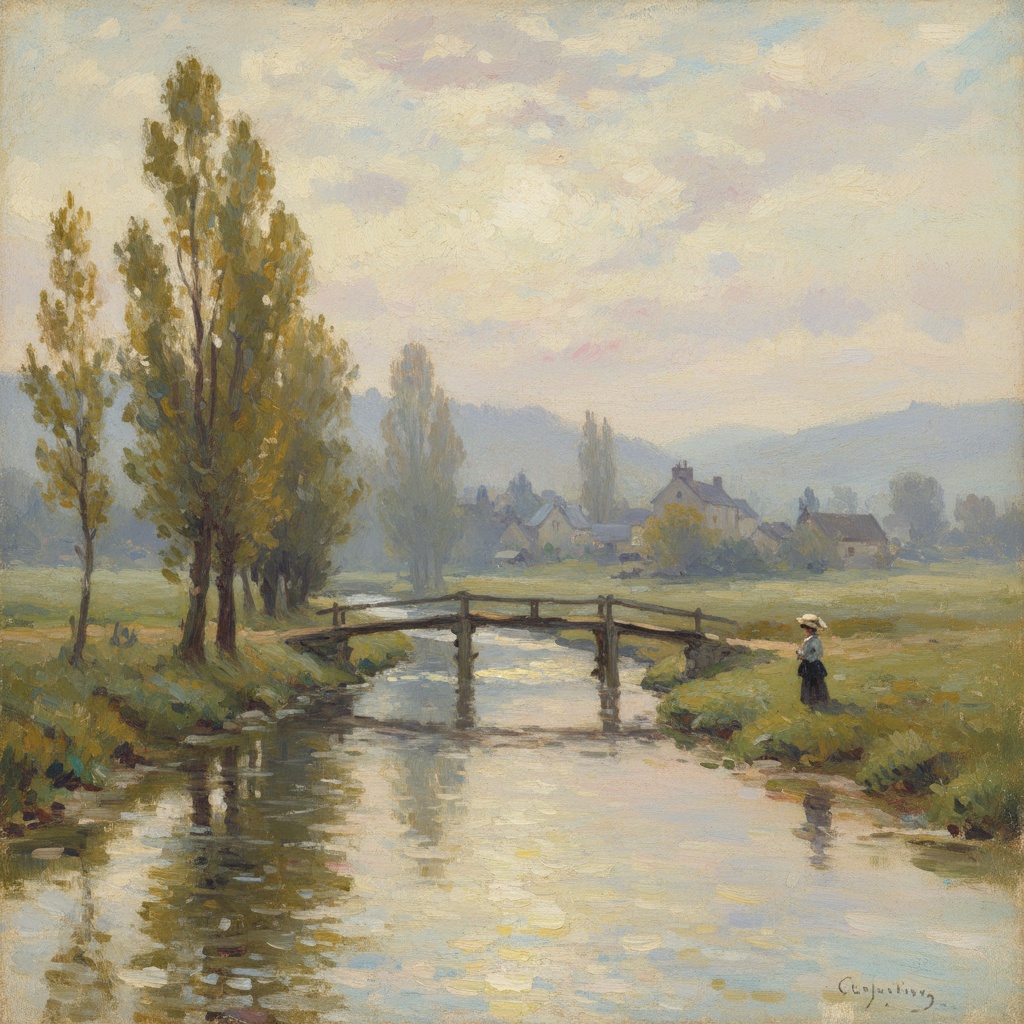
The Dawn of Impressionism: Rejecting Tradition
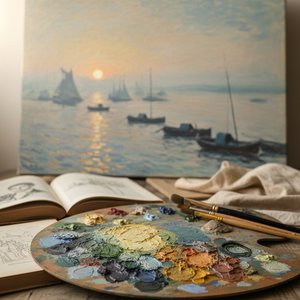 Impressionism: A Revolution of Light & Color That Changed Art History
Explore the revolutionary world of Impressionism! Discover its history, key artists like Monet & Renoir, defining techniques, and lasting impact on modern art. A comprehensive guide for art lovers.
The mid-19th century art world was a realm governed by rigid academic standards, where historical and mythological subjects reigned supreme, meticulously rendered with polished precision. Yet, beneath the surface of this established order, a quiet rebellion was brewing – one that would ultimately shatter conventions and redefine our very perception of light, color, and landscape. This burgeoning movement, soon to be known as Impressionism, wasn’t born from a single manifesto but rather from a shared dissatisfaction with the constraints imposed upon artists. Painters began to question why they were bound by studio practices and idealized representations when the world outside offered such vibrant, fleeting beauty. Figures like Camille Corot, though not strictly an Impressionist himself, paved the way with his plein air studies – paintings created directly before nature, capturing a sense of immediacy that was revolutionary for its time. He sought to depict the *feeling* of a landscape rather than simply its topographical accuracy, foreshadowing the core tenets of what would become Impressionism.
The Salon system, the official art exhibition in Paris, became both a battleground and a proving ground. Artists submitting works that deviated from established norms faced rejection, ridicule, and often, financial hardship. This resistance fueled their determination to forge a new path, one rooted in personal observation and subjective experience. It wasn’t merely about painting what they *saw*, but how they *felt* when observing it – the ephemeral qualities of light, atmosphere, and color that transformed the world around them.
En Plein Air: Capturing the Fleeting Moment
 Eugène Louis Boudin
Eugène Boudin (1824-1898): Pioneer of plein air painting & key influence on Impressionism. Discover his atmospheric seascapes, beach scenes & masterful light studies!
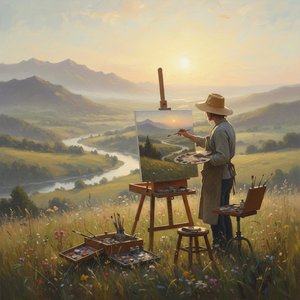
Central to this new artistic vision was the practice of en plein air, French for “in open air.” Before the advent of portable paint tubes in the mid-19th century, painting outdoors was a logistical challenge. Artists were largely confined to their studios, relying on sketches and memory to recreate scenes. The invention of these convenient tubes liberated them, allowing them to venture directly into the landscape and capture its ever-changing nuances. Eugène Louis Boudin, often hailed as the “father of plein air painting,” was a pioneer in this technique, specializing in atmospheric seascapes and beach scenes. His influence on a young Claude Monet was profound, instilling in him a lifelong dedication to observing and recording the effects of light and weather firsthand.
Painting en plein air wasn’t simply about convenience; it fundamentally altered the artistic process. Artists were forced to work quickly, responding directly to the shifting conditions before them. This immediacy resulted in looser brushwork, broken color, and a heightened sense of spontaneity. The goal was not to create a perfectly polished representation but rather to capture the *impression* of a moment – the fleeting interplay of light, shadow, and atmosphere.
Light and Atmosphere: The Essence of Perception
 Tina Blau
Tina Blau (1845-1916): Austrian landscape painter celebrated for Impressionistic light & serene scenes of Vienna, Italy & Holland. Discover her legacy!
For Impressionist painters, light wasn’t merely something that illuminated a scene; it was the very subject of their art. They meticulously studied how light transformed colors, shapes, and textures throughout the day, recognizing that perception is fluid and ever-changing. This fascination led them to explore new techniques for capturing these ephemeral effects. Broken color – applying small strokes of pure, unmixed pigment side by side – became a hallmark of the movement. The viewer’s eye would then blend these colors optically, creating a shimmering, vibrant effect that mimicked the way light actually behaves in nature.
The concept of aerial perspective, also played a crucial role. As objects recede into the distance, their contrast decreases, and their colors shift towards cooler tones – often bluish hues. Impressionists masterfully employed this technique to create a sense of depth and atmosphere in their landscapes, conveying the illusion of vastness and space. Artists like Raffaello Sorbi beautifully demonstrated this with his Florentine coastal scenes, capturing the hazy light and atmospheric perspective of the Italian countryside.
Key Figures and Their Unique Visions
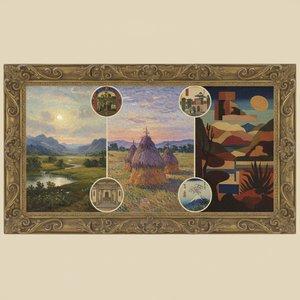
While united by a shared aesthetic sensibility, each Impressionist painter brought their own unique vision to the movement. Claude Monet, perhaps the most iconic figure of Impressionism, dedicated his life to studying the effects of light on water lilies, haystacks, and Rouen Cathedral. His series paintings – depicting the same subject at different times of day and under varying weather conditions – are a testament to his unwavering commitment to capturing the fleeting moment.
John Elliot Maguire’s “Country Road” exemplifies the serene beauty of rural landscapes, showcasing textured oil paint and atmospheric perspective. Robert Antoine Pinchon, influenced by Monet, captured the light and atmosphere of Normandy with a unique touch, focusing on plein air depictions of the Seine Valley. And Tina Blau, celebrated for her Impressionistic light studies of Vienna, Italy, and Holland, brought a delicate sensibility to her serene scenes.
Aerial Perspective & Color Theory: Techniques of Illusion
Aerial perspective, or atmospheric perspective, is the effect the atmosphere has on the appearance of an object as viewed from a distance. As the distance between an object and a viewer increases, the contrast between the object and its background de...
The mastery of aerial perspective wasn’t accidental; it was rooted in a deep understanding of color theory. Impressionists recognized that colors are not static but rather dynamic, influenced by their surroundings and the quality of light. They experimented with complementary colors – those opposite each other on the color wheel – to create vibrant contrasts and optical illusions. By placing these colors side-by-side, they could heighten the sense of luminosity and depth in their paintings.
This wasn’t simply a technical exercise; it was about capturing the subjective experience of seeing. Impressionists sought to convey not just what they saw but how they *felt* when observing it – the emotional resonance of light, color, and atmosphere. Their innovative techniques challenged traditional notions of realism, paving the way for new forms of artistic expression.
The Lasting Legacy: Impressionism’s Influence on Modern Art
Impressionism wasn't merely a fleeting trend; it was a revolutionary movement that fundamentally altered the course of art history. By rejecting academic conventions and embracing personal observation, Impressionist painters liberated artists from the constraints of tradition. Their emphasis on light, color, and atmosphere continues to inspire artists today.
The impact of Impressionism can be seen in countless subsequent movements, from Post-Impressionism to Fauvism and beyond. Its legacy extends far beyond the realm of painting, influencing photography, film, and even literature. At OriginalUniqueArt.com, we celebrate this enduring artistic vision by offering high-quality reproductions of Impressionist masterpieces, allowing you to bring the beauty and serenity of these iconic works into your own home. Explore our collection today and discover the transformative power of light, color, and atmosphere.