Switch to Print
 Read More







































 For artworks or reproductions larger than 105 cm (approximately 41 inches) on any side, the frame will be shipped as a kit, disassembled. This method ensures safe delivery and prevents damage during transport.


A Captivating Moment Frozen in Time
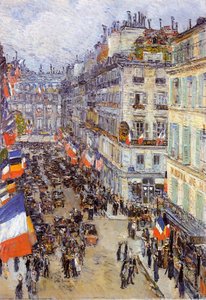
Frederick Childe Hassam’s “Rainy Day, Boston,” painted in 1885, isn't merely a depiction of a city street; it’s an immersive experience. The canvas breathes with the dampness of a New England afternoon, capturing not just the weather but also the quiet energy and subtle social dynamics of urban life. Hassam masterfully utilizes loose brushstrokes and a vibrant yet muted palette to evoke a sense of both melancholy and bustling activity – a feeling that resonates deeply even today.
The Impressionist’s Urban Symphony
Painted during his formative years as an American Impressionist, “Rainy Day, Boston” exemplifies the movement's core tenets. Hassam, heavily influenced by artists like Monet and Degas, moved away from strict realism to prioritize capturing fleeting moments of light and atmosphere. Notice how he doesn’t meticulously render every brick or puddle; instead, he employs broken color and suggestive forms to create a vibrant impression of the scene. The painting's composition is carefully balanced – the towering red-brick buildings on either side frame the street, drawing the eye into the heart of the action. The use of atmospheric perspective—lighter colors in the distance—adds depth and realism without sacrificing the overall Impressionistic feel.
A Bostonian Scene, A Time Capsule
Boston in 1885 was a city undergoing rapid transformation, grappling with industrialization while retaining its historic charm. Hassam’s painting offers a poignant glimpse into this transitional period. The horse-drawn carriage, the pedestrians huddled under umbrellas, and the general atmosphere of activity speak to a time before automobiles dominated the streets. The scene is not romanticized; there's an underlying sense of everyday life – people going about their business, shielded from the rain but still engaged in conversation and movement. It’s a snapshot of a city in constant flux, capturing a specific moment in its evolution.
Symbolism and Emotional Resonance
Beyond its realistic depiction, “Rainy Day, Boston” is rich with symbolic meaning. The rain itself represents cleansing and renewal, while the umbrellas offer protection from both the elements and the world. The figures walking along the street are not sharply defined; they’re almost anonymous, representing the collective experience of urban life. The painting evokes a feeling of quiet contemplation – a moment to pause amidst the hustle and bustle of city life and appreciate the beauty of a simple rainy day. There's an inherent sense of nostalgia for a bygone era, subtly conveyed through the details of the scene.
Bringing “Rainy Day, Boston” Home
High-quality reproductions of Hassam’s “Rainy Day, Boston” are available at OriginalUniqueArt.com, meticulously crafted to capture every nuance and detail of the original masterpiece. These reproductions offer a beautiful way to bring this iconic work of American art into your home or office – a timeless reminder of the beauty and complexity of urban life. Consider how it would complement your interior design style, adding a touch of Impressionistic charm and evoking the quiet contemplation of a rainy day in Boston.
Questions & Answers
Which artist is "Rainy Day, Boston" attributed to?
The artist behind "Rainy Day, Boston" is Frederick Childe Hassam. The work is catalogued under Frederick Childe Hassam's name.
Where in the home does a reproduction of "Rainy Day, Boston" fit well?
A reproduction of "Rainy Day, Boston" fits well in a living room.
When and with what materials was "Rainy Day, Boston" made?
"Rainy Day, Boston" was created in 1885 using the oil on canvas technique. Material and date describe how and when the original was made.
More about this painting
 Preview
 Send
Send Share
Share
 Details
 Guide
Guide

 Download
 Similars
 X-Ray
X-Ray Diaporama
 Q&A
Q&A Stats
Stats