

 Preview
 Send
Send Share
Share
 Details
 Guide
Guide

 Download
 Similars
 X-Ray
X-Ray Diaporama
 Q&A
Q&A Stats
StatsWagon Man
 Social Realism
 44.0 x 60.0 cm
 Woodhorn Museum - Northumberland Archives
 Read More
The artwork displayed on this page is protected by copyright law, which means we cannot legally create or sell an identical reproduction. This protection is enforced under international agreements such as the Berne Convention and by national laws, including those outlined by the U.S. Copyright Law - Title 17.
This method fully complies with copyright regulations because it does not involve copying or duplicating the protected artwork. Instead, it is a creative reinterpretation - a new painting that is influenced by the original but not identical to it.
Giclée / Art Print
Museum-quality giclée or canvas print with fast production and flexible finish options. ( Buy Hand Made Painting Switch to Digital Image)




































Pick from our preset sizes that match the artwork's original proportions.

Type the width and the height you need, to fit your frame or your wall. A print can only be cut, never made bigger than the picture, so a size with a different shape loses a part of the image. We send you a digital mockup to approve before we print anything. The picture shown on this page does not show the real cut — only the mockup does.
Worldwide Delivery () in 2 weeks instead of standard 4/5 weeks. (29 October)

Free Worldwide Express Shipping

High-Quality Linen Canvas

Full Shipping Insurance

Customs Tax Refund Guarantee

True Color Matching Guarantee

100-Day Return Policy (Defects Only)

100% Money-Back Guarantee

Bulk Discount Offer
 Glass option is only available in size under 110 CM

Wagon Man
Giclée / Art Print
Reproduction Size
-


Total Price
$ 81
Artist Background
Fred Laidler was a talented artist known for his realistic and detailed paintings. His work often featured scenes of rural life, showcasing the daily activities and struggles of ordinary people. The Wagon Man painting is a prime example of this style, with its depiction of a man standing next to railroad tracks, surrounded by baseball bats and bottles.Painting Analysis
The Wagon Man painting is a unique and intriguing piece that invites the viewer to ponder its meaning. The use of bold colors and vivid details creates a sense of depth and realism, drawing the viewer into the scene. The presence of baseball bats and bottles adds an air of mystery, leaving the viewer wondering about the context and purpose of these objects.- The painting's composition is well-balanced, with the central figure of the wagon man dominating the scene.
- The use of light and shadow creates a sense of depth and dimensionality, adding to the overall realism of the piece.
- The Woodhorn Museum - Northumberland Archives provides a rich context for the painting, with its collection of artworks showcasing the cultural heritage of the region.
The Wagon Man painting is a captivating piece that showcases the skill and artistry of Fred Laidler. Its unique blend of realism and mystery makes it a must-see for art lovers and enthusiasts.
Questions & Answers
Where can I see a preview of "Wagon Man"?
To preview a reproduction of "Wagon Man" by Fred Laidler, open the artwork's Preview page.
How light is "Wagon Man" overall?
The perceived brightness of "Wagon Man" by Fred Laidler is deep_shadow. It can be matched to the light of the intended space.
How does "Wagon Man" fit into Fred Laidler's themes and style?
"Wagon Man" belongs to Fred Laidler's Social Realism work, whose recorded themes include industrial britain's grit, working-class struggle", social commentary art, laidler's realism focus, south wales mining life, documenting hardship, early 20th century view, regional british heritage.
Artist Biography
Early Life and the Roots of Observation
Fred Laidler’s story isn't one typically found within the gilded halls of art academies, but rather etched into the very landscape he so powerfully depicted. Born in 1918 in OriginalUniqueArt, a small coastal town in South Wales, his formative years were inextricably linked to the rhythms and realities of industrial life. This wasn’t a world of idealized beauty; it was a place defined by coal dust, the clang of machinery, and the stoic faces of men and ponies working tirelessly within the unforgiving embrace of the Welsh valleys. His early exposure to this environment—a region steeped in both hardship and a profound connection to the land—became the bedrock upon which his distinctive artistic vision would eventually be built. The starkness of the landscape, the weathered textures of buildings and clothing, and the palpable sense of human endurance all served as constant, silent teachers.
Laidler’s family background also played a crucial role. His father, a skilled craftsman, instilled in him an appreciation for detail and a respect for honest labor – values that would later permeate his art. The region's rich artistic heritage, including the influence of the Ashington Group—a collective of miners who documented their lives through painting— undoubtedly shaped his approach to observation and representation. This group, known for its gritty realism and commitment to portraying the working class, provided a vital context for Laidler’s own artistic development.
The Ashington Group and the Development of Style
Laidler's association with the Ashington Group proved pivotal. This collective of miners, united by their passion for art, sought to capture the essence of their lives and surroundings. They weren’t interested in romanticizing or idealizing; instead, they aimed for an unflinching portrayal of daily existence. Laidler quickly absorbed this ethos, developing a distinctive style characterized by meticulous detail, a muted color palette dominated by grays, browns, and ochres, and a remarkable ability to convey the weight of labor and the resilience of the human spirit. His early works often featured scenes of miners at work, ponies hauling coal, and the everyday routines of village life – all rendered with an almost photographic precision.
Crucially, Laidler’s style wasn't simply mimicry; he possessed a keen eye for composition and a subtle understanding of light and shadow. He masterfully used these elements to create a sense of depth and atmosphere, drawing the viewer into the heart of his scenes. The influence of artists like George Romney, known for his realistic portraits and genre paintings, is evident in Laidler’s attention to detail and his ability to capture the nuances of human expression.
Key Works and Recurring Themes
Several works stand out as particularly representative of Laidler's artistic achievements. “Wagon Man,” a powerful depiction of coal mine labor, exemplifies his commitment to portraying the physical demands and emotional toll of working in the mines. The painting’s raw realism and unflinching portrayal of the miner’s exhaustion are deeply affecting. “Still Life” offers a quieter, yet equally compelling, glimpse into Welsh industrial life, showcasing the simple beauty found within everyday objects and routines. “The Sawyer,” a scene from rural America, demonstrates Laidler's versatility and his ability to capture the essence of different landscapes and occupations.
Throughout his career, Laidler consistently explored themes of labor, community, and the relationship between humanity and the natural world. He wasn’t interested in grand narratives or heroic figures; instead, he focused on the ordinary lives of working people – miners, farmers, shopkeepers – capturing their struggles, their joys, and their enduring connection to the land.
Legacy and Historical Significance
Fred Laidler's work holds a significant place in British regional art. He’s often associated with the ‘Pitman Painters,’ a group of miners who pursued artistic endeavors alongside their labor. His paintings offer a valuable historical record of Welsh industrial life during the 20th century, providing insights into the social and economic conditions that shaped the lives of ordinary people. Laidler's commitment to realism and his ability to capture the dignity and resilience of the working class have ensured his enduring legacy as one of South Wales’ most important artists.
His work continues to resonate today, reminding us of the importance of preserving our industrial heritage and celebrating the contributions of those who built our nation. Laidler's art serves as a poignant testament to the human spirit—a spirit forged in the crucible of labor and tempered by the beauty of the Welsh landscape.

Fred Laidler
1918 - 1988
Quick Facts
- Artistic Movement Or Style: Realist Landscape
- Artists Or Movements Influenced By This Artist: ['Ashington Group']
- Artists Who Influenced This Artist: ['Woodhorn Museum']
- Date Of Birth: 1918
- Date Of Death: 1988
- Full Name: Fred Laidler
- Nationality: British
- Notable Artworks:
- Wagon Man
- Still Life
- The Sawyer
- Place Of Birth: WahooArt
Related Articles
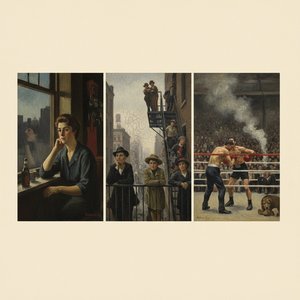
American Realism: Social Commentary & Artistic Representation in Early 20th-Century Painting
Explore the powerful social commentary & artistic representation of American Realism. Discover key artists like Bellows & Sloan, and understand the movement's lasting impact on 20th-century art history.

Romantic Realism's Finest: 10 Masterpieces for Your Home | OriginalUniqueArt
Explore 10 defining masterpieces of Romantic Realism! Discover Courbet, Millet & Daumier's powerful paintings—capturing emotion and social realities. Find museum-quality reproductions for your home at OriginalUniqueArt.com.
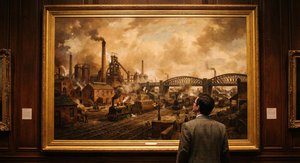
Industrial Revolution on Canvas: 10 Artworks That Define a Modern Aesthetic
Explore 10 iconic artworks capturing the Industrial Revolution’s grit & beauty. From Monet to Manet, discover realism, impressionism & powerful scenes of urban life. Find museum-quality reproductions for your home at OriginalUniqueArt.com.

The Unvarnished Truth: A Cultural Journey Through the Soul of American Realism
Explore the profound beauty of American Realism. From the Ashcan School's urban grit to intimate portraits, discover how artists captured the authentic soul of a nation through unvarnished truth and masterful observation.
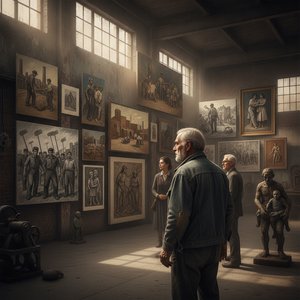
The Raw Truth: A Definitive Guide to the Power and Legacy of Social Realism Art
Explore the profound impact of Social Realism. Discover how masters like Courbet rejected idealism to capture the raw, socio-political truths of the working class through powerful, unvarnished art history and enduring visual critique.


