
 Preview
 Send
Send Share
Share
 Details
 Guide
Guide

 Download
 Similars
 X-Ray
X-Ray Diaporama
 Q&A
Q&A Stats
StatsOld Peasant Holding a Jug

- 17.0 x 14.0 cm


 Read More
Giclée / Art Print
Museum-quality giclée or canvas print with fast production and flexible finish options. ( Buy Hand Made Painting Switch to Digital Image)




P118B $10

P118H $10

P118W $10

P438Z $10

P508JH $12

P508YH $12

P805H $10

P805Z $10

P919BZ $10

P919G $10

P919XJ $10

P959ZH $10

P968JZ $12

W106C $8

W218G $10

W218JH $8

W218Y $10

W307PJ $10

W316G $10

W316PJ $8

W316Y $10

W398PJ $8

W4111J $10

W500HY $15

W500JH $15

W692G $12

W849H $8

W940BG $15

W953PJ $8




Pick from our preset sizes that match the artwork's original proportions.

Type the width and the height you need, to fit your frame or your wall. A print can only be cut, never made bigger than the picture, so a size with a different shape loses a part of the image. We send you a digital mockup to approve before we print anything. The picture shown on this page does not show the real cut — only the mockup does.
Worldwide Delivery () in 2 weeks instead of standard 4/5 weeks. (6 November)

Free Worldwide Express Shipping

High-Quality Linen Canvas

Full Shipping Insurance

Customs Tax Refund Guarantee

True Color Matching Guarantee

100-Day Return Policy (Defects Only)

100% Money-Back Guarantee

Bulk Discount Offer
 Glass option is only available in size under 110 CM

Old Peasant Holding a Jug
Giclée / Art Print
Reproduction Size
-


Total Price
$ 81
A Moment of Quiet Contemplation
In the hushed stillness of Frans van Mieris the Younger’s 1731 masterpiece, Old Peasant Holding a Jug, we are invited into a private, sacred moment of introspection. The painting presents us with an elderly man, his face etched with the wisdom and weathered resilience of a life lived through seasons of toil. Clad in a somber brown coat and crowned by a striking red wig, he holds a jug aloft, his gaze directed upward in a gesture that transcends the simple act of lifting a vessel. This upward tilt serves as a profound visual bridge between the earthly and the divine, inviting the viewer to share in his silent, contemplative awareness. The composition is masterfully balanced, with subtle background elements—a pair of bottles and a solitary bowl—anchoring the scene without distracting from the central figure's emotional gravity.
The brilliance of this work lies in its adherence to the Leiden fijnschilder style, a technique characterized by an almost supernatural level of detail and a smooth, glass-like surface. Mieris the Younger employs the painstaking layering of thin glazes to achieve a breathtaking fidelity to light. One cannot help but be captivated by the way the artist manipulates chiaroscuro; the dramatic interplay between deep shadows and soft highlights sculpts the man's anatomy, emphasizing the texture of his skin and the metallic sheen of the jug. This meticulous approach does more than just showcase technical prowess; it breathes life into the inanimate, making the light feel as though it is truly dancing across the ceramic and cloth.
Symbolism and the Dutch Baroque Spirit
Beyond its surface beauty, the painting is rich with the philosophical currents of the Dutch Baroque period. During this era, artists moved beyond mere representation to explore psychological realism, seeking to capture the inner landscapes of the human soul. The jug held by the peasant serves as a potent symbol of sustenance—not merely the physical nourishment of water or ale, but the spiritual nourishment required to sustain the spirit through solitude. This duality of meaning reflects the broader 17th and 18th-century interest in themes of introspection and the quiet dignity found in humble existence.
For the discerning collector or interior designer, this piece offers more than just a window into the past; it provides a focal point of profound emotional resonance. The painting’s subdued palette and masterful use of light make it an exquisite addition to a curated space, capable of imparting a sense of historical depth and tranquil sophistication. Whether placed in a study filled with books or as a centerpiece in a contemporary gallery, Old Peasant Holding a Jug continues to command attention, reminding us of the enduring power of stillness and the beauty found in the most unassuming subjects.
Questions & Answers
What are the medium and date of "Old Peasant Holding a Jug" by Frans van Mieris?
"Old Peasant Holding a Jug" was created in 1731 using the oil technique. Material and date describe how and when the original was made.
What historical period is "Old Peasant Holding a Jug" by Frans van Mieris from?
"Old Peasant Holding a Jug" belongs to the Early-Modern era.
Which museum holds the original "Old Peasant Holding a Jug"?
The original "Old Peasant Holding a Jug" by Frans van Mieris is held at the Hermitage Museum, Saint Petersburg, Russia. A reproduction allows the work to be displayed at home.
Artist Biography
A Life Immersed in Detail: The World of Frans van Mieris the Elder
Frans van Mieris the Elder, a name synonymous with meticulous detail and refined artistry, occupies a significant position within the Dutch Golden Age. Born in Leiden in 1635, his path diverged from the family trade of goldsmithing—a craft practiced by his father, Jan Bastiaensz van Mieris—towards the captivating world of painting. This early inclination for drawing set the stage for a career that would define the “fijnschilder” style and offer an intimate glimpse into 17th-century Dutch society. His initial training under Abraham Toorenvliet, followed by crucial instruction from the esteemed Gerrit Dou, laid a solid foundation upon which he built his distinctive artistic voice. These formative years instilled in him not only technical skill but also an appreciation for narrative nuance and the power of subtle observation.The Rise of a ‘Fijnschilder’
Van Mieris quickly became celebrated as a master of *fijnschilder*—a Dutch term denoting “fine painting.” This technique was characterized by an almost obsessive attention to detail, smooth and polished brushwork, and a preference for small-scale canvases. It wasn't merely about replicating reality; it was about elevating it through painstaking precision. The surfaces in his paintings seem to shimmer with life – the lustrous sheen of satin, the delicate texture of velvet, the glint of metal—all rendered with astonishing accuracy. He didn’t simply paint a room; he recreated the very atmosphere within it, inviting viewers into scenes of domesticity and affluence. His subject matter frequently revolved around the lives of the wealthy: elegant gatherings, elaborate interiors, portraits that captured not just likeness but also character. Recurring motifs like oyster luncheons, doctors attending to patients, and women engaged in everyday tasks provided windows into the habits and social rituals of the upper classes. While initially heavily influenced by Gerrit Dou’s style, Van Mieris gradually developed his own unique approach. He moved away from an overabundance of detail towards a greater emphasis on interaction between figures and the unfolding narratives within his compositions. Later works sometimes display darker tonal qualities compared to the brighter palettes of his earlier paintings, reflecting a growing maturity and artistic exploration.Significant Works and Enduring Legacy
Several key works stand as testaments to Van Mieris’s skill and evolving style. Doctor's Visit (1657), considered one of his earliest dated and most important pieces, showcases his emerging independence from Dou’s influence. The painting is a masterclass in capturing the quiet tension of a medical examination, rendered with an astonishing level of realism. His Self-Portrait with a Cittern is equally compelling, demonstrating his ability to depict opulent attire while simultaneously conveying a sense of personality and introspection. Portrait of the Artist's Wife, Cunera van der Cock, exemplifies his mastery of portraiture, highlighting both technical skill and an understanding of *chiaroscuro*—the dramatic interplay of light and shadow. Beyond genre scenes and portraits, Van Mieris also ventured into allegorical paintings, such as those depicting vices like drinking, smoking, and gambling, demonstrating the breadth of his artistic capabilities. The impact of Frans van Mieris extended far beyond his own lifetime. His influence resonated within his family; his son Willem van Mieris (1662–1747) and grandson Frans van Mieris the Younger (1689–1763) both became accomplished genre painters, continuing the artistic tradition. The popularity of his style also spawned numerous imitators, most notably A. D. Snaphaan, who worked in Leipzig and enjoyed patronage from the court of Anhalt-Dessau.A Lasting Contribution to Dutch Art
Frans van Mieris played a pivotal role in shaping the *fijnschilder* movement within Dutch Golden Age painting. His dedication to meticulous detail, realistic depictions of everyday life and upper-class society, and technical brilliance contributed significantly to an era already renowned for its artistic innovation. He enjoyed patronage from prominent figures, including Archduke Leopold and Cosimo III de' Medici, a testament to the international recognition of his talent. Even today, his works continue to captivate audiences with their exquisite craftsmanship and insightful portrayal of 17th-century culture. The theft of a self-portrait from the Art Gallery of New South Wales in Sydney serves as a poignant reminder of the enduring value and appeal of his art—a legacy that continues to inspire and intrigue collectors and art enthusiasts alike. His paintings are not merely historical artifacts; they are windows into a bygone era, meticulously crafted and imbued with a timeless beauty.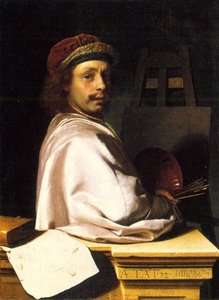
Frans van Mieris
1635 - 1681 , Netherlands
Quick Facts
- Artistic Movement Or Style: Fijnschilder, Genre painting
- Artists Or Movements Influenced By This Artist:
- Willem van Mieris
- Frans van Mieris the Younger
- A. D. Snaphaan
- Artists Who Influenced This Artist:
- Gerrit Dou
- Abraham van den Tempel
- Date Of Birth: 1635
- Date Of Death: 1681
- Full Name: Frans van Mieris the Elder
- Nationality: Dutch
- Notable Artworks:
- Doctor's Visit
- Self-Portrait with a Cittern
- Musical Company
- Duet
- Place Of Birth: Leiden, Netherlands
Related Articles

Baroque Drama: Bringing Opulence & Emotion into Contemporary Interiors
Explore the opulent world of Baroque interior design! Discover key elements, modern applications & how to bring dramatic elegance into your home with OriginalUniqueArt.com's authentic reproductions.

Golden Light & Dutch Skies: The Timeless Magic of Dutch Golden Age Landscapes
Discover the breathtaking beauty of Dutch Golden Age landscapes. Explore the mastery of light, chiaroscuro, and 17th-century realism through an expert art history lens, celebrating the enduring legacy of the Dutch Masters for discerning collectors and art lovers.

Baroque Masterpieces: 10 Paintings That Defined an Era |
Journey through the drama & grandeur of Baroque art! Explore 10 masterpieces by Caravaggio, Rembrandt, Rubens & more. Discover stunning oil paintings, rich colors & timeless stories. Find museum-quality reproductions at .

Golden Age Reflections: Dutch Baroque Painting & Cultural Innovation
Explore the Dutch Golden Age of painting! Discover key artists like Vermeer & ter Borch, their innovative techniques, and the rich cultural context behind these Baroque masterpieces. Learn about collecting & appreciating this iconic art period.

Dutch Baroque Masters: 10 Paintings That Shaped an Era | OriginalUniqueArt
Journey through the Golden Age with our guide to the Top 10 Dutch Baroque masterpieces! Explore iconic paintings by Rembrandt, Vermeer & Frans Hals. Find museum-quality art reproductions and elevate your home decor at OriginalUniqueArt.com.


